
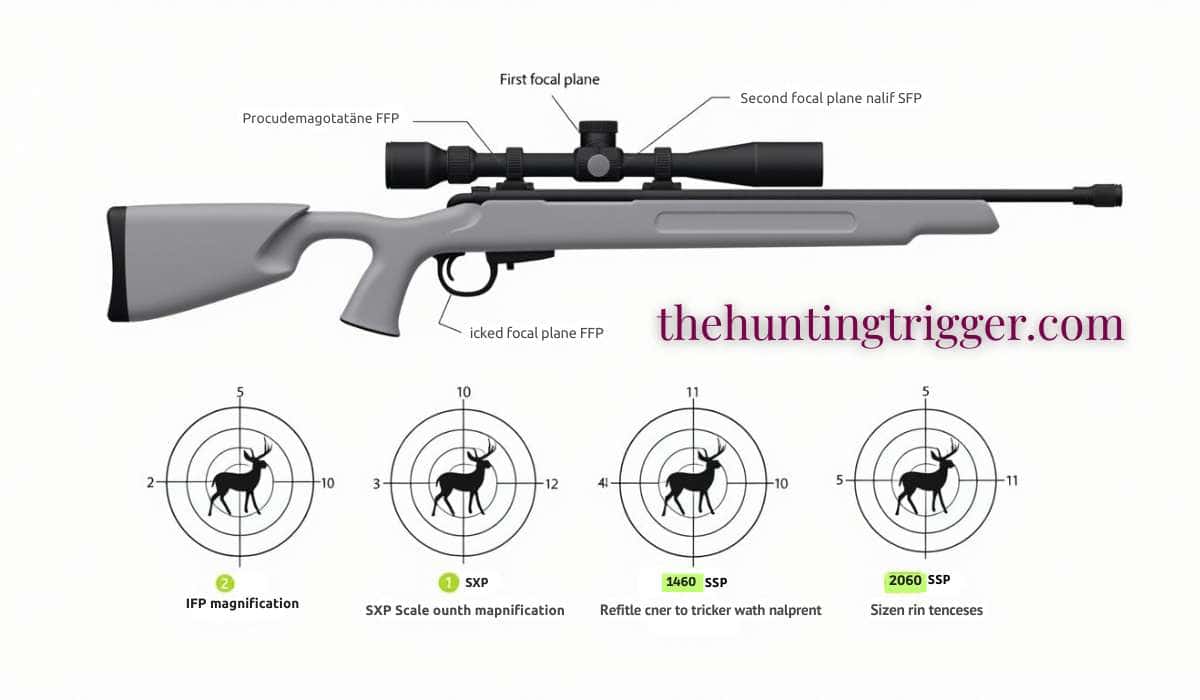
A first focal plane scope is a popular tool among hunters, tactical shooters, and long-range marksmen. But what makes it different from other rifle scopes? If you want to improve your accuracy or need reliable performance at different distances, it’s important to know how a first focal plane (FFP) scope works and why it stands out.
This article explains the meaning, function, advantages, and possible drawbacks of FFP scopes, using clear language and practical examples. By the end, you’ll be able to decide if this type of scope is right for your needs.
Table of Contents
What Is A First Focal Plane Scope?
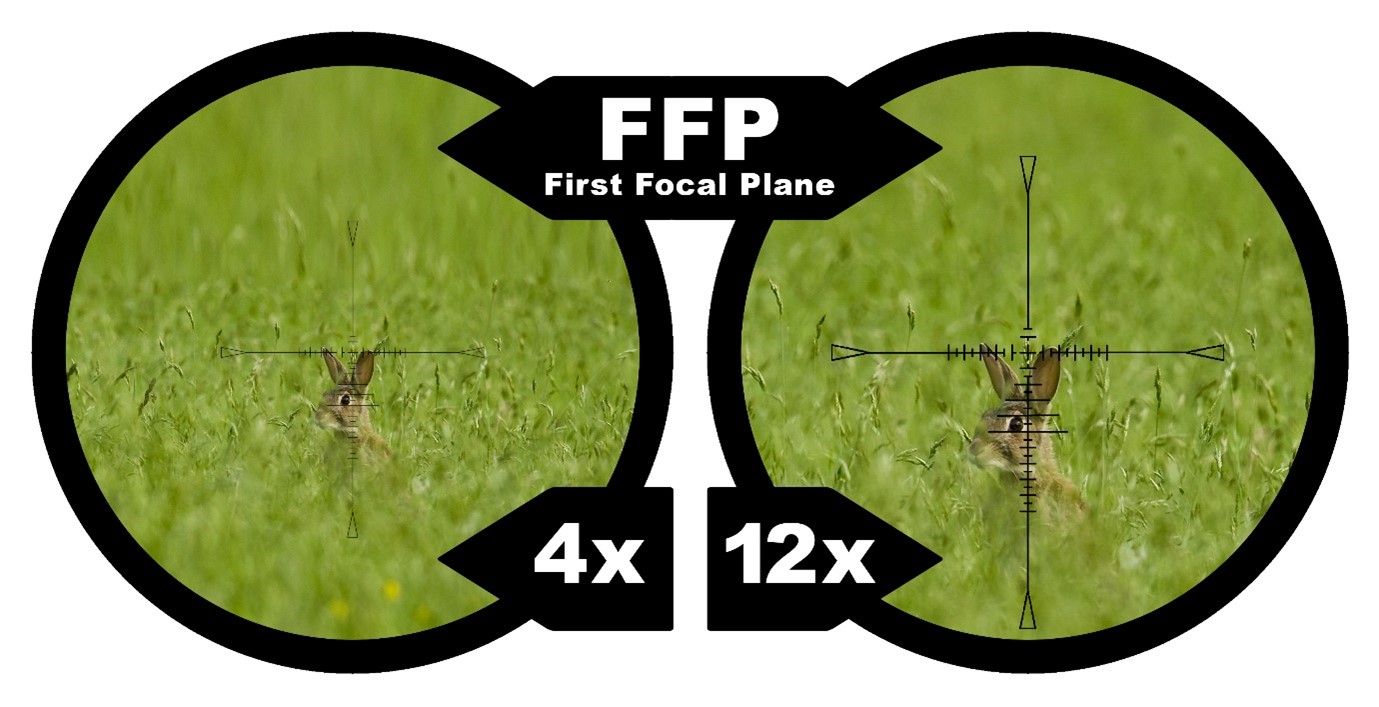
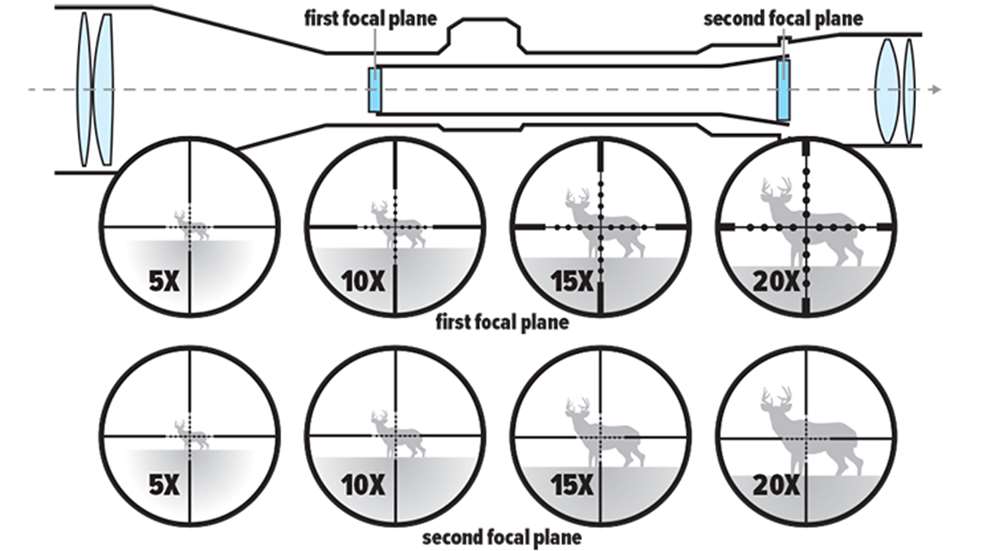
A first focal plane scope is a rifle scope where the reticle (the crosshairs or aiming mark) sits in front of the magnification lenses. As you increase or decrease magnification, the reticle changes size along with the target image. This is different from a second focal plane (SFP) scope, where the reticle stays the same size even if you zoom in or out.
This setup matters because many scopes use special marks (called subtensions) to help you estimate distance, adjust for bullet drop, or compensate for wind. In an FFP scope, these marks stay accurate at any magnification, making it useful for shooters who need to adjust quickly and shoot at various distances.
How Does A First Focal Plane Scope Work?
The key to an FFP scope is where the reticle sits inside the scope tube. In a simple scope, the reticle sits behind the magnification lenses, so it stays the same size. In an FFP scope, the reticle is placed before these lenses, so it grows or shrinks with the image when you zoom.
Visual Difference: FFP Vs. SFP
A practical way to see the difference is to look through both types of scopes and change the magnification:
- In an FFP scope, the reticle grows and shrinks as you zoom.
- In an SFP scope, the reticle stays the same size, and only the target image changes.
This difference is not just visual—it affects how you use the reticle for measurements and adjustments.
Advantages Of First Focal Plane Scopes
FFP scopes have become more common in recent years, especially for precision shooting and tactical use. Here are some of the main benefits:
1. Consistent Holdovers At Any Magnification
The biggest advantage of FFP scopes is the accuracy of the reticle marks at any zoom level. If your reticle has marks for bullet drop or wind drift, they always match the target image, no matter how much you zoom in or out. This means you don’t need to remember which zoom setting to use for your adjustments.
2. Faster Target Engagement
In changing situations, you might need to switch between close and long-range targets quickly. With an FFP scope, you can zoom in or out as needed, and the holdover marks stay correct. This is especially helpful for tactical shooters or hunters who must react fast.
3. Easier Range Estimation
Many FFP scopes have reticles designed for range estimation. Because the marks stay proportional to the target, you can use the reticle to measure objects and estimate how far away they are, no matter the zoom. This can save time in the field.
4. Useful For Variable Shooting Distances
If you shoot at different distances often, an FFP scope allows you to adjust your magnification without losing the accuracy of your reticle’s extra marks. This is valuable for competitions, hunting, and military or law enforcement work.
Disadvantages Of First Focal Plane Scopes
While FFP scopes offer many benefits, there are also challenges to consider.
1. Reticle Size At Low And High Magnification
At low magnification, the reticle in an FFP scope can look very small, making it hard to see the fine details. At high magnification, the reticle might appear too thick and cover too much of the target. This can make it harder to aim at small targets or shoot at long distances.
2. Cost
FFP scopes tend to be more expensive than SFP scopes with the same features and quality. Placing the reticle in the first focal plane requires more precise manufacturing, which raises the price.
3. Learning Curve
If you are new to rifle scopes, the way the reticle changes size might be confusing at first. Some people find it harder to use, especially if they are used to the fixed reticle size in SFP scopes.
4. Less Useful For Some Types Of Shooting
For shooters who only use their scope at one magnification (for example, hunting deer at a fixed distance), an FFP scope might not offer much benefit over an SFP scope.
First Focal Plane Vs. Second Focal Plane: Key Differences
To help see the main differences, here is a side-by-side comparison:
| Feature | First Focal Plane (FFP) | Second Focal Plane (SFP) |
|---|---|---|
| Reticle Size | Changes with magnification | Stays the same |
| Holdover Accuracy | Correct at any magnification | Correct at one magnification (usually max) |
| Cost | Generally higher | More affordable |
| Best Use | Variable distance, precision shooting | Fixed distance, hunting |
This comparison helps you pick the right scope for your specific needs.
When Should You Choose A First Focal Plane Scope?
FFP scopes are not for everyone. Your choice depends on your main activities and shooting style.
Ideal Users For FFP Scopes
- Long-Range Shooters: If you shoot at targets several hundred yards away, FFP scopes help keep your reticle marks accurate at any zoom.
- Tactical Shooters: In military, law enforcement, or competition settings, fast, accurate adjustments are critical. FFP scopes are designed for these needs.
- Hunters in Changing Environments: If you hunt in places where you might need to shoot from 50 to 500 yards, an FFP scope allows quick adjustment without losing accuracy.
Less Ideal Users
- Short-Range or Single-Distance Hunters: If you always shoot at the same distance, a second focal plane scope can be more comfortable and affordable.
- Beginners: SFP scopes are often simpler to use, especially for those just starting with optics.
Common Features In Modern FFP Scopes
FFP scopes come with a wide range of features. Here’s what you’ll often find:
- Illuminated reticles: Helpful for low-light conditions.
- Tactical turrets: Allow quick adjustments for elevation and windage.
- Zero stop: Lets you return to your original zero after making changes.
- Parallax adjustment: Improves focus at different distances.
- High-quality glass: Clearer images, better light transmission.
Not every FFP scope will have all these features, but they are common in mid- to high-end models.
Practical Tips For Using A First Focal Plane Scope
Success with an FFP scope depends on more than just the equipment. Proper use and practice are just as important.
- Practice at Different Magnifications: Get used to how the reticle looks at low and high zoom. This helps with target identification and quick shots.
- Learn Your Reticle: Know what each mark means and how to use it. Many reticles have special lines or dots for different adjustments.
- Check the Manual: Each scope is different. Read the manual for your model to get the most out of its features.
- Adjust for Light Conditions: At dawn or dusk, some reticles can be hard to see. Use illumination if available, but remember it can add glare at high brightness.
- Zero Your Scope Properly: Set your zero (the range where your point of aim and bullet hit match) at a distance you use most often.

Data: Growth Of FFP Scope Use
First Focal Plane (FFP) scopes have moved from a specialized optic used mainly in military and long-range competition shooting to a rapidly growing choice in the civilian market. From 2023 to 2026, industry trends show a clear increase in FFP adoption, especially in mid-range and premium riflescopes designed for precision shooting.
While exact global “FFP vs SFP market share” percentages are not publicly standardized, market research consistently shows that FFP scopes are gaining ground quickly due to rising demand for long-range accuracy and advanced ballistic reticles.
| Year | FFP Scope Market Share (%) | SFP Scope Market Share (%) |
|---|---|---|
| 2017 | ~20–30% | ~70–80% |
| 2022 | ~35–45% | ~55–65% |
| 2023 | ~30–40% | ~60–70% |
| 2024 | ~35–45% | ~55–65% |
| 2025 | ~40–50% | ~50–60% |
| 2026 | ~45–55% | ~45–55% |
This trend shows that more shooters are choosing FFP scopes for their flexibility and advanced features.
Source: Riflescope & Red Dot Sight Market Share
Real-world Example: Competition Shooting
In the Precision Rifle Series (PRS), one of the most popular long-range shooting competitions, nearly all top competitors use FFP scopes. This is because stages often require shooters to change magnification quickly and make precise adjustments. The ability to trust your reticle at any zoom setting is a clear advantage.
Common Mistakes With First Focal Plane Scopes
Even experienced shooters sometimes struggle with FFP scopes. Here are two mistakes beginners often make:
- Not practicing with different magnifications: Many people set their scope at one zoom level and never change it. This makes it harder to use the FFP’s benefits in real situations.
- Choosing reticles that are too complex: Some FFP scopes have very busy reticles with many lines and dots. These can be confusing, especially at high magnification. Start simple and move to advanced reticles as you gain experience.
How To Choose The Right FFP Scope
If you’ve decided an FFP scope is the right tool, here are key factors to consider:
- Magnification range: Choose a range that matches your shooting style. For example, 3-18x is good for hunting, while 5-25x is better for long-range.
- Reticle type: Simple reticles are easier for beginners; advanced ones offer more information for experienced shooters.
- Glass quality: Clearer glass gives better images, especially at dusk or dawn.
- Durability: Look for waterproof, shockproof, and fog-proof features.
- Turret quality: Precise, repeatable adjustments are essential for long-range work.
- Weight: Heavier scopes may affect your balance, especially when hunting on foot.
Here is a basic comparison for reference:
| Feature | Entry-Level FFP Scope | High-End FFP Scope |
|---|---|---|
| Price | $300–$600 | $1,500–$3,000+ |
| Glass Quality | Good | Excellent |
| Reticle | Simple | Advanced, illuminated |
| Turrets | Basic | Tactical, zero stop |
| Weight | Light-medium | Heavier |
Frequently Asked Questions
What Is The Main Benefit Of A First Focal Plane Scope?
The top benefit is that the reticle marks (for holdover, wind, and range estimation) stay accurate at any magnification. This helps shooters make fast, correct adjustments at different distances.
Are First Focal Plane Scopes Better Than Second Focal Plane Scopes?
FFP scopes are better for shooting at variable distances and when you need to use the reticle for measurements. SFP scopes can be easier to use and cost less, making them suitable for fixed-distance shooting.
Why Are FFP Scopes More Expensive?
Manufacturing FFP scopes requires more precise engineering to keep the reticle and image in perfect alignment as you zoom. This extra work leads to higher prices.
Is An FFP Scope Good For Hunting?
FFP scopes are excellent for hunting in areas with changing distances. But at low magnification, the reticle can be hard to see. For short-range hunting, some people prefer SFP scopes.
Last Word
With this information, you’re better prepared to decide if a first focal plane scope fits your shooting style and needs. The right scope can help you shoot more accurately and confidently, whether on the range or in the field.

Leave a Reply