
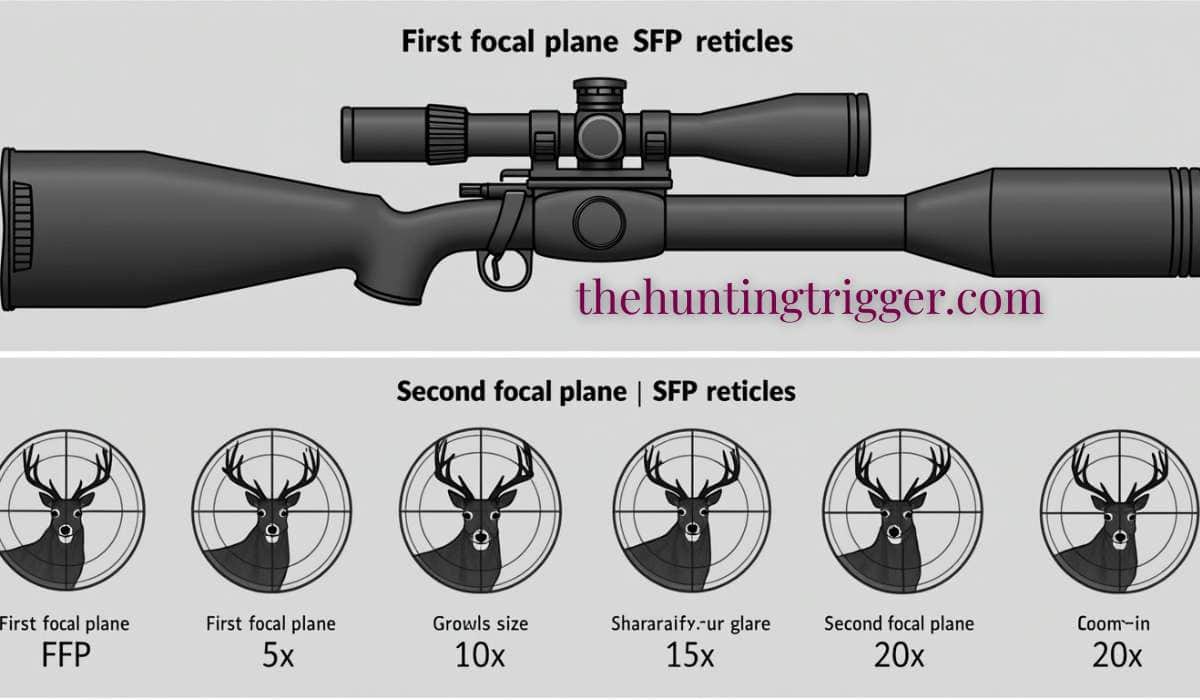
Many shooters want to know if the first focal plane or second focal plane is better when choosing a rifle scope. This question often comes up for both hunters and target shooters. The answer depends on how you use your scope, what type of shooting you do, and your own preferences. Some believe the first focal plane is always superior, while others remain loyal to the second focal plane. But there is no single answer for everyone.
This article will give a clear comparison of both focal planes. You will see how they work, their strengths and weaknesses, and what matters most for different shooting needs. By the end, you’ll know which type suits your style and why it matters for accuracy, speed, and overall shooting experience.
Table of Contents
What Is First Focal Plane?
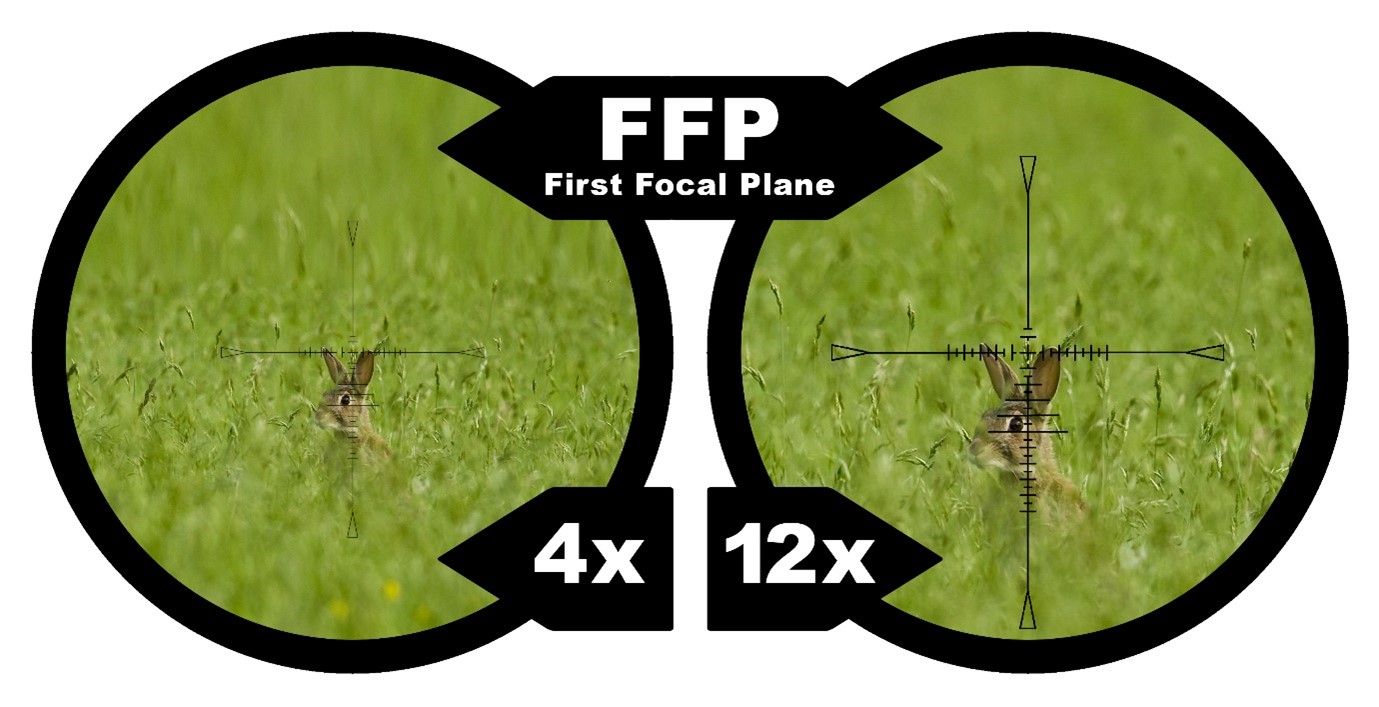
A first focal plane (FFP) scope means the reticle (the lines you see when aiming) is placed in front of the magnifying lenses. When you increase or decrease the magnification, the reticle changes size along with the image. This feature is important for shooters who use their reticle for range estimation or holdovers.
For example, if you shoot at both 4x and 16x magnification, the lines on the reticle will always match the target size. This makes it easier to estimate distance and adjust for bullet drop, especially when shooting at long ranges.
What Is Second Focal Plane?
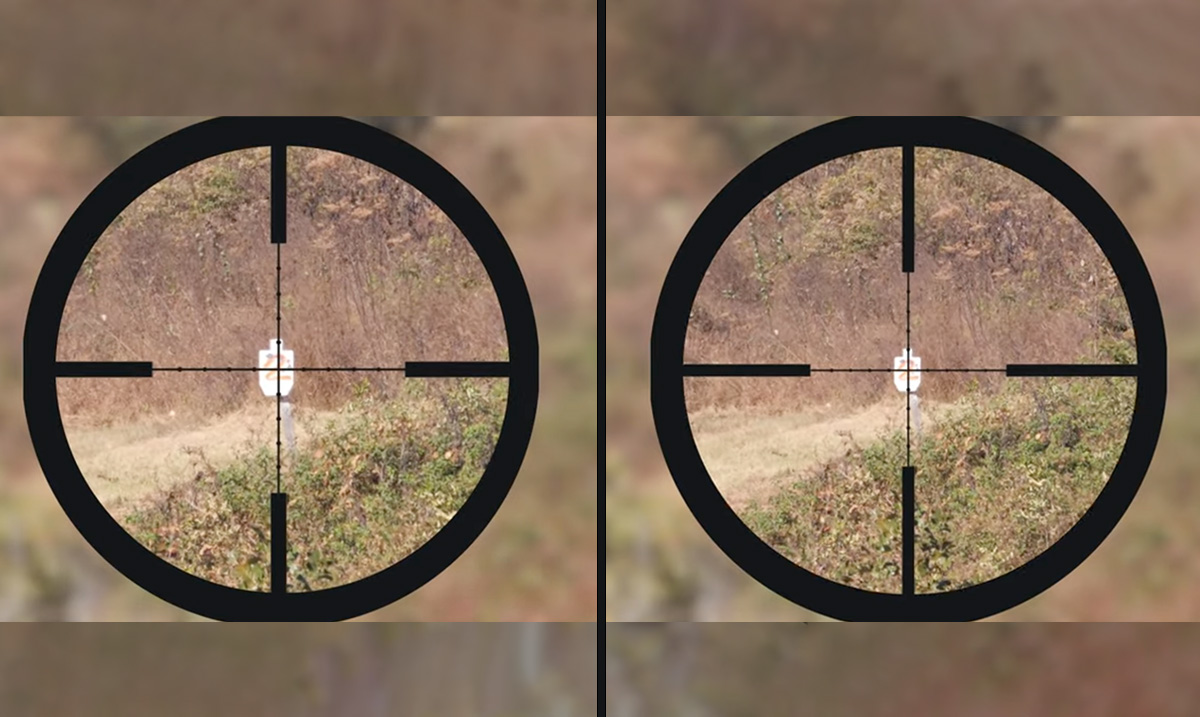
A second focal plane (SFP) scope has the reticle placed behind the magnifying lenses. As you zoom in or out, the reticle stays the same size while the target image gets bigger or smaller. This type is very common for hunting scopes and many recreational shooters.
Because the reticle does not change size, it can be easier to see at low magnification and less distracting at high magnification. However, the markings on the reticle only match the correct range and bullet drop at one zoom setting, usually the highest.
How Each Focal Plane Works
Understanding how the two focal planes function will help you decide which one fits your shooting style.
First Focal Plane Mechanics
In FFP scopes, the reticle sits before the zoom lens. When you change the zoom level, both the target and the reticle get bigger or smaller together. This means:
- Range estimation marks are always accurate.
- Holdovers for wind and bullet drop stay true, no matter the zoom.
Second Focal Plane Mechanics
In SFP scopes, the reticle is after the zoom lens. As you zoom in, the target image grows, but the reticle stays the same. This leads to:
- Reticle lines only match up with bullet drop at one magnification.
- The reticle is always easy to see, even at low zoom.
Comparing First Focal Plane Vs Second Focal Plane
To make things clear, here is a simple side-by-side comparison of key features:
| Feature | First Focal Plane (FFP) | Second Focal Plane (SFP) |
|---|---|---|
| Reticle size changes with zoom | Yes | No |
| Holdover accuracy at all magnifications | Yes | No |
| Best for long-range shooting | Yes | Sometimes |
| Reticle visibility at low power | Can be thin | Always clear |
| Price | Usually higher | Often lower |
Advantages Of First Focal Plane
FFP scopes offer some unique benefits that matter for certain shooters.
- True holdovers at any zoom: Whether you use 6x or 24x, your holdover marks always match up. This is vital for tactical shooters or those who shoot targets at different distances.
- Faster adjustments: You can estimate range and bullet drop without changing your zoom to a specific setting.
- Ideal for advanced reticles: Many FFP scopes come with complex reticles that help with windage, drop, and moving targets.
For example, in long-range competitions, shooters often have to change magnification quickly. With FFP, their reticle stays accurate, helping them shoot faster and with fewer mistakes.
Disadvantages Of First Focal Plane
Not everything is perfect with FFP scopes.
- Thin reticle at low power: At low magnification, the reticle can look very thin. In dark forests or against complex backgrounds, it may be hard to see.
- Higher cost: The design is more complex, so FFP scopes usually cost more.
- Can be distracting at high power: At maximum zoom, the reticle can become thick and cover small targets.
These drawbacks mean FFP is not always the best choice for hunters who shoot at close range or in low light.
Advantages Of Second Focal Plane
SFP scopes remain popular for good reasons.
- Clear reticle at all zoom levels: The reticle size never changes, so it’s always easy to see—great for fast shots at moving animals.
- Lower price: SFP scopes are often more affordable, making them a smart choice for many hunters and hobbyists.
- Simple to use: You don’t need to worry about your reticle being too thin or thick.
Many hunters trust SFP scopes because they give a steady view and are less confusing in fast situations.
Disadvantages Of Second Focal Plane
SFP scopes also have some limits.
- Holdovers only accurate at one zoom: The markings on the reticle work only at one magnification, often the highest. If you shoot at lower zoom, you must do extra math to adjust.
- Not ideal for tactical shooting: If you need to switch between targets at different ranges quickly, SFP can slow you down.
- Less flexible for advanced reticles: Some advanced reticle patterns are less useful in SFP scopes, since their marks won’t match up at different zoom levels.
Real-life Examples: Who Uses Which?
Let’s look at some actual shooting situations to make the differences clearer.
- Long-range target shooter: Uses FFP because holdover marks must be accurate at all magnifications.
- Tactical competitor: Chooses FFP for speed and flexibility.
- Big game hunter: Prefers SFP for a bold, always-visible reticle, especially in brush or low light.
- Plinker or casual shooter: Enjoys SFP for its simplicity and lower cost.
What Really Matters When Choosing
When picking between FFP and SFP, think about these main points:
- Shooting distance: FFP is better for long-range and variable distances. SFP works well for close to medium distances.
- Target type: Small targets or targets that move fast may need a clear, bold reticle (SFP).
- Lighting conditions: If you often shoot in low light, SFP can be easier to see.
- Budget: FFP usually costs more, so consider what you are willing to spend.
- Reticle design: Advanced reticles with many marks are more helpful in FFP.

Common Myths About Focal Planes
There are a few beliefs that often confuse new shooters.
- FFP is always better for everything. This is not true. For hunting or close-range shots, SFP can be just as good or better.
- SFP is not accurate at long range. SFP scopes can be very accurate, but you must set your zoom to the right level for the reticle marks to match.
- FFP reticles are too thin to use. At low zoom, yes, they can be thin—but many new FFP scopes have bolder reticle designs to help with this issue.
Practical Tips Before Buying
- Try both types in person. Visit a store and look through FFP and SFP scopes at different zoom levels.
- Check the reticle design. Some reticles are made to be thick enough to stay visible in FFP scopes.
- Think about your shooting style. If you change zoom often and shoot at many distances, FFP may be best. If you use only one zoom level, SFP could be perfect.
- Remember eye relief and field of view. Sometimes the focal plane can affect these, so test the scope with your rifle setup.
Price Comparison: Ffp Vs Sfp
To give you a sense of the cost difference, here’s a typical price range for both types (as of 2026):
| Scope Type | Entry-Level | Mid-Range | High-End |
|---|---|---|---|
| First Focal Plane | $300 – $600 | $600 – $1,200 | $1,200+ |
| Second Focal Plane | $150 – $400 | $400 – $900 | $900+ |
Prices change depending on the brand, glass quality, and extra features.
Non-obvious Insights Most Beginners Miss
Many new shooters do not realize:
- Reticle illumination matters more in FFP. If your FFP scope has a very thin reticle at low power, illumination can help you see it in dark or busy backgrounds. Always check if the scope offers this feature if you plan to hunt or shoot in poor light.
- Parallax adjustment is not affected by focal plane. Some think FFP scopes solve parallax by design, but both FFP and SFP can suffer from parallax error. Always check if the scope has a side or adjustable parallax feature, especially for long-range shooting.
Use Cases For Ffp And Sfp
Here’s a quick reference for which focal plane suits which activity:
| Activity | Best Focal Plane | Why |
|---|---|---|
| Long-range competition | FFP | Accurate holdovers at all zooms |
| Big game hunting | SFP | Bold, clear reticle for fast shots |
| Tactical/PRS shooting | FFP | Quick range and wind adjustments |
| Varmint or pest control | SFP | Simple aiming at set distances |
| Target plinking | SFP | Low cost, easy use |
Which Is Better: First Or Second Focal Plane?
There is no single answer. The best choice depends on how you use your rifle, your budget, and your own comfort. Competitive shooters and those who need fast, accurate adjustments at many distances often choose FFP. Hunters and casual shooters often prefer SFP for its bold reticle and simple use.
If possible, try both types before you decide. Pay attention to reticle visibility at different zooms and think about where you’ll use your rifle most. Also, check out detailed guides from trusted sites like the Wikipedia Rifle Scope article for further reading.
Frequently Asked Questions
What Does First Focal Plane Mean In Scopes?
In a first focal plane (FFP) scope, the reticle sits in front of the zoom lens. The reticle grows and shrinks with the target when you change magnification. This keeps all marks for range and bullet drop accurate at any zoom level.
Is First Focal Plane Better For Hunting?
Not always. FFP scopes can be great for long-range hunting, but for thick woods or close shots, a second focal plane (SFP) scope is often better. The reticle in SFP stays bold and easy to see, making fast shots easier.
Why Are First Focal Plane Scopes More Expensive?
FFP scopes are harder to build because the reticle must stay sharp and clear at all zoom levels. This adds to the cost. High-quality glass and strong reticle designs also increase the price.
Can You Use A Second Focal Plane Scope For Long-range Shooting?
Yes, you can. Many skilled shooters use SFP scopes for long-range, but you need to remember that the reticle marks are only exact at one magnification (usually the highest). For other zoom levels, you must do extra calculations.
Which Is Better For Beginners: Ffp Or Sfp?
For most beginners, SFP is easier. The reticle always looks the same and is simple to use. As you gain more skill and shoot at many distances, you might prefer FFP for its flexibility.
Lastly
Choosing between first and second focal plane is a personal decision. Think about your main shooting activities, your comfort with reticle math, and what fits your budget. A good scope should match your needs, not just follow trends.

Leave a Reply