
A second focal plane scope is a tool many hunters and shooters use to improve accuracy. It is a common type of rifle scope, but not everyone knows how it works or how it compares to other scopes. If you are thinking about buying a scope or just want to know more, this article will give you clear information.
The goal is to help you make confident choices and avoid mistakes that beginners often make.
Table of Contents
How A Second Focal Plane Scope Works?
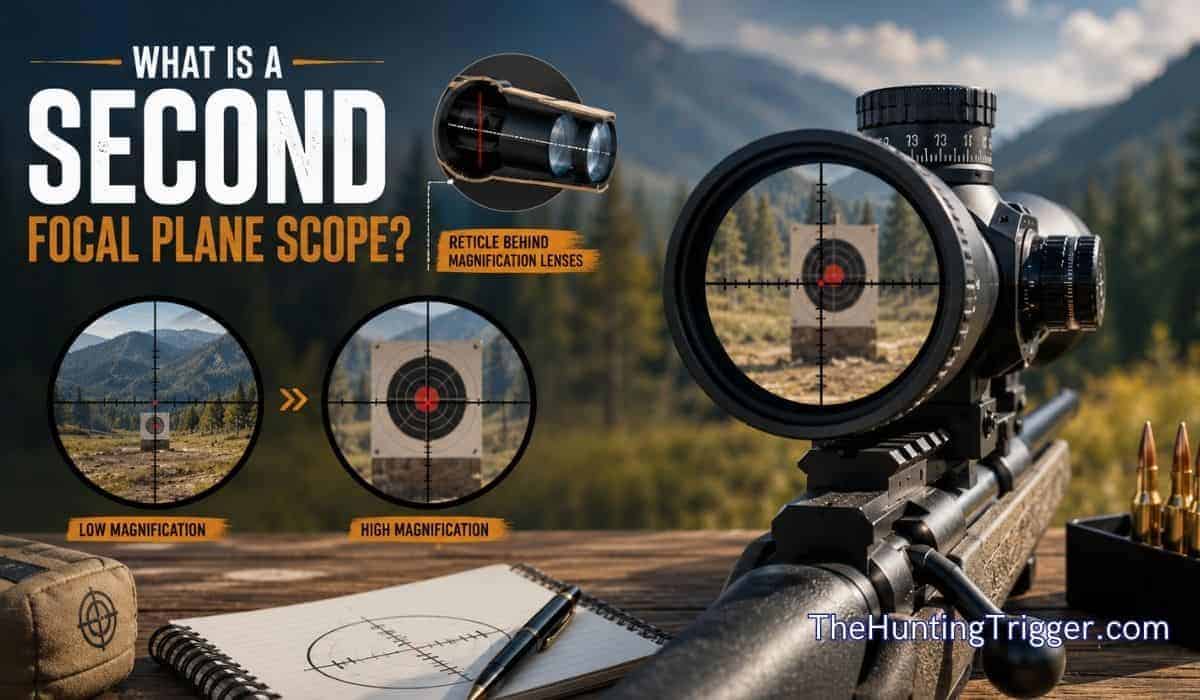
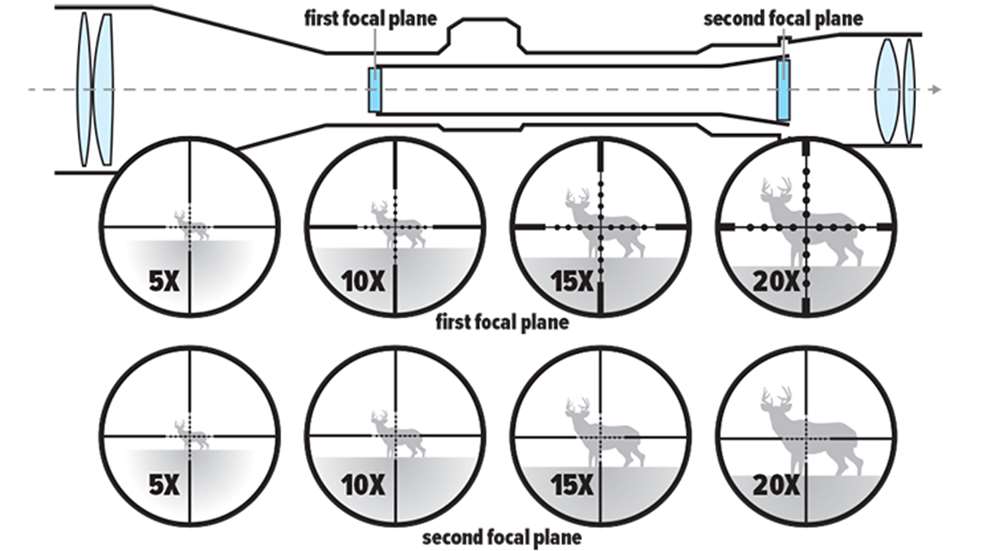
The second focal plane (SFP) refers to where the reticle sits inside the scope. In an SFP scope, the reticle is placed behind the magnification lens. This means that when you change the magnification, the size of the reticle stays the same, but the target appears larger or smaller.
For example, if you zoom in from 4x to 12x power, the reticle will look the same size, but the target becomes bigger in your view. This is different from a first focal plane (FFP) scope, where the reticle grows or shrinks as you change the magnification.
Many shooters like SFP scopes because the reticle is always easy to see, even at low power. This is helpful for hunting in thick forests or situations where you need fast target acquisition.
Key Features Of Second Focal Plane Scopes
Second focal plane scopes have several features that make them popular:
- Fixed reticle size: The reticle does not change with magnification, so it is always clear and easy to use.
- Affordable options: SFP scopes are usually less expensive than FFP scopes, making them accessible for beginners and casual shooters.
- Variety of reticle designs: You can choose from simple crosshairs, illuminated reticles, or more advanced designs.
- Easy to use: The constant reticle size means you do not have to adjust your aiming technique when you change magnification.
Most manufacturers offer a wide range of SFP scopes, from basic models to high-end versions with advanced coatings and better glass quality.

Comparing Second Focal Plane Vs First Focal Plane Scopes
It helps to see the differences between SFP and FFP scopes clearly. Here is a comparison:
| Feature | Second Focal Plane (SFP) | First Focal Plane (FFP) |
|---|---|---|
| Reticle Size | Stays the same | Changes with zoom |
| Ease of Use | Simple for most users | Requires more practice |
| Price | Usually lower | Usually higher |
| Best for | Hunting, casual shooting | Long-range, tactical |
| Holdover Accuracy | Only accurate at one power | Accurate at any power |
This table shows why many hunters prefer SFP scopes. They are simple to use and cost less, but they may not be the best for advanced long-distance shooting.
Why Choose A Second Focal Plane Scope?
There are several reasons to select an SFP scope:
- Budget-friendly: If you are new to shooting or have a limited budget, SFP scopes offer good quality at a lower price.
- Reticle clarity: The reticle stays sharp and visible, even at low magnification. This is useful for quick shots at moving targets.
- Wide choice: You can find many different SFP scopes in stores, from basic models to more advanced options.
- Ideal for hunting: Most hunting situations do not need complex reticle adjustments. An SFP scope is perfect for these needs.
Some shooters use SFP scopes for target shooting at moderate distances. They work well for ranges up to about 400 yards, especially when the reticle’s markings are only accurate at the highest magnification.
Practical Uses And Limitations
SFP scopes are common in hunting, plinking, and general shooting sports. They are easy to set up and use. However, there are some limitations you should know:
- Holdover marks: The reticle may have marks for estimating bullet drop or wind drift. These marks are only accurate at one magnification, usually the highest setting. If you use a lower power, the marks will not match the real-world distances.
- Long-range shooting: SFP scopes are less suitable for extreme distance shooting. If you plan to shoot beyond 600 yards, an FFP scope may be better because its reticle markings stay true at any magnification.
- Changing magnification: If you switch magnification often, you must remember that the reticle’s marks change in value. This can lead to mistakes if you forget which power you are using.
These issues are not deal-breakers for most casual shooters. But if you want to shoot at long range or use advanced reticle features, an FFP scope will be more accurate.
Common Reticle Types In Second Focal Plane Scopes
SFP scopes come with several reticle options. Here are some popular types:
- Duplex reticle: Simple crosshair with thicker lines on the outside, thinner in the center. Good for hunting.
- Mil-dot reticle: Dots spaced at regular intervals for estimating range and holdover. Useful for target shooters.
- BDC reticle: Bullet drop compensator markings help estimate bullet drop at different distances. Great for hunting and mid-range shooting.
- Illuminated reticle: Has a lighted center or lines, making it easier to aim in low light.
Most reticles in SFP scopes are designed for clear visibility, and you can often choose the one that suits your shooting style.
How To Use A Second Focal Plane Scope Effectively?
To get the best results from your SFP scope, follow these tips:
- Always check which magnification power you are using before making shots with holdover marks.
- Zero your rifle at the highest magnification if your reticle has bullet drop marks. This makes the marks accurate for long shots.
- Practice with your scope at different magnifications to see how the reticle matches up with real distances.
- Use the simplest reticle possible for hunting or quick shooting. Complex reticles are better for target shooting or competitions.
Many shooters forget to adjust their magnification when using reticle markings. This is a common mistake, especially for beginners.
Mistakes Beginners Make With Sfp Scopes
New users often make these errors:
- Using holdover marks at wrong magnification: This leads to missed shots because the marks are only accurate at one power.
- Ignoring parallax adjustment: Some SFP scopes have a parallax knob. Not using it can cause blurry targets.
- Choosing complex reticles: Beginners often pick advanced reticles that are hard to use. Start with a simple crosshair or duplex.
- Not checking eye relief: SFP scopes can have different eye relief at various magnifications. Always check before shooting.
Avoiding these mistakes will help you use your scope confidently and improve your accuracy.
How To Select The Right Second Focal Plane Scope?
Choosing the right SFP scope depends on your needs:
- Magnification range: Pick a scope with 3–9x or 4–12x for most hunting. For target shooting, you may want 6–24x.
- Reticle design: Choose a simple reticle for hunting, or a BDC or mil-dot for target shooting.
- Build quality: Look for scopes with waterproof and fog-proof features. Good glass improves clarity.
- Turrets: If you adjust for windage or elevation often, pick scopes with easy-to-turn turrets.
- Warranty: Reliable brands offer long warranties. This shows confidence in their products.
Here is a comparison of typical SFP scope features:
| Brand | Magnification | Reticle Type | Price Range | Warranty |
|---|---|---|---|---|
| Leupold VX-Freedom | 3-9x | Duplex | $250-$400 | Lifetime |
| Vortex Crossfire II | 4-12x | BDC | $180-$250 | Lifetime |
| Bushnell Banner | 3-9x | Multi-X | $100-$180 | 1 Year |
This table shows you do not have to spend a lot to get a good SFP scope. The warranty is an important factor many buyers miss.
Real-life Example: Using An Sfp Scope For Deer Hunting
A hunter uses a 3-9x SFP scope with a duplex reticle. He sets his rifle zero at 100 yards at 9x magnification. When a deer appears at 80 yards, he lowers the magnification to 4x for a wider view. The reticle is still clear, and he aims quickly.
He does not use holdover marks, so the shot is simple and fast.
This example shows how SFP scopes work well for hunting at short to medium ranges. The fixed reticle size helps with fast target acquisition.
Advanced Tips: Getting More From Your Sfp Scope
- Memorize your reticle values: If you use holdover marks, know which magnification they are accurate at.
- Try different ammunition: Some SFP scopes have BDC reticles designed for a specific bullet. Test your ammo to see how it matches.
- Keep your lens clean: A dirty scope lens can affect clarity. Use a microfiber cloth for cleaning.
- Use scope covers: Protect your scope when not in use. This helps avoid scratches and dust.
Many shooters do not realize how much lens quality affects their shooting. Investing in good glass can make a big difference.
Frequently Asked Questions
What Does “second Focal Plane” Mean In A Scope?
Second focal plane means the reticle is placed behind the magnification lens. The reticle stays the same size, even when you change the magnification.
Are Sfp Scopes Good For Long-range Shooting?
SFP scopes can work for long-range, but the holdover marks are only accurate at one magnification. For precision shooting at long distances, a first focal plane scope is usually better.
Can I Use An Sfp Scope For Hunting?
Yes. Most hunters use SFP scopes because they are simple and the reticle is always clear. They are great for hunting at short to medium ranges.
How Do Reticle Markings Change In An Sfp Scope?
The reticle markings do not change in size, but their value changes when you adjust the magnification. The marks are only correct at a specific power, usually the highest.
What Should I Check Before Buying An Sfp Scope?
Look for good glass quality, a clear reticle, proper magnification range for your needs, and a strong warranty. Also, make sure the scope is waterproof and fog-proof for outdoor use.
Last Word
Second focal plane scopes are a solid choice for many shooters. They offer clear reticles, easy use, and affordable prices. If you need a scope for hunting or casual target shooting, an SFP scope is likely a good fit. However, if you plan to shoot at long distances or need precise reticle marks at any magnification, consider a first focal plane scope.
Choosing a scope should match your style and needs. Knowing how SFP scopes work and their benefits will help you make smart decisions and improve your shooting experience.

Leave a Reply