
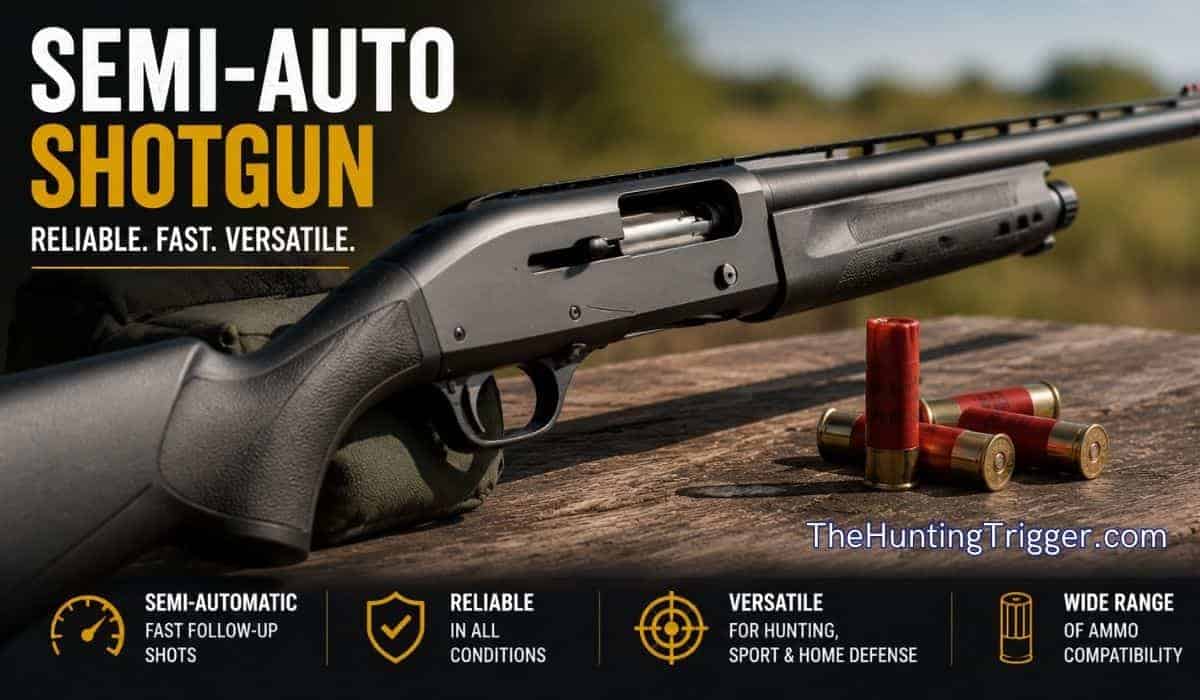
A semi auto shotgun is a popular firearm among hunters, sport shooters, and home defense enthusiasts. Its design offers speed, reliability, and ease of use compared to manual shotguns. But how does a semi auto shotgun actually operate? This article explains the mechanics, features, advantages, and practical details so you can confidently know how these guns function.
Table of Contents
The Basic Operation Of A Semi Auto Shotgun
A semi auto shotgun fires one shot with each pull of the trigger, then automatically loads the next shell. Unlike pump-action shotguns, which require manual cycling, semi auto models use energy from the fired cartridge to perform the cycling.
When you pull the trigger, the firing pin strikes the primer on the shotgun shell. The primer ignites the powder, creating pressure that propels the shot down the barrel. At the same time, this energy is harnessed to eject the spent shell and load a new one.
The gun is then ready for another shot without manual action.
Most semi auto shotguns hold between three and eight shells, depending on the magazine size and design. This allows for quick follow-up shots, useful in hunting, competition, or defensive scenarios.
Key Mechanisms: Gas Vs. Inertia
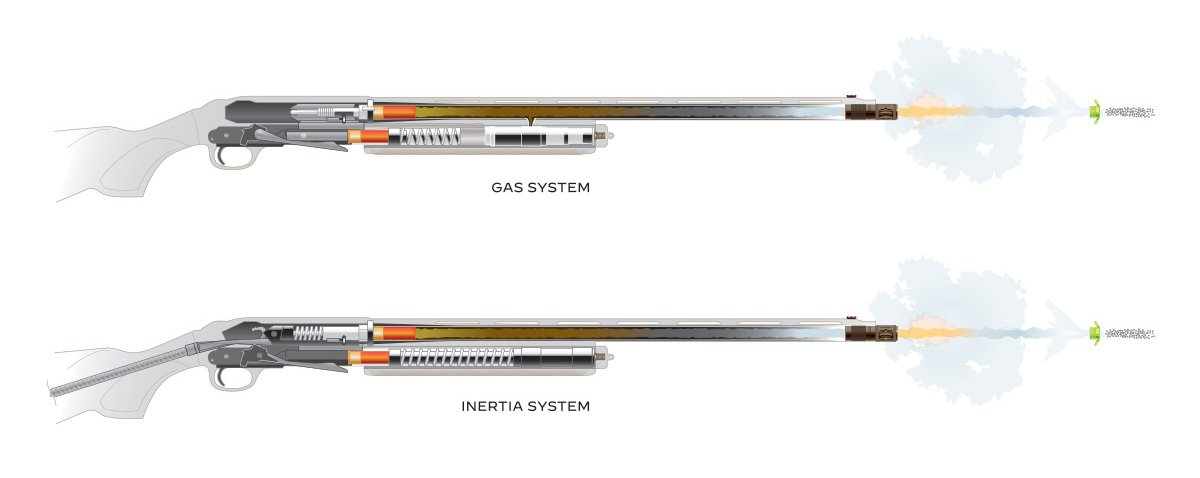
Semi auto shotguns use two main systems to cycle shells: gas-operated and inertia-driven. Each system has unique advantages, and the choice affects how the shotgun performs.
Gas-operated Shotguns
Gas-operated shotguns use hot gases from the fired shell to move the action. When the shell fires, some gas escapes through small holes in the barrel. This gas pushes a piston, which moves the bolt backward, ejecting the spent shell and loading the next one.
Gas systems are common in brands like Remington, Mossberg, and Beretta. They tend to handle recoil well, making shooting more comfortable.
Inertia-driven Shotguns
Inertia-driven shotguns rely on the force of recoil to cycle the action. When the shotgun fires, the entire gun moves backward slightly, compressing a spring inside. This stored energy then drives the bolt rearward, ejecting the shell and loading the next one.
Benelli is famous for inertia systems. These shotguns are often lighter and simpler, with fewer moving parts.
Here’s a quick comparison of the two systems:
| Feature | Gas-Operated | Inertia-Driven |
|---|---|---|
| Recoil | Lower | Higher |
| Maintenance | Needs cleaning often | Less cleaning |
| Weight | Heavier | Lighter |
| Shell Reliability | Handles light loads well | May struggle with lighter loads |
How The Cycling Process Works?
The cycling process is what makes semi auto shotguns unique. Once a shot is fired, the gun automatically completes several steps:
- Bolt unlocks: The bolt moves backward, unlocked by gas or inertia.
- Spent shell ejected: The empty shell is pushed out of the chamber.
- Next shell loaded: The bolt returns forward, pushing a new shell from the magazine into the chamber.
- Bolt locks: The bolt locks in place, ready for the next shot.
This sequence happens quickly, often in less than a second. It’s important to note that only one shell fires per trigger pull. Holding the trigger does not cause continuous firing.
Main Parts Of A Semi Auto Shotgun
To fully appreciate how these shotguns work, it helps to know the main parts involved in the process. Here are the most essential components:
- Barrel: Directs the shot toward the target.
- Chamber: Holds the shell ready to fire.
- Magazine: Stores extra shells (usually in a tube under the barrel).
- Bolt: Moves backward and forward to eject and load shells.
- Receiver: Houses the action and connects other parts.
- Trigger: Starts the firing cycle.
- Gas system or inertia spring: Powers the cycling process.
Each part must work together smoothly. If any component fails, the shotgun may jam or fail to cycle properly.
Advantages Of Semi Auto Shotguns
Semi auto shotguns are popular for several reasons. Here’s what makes them stand out:
- Fast firing: Quick follow-up shots without manual cycling.
- Reduced recoil: Gas systems help absorb recoil, improving comfort.
- Ease of use: No need to manually operate the action between shots.
- Versatility: Good for hunting, sport shooting, and home defense.
A semi auto shotgun can be especially helpful for beginners. The reduced recoil and simple operation allow new shooters to focus on aiming and technique.
Limitations And Common Challenges
No firearm is perfect. Semi auto shotguns have some drawbacks that users should know:
- Maintenance: Gas-operated models need regular cleaning. Carbon and residue can build up, causing jams.
- Shell selection: Inertia systems sometimes struggle with lighter loads. Using the right ammo is key.
- Weight: Gas shotguns are heavier because of their extra parts.
- Cost: Semi auto shotguns are usually more expensive than pumps.
Many beginners overlook the importance of cleaning. Failure to clean a gas shotgun can cause malfunctions. Also, not all shells are suitable for every shotgun; checking manufacturer guidelines helps avoid problems.
Choosing A Semi Auto Shotgun
When picking a semi auto shotgun, several factors matter. Here’s a comparison of key features to help you decide:
| Factor | Gas-Operated | Inertia-Driven |
|---|---|---|
| Recoil Management | Better for sensitive shooters | Acceptable for most users |
| Weight | Heavier | Lighter, easier to carry |
| Cleaning Needs | Frequent | Less frequent |
| Ammo Flexibility | Works with light and heavy loads | Prefers heavier loads |
| Price Range | $500–$2,000 | $800–$2,500 |
Some popular models include the Remington 1100, Mossberg 930, Beretta A400, and Benelli M2. Each offers different features. For hunting, a lighter inertia model may be better for long walks. For home defense, a gas-operated shotgun with reduced recoil can help with accuracy.
Real-world Use Cases
Semi auto shotguns are used in many situations:
- Hunting: Fast follow-up shots help with moving targets like ducks or pheasants.
- Sport shooting: In competitions, speed and accuracy are crucial.
- Home defense: Quick cycling and easy operation provide reliable protection.
Statistics show that semi auto shotguns make up about 40% of shotgun sales in the US, according to industry reports. Their popularity continues to grow as more shooters appreciate the advantages.

Safety And Maintenance Tips
Proper care is essential for safe and reliable use. Here are some practical pointers:
- Always check the chamber: Make sure the shotgun is unloaded before cleaning or handling.
- Regular cleaning: Gas-operated models need cleaning after every use. Inertia models require less frequent cleaning but still benefit from regular checks.
- Use recommended ammo: Check your manual to avoid jams or cycling issues.
- Inspect parts: Look for wear or damage on the bolt, magazine, and gas system.
- Store safely: Keep your shotgun in a secure place, out of reach of children.
A common mistake is skipping maintenance. Even the best shotgun can fail if neglected. Clean, inspect, and store properly to ensure years of reliable service.
Common Myths About Semi Auto Shotguns
Many beginners have misconceptions about these firearms. Here are a few:
- “Semi auto shotguns are unreliable.” Modern designs are highly dependable if maintained.
- “They can fire multiple shells with one trigger pull.” Only one shell fires per pull.
- “All semi auto shotguns are heavy.” Inertia models are often lighter than pumps.
- “They can use any ammunition.” Not all shells work; check compatibility.
Experienced shooters often mention that understanding the difference between gas and inertia systems helps avoid frustration. Another overlooked point: using the wrong oil or lubricant can cause cycling problems, especially in cold weather.
Maintenance Comparison: Gas Vs. Inertia
To clarify the differences in upkeep, here’s a maintenance comparison:
| Aspect | Gas-Operated | Inertia-Driven |
|---|---|---|
| Cleaning Frequency | After every use | After several uses |
| Parts to Clean | Gas ports, piston, bolt | Bolt, spring |
| Common Issues | Carbon build-up, jams | Spring wear |
| Ease of Cleaning | More complex | Simpler |
Frequently Asked Questions
How Many Shells Can A Semi Auto Shotgun Hold?
Most semi auto shotguns hold 3 to 8 shells in the magazine. Some models allow extensions for more capacity, but laws may limit magazine size depending on your location.
Is A Semi Auto Shotgun Good For Beginners?
Yes, many beginners find semi auto shotguns easier to use because of reduced recoil and automatic cycling. Choosing the right model and maintaining it properly makes the experience smoother.
What Is The Difference Between Semi Auto And Pump-action Shotguns?
A pump-action shotgun requires manual cycling between shots, while a semi auto shotgun uses gas or inertia to cycle automatically. Semi auto models are faster and often more comfortable to shoot.
Can I Use Any Type Of Shotgun Shells?
No, not every shotgun shell will work well in all semi auto shotguns. Always use manufacturer-recommended ammunition to avoid cycling issues or jams.
How Often Should I Clean My Semi Auto Shotgun?
Gas-operated shotguns should be cleaned after each use. Inertia-driven models can go longer, but regular cleaning keeps them reliable and safe.
Last Word
A semi auto shotgun offers speed, reliability, and ease for many shooters. By knowing how the gun cycles, the differences between gas and inertia systems, and the importance of maintenance, you can make informed decisions and enjoy shooting safely.

Leave a Reply