Many shooters face challenges when they first mount a scope or sight to their firearm. The bullets rarely hit the target’s center on the first try. This is where boresighting becomes important. It is a process that helps align the firearm’s barrel with the sight or optic before firing any shots. Boresighting saves time, reduces wasted ammunition, and improves accuracy from the start. Whether you use rifles, shotguns, or handguns, this technique can make a big difference.
Table of Contents
The Basics Of Boresighting
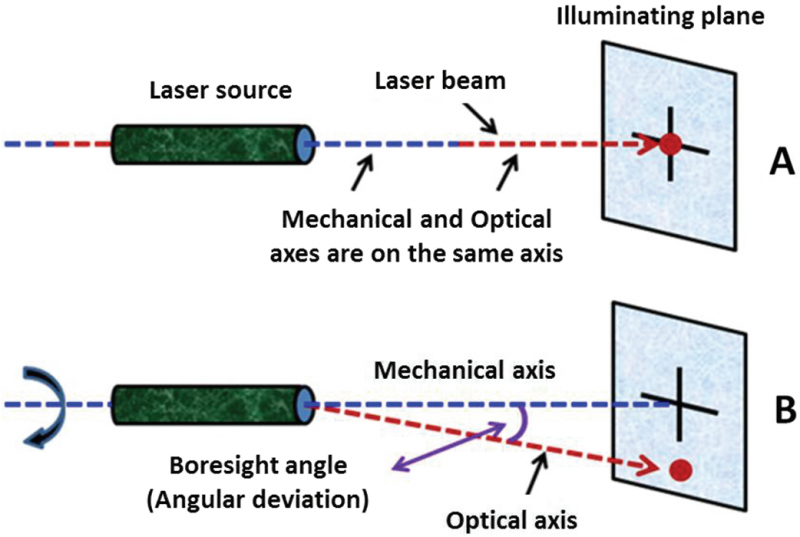
Boresighting is a method used to adjust a gun’s sight so it matches the axis of the barrel. The main goal is to make sure that the point of aim (where the sight is looking) is as close as possible to the point of impact (where the bullet will hit). There are two main approaches: manual and using tools.
Manual boresighting involves looking through the barrel and adjusting the sight until the target is centered in both the barrel and the scope. Tool-based boresighting uses devices like laser boresighters or optical boresighters. These tools make the process faster and more precise.
Why Boresighting Matters?
Without proper alignment, even the best scope will not help you hit your target. Boresighting helps in several ways:
- Saves ammunition by reducing the number of test shots needed.
- Cuts down time spent at the range adjusting your sights.
- Boosts confidence with early accuracy.
- Prevents frustration for new shooters.
For hunters, sports shooters, and anyone who uses firearms, boresighting is a smart first step. Skipping it often leads to wasted resources and poor results.
Methods Of Boresighting
There are several ways to boresight a firearm. Each has its own advantages and limitations.
1. Manual (traditional) Boresighting
This method requires no special tools. You simply remove the bolt (for bolt-action rifles) and visually align the barrel with the target.
Steps:
- Secure the firearm on a stable rest.
- Remove the bolt (or open the action) so you can look down the barrel.
- Center the barrel on the target.
- Without moving the gun, adjust the scope or sight so its crosshairs are also on the target.
This works best for bolt-action rifles and some single-shot guns. It is not possible with all types of firearms.
2. Optical Boresighting
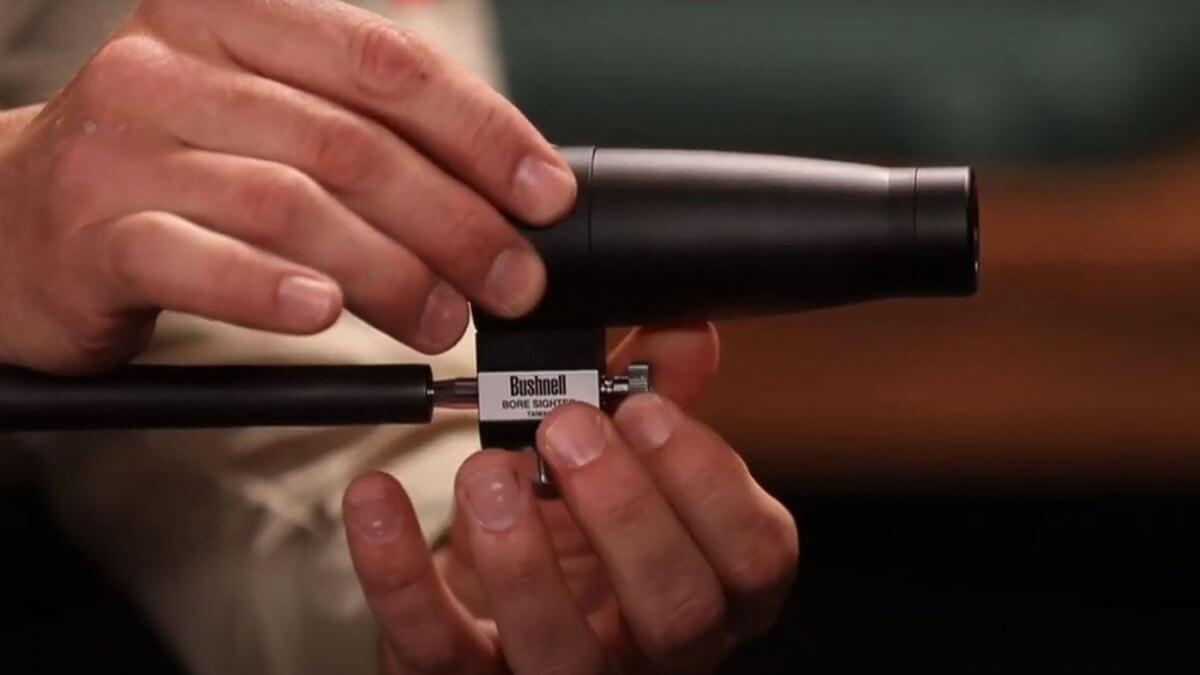
Optical boresighters use a collimator with a grid pattern. The collimator attaches to the muzzle and projects a pattern visible through the scope.
Steps:
- Attach the optical boresighter to the muzzle.
- Look through the scope and match the crosshairs to the grid pattern.
- Adjust the scope until both are aligned.
Optical boresighters are reliable but require the right adapter for each caliber.
3. Laser Boresighting
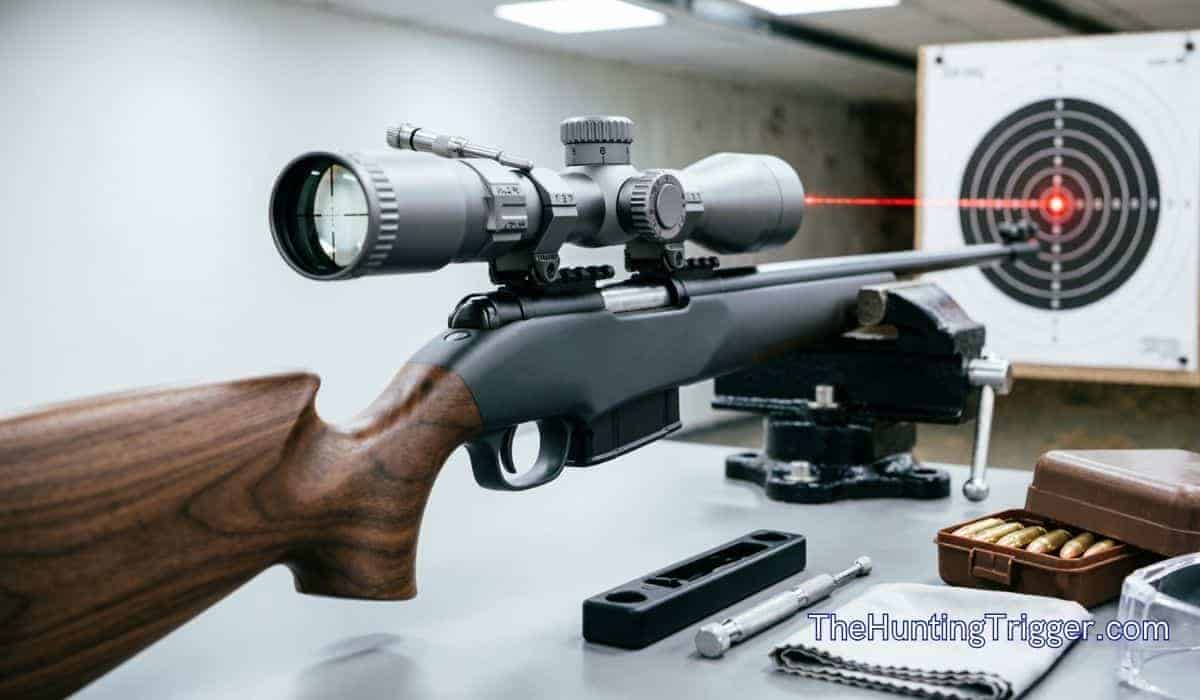
Laser boresighters are popular because they are quick and easy. A laser device is inserted into the chamber or attached to the muzzle. The laser projects a dot onto the target, showing where the barrel is pointing.
Steps:
- Insert or attach the laser boresighter.
- Aim the gun at a target (usually 25 yards away).
- Adjust the scope until the crosshairs match the laser dot.
Laser boresighters are available for many calibers and firearm types.
Comparing Boresighting Methods
Here’s a comparison of the three main methods:
| Method | Tools Needed | Speed | Accuracy | Best For |
|---|---|---|---|---|
| Manual | None | Medium | Good | Bolt-action rifles |
| Optical | Collimator | Medium | Very Good | Most rifles, shotguns |
| Laser | Laser device | Fast | Excellent | All firearm types |
Each method can help shooters get closer to the target center. Laser boresighters are the most versatile and precise, but manual boresighting is still useful for those without extra tools.
When To Boresight
There are certain times when boresighting is especially helpful:
- After mounting a new scope or optic
- When changing barrels or other gun parts
- Before hunting trips or shooting competitions
- After dropping or bumping the firearm
Regular boresighting ensures your sights stay accurate. Even small changes in setup can affect alignment.
Boresighting Vs. Zeroing
Boresighting and zeroing are not the same. Boresighting aligns the sight with the barrel to get close to the target center. Zeroing involves fine-tuning the sight by firing live ammunition and adjusting for precise impact at a specific distance.
A typical process:
- Boresight the firearm.
- Fire a group of shots at the target.
- Adjust the scope or sight for exact point of impact.
- Repeat until satisfied.
Boresighting is only the first step. Zeroing is necessary for full accuracy.
Common Boresighting Tools
Many products are available to help with boresighting. Here is a table comparing popular tool types:
| Tool Type | Price Range | Ease of Use | Suitable for |
|---|---|---|---|
| Laser Boresighter | $25–$100 | Very Easy | Rifles, shotguns, handguns |
| Optical Collimator | $40–$120 | Easy | Rifles, shotguns |
| Bore Guide | $10–$30 | Easy | Bolt-action rifles |
Laser boresighters are the most popular because they work with many calibers and are quick to use. Optical collimators are valued for their precision.
Practical Tips For Better Boresighting
If you want the best results, keep these tips in mind:
- Stabilize the firearm. Use a solid rest or sandbags to keep the gun steady.
- Choose the right distance. Most shooters boresight at 25 yards.
- Check the tools. Clean the barrel and make sure the boresighter is secure.
- Use good lighting. It’s easier to see the laser dot or grid in bright conditions.
- Don’t rush zeroing. Boresighting only gets you close; take your time when fine-tuning with live fire.
- Be aware of parallax. Cheaper scopes may have parallax error, so double-check alignment.
- Record your settings. Write down scope adjustments for future reference.
Many beginners overlook the importance of stabilizing the firearm. Even small movements can cause errors. Another missed point is choosing the proper distance for boresighting. If you boresight too close or too far, the adjustments may not match your shooting range.
Mistakes To Avoid
Some common mistakes can ruin the boresighting process:
- Skipping stabilization: Wobbly guns give wrong results.
- Using wrong adapters: Optical boresighters need the right caliber adapter.
- Ignoring barrel cleanliness: Dirt can block the laser or optical pattern.
- Not checking for obstructions: Always make sure the bore is clear.
- Failing to zero after boresighting: You must fire live rounds to finish sight-in.
Careful attention prevents these problems. One overlooked issue is using the wrong laser boresighter. There are chamber-type and muzzle-type devices. Always use the correct one for your firearm.
Examples: Boresighting In Different Scenarios
Boresighting is useful for many situations. For example, hunters often boresight before deer season. This helps them get on target quickly and avoid missing a shot. Competitive shooters boresight before matches for early accuracy.
In law enforcement, officers boresight their patrol rifles after maintenance. This ensures the weapon is ready for duty. Even hobby shooters benefit from boresighting when testing new optics or barrels.
Boresighting For Different Firearm Types
The process varies by firearm type. Here’s a quick overview:
| Firearm | Best Method | Special Notes |
|---|---|---|
| Bolt-action Rifle | Manual or Laser | Easy to remove bolt for manual method |
| AR-15/Modern Sporting Rifle | Laser | Chamber-type laser boresighter works well |
| Shotgun | Optical or Laser | Optical collimator needs correct adapter |
| Handgun | Laser | Use caliber-specific laser boresighter |
Some handguns are harder to boresight manually due to their design. Laser boresighters are usually the best option.

How Boresighting Helps Accuracy And Safety?
Proper boresighting improves accuracy from the start. This means fewer missed shots and more hits on target. It also helps with safety. Fewer rounds are fired during adjustment, reducing risk at the range.
For new shooters, boresighting builds confidence. They see results quickly and learn the basics of sight alignment. For experienced shooters, it saves time and keeps their gear ready.
Frequently Asked Questions
What Is The Main Purpose Of Boresighting?
The main purpose is to align the sight with the barrel before firing live ammunition. This helps shooters get closer to the target center, reducing wasted shots and improving early accuracy.
How Accurate Is Boresighting?
Boresighting gets you close to the target center, but it is not perfect. You still need to fire live rounds and zero your sight for exact accuracy.
Can I Boresight Any Firearm?
Most firearms can be boresighted, but the method may change. Bolt-action rifles are easy to boresight manually. For semi-automatic guns and handguns, laser boresighters are usually best.
Do I Need Special Tools For Boresighting?
Special tools like laser boresighters or optical collimators make the process easier and more precise. Manual boresighting can be done without tools, but it is less accurate.
Last Word
Boresighting is a practical skill for shooters of all levels. With the right tools and careful steps, you can save time, reduce ammunition costs, and boost accuracy. Whether you are preparing for a hunt, a competition, or just improving your skills, boresighting sets you up for success.

Leave a Reply