
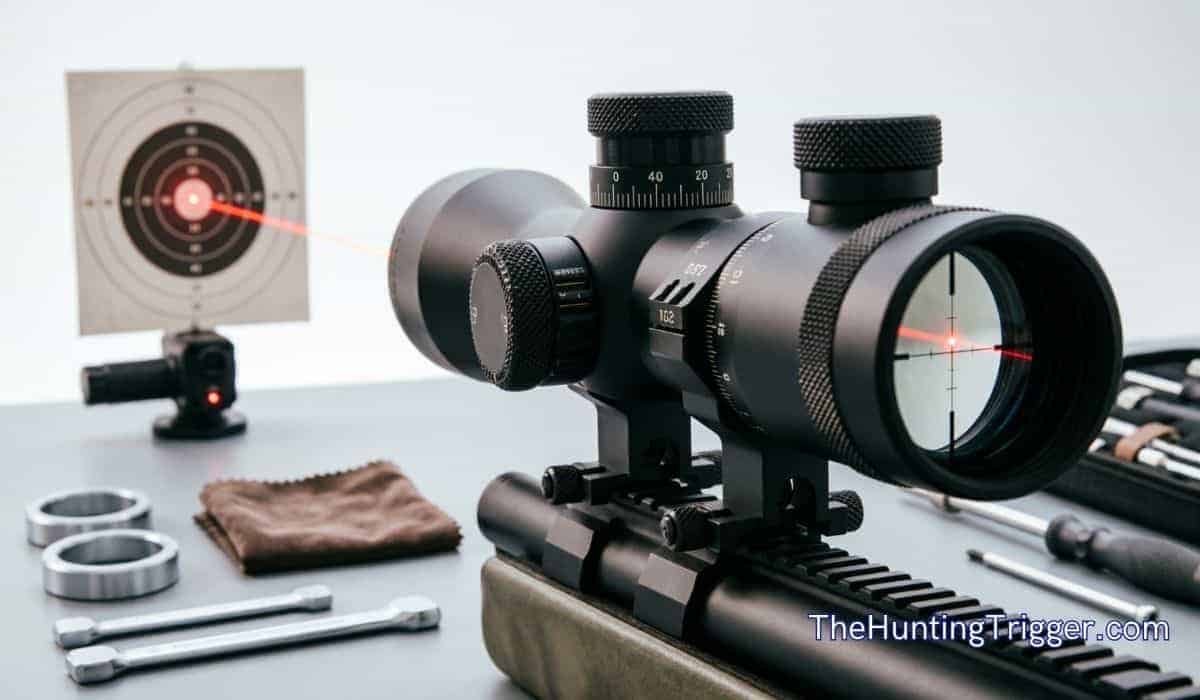
Boresighting a scope is a crucial process for anyone using a rifle, whether you are a hunter, target shooter, or simply want to improve your accuracy. This method helps align the scope with the barrel of the firearm before you fire live ammunition.
Boresighting saves time, reduces wasted ammo, and helps you shoot more accurately from the start. Many beginners skip boresighting, thinking it’s unnecessary, but this step can make a big difference in performance and confidence. In this article, you’ll find clear instructions, practical examples, and helpful tips to boresight a scope efficiently and safely.
Table of Contents
What Is Boresighting?
Boresighting is the process of aligning the scope’s reticle with the bore (barrel) of the firearm. The main goal is to make sure the rifle’s scope points in the same direction as the barrel. This alignment doesn’t replace final sighting-in with live rounds but gets you very close to the target. You can boresight using two main methods: manual (visual) boresighting and using a boresighter device.
Why Boresighting Matters
- Saves Ammunition: You won’t waste rounds trying to hit the target.
- Faster Zeroing: You spend less time adjusting your scope on the range.
- Safety: Prevents wild shots and potential accidents from misaligned optics.
- Accuracy: Starts you closer to the actual zero, making fine-tuning easier.
Many shooters miss that boresighting also reduces stress on the scope’s adjustment turrets. Large, unnecessary adjustments can wear out the mechanisms over time.
Types Of Boresighting Methods
There are several ways to boresight a scope. Each method has its own advantages and limitations. Below are the most common methods.
| Method | Tools Needed | Accuracy | Cost |
|---|---|---|---|
| Manual (Visual) | None | Moderate | Free |
| Laser Boresighter | Laser device | High | Medium to High |
| Optical Boresighter | Optical device | High | Medium |
Manual (visual) Boresighting
This method uses your eye to align the scope with the barrel. It’s simple and doesn’t require extra tools.
Laser Boresighter
A laser boresighter is a small device that projects a laser down the barrel. You adjust the scope so the reticle matches the laser dot on the target.
Optical Boresighter
An optical boresighter attaches to the muzzle and uses a grid or crosshair to help align the scope. It’s more accurate than manual methods but less common than laser devices.
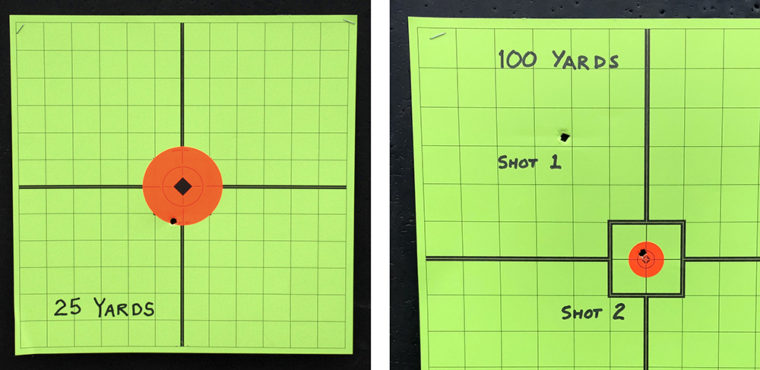
How To Boresight A Scope: Detailed Instructions
This section covers the process for both manual and laser methods. You’ll also find tips for bolt-action and semi-auto rifles.
Manual Boresighting (visual Method)
- Unload and Secure the Rifle
- Always make sure the rifle is unloaded.
- Place it on a stable surface, like a bench rest.
- Remove the Bolt
- For bolt-action rifles, remove the bolt so you can look directly down the barrel.
- Position the Rifle
- Point the rifle at a target about 25 yards away.
- Center the target in the barrel by looking through the bore.
- Adjust the Scope
- Look through the scope and adjust windage (left/right) and elevation (up/down) so the reticle matches the target seen through the barrel.
- Check Alignment
- Switch between looking through the barrel and the scope to make sure both are pointing at the same spot.
- Reinstall the Bolt
- Once aligned, put the bolt back in.
Common Mistakes:
- Not checking if the rifle is truly unloaded.
- Rushing the alignment and not double-checking both barrel and scope.
Using A Laser Boresighter
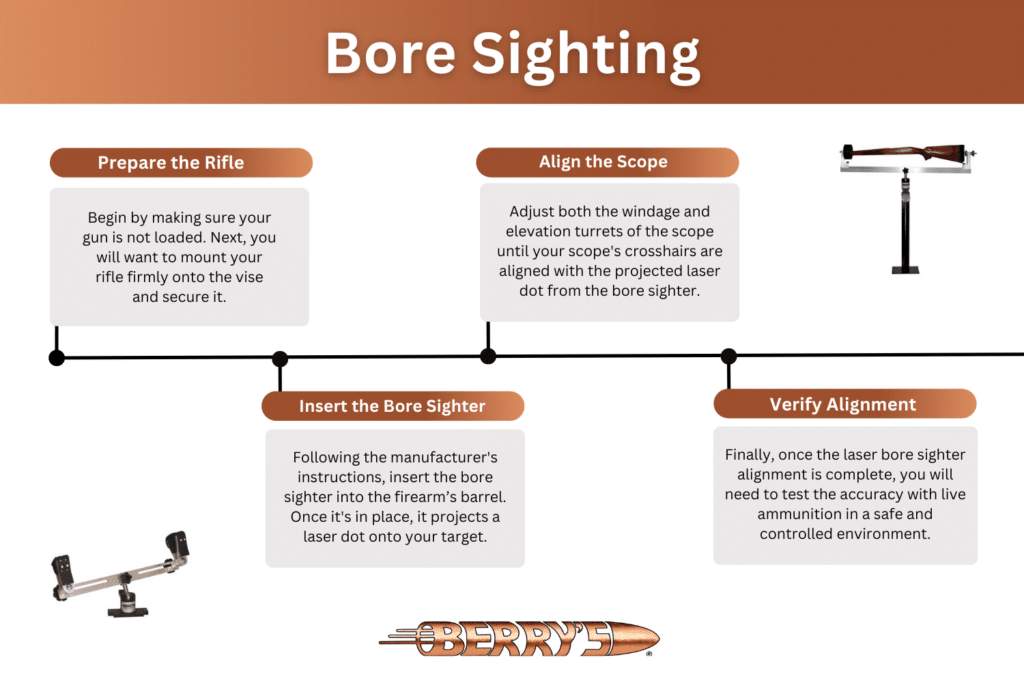
- Insert the Laser Boresighter
- Place the device in the chamber or muzzle, depending on the model.
- Set Up the Rifle
- Secure the rifle on a bench or shooting rest.
- Turn On the Laser
- Aim the rifle at a target about 25 yards away.
- Adjust the Scope
- Move the reticle until it matches the laser dot on the target.
- Check and Fine-Tune
- Repeat adjustments until the scope reticle and laser dot are aligned.
Practical Example:
If you are using a. 223 caliber rifle, a chamber laser boresighter will fit directly into the chamber. You’ll see a red dot on your paper target, making scope adjustments easy and precise.
Using An Optical Boresighter
- Attach the Device
- Fit the optical boresighter onto the muzzle.
- View the Grid
- Look through the scope and see the boresighter’s grid pattern.
- Adjust the Scope
- Move the reticle to the center of the grid.
- Remove the Boresighter
- Detach the device and check if the scope stays centered.
Non-Obvious Insight:
Laser boresighters can also help diagnose mechanical issues, like a crooked scope mount or damaged barrel, if the laser dot cannot be aligned with the scope reticle.
Fine-tuning After Boresighting
Boresighting gets you close, but you still need to zero the rifle by shooting live rounds. Fine-tuning ensures your rifle is accurate at your chosen distance.
Shooting For Final Zero
- Set up a target at your preferred zero range (usually 100 yards for rifles).
- Fire three shots, then check the grouping.
- Adjust the scope in small increments until your shots hit the bullseye.
Recommended Ammo And Distance
| Caliber | Recommended Zero Distance | Common Use |
|---|---|---|
| .22 LR | 50 yards | Plinking, small game |
| .223 Rem | 100 yards | Varmint, target shooting |
| .308 Win | 100 yards | Big game, long-range |
| 12 Gauge | 50 yards | Shotgun slug, deer hunting |
Pro Tips For Accuracy
- Use the same ammunition type for boresighting and zeroing.
- Make sure the scope is tightly mounted—loose screws can shift your zero.
- Clean the barrel before boresighting and after zeroing for consistent results.
Non-Obvious Insight:
Temperature changes can affect zero. If you zero your rifle in summer, check your zero again in winter, as cold air can shift bullet impact.
Comparing Boresighters: Which Should You Choose?
Choosing the right boresighter depends on your budget, frequency of use, and firearm type.
| Boresighter Type | Best For | Durability | Ease of Use |
|---|---|---|---|
| Manual (Visual) | Occasional shooters | High | Basic |
| Laser | Frequent shooters | Medium | Easy |
| Optical | Precision shooters | High | Moderate |
Buyer Mistake:
Many people buy expensive boresighters but rarely use them. It’s better to invest in a quality scope mount and basic boresighter if you don’t shoot often.
Safety Precautions
Always follow these rules when boresighting a scope:
- Check the Chamber: Make sure the rifle is unloaded before starting.
- Point in Safe Direction: Even when not using live ammo, keep the barrel pointed away from people or valuable items.
- Use Protective Gear: Eye protection is a must, especially when handling lasers.
- Secure the Rifle: Use a stable rest to prevent movement during adjustments.

Common Problems And Solutions
- Scope Won’t Adjust Enough:
- Check if the scope is mounted correctly. Loose rings or base can limit adjustment range.
- Laser Dot Too High/Low:
- Make sure you’re using the correct caliber insert. A mismatch can cause off-center readings.
- Reticle Moves After Shooting:
- Tighten all mounting screws. Consider using a torque wrench for consistent pressure.
- Difficulty Seeing the Target:
- Use a brightly colored target or place a white sheet behind it for better visibility.
Frequently Asked Questions
How Far Should I Set My Target When Boresighting?
Most shooters use 25 yards for initial boresighting. This distance is close enough for clear alignment and easy adjustments. After boresighting, move the target to your preferred zero range for live-fire tuning.
Is Boresighting Necessary If My Scope Is Factory-installed?
Even factory-installed scopes may not be perfectly aligned. Boresighting checks and corrects any misalignment, saving you time and ammo on the range.
Can I Boresight A Scope Without Removing The Bolt?
For semi-auto rifles or models where the bolt can’t be removed, a laser boresighter is the best option. It allows you to align the scope without direct access to the barrel.
Do I Need To Boresight Every Time I Change Scopes?
Yes. Whenever you install a new scope or move your scope to a different rifle, boresighting ensures you start with proper alignment.
Last Word
Aligning your scope with your rifle’s barrel is a smart first step for any shooter. Boresighting makes the zeroing process quicker and more efficient, helping you hit your target with fewer shots. By following the methods outlined here and paying attention to the details, you’ll improve your accuracy and save money on ammunition.
Remember, safety and patience are key—take time to double-check your setup, and you’ll be rewarded with better results at the range or in the field.

Leave a Reply