Boresighting a gun is an essential skill for anyone who wants better accuracy and safer shooting. Whether you’re a hunter, target shooter, or new to firearms, aligning your gun’s sights or scope with the barrel before using live ammo saves time, money, and reduces frustration.
This process helps ensure the first shots land close to your target, making fine adjustments easier. Many beginners rush straight to the range, but boresighting first helps avoid wasted bullets and missed shots. In this guide, you’ll find clear advice on boresighting, practical tips, and common mistakes to avoid.
Table of Contents
What Is Boresighting?
Boresighting is the process of aligning the sights or optics of a firearm with the barrel, so the point of aim matches the point of impact. This is usually done before shooting live ammunition. The main goal is to make sure your gun is “on paper” when you fire your first shot, meaning the bullet hits somewhere on the target, not off in the dirt or missing completely.
There are two main methods:
- Manual boresighting (visual alignment)
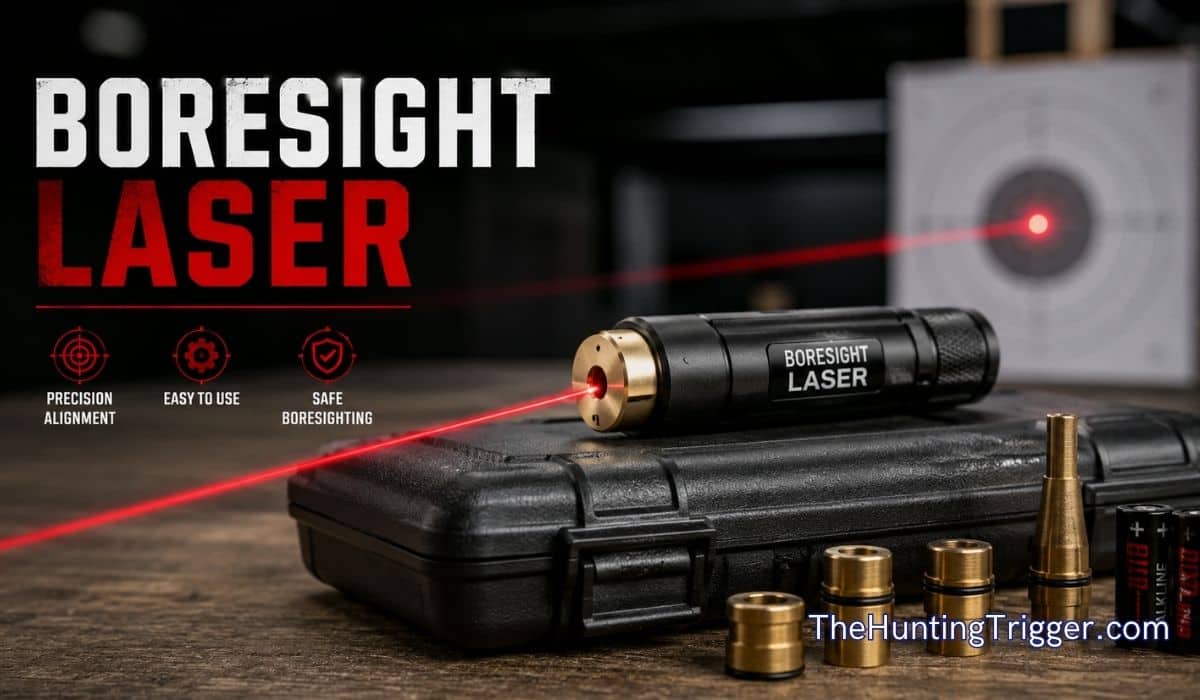
- Laser boresighting (using a device to project a laser through the barrel)
Each method has its advantages. Manual is simple and does not require extra tools, while laser boresighters are quick and work well for beginners.
Why Boresighting Matters?
Many shooters skip boresighting, thinking it’s unnecessary. This can lead to wasted ammo, missed targets, and frustration. Boresighting helps:
- Save ammunition
- Reduce time spent adjusting sights
- Improve safety by avoiding stray shots
- Make sighting-in easier, especially with new scopes or optics
It’s especially useful for rifles, but also helps with shotguns and handguns with optics.
Manual Boresighting Method
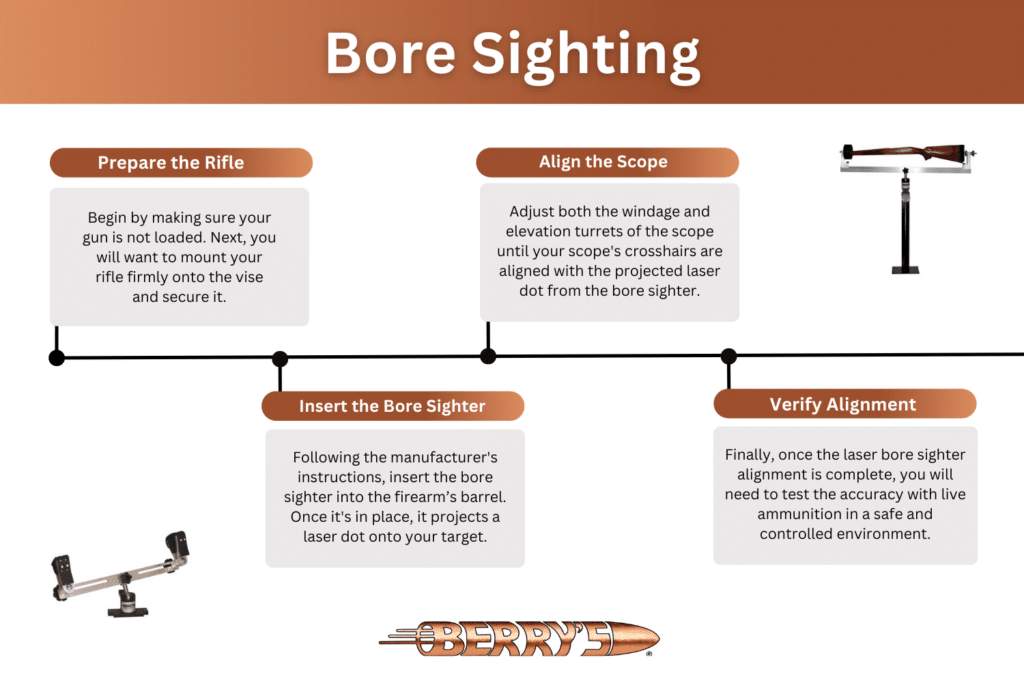
Manual boresighting is simple and does not require special equipment. Here’s how you can do it:
Prepare Your Workspace
- Make sure the gun is unloaded and pointed in a safe direction.
- Remove the bolt or open the action so you can see through the barrel.
- Place the gun on a stable surface like a bench or use a gun vise.
Align The Barrel
- Look through the barrel from the breech (where the bolt sits). You should see the target downrange.
- Adjust the gun until the center of the barrel lines up with the target’s bullseye.
Adjust Sights Or Scope
- Without moving the gun, look through your scope or iron sights.
- Adjust the scope’s windage (left/right) and elevation (up/down) so the crosshairs or sights also point at the bullseye.
- Repeat checking through the barrel and scope until both are aligned.
Tip: Small movements matter. Make tiny adjustments and check often.
Example
Let’s say you’re sighting a. 308 rifle with a new scope. After aligning the barrel visually, you notice the scope’s crosshairs are off to the right. You adjust the windage dial until the crosshairs match the bullseye seen through the barrel.
This puts your first shot close to center.
Laser Boresighting Method
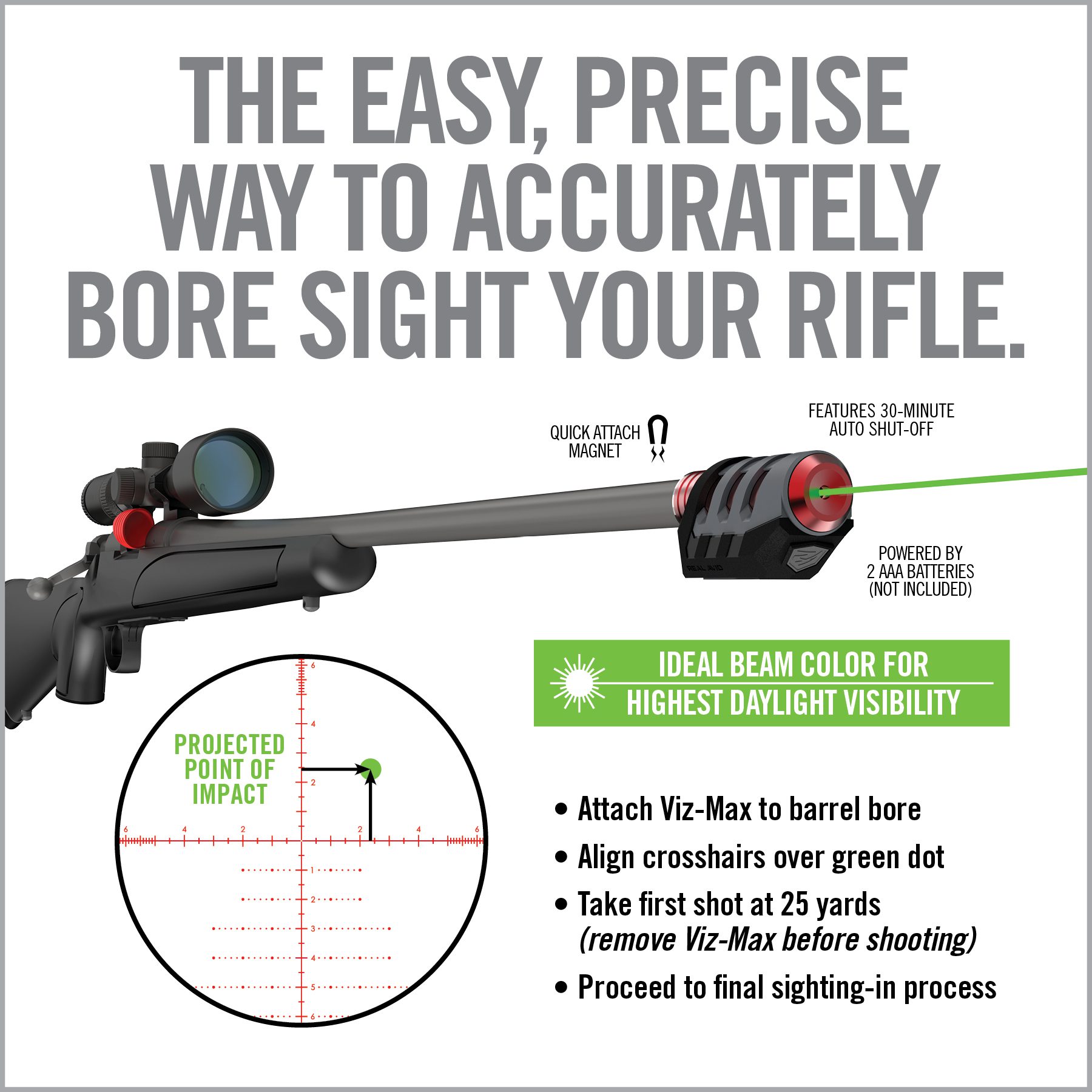
Laser boresighters are popular because they are fast and easy. They come in two main types:
- Cartridge-type: Fits in the chamber like a real bullet
- End-of-barrel type: Fits inside the muzzle
Using A Laser Boresighter
- Insert the laser boresighter into the chamber or muzzle.
- Turn it on so the laser beam projects onto your target.
- Secure the gun on a stable surface.
- Adjust your scope or sights until the crosshairs or aiming point match the laser dot on the target.
Practical Example
Suppose you use a cartridge-type laser in a 6. 5 Creedmoor rifle. The laser shows a dot high and left of the bullseye. You adjust your scope’s elevation and windage until the crosshairs are centered on the laser dot. Now, your rifle is ready for final zeroing at the range.
Comparing Manual Vs. Laser Boresighting
Here’s a comparison of the two methods:
| Method | Tools Needed | Speed | Accuracy | Cost |
|---|---|---|---|---|
| Manual | None | Medium | Good | Free |
| Laser | Laser device | Fast | Very Good | $$ |
Laser boresighters work especially well in low-light conditions, but manual boresighting is still trusted by experienced shooters.
Setting Up Your Gun For Boresighting
Before boresighting, proper setup is crucial. Here’s what you need to do:
- Unload the firearm: Always double-check.
- Mount the scope securely: Loose mounts cause inaccurate alignment.
- Use a stable platform: A gun rest or vise keeps the firearm steady.
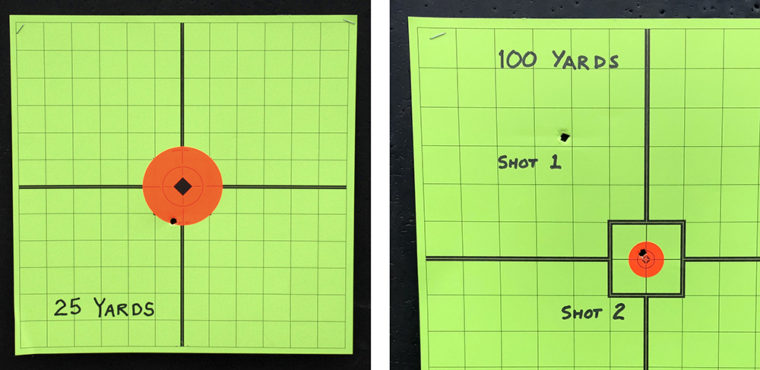
- Select the right distance: 25 yards is common for initial boresighting.
- Choose a clear target: A bold bullseye helps with alignment.
Insight: Many beginners forget to check scope mounts. Even a slightly loose mount can ruin accuracy. Tighten all screws before boresighting.
Fine-tuning After Boresighting
Boresighting gets you close, but live firing is needed for final adjustments. Once your gun is boresighted, follow these steps:
- Fire one shot at the target from a stable rest.
- Check where the bullet hits compared to the aiming point.
- Adjust scope or sights as needed (windage and elevation).
- Repeat until your shots hit the center.
Data: On average, boresighting reduces sight-in shots by 50%. Shooters often need only 3–5 rounds to finish zeroing after proper boresighting.
Common Mistakes To Avoid
Even experienced shooters make errors during boresighting. Here are some mistakes and how to prevent them:
- Skipping stability: Not using a rest leads to poor alignment.
- Rushing adjustments: Quick, large changes often miss the mark.
- Ignoring scope parallax: If your scope has parallax adjustment, set it for the target distance.
- Forgetting to check mounting screws: Loose screws shift the scope’s position.
- Not verifying after transport: Carrying the gun to the range can move the scope; check alignment again.
Non-obvious insight: Parallax error is often ignored by beginners. It means the crosshairs shift when you move your eye, making alignment less accurate. Always adjust parallax if your scope allows.
Choosing The Right Laser Boresighter
Laser boresighters vary in price and features. Picking the right one saves time and helps accuracy. Here’s what matters:
Key Factors
- Caliber compatibility: Some lasers fit only certain calibers. Make sure it matches your gun.
- Battery life: Longer battery life means more uses before replacing.
- Visibility: Red lasers are cheaper but harder to see in bright light; green lasers are more visible.
- Durability: Metal construction lasts longer than plastic.
Comparison Of Popular Laser Boresighters
| Model | Type | Caliber Range | Battery Life | Price |
|---|---|---|---|---|
| SiteLite SL-100 | End-of-barrel | .22 – .50 | ~10 hours | $80 |
| LaserLyte Universal | Cartridge | .22 – .50 | ~6 hours | $60 |
| Wheeler Professional | End-of-barrel | .17 – .50 | ~8 hours | $90 |
Tip: If you own multiple guns, a universal model covers more calibers.
Best Practices For Boresighting Success
Following some best practices can make boresighting easier and more reliable:
- Use consistent lighting: Good lighting helps see both barrel and scope clearly.
- Check alignment twice: After adjusting sights, double-check through the barrel.
- Mark your adjustments: Write down scope settings before and after boresighting.
- Clean the barrel: Dirt or residue can affect the laser or visual alignment.
- Don’t skip final zeroing: Boresighting is not a substitute for live fire adjustment.
Practical insight: Many shooters forget to clean the barrel before using a laser boresighter. Residue can scatter the laser beam, making the dot unclear.
How Boresighting Saves Ammo And Money?
Using boresighting can cut costs and wasted ammo. Here’s a quick look:
| Process | Average Ammo Used | Estimated Cost |
|---|---|---|
| No boresighting | 15-25 rounds | $30-$50 |
| With boresighting | 5-10 rounds | $10-$20 |
If you shoot expensive calibers, boresighting can save even more. It also makes shooting more enjoyable, as you spend less time adjusting and more time hitting targets.
Safety Considerations
Safety should always come first. Boresighting involves handling firearms, so follow these rules:
- Always check that the gun is unloaded before starting.
- Never point the gun at anything you don’t want to shoot.
- Keep your finger off the trigger.
- Use a stable surface to prevent accidental drops.
- Store boresighters and tools safely after use.
Frequently Asked Questions
How Accurate Is Boresighting?
Boresighting gets your shots close to the target, but it’s not perfect. You’ll still need live fire to finish zeroing. Most shooters find their first shot lands within a few inches of the center after boresighting.
Can I Boresight A Handgun?
Yes, you can boresight a handgun, especially if it has a mounted optic. Laser boresighters work well for handguns, but manual methods are more difficult due to the shorter barrel.
Is Boresighting Needed For Iron Sights?
Boresighting helps with iron sights, but it’s more useful for scopes and optics. With iron sights, alignment is mostly set at the factory, but checking can still improve accuracy.
What Distance Should I Use For Boresighting?
25 yards is standard for initial boresighting, but you can use longer distances for rifles meant for long-range shooting. The goal is to get “on paper” before final adjustments at your preferred range.
Are Laser Boresighters Safe To Use?
Laser boresighters are safe if used correctly. Never look directly into the laser, and always keep the gun pointed in a safe direction. Read the manufacturer’s instructions for best results.
Final Word
Boresighting is a simple but powerful way to improve your shooting experience. It saves ammo, increases accuracy, and makes sighting-in faster and safer. Whether you use manual or laser methods, the right approach gets your gun ready for the range. Remember to follow safety rules, check your equipment, and finish adjustments with live fire. With careful boresighting, you’ll spend less time adjusting and more time hitting your target.

Leave a Reply