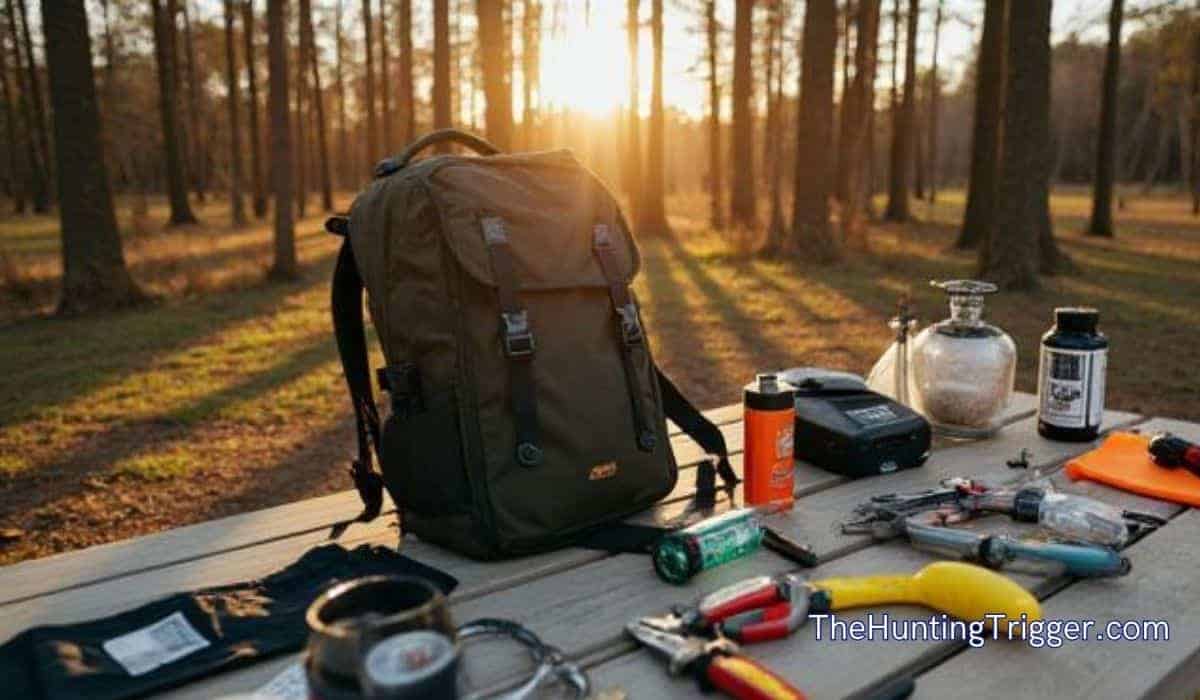
Packing a hunting backpack is more than just filling it with gear. It’s about making sure you have everything for safety, comfort, and success, while keeping your load manageable. Many hunters carry too much or forget critical items, leading to long hikes, wasted energy, or even risky situations.
If you prepare well, your trip becomes smoother and your chances of a good hunt improve.
Table of Contents
Choosing The Right Backpack
The first step is picking the right backpack. The best hunting backpacks are designed for rugged conditions, with enough space and smart compartments. For most hunting trips, a pack with 2,000–4,000 cubic inches is suitable. For multi-day hunts, larger packs up to 6,000 cubic inches are common.
Backpack Types
| Type | Capacity Range | Best For | Features |
|---|---|---|---|
| Day Pack | 1,500–2,500 cu in | Short hunts | Lightweight, compact |
| Multi-Day Pack | 3,000–6,000 cu in | Overnight trips | Large storage, frame support |
| Meat Hauler Pack | 4,000–8,000 cu in | Big game hunts | Heavy-duty, extra straps |
A good backpack should have adjustable straps, waist support, and be made from water-resistant material. Some packs come with built-in hydration systems or meat hauling frames. Try the pack with weight inside before your hunt to check comfort.
Essential Gear For Your Hunting Backpack
Packing starts with listing what you need. The essentials depend on your hunt, but certain items are always important.
Core Items
- Hunting license and tags: These are mandatory.
- Knife: For field dressing and utility tasks.
- First aid kit: Include bandages, antiseptic, pain relief, and any personal medication.
- Water and hydration system: Carry at least 2 liters of water. Hydration bladders are convenient.
- Food and snacks: High-energy foods like trail mix, jerky, protein bars.
- Map and compass/GPS: Do not rely only on electronics; batteries can fail.
- Fire-starting kit: Waterproof matches, lighter, firestarter.
- Headlamp and spare batteries: Essential for early morning or evening.
- Extra clothing: Layers, socks, gloves, hat.
- Rain gear: Lightweight poncho or rain jacket.
- Emergency shelter: Compact tarp or bivy sack.
- Game bags: For carrying meat.
- Binoculars: For spotting game.
- Sunscreen and insect repellent: Protection from sun and bugs.
Optional Items
- Rangefinder: For accurate distance measurement.
- Camera: For documenting your hunt.
- Paracord: Useful for many tasks.
- Multi-tool: Includes pliers, screwdriver, etc.
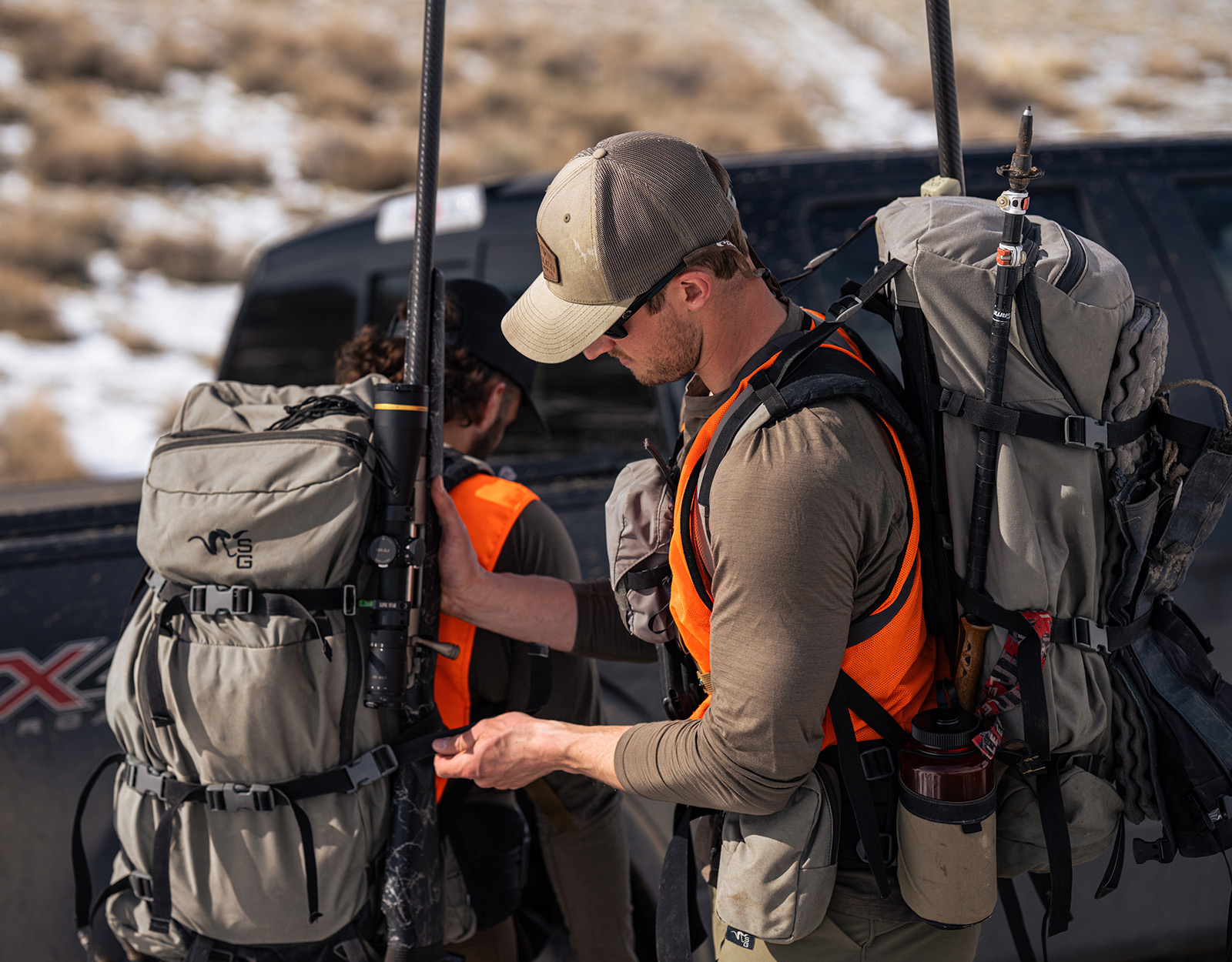
Most hunters carry a firearm or bow, but these are not packed inside the backpack. Instead, use rifle/bow holders on the pack.
Organizing Your Backpack
Organization matters for quick access and weight balance. Place heavy items close to your back and low in the pack. Light items go higher or farther from your back. Emergency gear should be easy to reach.
Packing Strategy
- Place water and food near the center.
- Store first aid kit and fire-starting kit on top or in side pockets.
- Keep maps, license, and binoculars in easy-access pockets.
- Pack extra clothing at the bottom.
- Attach rain gear and shelter outside if needed.
- Use game bags in a clean section, away from food.
| Item | Best Location | Reason |
|---|---|---|
| Knife | Hip belt pouch | Quick access |
| First aid kit | Top pocket | Emergency use |
| Food | Main compartment | Balanced weight |
| Rain gear | Outer pocket | Easy to grab |
Many beginners forget to secure items well. Loose gear can shift, causing discomfort or even injury. Use internal compartments and compression straps.
Managing Weight And Comfort
A common mistake is overpacking. Every extra pound makes hiking harder. The average loaded hunting pack should weigh 20–35 pounds for day hunts and 40–60 pounds for multi-day trips, including water and food. Weigh your pack before leaving home.
Tips For Reducing Weight
- Remove non-essential items. If you don’t use it every hunt, leave it.
- Choose lightweight gear. Modern materials are lighter and just as durable.
- Share items with hunting partners. One stove, one emergency shelter.
- Pack small amounts of food; bring calorie-dense snacks.
Comfort Considerations
Adjust the pack’s hip belt and shoulder straps so the weight sits on your hips. The sternum strap stabilizes the load. Test the fit with your hunting clothes on. Avoid packing items in a way that creates uneven pressure.
Weather And Terrain Preparation
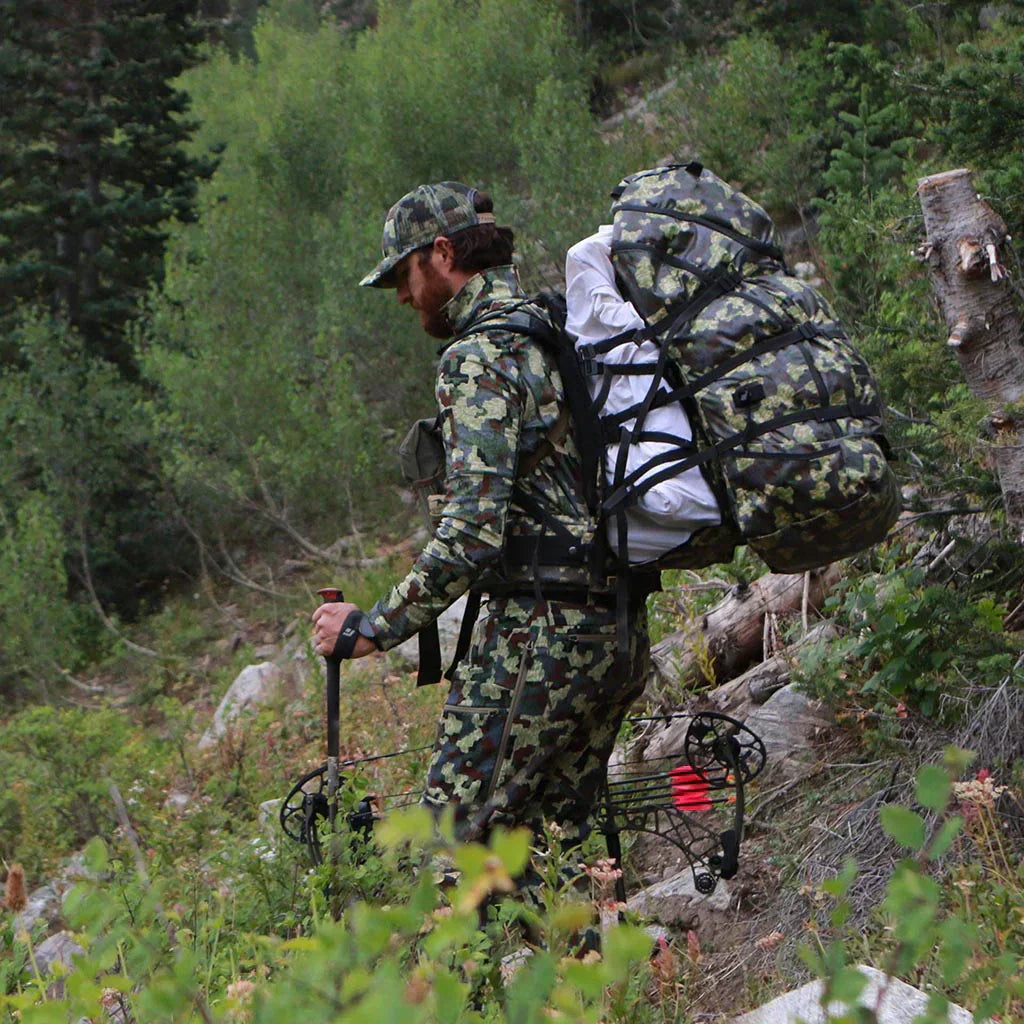
Weather and terrain change what you need. For cold conditions, add extra insulation layers, hand warmers, and thicker socks. In hot weather, pack more water and lightweight clothing. Mountain terrain requires sturdy boots and trekking poles.
Example: Packing For Mountain Elk Hunt
- Large backpack (4,500 cu in)
- Water bladder (3 liters)
- Insulated jacket
- Trekking poles
- Game bags
- Extra socks
- Emergency shelter
Example: Packing For Wetland Duck Hunt
- Smaller backpack (2,000 cu in)
- Rubber boots
- Rain gear
- Bug spray
- Waterproof map case
These examples show why planning for your specific location and season is crucial.
Safety And Emergency Gear
Your pack should always include safety equipment. Accidents can happen quickly in remote areas.
Must-have Safety Items
- Whistle: For signaling.
- Emergency blanket: Lightweight and warm.
- Personal locator beacon (PLB): Sends distress signals.
- Small mirror: For signaling.
- Duct tape: Repairs and first aid.
Many hunters skip safety gear, thinking “it won’t happen to me.” But statistics from the National Safety Council show that over 7,000 hunting accidents occur each year in the US. Proper safety gear can save lives.
Packing Food And Water
Food and water planning is often overlooked. You need about 2,000–3,000 calories per day during a hunt, depending on activity level. Water needs rise with heat and altitude.
Smart Food Choices
- Jerky: High protein, lightweight.
- Nuts and trail mix: Good fats and calories.
- Energy bars: Easy to pack.
- Instant oatmeal: Quick breakfast.
- Dehydrated meals: For longer hunts.
Avoid packing foods that spoil quickly. Use resealable bags to keep items fresh and reduce bulk.
Water Solutions
If you hunt in areas with streams, carry a water filter or purification tablets. This lets you refill safely, saving weight. Hydration bladders are easier to drink from than bottles, but always carry at least one backup bottle.
Clothing And Layering
Good clothing is the foundation of comfort and safety. The layering system is best:
- Base layer: Moisture-wicking material like polyester or merino wool.
- Insulation layer: Fleece or down for warmth.
- Outer layer: Waterproof and windproof jacket.
Pack extra socks, gloves, and a hat. Wet feet cause blisters and discomfort, so keep your feet dry.
Comparing Materials
| Material | Weight | Warmth | Drying Speed |
|---|---|---|---|
| Merino Wool | Medium | High | Fast |
| Polyester | Light | Medium | Very fast |
| Cotton | Heavy | Low | Slow |
Avoid cotton—it stays wet and can cause hypothermia in cold conditions.
Practical Packing Tips For Beginners
Many new hunters struggle with packing. Here are some proven tips:
- Test your pack at home with full gear.
- Practice walking with the pack for at least 1 hour.
- Mark essential items on a checklist and double-check before leaving.
- Pack extra batteries for electronics.
- Use zippered bags for organizing small items.
- Don’t forget your hunting license—many hunters are fined for missing paperwork.
A useful insight: Keep your pack organized for quick changes in weather or emergencies. Many hunters waste precious time searching for gear.
Another tip: If hunting with others, coordinate who carries what. This reduces duplication and lightens everyone’s load.
Frequently Asked Questions
How Much Should My Hunting Backpack Weigh?
A day hunt pack should weigh 20–35 pounds. For multi-day hunts, aim for 40–60 pounds. Weigh your pack before leaving to avoid carrying excess.
What Is The Best Way To Organize Gear In My Backpack?
Place heavy items low and close to your back, lighter items higher. Emergency items and things you use often should be easy to reach.
What Items Are Often Forgotten By Beginner Hunters?
Beginners often forget first aid kits, extra batteries, rain gear, and hunting licenses. Double-check with a checklist before heading out.
Is It Necessary To Carry A Water Filter?
If you hunt where water sources are available, a water filter or purification tablets are very useful. They help you avoid carrying excess water weight.
How Can I Make My Backpack More Comfortable?
Adjust hip and shoulder straps so weight is supported by your hips. Use the sternum strap. Test the pack with your hunting clothes and gear to ensure even weight distribution.
Last Word
Packing a hunting backpack is a skill that improves with experience. Good planning, smart packing, and attention to weight and comfort make your hunt safer and more enjoyable. Remember, every hunt is different—adapt your packing to your trip, and you’ll be ready for whatever nature brings.


Leave a Reply