
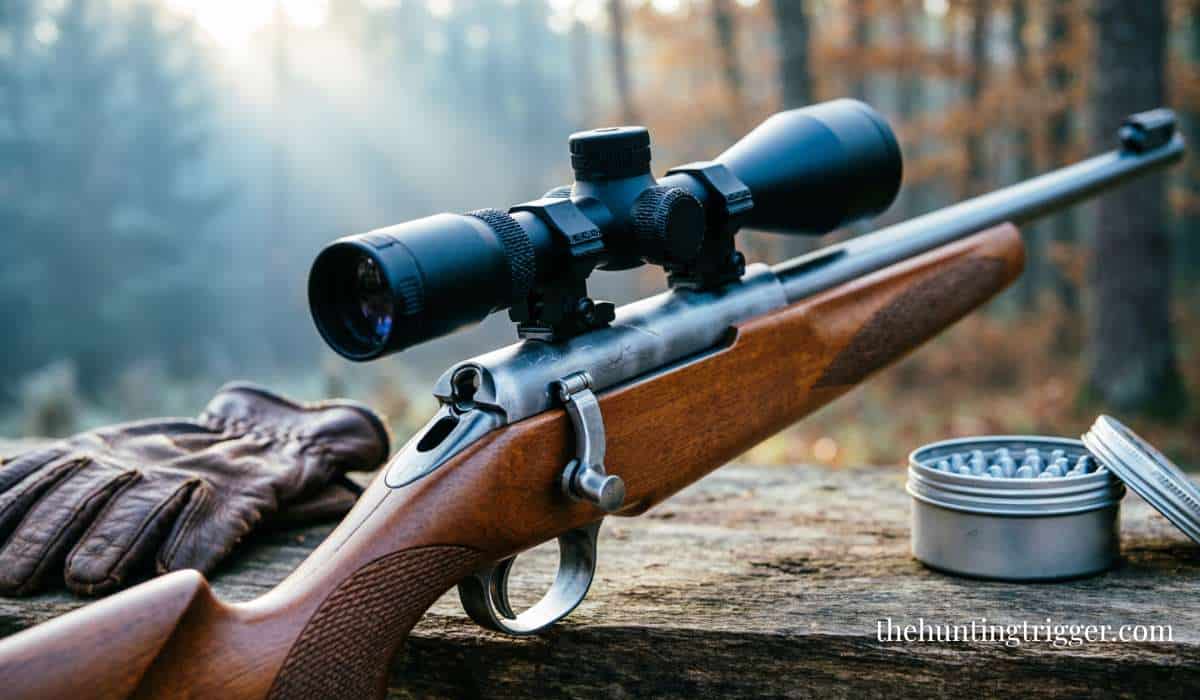
A break barrel air rifle is one of the most recognizable and widely used types of airguns in the world. If you have ever seen someone cock an air rifle by bending the barrel downward, you have seen a break barrel in action.
These rifles are popular with beginners and experts alike for target shooting, small game hunting, and even pest control. But what really makes a break barrel air rifle unique? How does it work, and what should you know before using or buying one?
Let’s look closely at everything that matters about break barrel air rifles.
Table of Contents
How Does A Break Barrel Air Rifle Work?
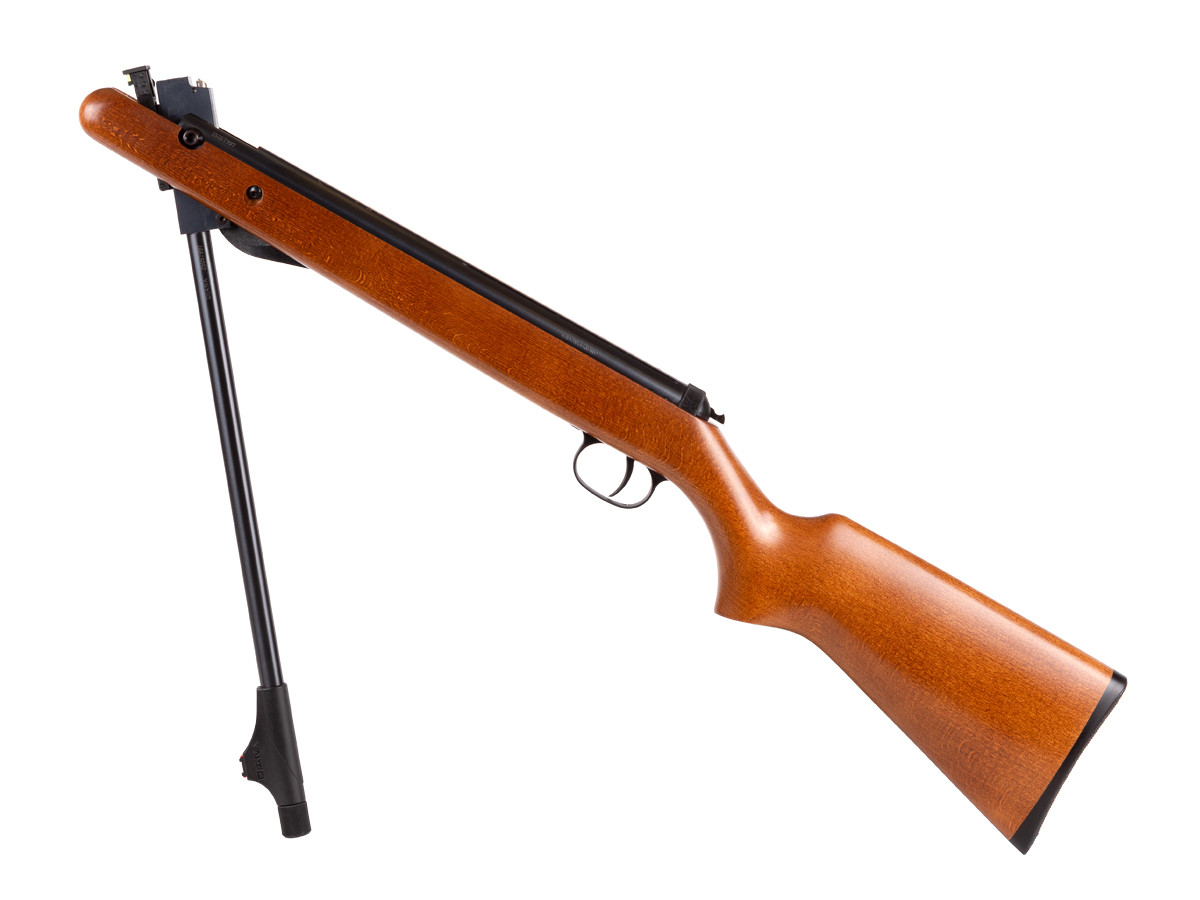
The key feature of a break barrel air rifle is its break action. You load and cock the gun by physically “breaking” the barrel downward, which compresses a spring or gas piston inside the gun. This is different from pre-charged pneumatic (PCP) or CO2 airguns that use tanks or cartridges.
Here’s how the process works:
- Breaking the Barrel: You hold the stock and pull the barrel downward until it clicks. This compresses a spring or gas piston.
- Loading the Pellet: With the barrel open, you insert a pellet directly into the breech.
- Closing the Barrel: You swing the barrel back up until it locks in place.
- Firing: Pulling the trigger releases the compressed spring or piston, which propels the pellet out of the barrel.
This simple mechanism is both reliable and easy to maintain.
How far can an air rifle shoot accurately for hunting
Key Parts Of A Break Barrel Air Rifle
A break barrel air rifle has several important components:
- Barrel: The part you “break” to cock the gun and load the pellet.
- Stock: The body of the rifle, which you hold.
- Trigger: Releases the spring or gas piston.
- Breech: Where you load the pellet after breaking the barrel.
- Spring or Gas Piston: Provides the power to shoot the pellet.
- Sights/Scope: Helps you aim at your target.
Understanding these parts helps you see why the break barrel design is so durable.
How do air rifles work step by step
Types Of Powerplants: Spring Vs Gas Piston
Break barrel air rifles use two main powerplants: spring-piston and gas piston (sometimes called gas ram or nitro piston).
| Feature | Spring-Piston | Gas Piston |
|---|---|---|
| Power Source | Coiled steel spring | Sealed gas cylinder |
| Recoil | Often more “twangy” | Smoother and less vibration |
| Temperature Sensitivity | Can weaken in cold | Performs well in all temperatures |
| Lifespan | Springs can wear out faster | Longer-lasting, less maintenance |
Spring-piston rifles are classic, often less expensive, and have a distinctive recoil. Gas piston models are newer, with smoother shooting and longer service life. Both types are cocked and loaded the same way.
Advantages Of Break Barrel Air Rifles
Break barrel air rifles are popular for several good reasons:
- Simple Operation: No pumps, CO2, or air tanks required.
- Durability: Fewer moving parts means less can break.
- Cost-Effective: Often cheaper than PCP or CO2 rifles.
- Easy Maintenance: Cleaning and repairs are straightforward.
- Versatility: Good for both target shooting and hunting.
Unlike PCP rifles, you are never stuck if you run out of compressed air. All you need is your strength to cock the rifle.
Common Uses And Performance
Break barrel air rifles are used for:
- Target Practice: Accurate at short to medium ranges (10-50 meters).
- Plinking: Shooting cans or other objects for fun.
- Small Game Hunting: Rabbits, squirrels, and birds at reasonable distances.
- Pest Control: Effective for rodents and garden pests.
Most break barrel rifles shoot .177 or .22 caliber pellets. Typical muzzle velocities:
| Caliber | Velocity Range (fps) | Best Use |
|---|---|---|
| .177 | 800 – 1300 | Targets, small game |
| .22 | 600 – 1000 | Hunting, pest control |
A. 177 caliber rifle is better for accuracy and flat shooting, while. 22 offers more stopping power.
How do you install scope mounts on an air rifle
Choosing The Right Break Barrel Air Rifle
Before buying, consider these factors:
- Intended Use: Will you target shoot, hunt, or control pests?
- Caliber: .177 for accuracy, .22 for more power.
- Build Quality: Look for sturdy construction, especially the barrel lockup.
- Weight and Size: Lighter rifles are easier for younger shooters.
- Trigger Quality: A smooth, adjustable trigger helps accuracy.
- Scope Compatibility: Many break barrels have scope rails but check for mounting strength.
Many beginners miss that break barrel air rifles require good technique for accuracy. The way you hold the rifle matters—known as the “artillery hold.” Let the gun recoil naturally instead of gripping tightly. This helps with consistent shot placement.
Safety Tips For Break Barrel Air Rifles
Safety is always important with any gun:
- Always treat the rifle as loaded.
- Never point at anything you do not intend to shoot.
- Use proper backstops when shooting.
- Keep your finger off the trigger until ready.
- Store pellets and rifles out of children’s reach.
It’s easy to underestimate an air rifle. Many break barrel models can cause serious injury or damage. Always respect the power of these guns.
Maintenance And Care
Break barrel air rifles are low-maintenance, but a few steps keep them running smoothly:
- Clean the barrel with a pull-through or patch every few hundred shots.
- Lubricate the pivot and spring sparingly—over-oiling can harm seals.
- Store in a dry place to prevent rust.
- Check screws and stock bolts regularly.
- Never dry fire (shoot without a pellet); it can damage the spring or piston.
One thing even experienced shooters overlook: barrel lockup. If the barrel does not close tightly after cocking, accuracy suffers. If you notice your groups getting worse, check the lockup and pivot bolt for wear.
Break Barrel Vs. Other Air Rifles
How Does A Break Barrel Compare To Other Designs?
| Type | Power Source | Ease of Use | Maintenance |
|---|---|---|---|
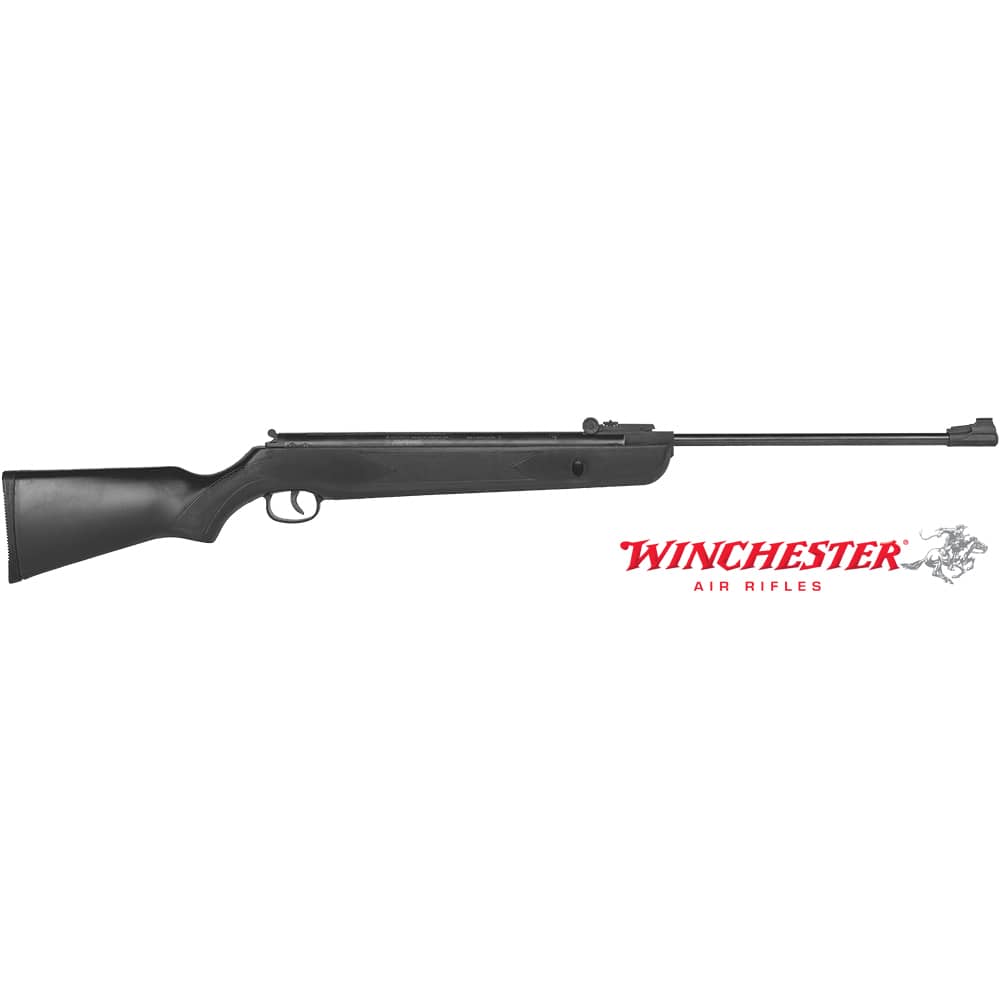
| Break Barrel | Spring or gas piston | Very easy | Low |
| PCP | Compressed air tank | Requires filling equipment | Medium |
| CO2 | CO2 cartridge | Easy, but needs cartridges | Low |
| Underlever/Sidelever | Spring or gas piston | Heavier, more complex | Low |
Break barrels remain the top choice for simplicity and independence from air tanks or cartridges.
Real-world Example
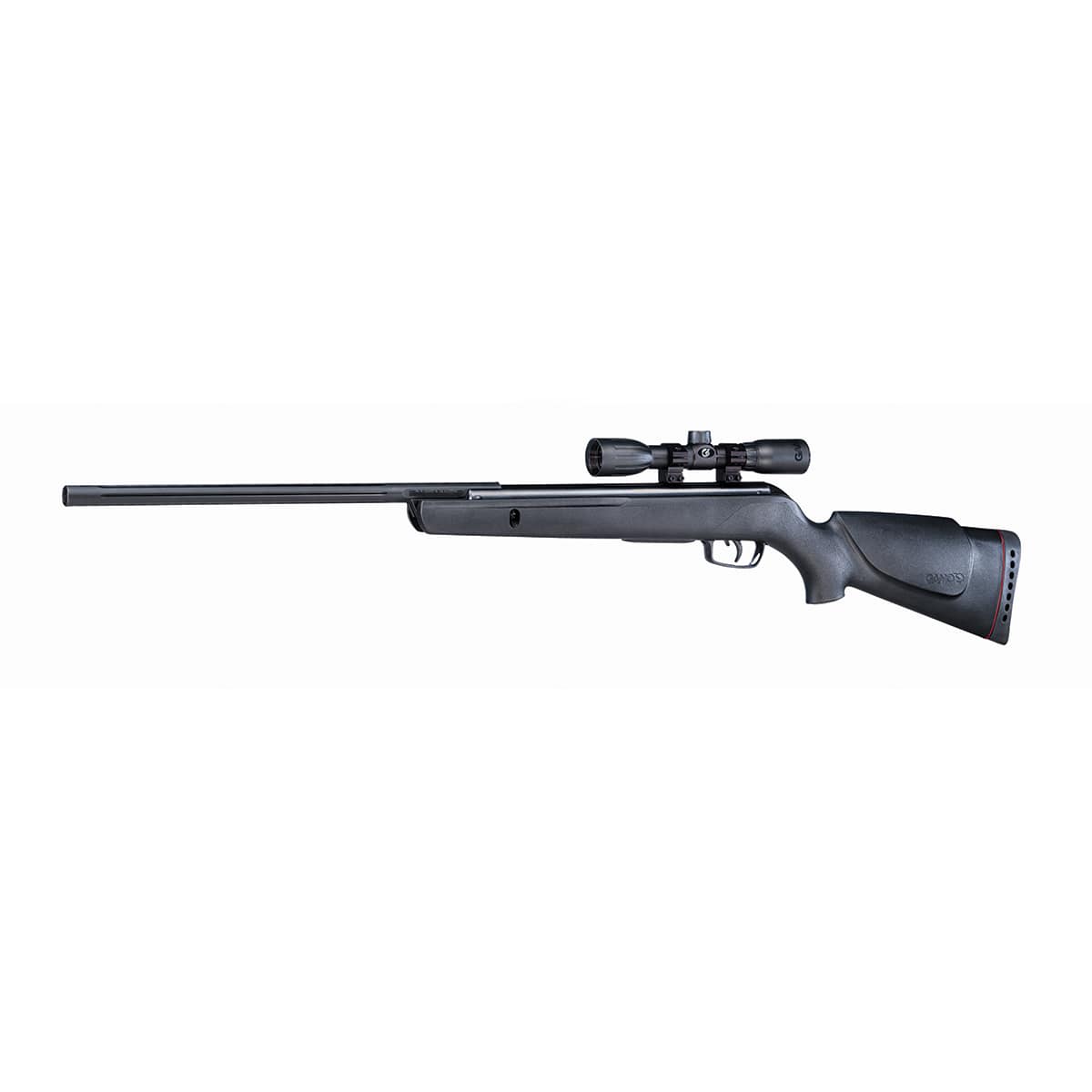
The Gamo Whisper Fusion is a popular break barrel air rifle. It uses a gas piston, delivers up to 1300 fps in .177, and comes with a noise dampening system. Many shooters value its quiet operation and reliable performance. This is just one example showing the range of features you can find in modern break barrels.
Frequently Asked Questions
What Is The Main Advantage Of A Break Barrel Air Rifle?
The biggest advantage is simplicity. You do not need extra equipment like pumps or CO2. Just break the barrel, load, and shoot.
Can I Use A Break Barrel Air Rifle For Hunting?
Yes, especially for small game like rabbits, squirrels, or birds. Use .22 caliber for more stopping power and check your local hunting laws.
How Accurate Are Break Barrel Air Rifles?
With good technique and a quality rifle, they are very accurate at short to medium range. Most can hit a target the size of a coin at 25 meters.
What Is The Lifespan Of A Break Barrel Air Rifle?
A well-made break barrel can last decades with proper care. Gas piston models tend to last longer than spring-piston rifles.
Squirrel hunting with air rifle tips
Lastly
A break barrel air rifle is an excellent choice for both new and experienced shooters. It is simple, effective, and requires only basic care. With the right rifle and good shooting habits, you can enjoy years of reliable use and fun.

Leave a Reply