
Many hunters find themselves with impressive deer mounts accumulated over the years, and eventually, the question arises: can I sell these trophies, perhaps to a large retailer like Bass Pro Shops? The desire to recoup some investment or make space is entirely understandable.


However, the straightforward answer for most individual sellers is no; Bass Pro Shops, nor most similar large outdoor retailers, typically purchase used deer mounts directly from the public.
This article will explore the realities behind selling taxidermy, delving into why direct sales to big box stores are unlikely, the crucial legal considerations involved, how to properly value your mount, and effective alternative avenues for selling your cherished hunting mementos.
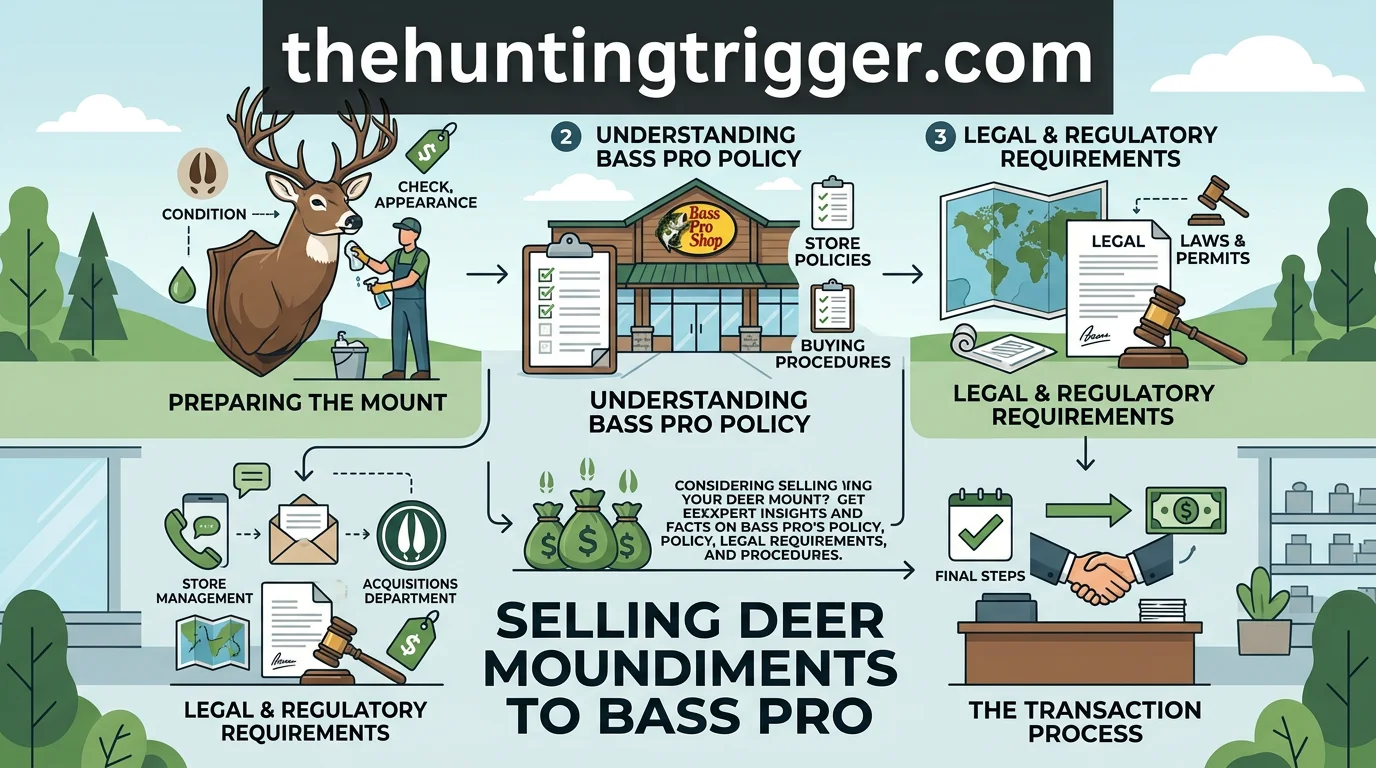
Does Bass Pro Shops Buy Used Deer Mounts from Individuals? The Direct Answer
Bass Pro Shops, along with its affiliate Cabela’s and similar large outdoor retailers, generally do not purchase used individual deer mounts directly from the public. Their business model for acquiring display items differs significantly from buying personal taxidermy.

These retailers typically commission professional taxidermists to create the elaborate, high-quality wildlife displays seen in their stores. This approach ensures consistency, specific thematic designs, and adherence to their strict brand standards, which privately-owned mounts cannot guarantee.
Consequently, a hunter attempting to bring a personal deer mount into a Bass Pro store for evaluation or sale would almost certainly face a polite refusal. Trying to sell a personal mount to these large retail chains is, regrettably, a dead end for individuals.
Why Selling Deer Mounts to Bass Pro (or Similar Stores) Isn’t
Many individuals wonder if large outdoor retailers like Bass Pro Shops purchase used deer mounts directly from the public. The short answer is no, and understanding the business and logistical realities of these corporations clarifies why they aren’t a market for personal hunting trophies, despite how appealing the idea might seem to a seller.

Mounts intended for retail display in large stores are typically commissioned directly from professional taxidermists or specialized artists. This approach ensures consistent quality, specific aesthetic alignment with the brand’s image, and a verified provenance. These elements are crucial for their meticulously curated wildlife displays, guaranteeing every piece meets their exacting standards from the outset.
Major corporations also face stringent legal and liability considerations that preclude buying used items from individuals. Acquiring a used mount from an unknown source introduces complexities regarding its legal compliance, such as proof of lawful harvest, species identification, and adherence to state and federal wildlife regulations. Avoiding these unknown variables and the potential for legal issues is a major operational factor for big corporations.
Ultimately, the market for used personal hunting trophies operates very differently from the specialized field of commissioned display art. Bass Pro’s iconic, curated wildlife displays, for example, are professionally planned and executed pieces, not a collection of individual, pre-owned taxidermy. This fundamental difference means retailers are simply not in the business of buying personal, second-hand mounts from the public.
Navigating Legal Requirements for Selling Deer Mounts and Taxidermy
Selling wildlife parts, including taxidermy, is heavily regulated at both state and federal levels. Understanding these laws is crucial to avoid legal pitfalls when considering selling a deer mount. These strict regulations prevent poaching and illegal wildlife trade, ensuring all harvested animals were legally obtained.
State-Specific Game Laws for Taxidermy Sales
Each state has unique game laws governing the possession, transport, and sale of wildlife parts like deer mounts. Regulations vary significantly, dictating required permits, interstate transport rules, and necessary proof of origin. Always research your state’s Department of Natural Resources (DNR) guidelines before any sale.
Failure to comply with state provisions can result in significant fines, confiscation, and other legal penalties. Wildlife law enforcement is serious, so selling a mount without understanding these rules leads to severe consequences, emphasizing the need for due diligence.
Essential Documentation: Your Harvest Tag and More
Proof of legal harvest is almost always mandatory for selling a deer mount. This includes the original hunting tag, conservation license details, or other state-issued permits verifying legal acquisition during an authorized season.
Without proper documentation, the mount’s legal origin cannot be verified. For instance, a hunter attempting to sell a mount lacking its original harvest tag will likely face immediate legal scrutiny and potential confiscation. Such actions invariably lead to severe legal penalties.
Understanding Federal Wildlife Protection Acts
Beyond state laws, federal regulations also govern wildlife parts sales. The Lacey Act prohibits trafficking wildlife taken, possessed, or sold in violation of any state, federal, or foreign law. Federal violations can thus occur even for legally harvested mounts under specific circumstances.
While less common for North American deer, CITES (Convention on International Trade in Endangered Species of Wild Fauna and Flora) is important. CITES regulates the international trade of endangered species and their parts, highlighting broad wildlife protection laws globally.
Factors Determining Your Deer Mount’s Value and Quality for Resale
Antler Score and Species: Primary Value Drivers
The most significant factor influencing your deer mount’s potential value is the size and score of its antlers. Trophy mounts recognized by scoring systems like Boone & Crockett (B&C) or Pope & Young (P&Y) inherently command higher interest and value due to their exceptional nature.
Higher scores directly translate to a more desirable and potentially more valuable item for collectors or enthusiasts. The species of deer also plays a role; common Whitetail and Mule Deer mounts are prevalent, but rarer sub-species or those from specific, renowned hunting regions (provenance) can sometimes enhance their perceived worth.
While overall value remains highly subjective, a mount with an impressive antler score provides a concrete, objective measure that significantly elevates its market appeal. This forms the foundational layer of its resale potential.
Assessing Taxidermy Artistry and Condition
Beyond the antlers, the quality of the taxidermy itself profoundly impacts a mount’s market value. There is a clear distinction between amateur work and the artistry of a master taxidermist. High-quality taxidermy exhibits lifelike features, accurate anatomical details, realistic muscle tone, and meticulous attention to areas like the eyes, nose, and mouth.
Conversely, mounts completed by an inexperienced or amateur taxidermist often show signs of imperfection, such as unnatural poses, visible seams, asymmetrical features, or a general lack of realism. Even a substantial antler score can be undermined if the taxidermy work itself is of poor quality, significantly depreciating its resale potential.
What to Look For: Signs of Damage or Wear
The physical condition of your deer mount is critical and can drastically reduce its value. Sellers often ignore the signs of aging or damage, but prospective buyers certainly won’t. Look for common issues like fading of the hide or hair, especially if exposed to sunlight, and cracking or peeling skin around the eyes, nose, and mouth.
Pest damage, such as from moths or dermestid beetles, can manifest as bald spots, trails in the hair, or a deteriorating hide. Other issues include excessive dust accumulation, loose ears, or even broken antler tines. These flaws significantly diminish aesthetic appeal and value.
To illustrate, a faded, cracked mount with amateur taxidermy will fetch a significantly lower price than a pristine, professionally done Boone & Crockett trophy. The market for used taxidermy is quite niche, and prices are often considerably lower than the original cost of the taxidermy work, even for well-preserved pieces.
Preparing Your Trophy Mount for Sale: Documentation and Condition
Cleaning and Basic Maintenance for Deer Mounts
The condition of your mount is the primary driver of its resale value. Before listing, gently remove dust from the cape and antlers using a soft-bristled brush or a microfiber cloth. Avoid using harsh chemicals, which can cause discoloration or damage to the hide.
Inspect the mount thoroughly for signs of moth larvae or pest infestation, often found near the eyes, nose, and ears. If the mount is shedding hair or showing damaged patches, minor repairs may be possible, but honesty regarding these flaws is essential for a smooth transaction.
Collecting and Organizing Your Harvest Documentation
Professional buyers require strict adherence to state and federal regulations. You must provide proof of legal harvest to validate the item’s provenance. Gather your original hunting tags, conservation license details, and any associated taxidermy receipts to prove the mount was acquired through legal means.
Digitalize these records by scanning your original tags and permits into high-quality PDFs. Having a clear, organized paper trail ensures you meet all legal requirements and builds immediate trust with potential buyers or retail procurement departments.
Showcasing Your Mount with High-Quality Photography
High-resolution images are vital for conveying the quality of your mount. Capture multiple photos from various angles—front, profile, and back—to show the symmetry of the antlers and the condition of the cape. Ensure you have clear lighting that reveals the true texture of the fur.
Include close-up shots of any specific features or potential wear areas. If the mount includes a display plaque or unique mounting hardware, photograph those components as well. Clear, honest visuals significantly reduce buyer hesitation and help justify your asking price.
Alternatives to Selling Deer Mounts to Bass Pro: Exploring Your Options
While large retailers like Bass Pro Shops typically do not purchase individual deer mounts from private sellers, numerous other avenues exist for those seeking to rehome their taxidermy trophies. Understanding these alternatives is crucial for identifying the best fit for your mount and financial objectives.
It’s important to set realistic expectations; the market for used taxidermy is quite niche. Prices for resold mounts are often significantly lower than the original cost of the taxidermy work, a common reality sellers should be prepared for.
One of the most promising routes involves connecting directly with private collectors. These individuals often possess a deep appreciation for taxidermy and may be willing to pay a higher price for unique or well-preserved specimens. However, finding such buyers typically requires more personal effort in networking and advertising.
Specialized online marketplaces offer a broad audience, potentially reaching buyers across a wider geographic area. Platforms like eBay, as well as dedicated hunting and taxidermy forums, can facilitate sales. While they increase visibility, these platforms often present challenges related to shipping logistics and the potential for fraud, requiring careful handling.
For local options, consider approaching small independent sporting goods stores, antique shops, or even local pawn shops. While these venues offer convenience and direct payment, they generally cater to a smaller customer base and often offer lower prices compared to what a private collector might pay, as they need to account for their own resale margin.
Consignment shops can also be a viable option. These shops handle the display and sale of your mount, taking a pre-agreed commission upon sale. This reduces your direct effort but means a portion of the sale price goes to the shop, and the sale timeline is often uncertain.
Finally, if monetary gain isn’t the primary goal, donation to a public benefit organization is an alternative. Wildlife museums, educational institutions, or nature centers, for example, may accept well-preserved mounts for display or educational purposes. Such donations can sometimes qualify for tax deductions, offering an indirect benefit.
How to Read This Comparison Table
This table provides a high-level overview of different avenues for disposing of a deer mount. The “Selling Avenue” column lists the various options discussed. “Potential Price vs. Original Cost” indicates the approximate resale value you might expect to receive, expressed as a percentage of the amount originally paid for the taxidermy work. These figures are general estimates for used taxidermy, as actual prices vary widely based on mount quality, species, condition, and market demand.
“Effort Required by Seller” gauges the amount of time and work you, as the seller, would typically need to invest in the process. “Market Reach” describes the breadth of potential buyers or recipients for each option. Finally, “Key Challenges” highlights common obstacles or drawbacks associated with each method. Note that for donations, direct monetary gain is absent, but potential tax benefits may apply, requiring specific appraisal and financial verification.
Common Pitfalls When Selling Deer Mounts and How to Avoid Them
Overestimating Market Value and Demand
When attempting to sell a deer mount, a common mistake is overestimating its market value. Many sellers assume their mount retains a significant portion of its original taxidermy cost, or that there’s high demand for used mounts. In reality, the market for pre-owned taxidermy is niche, and mounts often sell for considerably less than their initial production cost.
It is crucial to be realistic about your mount’s condition and the quality of its taxidermy. Misrepresenting the age, quality, or species details of your mount can severely hurt your credibility and deter potential buyers, leading to prolonged selling periods or significantly reduced offers. A detailed assessment of its true condition is always recommended.
The Dangers of Incomplete Documentation
Underestimating the legal complexities and strict documentation requirements for selling wildlife products, even taxidermy, is a critical pitfall. Every deer mount sold requires legal proof of harvest, such as a valid hunting tag, license information, or a bill of sale from the original hunter if you are not them.
Failing to disclose or provide proof of legal harvest can lead to severe penalties, including fines, confiscation, and even legal action. Imagine a scenario where a buyer demands a mount but you cannot provide the proper tag or harvest documentation; the sale will likely fall through, and you could face legal scrutiny.
Without complete and verifiable documentation, you risk legal issues, buyer distrust, and the inability to complete a sale. Always ensure all paperwork is in order before listing your mount.
Avoiding Online Scams and Shipping Challenges
When selling mounts, especially through online platforms, beware of scams. Protect yourself by establishing clear terms of sale, using secure payment methods, and avoiding buyers who pressure you into unusual transactions. Always verify buyer identity and legitimacy.


Shipping taxidermy presents its own set of challenges, from potential shipping damage due to inadequate packaging to prohibitive costs for large items. Furthermore, ensure your mount is pest-free and properly stored before any sale or shipment. A mount infested with carpet beetles, for example, will not only be unsellable but could also pose a risk to other collections.
Key Takeaways
-
✓
Bass Pro Shops typically does not buy used deer mounts from individuals due to company policies and logistical reasons. -
✓
Understanding and adhering to all local and state legal requirements for selling taxidermy is crucial for a compliant sale. -
✓
Accurately assessing your deer mount’s value based on condition, species, and craftsmanship is vital for successful resale. -
✓
Proper documentation (e.g., harvest tags) and ensuring the mount’s excellent condition significantly impact its marketability. -
✓
Exploring diverse alternative selling platforms, such as online marketplaces or specialty auction houses, broadens your buyer reach.
❓ Frequently Asked Questions
1
What is selling deer mounts to Bass Pro?
This refers to the common inquiry about whether major outdoor retailers like Bass Pro Shops purchase pre-owned taxidermy. Generally, these stores do not buy used deer mounts directly from individuals due to policy, liability, and quality control concerns, making alternative selling methods necessary.
2
How does one typically sell a deer mount?
Selling a deer mount usually involves private sales through online marketplaces, hunting forums, specialty taxidermy auction sites, or local classifieds. Proper documentation, clear photos, and accurate descriptions are essential for a successful transaction. Networking with other hunters can also provide avenues.
3
Why is understanding market value important for deer mounts?
Understanding market value prevents underselling and helps set realistic price expectations. Factors like species, condition, taxidermist’s reputation, and unique features significantly influence value. Researching comparable sales offers valuable insights into current demand and pricing trends.
4
What are the benefits of exploring alternatives to retail stores?
Exploring alternatives opens up a broader market of interested buyers, often leading to better prices and more direct sales. Options like online forums, specialized auction sites, and private sales give sellers more control over pricing and negotiation, bypassing retail markups and restrictions.
5
How can I ensure my deer mount is legally compliant for sale?
To ensure legal compliance, thoroughly research state and local wildlife regulations regarding the sale of taxidermy. Verify that you have proper documentation, such as hunting licenses or harvest tags, if required. This prevents legal issues and builds buyer confidence in the authenticity of your mount.
6
Does Bass Pro Shops buy used deer mounts from individuals?
No, Bass Pro Shops and similar large retailers typically do not purchase used individual deer mounts from the public. They usually commission new mounts from professional taxidermists for their displays.


Leave a Reply