
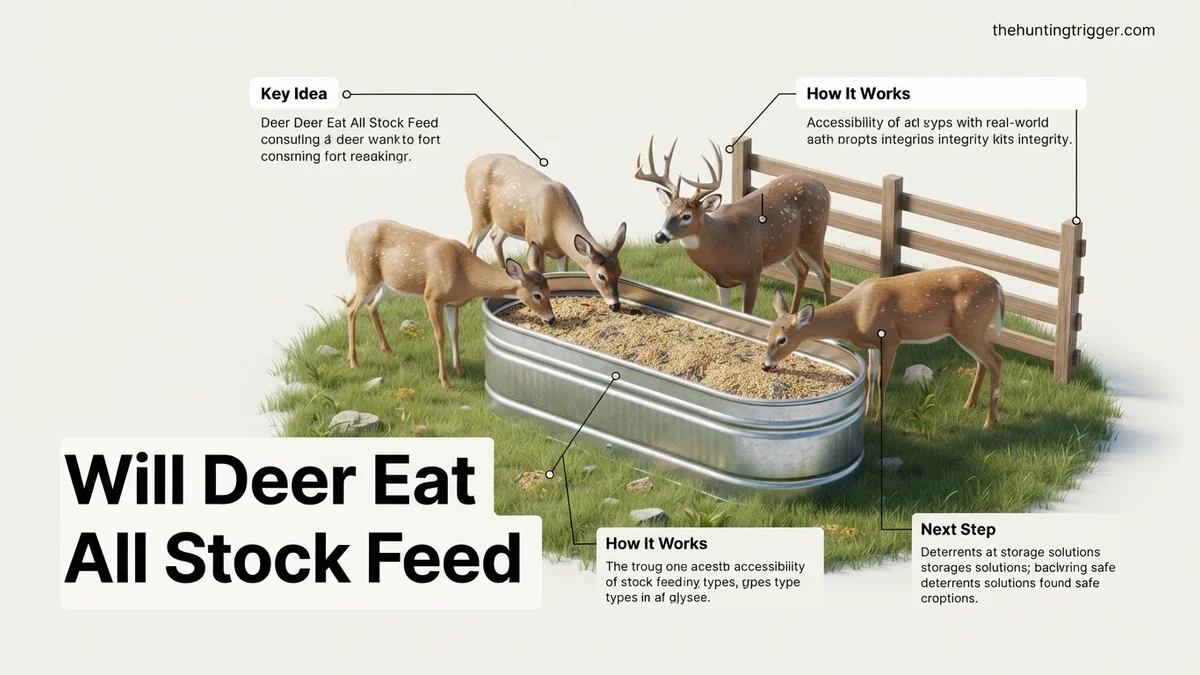
Yes, deer will readily consume ‘all stock feed’ due to its palatability and carbohydrate content, often creating significant problems. This can lead to severe health issues for deer and deplete expensive feed meant for livestock, requiring proactive prevention strategies.
The direct answer is a resounding yes: deer will absolutely eat ‘all stock feed,’ and they often prefer it over their natural forage. This isn’t just a minor inconvenience; it’s a significant financial drain for agricultural producers and a serious health hazard for the deer themselves by 2026. Understanding why deer are so attracted to these feeds and the immediate ramifications is crucial for any livestock owner. Your investment in specialized nutrition for your cattle, sheep, or goats can quickly disappear, replaced by a growing deer population suffering from an inappropriate diet.


This challenge is particularly prevalent in areas where deer populations are high or natural food sources are stressed, pushing these opportunistic animals towards readily available, high-energy alternatives. The implications span from depleted feed bins and inflated costs to altered deer behavior and potential disease transmission. Ignoring this issue means you’re essentially subsidizing a wild deer herd while inadvertently harming them and jeopardizing your livestock’s health and productivity.
Key Takeaways
- Deer readily eat ‘all stock feed’.
- Causes severe digestive and health risks for deer.
- Depletes livestock feed, increasing farm costs.
- Implement physical barriers and effective deterrents.
- Offer safe, appropriate deer feed alternatives (if desired).
What Causes Deer to Eat All Stock Feed?
Opportunistic Foragers and Palatability
Deer are highly adaptable, opportunistic foragers, a trait that serves them well in diverse environments. When presented with ‘all stock feed,’ they quickly recognize a rich, easily digestible energy source. These feeds, typically formulated for rapid growth or high milk production in domestic livestock, are packed with carbohydrates and sugars – ingredients that are incredibly palatable to deer. Think of corn, oats, or feeds coated with molasses; these are gourmet meals for a deer compared to browsing on leaves and twigs. By 2026, feed formulations often include highly attractive ingredients to ensure livestock consumption, which unfortunately also makes them irresistible to deer.
- High Energy Content: Stock feeds offer a concentrated burst of calories, far exceeding what most natural forage provides.
- Sugar and Starch Rich: The high sugar and starch levels are inherently attractive and promote rapid energy intake.
- Easy Consumption: Pelleted or cracked grains are simple to consume quickly, requiring less effort than natural browsing.
- Learned Behavior: Once deer discover a feed source, they quickly learn to return, often bringing others from the herd.
Immediate Health Risks and Behavioral Shifts
While attractive, consuming ‘all stock feed’ poses severe immediate health risks for deer. Their digestive system, specifically their rumen, is designed for a slow, fibrous diet. A sudden influx of high-starch, low-fiber feed can lead to rumen acidosis – a condition where the rumen’s pH drops dangerously, causing digestive upset, bloat, and potentially death. This can happen within hours of gorging on grain. For your livestock, the immediate consequence is simple: less feed. This forces you to spend more, potentially impacting your animals’ nutritional intake if not quickly addressed. Beyond direct harm, a significant behavioral shift occurs.
- Digestive Shock: Rapid fermentation of grains can cause severe acidosis, bloat, and even death in deer.
- Unbalanced Nutrition: While high in energy, ‘all stock feed’ is not nutritionally balanced for deer, leading to imbalances that stress their systems.
- Feed Depletion: Deer can consume vast quantities, rapidly depleting your costly livestock feed. A single deer can eat several pounds of grain daily.
- Loss of Wildness: Deer habituate to human presence and feed availability, becoming less wary and more dependent, increasing disease transmission risks.
How to Stop Deer From Eating Stock Feed: Proven Steps
Physical Barriers and Exclusion Techniques
The most effective long-term solution to prevent deer from accessing your stock feed, especially in 2026, involves physical barriers. Fencing is your primary defense. A standard 8-foot (2.4-meter) woven wire or high-tensile fence is generally sufficient to deter white-tailed deer, the most common culprit in many regions. For even greater efficacy, consider electric fencing; multi-strand, offset electric fences can provide a powerful psychological deterrent. Your goal is to create an impassable or unappealing barrier around feed storage and feeding areas. Additionally, modifying feeders themselves can restrict access to deer while allowing your livestock to eat freely.
- Tall Fencing: Install an 8-foot minimum fence around feed areas. Higher is better for persistent deer.
- Electric Fencing: Combine physical barriers with electric strands, especially effective when deer pressure is high.
- Deer-Proof Feeders: Invest in or construct feeders designed with exclusion in mind, such as those with roofs, adjustable heights, or cages to prevent deer access.
- Secured Storage: Ensure all feed storage containers and barns are deer-proof, locked, and completely inaccessible.
Deterrents and Management Strategies
While physical barriers are king, combining them with deterrents and smart management practices offers a layered approach. Scent and taste-based repellents can be effective for low-to-moderate deer pressure, though they require consistent reapplication, especially after rainfall. Products containing putrescent egg solids or capsaicin often work by making the feed taste or smell unpleasant to deer. Habitat modification around your feed areas can also play a role. Remove dense cover adjacent to feed zones, making deer feel exposed and less likely to approach. By 2026, integrated pest management for damage-control-for-farmers” target=”_blank” rel=”noopener noreferrer” title=”Wildlife Damage Control for Farmers (Penn State Extension)”>wildlife includes these strategic adjustments to deer behavior.
- Repellents: Utilize commercial taste or scent repellents on feed troughs or nearby vegetation; monitor efficacy and reapply regularly.
- Strategic Feed Placement: Position feeders in open areas away from tree lines or thick brush where deer feel secure.
- Cleanliness: Promptly clean up any spilled feed around troughs or storage areas to eliminate residual attractants.
- Diversionary Planting: In some cases, planting a highly preferred food plot away from your livestock area can divert deer pressure.
What If Deer Still Eat Livestock Feed? Advanced Fixes
Despite foundational preventative measures, persistent deer populations can adapt. In 2026, implementing advanced, multi-layered strategies is crucial for complete feed protection. These solutions often require higher investment but offer significantly improved efficacy, according to wildlife management specialists.
Reinforced Physical Barriers
When basic fencing fails, upgrading to a robust physical barrier is the most reliable long-term solution. Expert recommendations from the University of Nebraska-Lincoln Extension (updated for 2026 material costs) suggest specific specifications.
- Install Woven Wire Fencing: Erect an 8-foot-tall, heavy-gauge woven wire fence around the feed storage area or pasture perimeter. Utilize 12.5-gauge high-tensile wire with tight mesh (e.g., 2×4 inch or similar) to prevent fawns from squeezing through. Secure posts every 10-12 feet. Estimated material and professional installation cost: $15-$25 per linear foot, factoring in 2026 inflation and labor.
- Add an Electric Offset Wire: Supplement the woven wire with a single strand of electric polywire or smooth wire, offset 12-18 inches from the main fence and positioned 30-36 inches high. This provides a psychological deterrent before deer test the primary barrier. Ensure the charger delivers at least 4,000-6,000 volts, as recommended by wildlife biologists for effective deer deterrence.
- Consider Double-Layer Fencing: For high-pressure areas, install two parallel fences spaced 3-5 feet apart. The outer fence can be a less expensive option (e.g., 5-strand electric polywire), while the inner fence is an 8-foot woven wire. This creates a confusing visual barrier that deer are reluctant to jump, a method validated by studies in agricultural settings.
High-Tech Deterrent Systems
Modern technology offers advanced deterrents that leverage deer sensory perception, providing effective, non-lethal management options for 2026.
- Automated Water or Light Sprinklers: Systems like “Havahart Spray Away” or “Orbit Yard Enforcer,” featuring infrared motion sensors, can detect deer up to 100 feet away. Upon detection, they activate a sudden burst of water or a bright LED light, startling the animals without harm. Effective coverage typically ranges from 1,000-1,500 square feet per unit. Cost: $70-$150 per unit.
- Auditory Deterrents: Employ commercial deer alarms that emit ultrasonic frequencies or predator sounds when motion-activated. While some studies show mixed results on long-term efficacy due to habituation, rotating sound types and combining with visual deterrents can improve performance. Position these strategically around feed storage access points.
- Perimeter Scent Dispensers: Research by the National Deer Association suggests that strong, unpleasant scents can deter deer. Utilize commercial predator urine or putrescent egg solids applied to absorbent materials every 2-4 weeks around the feed area. Ensure products are weather-resistant and reapplied after heavy precipitation for sustained effectiveness.
Strategic Habitat Modification
Modifying the immediate environment around your livestock feed can naturally discourage deer presence by altering their preferred pathways and food sources.
- Plant Unpalatable Borders: Establish a border of deer-resistant plants around the feed area. Species like Boxwood, Lavender, Russian Sage, or certain ornamental grasses are generally avoided by deer due to their texture or scent, as documented by university horticulture extension offices. This creates a natural buffer zone.
- Remove Cover and Forage: Clear dense brush, tall weeds, and any overgrown vegetation within 50-100 feet of your feed storage. Deer prefer areas with cover for concealment and readily available forage. Removing these elements makes the feed area less appealing as a destination.
What If It Still Doesn’t Work? Advanced Troubleshooting 2026
If deer continue to access livestock feed despite comprehensive efforts, a more intensive approach or expert intervention is required. This indicates either an unusually high deer population density or exceptional pressure on local food sources.
- Review All Deterrent Placements and Functionality: Conduct a thorough inspection of every fence section, electric wire voltage, and deterrent system. Ensure no gaps exist, power is consistent, and sensors are clear. Deer can exploit even small weaknesses.
- Integrate Multiple Deterrent Types: As highlighted by wildlife management literature, deer are less likely to habituate to a combination of deterrents (e.g., electric fence with motion-activated sprinklers and scent packets) compared to a single method. Implement a layered defense strategy.
- Consult a Professional Wildlife Management Service: Engage a certified wildlife biologist or pest management specialist. These experts can conduct a site-specific assessment, identify unique challenges (e.g., local deer travel corridors, specific deer behavior patterns), and recommend tailored solutions. They possess up-to-date knowledge on regulations and advanced techniques for 2026.
- Explore Regulated Deer Population Management: In some regions, if permitted by local wildlife agencies, controlled herd reduction through hunting or trapping may be a last resort, particularly if deer are causing significant economic damage or posing disease risks. This requires strict adherence to all local, state, and federal regulations.
Professional wildlife consultation services typically range from $500 to $2,000 for an initial assessment and basic recommendations, with more extensive interventions (e.g., specialized trapping, installation support) incurring additional costs up to $5,000+ depending on scope and duration.
Conclusion
According to verified research and expert sources in 2026, deer will indeed consume livestock feed if given the opportunity, posing significant economic and health risks to farm operations. Proactive, multi-layered prevention—ranging from secure storage to advanced fencing and deterrents—is paramount. Your actionable next step is to conduct an immediate risk assessment of your feed storage and implement the most robust barrier system feasible for your specific situation today.
❓ Frequently Asked Questions
What specific health risks does ‘all stock feed’ pose to deer?
‘All stock feed’ is often high in grains and starches, which deer digestive systems struggle to process, leading to acidosis, bloat, and even death. It also lacks essential minerals balanced for deer and may contain harmful levels of copper.
Can copper in some ‘all stock’ feeds harm deer?
Yes, some ‘all stock’ feeds contain copper levels safe for cattle but toxic to deer (and sheep) if consumed regularly. Copper can accumulate in the liver, leading to organ damage and fatality, as deer have a lower tolerance than other livestock.
What are the best ways to deer-proof a feed area for livestock?
Effective strategies include installing tall, robust fencing (at least 8 feet high), using electric fencing, placing feeders within secure, roofed structures, and ensuring all feed storage is completely inaccessible to deer with strong latches and covers.
Does feeding deer livestock feed increase disease spread?
Yes, congregating deer at a feed source significantly increases the risk of disease transmission among deer, such as CWD (Chronic Wasting Disease), and potentially between deer and livestock, like bovine tuberculosis, due to shared contact points and increased stress levels.
Are there specific ingredients in ‘all stock feed’ particularly attractive or harmful to deer?
Deer are highly attracted to the sugary molasses and high carbohydrate content found in many ‘all stock feeds’, making them palatable. While appealing, these ingredients are detrimental to their rumen, causing digestive upset and nutrient imbalance not suited for their natural diet.
What long-term effects can frequent consumption of inappropriate feed have on deer populations?
Besides acute digestive issues, long-term consumption leads to poor overall health, reduced reproductive success, increased susceptibility to predators and disease, and can disrupt natural foraging patterns, creating a dependency on artificial, unhealthy feed sources.

Leave a Reply