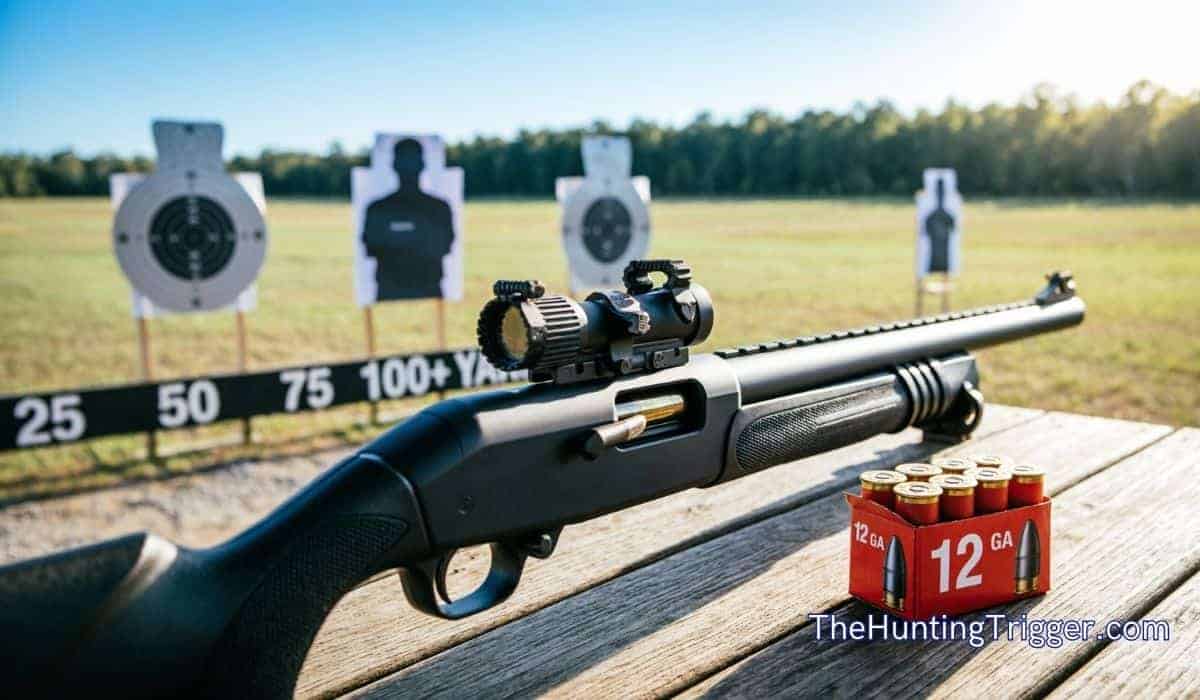
Many people are curious about how far a shotgun can shoot. Whether you are a hunter, sport shooter, or just interested in firearms, knowing the range of a shotgun is important for safety and practical use. The answer is not simple, because the range depends on the type of shotgun, the ammunition, the choke, and even the weather.
This article explains these factors in clear terms, using real data and examples. By the end, you will know what to expect from a shotgun in terms of range, pattern, and practical use.
Table of Contents
What Determines A Shotgun’s Range?
Several things affect how far a shotgun can shoot. The most important factors include:
- Gauge: Common gauges are 12, 20, and .410. The number refers to the size of the barrel and the shell it fires.
- Type of ammunition: Buckshot, birdshot, and slugs are the main types.
- Choke: This is a device at the end of the barrel that changes how the shot spreads.
- Barrel length: Longer barrels can add some velocity but do not dramatically change range.
- Weather and angle: Wind and shooting angle can change the distance the pellets travel.
Each of these factors plays a role in how far your shotgun can shoot and what happens when it does.
What is the minimum legal barrel length for a rifle
Maximum Range Vs. Effective Range
There is a big difference between maximum range and effective range. The maximum range is the farthest distance a pellet or slug can travel before hitting the ground. The effective range is how far you can shoot and still expect to hit your target with enough power
- Effective range: Where the pattern is tight enough, and the pellets have enough energy to do the job (hunting, target, defense).
- Maximum range: The absolute furthest the projectile goes, even if it cannot do any useful work at that distance.
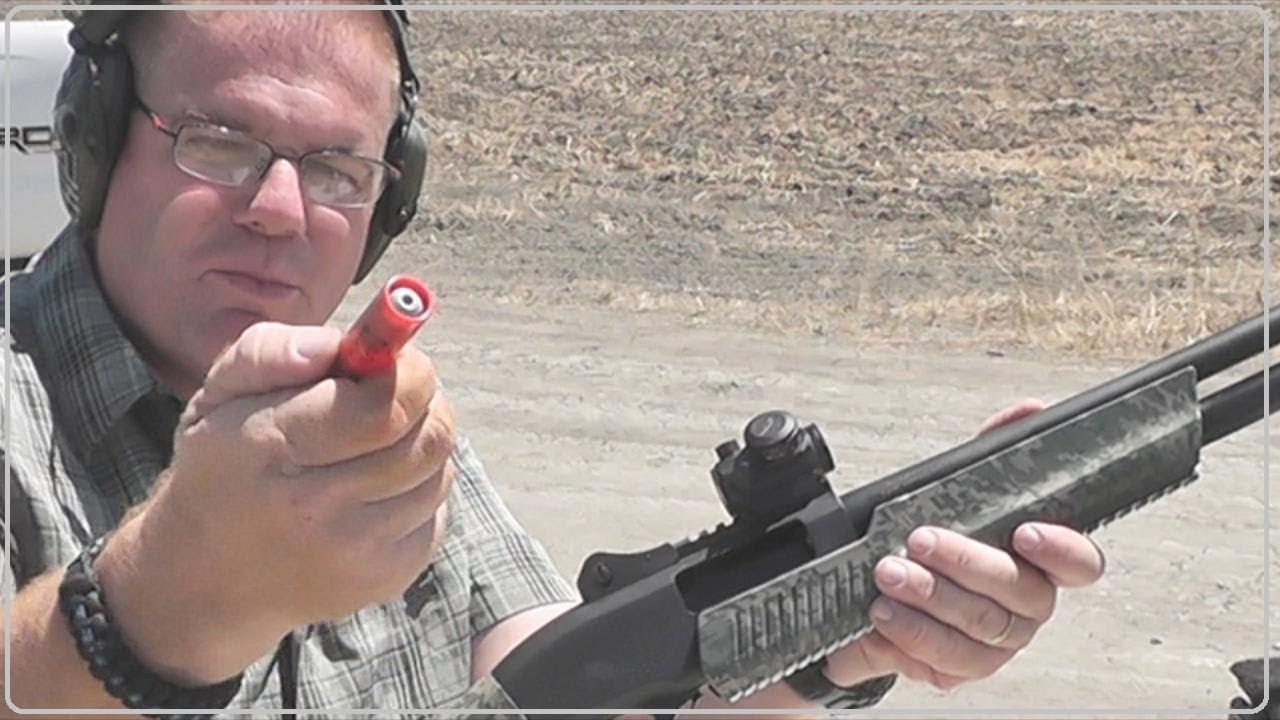
Shotgun Ammunition Types And Their Ranges
Shotguns use different kinds of ammunition, and each has its own range and pattern.
Birdshot
Birdshot is made up of many small pellets. It is used for hunting birds and small animals.
- Effective range: Usually 35 to 40 yards (32–37 meters).
- Maximum range: Can reach up to 350–400 yards (320–365 meters), but with almost no energy left.
Buckshot
Buckshot is larger pellets, used for deer and home defense.
- Effective range: 30 to 50 yards (27–46 meters).
- Maximum range: Around 400–500 yards (365–457 meters), but the pattern spreads wide and is not accurate.
Slugs
Slugs are single, heavy projectiles. They are used for hunting big game and sometimes for self-defense.
- Effective range: Up to 75–100 yards (69–91 meters) with standard slugs; up to 150 yards with special slugs and rifled barrels.
- Maximum range: Can travel up to 800 yards (730 meters) or more, but accuracy drops fast.
Comparing Shotgun Ranges
Here is a comparison of the typical effective and maximum ranges for each ammunition type:
| Ammo Type | Effective Range (yards) | Maximum Range (yards) | Typical Use |
|---|---|---|---|
| Birdshot | 35–40 | 350–400 | Bird hunting, clay targets |
| Buckshot | 30–50 | 400–500 | Deer hunting, home defense |
| Slug | 75–100 | 800+ | Big game hunting |
The Role Of Choke In Shotgun Range
A choke changes the pattern of shot as it leaves the barrel. The choke can make the shot spread out wide, or keep it tighter for longer. This changes the effective range.
- Cylinder choke: No constriction. Wide spread. Best for short range (home defense, close birds).
- Modified choke: Some constriction. Medium spread. Good for general hunting.
- Full choke: Tight constriction. Keeps shot together longer. Best for long shots (ducks, geese).
Here is how different chokes affect the shot pattern at 40 yards:
| Choke Type | Pattern Diameter at 40 yards (inches) | Best Use |
|---|---|---|
| Cylinder | ~40 | Home defense, skeet shooting |
| Modified | ~30 | General hunting |
| Full | ~25 | Waterfowl, distant targets |
A tighter choke keeps more pellets in a smaller area, which helps with longer shots. But if the choke is too tight for close targets, you may miss or damage the meat.
Gauge And Its Effect On Range
The gauge of a shotgun tells you the size of the bore. A 12-gauge is the most common and shoots more pellets than a 20-gauge or a .410 bore.
- 12-gauge: Shoots a larger payload and is effective at longer ranges.
- 20-gauge: Lighter recoil, slightly less range but still good for most uses.
- .410 bore: Very light recoil, less range, best for close targets and training.
For most uses, a 12-gauge offers the best mix of pattern, payload, and range.
How Barrel Length Influences Range?
Many people believe a longer barrel means a longer range. This is not completely true. Barrel length mostly affects how the gun swings and how much velocity the pellets have.
- Short barrels (18–20 inches): Easier to move, better for home defense.
- Long barrels (26–32 inches): Slightly more velocity, smoother swing for hunting and clay shooting.
The difference in range is minor, usually only a few yards.
Weather And Shooting Angle
Wind, rain, and even temperature can change shotgun range. Strong wind can push pellets off course. Humid air can slow pellets down. Shooting uphill or downhill also changes how far pellets travel.
- Wind: Can move shot off target, especially at longer range.
- Rain: Can slow pellets slightly.
- Angle: Shooting up can make pellets go farther before they land.
These effects are small at short range but matter when shooting at maximum distances.

Pattern Spread And Pellet Energy
A shotgun fires many pellets at once. As they travel, the pellets spread out, making a pattern. The farther they go, the more the pattern spreads and the less energy each pellet has.
- At short range, the pattern is tight and pellets hit with full force.
- At longer range, the pattern is wide and pellets may not hit hard enough to be effective.
For example, with birdshot, you may still hit a target at 50 yards, but the pellets may not be strong enough to cleanly kill a duck or pheasant. For safety and ethical hunting, only shoot within the effective range.
Real-world Examples
- Hunting ducks with a 12-gauge, full choke, and #2 steel shot: Most hunters limit their shots to under 40 yards, because beyond that, the pattern spreads too much, and pellets lose power.
- Defensive shooting with buckshot: Home defense experts say that buckshot is most effective under 25 yards. After that, the pattern spreads and the energy drops.
- Shooting deer with slugs: Many hunters use slugs out to 100 yards in states where rifles are not allowed. With a rifled barrel, modern slugs can reach 150 yards.
Safety Considerations
Shotguns can send pellets and slugs much farther than most people expect. Even when the pattern is too wide or weak to hunt, the pellets can still injure or kill.
- Never shoot unless you know what is beyond your target.
- Even birdshot can travel hundreds of yards, especially at an upward angle.
- Slugs can cross fields and reach houses, so always check your backstop.
Myths And Common Mistakes
Many people believe that shotgun pellets “just fall to the ground” after a short distance. In reality, pellets can travel far, especially if you shoot at an angle. Here are two things beginners often miss:
- Overestimating the effective range: Just because a shotgun can shoot far does not mean it is effective at those ranges. Patterns become too wide and weak for hunting or defense beyond 40–50 yards (with shot).
- Ignoring pellet energy: At long ranges, even if you hit the target, the pellets may not have enough energy to do the job. This is very important in ethical hunting.
A safe shooter always knows both the effective and maximum range of their firearm.

Comparing Shotguns With Other Firearms
People sometimes wonder how a shotgun’s range compares to a rifle or handgun. Here is a quick comparison:
| Firearm Type | Effective Range (yards) | Maximum Range (yards) | Best Use |
|---|---|---|---|
| Shotgun (birdshot) | 35–40 | 400 | Birds, clays, short-range defense |
| Shotgun (slug) | 75–150 | 800+ | Deer, large game |
| Rifle (.30-06) | 300–400 | 3,000+ | Big game, long-range |
| Handgun (9mm) | 25–50 | 1,800 | Self-defense |
As you see, shotguns are best for close to medium range. Rifles are for long range, and handguns are for short range.
Practical Tips For Using A Shotgun Safely
- Know your range: Only shoot at targets within the effective range for your ammo and choke.
- Pattern your shotgun: Shoot at paper targets to see how your gun and ammo perform at different distances.
- Use the right choke: Match your choke to the type of shooting you are doing.
- Check your backstop: Always have a safe area behind your target. Never shoot at water or hard surfaces.
- Respect local laws: Some places limit the range or use of shotguns for hunting.
Frequently Asked Questions
How Far Can A Shotgun Slug Travel?
A standard 12-gauge slug can travel over 800 yards if fired at an upward angle. However, the effective range for accurate and ethical shooting is usually 75–100 yards. Beyond that, accuracy and power drop quickly.
Is Birdshot Dangerous At Long Range?
Yes. While birdshot loses power after 40 yards and is not effective for hunting, the pellets can still cause injury or death at much greater distances. Always be aware of what is behind your target, even when using birdshot.
Does Barrel Length Make A Shotgun Shoot Farther?
Not really. Barrel length mostly affects the balance and how the shotgun feels. The increase in range is very small—just a few yards. Choke, ammo, and gauge matter much more for range.
What Is The Best Range For Home Defense With A Shotgun?
Most experts suggest keeping shots within 20 yards (18 meters) for home defense. At this range, buckshot is still effective, and the pattern is tight enough to hit an intruder without hitting bystanders.
Can You Use A Shotgun For Long-range Hunting?
Shotguns are not made for long-range hunting. Even with slugs, most hunters stay within 100–150 yards. For anything farther, a rifle is a better choice.
Final Word
A shotgun is a flexible tool, but knowing its true range keeps everyone safe and makes your shooting more effective. Whether you hunt, shoot clay targets, or use a shotgun for protection, always match your ammo and choke to your purpose, and respect the limits of your firearm.

Leave a Reply