Boresighting is one of the most practical ways to help shooters set up their rifles for accuracy. Whether you’re new to shooting or have used rifles for years, boresighting makes the process of sighting in easier, safer, and more efficient. It saves ammunition, time, and frustration by helping you align your rifle’s sights or scope with the barrel before you start live firing. This guide covers everything you need to know about boresighting a rifle: methods, tools, common mistakes, and tips for best results.
Table of Contents
What Is Boresighting?
Boresighting is the process of aligning the rifle barrel (bore) with the optics or sights before shooting. It helps ensure your first shots are on paper and close to the target center. This reduces the number of rounds needed for zeroing and makes adjustments easier.
There are two main ways to boresight:
- Manual boresighting: Looking through the barrel and matching it with the scope or sight.
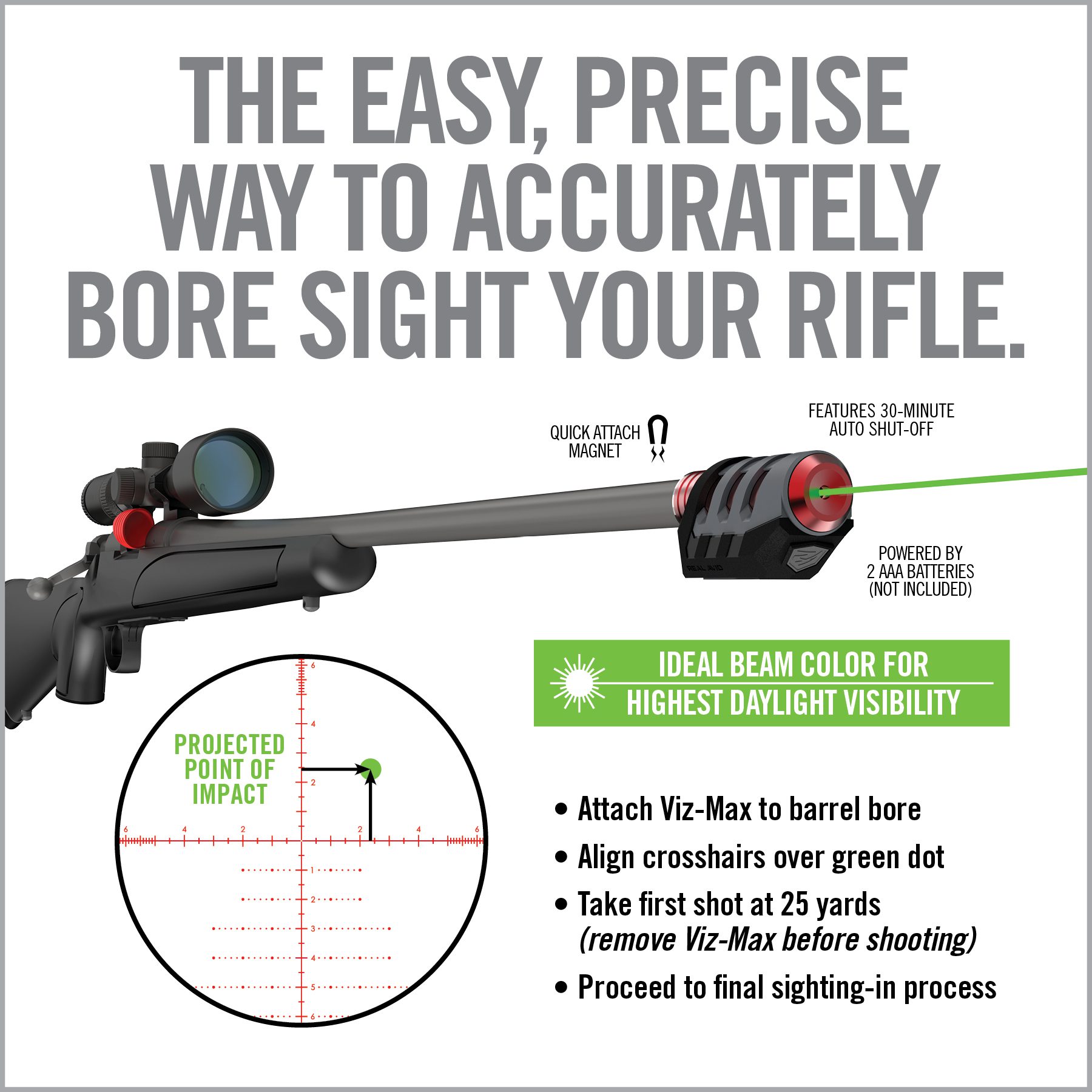
- Laser boresighting: Using a laser device to project a dot onto a target, guiding adjustments.
Why Boresighting Matters
Proper boresighting has several important benefits:
- Ammunition savings: You use fewer rounds to zero your rifle.
- Time efficiency: You spend less time adjusting sights.
- Safety: Initial shots are more predictable, reducing stray bullets.
- Accuracy foundation: It provides a starting point for fine-tuning your scope.
Many shooters skip boresighting and go straight to the range, wasting time and ammo. Starting with boresighting gives you a clear advantage and builds good shooting habits.
Manual Boresighting Method
Manual boresighting requires no special equipment, just patience and attention to detail. It works well for bolt-action rifles and some single-shot models. Here’s how you can do it:
- Unload the rifle and ensure it’s safe.
- Remove the bolt so you can see through the barrel.
- Set the rifle on a stable surface, such as a sandbag or shooting rest.
- Place a target about 25 yards away.
- Look through the barrel and adjust the rifle until the target’s center is visible.
- Without moving the rifle, adjust the scope’s windage and elevation so the reticle aligns with the target center.
- Re-check the barrel and scope alignment several times.
Example: Bolt-action Rifle
For a Remington 700 or similar rifle, manual boresighting is straightforward. After removing the bolt and stabilizing the rifle, you can visually match the barrel and scope to a target. This method is reliable for new scopes or after major adjustments.
Laser Boresighting Method
Laser boresighters make the process faster and less dependent on visual alignment. There are two types:
- Cartridge laser boresighter: Fits into the chamber like a real cartridge.
- End-of-barrel laser boresighter: Inserts into the muzzle.
Laser Boresighting Steps
- Ensure the rifle is unloaded.
- Insert the laser boresighter according to the manufacturer’s instructions.
- Aim the rifle at a target, usually at 25 yards.
- Turn on the laser. It projects a dot onto the target.
- Adjust the scope so the reticle matches the laser dot.
- Remove the boresighter and check the alignment.
Laser boresighters are popular because they work with various rifles, including semi-automatics and rifles with fixed bolts. They are also helpful for those with limited vision or physical constraints.
Data Comparison: Manual Vs. Laser Boresighting
Here’s a comparison showing the practical differences between manual and laser boresighting:
| Method | Equipment Needed | Accuracy | Time Required | Best For |
|---|---|---|---|---|
| Manual | Bolt removal, stable rest | Good | Moderate | Bolt-action rifles |
| Laser | Laser boresighter | Very Good | Fast | All rifle types |

Choosing The Right Boresighter
When picking a boresighter, consider these factors:
- Rifle type: Make sure the boresighter fits your rifle (chamber or muzzle).
- Budget: Prices range from $25 to $200. Higher-priced models often have more features.
- Ease of use: Cartridge types are easier for beginners.
- Durability: Metal body boresighters last longer.
Comparison Table: Popular Boresighters
Here are some common boresighters and their features:
| Brand | Type | Price (USD) | Compatible Rifles | Special Features |
|---|---|---|---|---|
| SiteLite SL-100 | End-of-barrel | 120 | Most rifles | Adjustable adapters |
| LaserLyte | Cartridge | 60 | Specific calibers | Battery included |
| Bushnell | End-of-barrel | 45 | Most rifles | Multiple caliber tips |
Boresighting For Different Rifle Types
Boresighting is not limited to bolt-action rifles. Here’s how it applies to other types:
Semi-automatic Rifles
Most semi-automatic rifles don’t allow you to look down the barrel. A laser boresighter is usually the best option. It avoids the need to remove bolts and works quickly.
Lever-action Rifles
Some lever-action rifles allow manual boresighting if you can remove the bolt. If not, use a laser boresighter.
Shotguns
Boresighting is less common for shotguns, but laser devices can help align red dot sights or scopes.
How do you sight in a red dot optic step by step
Common Mistakes And How To Avoid Them
Many shooters make errors during boresighting. Here are five frequent mistakes:
- Not stabilizing the rifle: Small movements change alignment. Always use a stable rest.
- Wrong distance to target: Too close or too far can mislead adjustments. 25 yards is standard.
- Skipping repeated checks: Always re-check alignment after each adjustment.
- Leaving the laser on too long: Drains batteries quickly.
- Using a dirty barrel: Dirt can block the laser or affect manual sighting.
Non-obvious Insight
One thing many beginners miss: parallax errors. If your scope has a parallax adjustment, set it for the distance used during boresighting. Otherwise, the reticle may not actually be aligned with the barrel at your chosen distance.
Fine-tuning After Boresighting
Boresighting gets you close to zero, but it doesn’t guarantee perfect accuracy. After boresighting, you should:
- Fire three-shot groups at 25 yards.
- Adjust scope for windage and elevation based on impact.
- Move to 100 yards for final zeroing.
A common mistake is adjusting after each shot. Always shoot a group before making changes. This avoids chasing single, stray shots and gives a true average.

Advanced Tips For Better Results
- Use high-contrast targets: They help you see the alignment more clearly.
- Check in different lighting: Some lasers are hard to see in bright light.
- Clean your barrel and optics before boresighting.
- Record your adjustments: Keep a notebook for scope settings. This helps if you change optics or need to reset after travel.
- Double-check mounting: Loose scope rings can ruin boresighting. Tighten all screws before starting.
Safety Considerations
Always make sure your rifle is unloaded before boresighting. Use a chamber flag or visual check if possible. Never point the rifle at anything you wouldn’t want to shoot, even during boresighting.
Real-world Examples And Data
Boresighting is common in hunting, competition shooting, and tactical situations. For example, hunters who travel to new areas often re-boresight rifles after flights to ensure accuracy. Competition shooters save money and time by starting with boresighting before every season.
A test by the National Shooting Sports Foundation showed that shooters who boresighted saved an average of 12 rounds during initial zeroing compared to those who did not.
Boresighting Vs. Zeroing: Key Differences
Many confuse boresighting with zeroing. Here’s a clear comparison:
| Aspect | Boresighting | Zeroing |
|---|---|---|
| Purpose | Align barrel and sights | Match point of impact with point of aim |
| Live Fire | No | Yes |
| Tools | Manual or laser | Scope, rifle, ammo |
| Final Result | On paper, close to target | On target, precise zero |
Frequently Asked Questions
How Accurate Is Boresighting?
Boresighting puts your shots close to the target center but is not a replacement for zeroing. Expect shots to be within 2–4 inches at 25 yards if done correctly. Always finish with live fire adjustments.
Can I Boresight Without Removing The Bolt?
Some rifles, like semi-automatics, don’t allow bolt removal. In these cases, use a laser boresighter. It works through the muzzle or chamber and doesn’t require barrel access.
What Distance Should I Use For Boresighting?
Most shooters use 25 yards. This distance gives a good starting point. After boresighting, move to 100 yards for final zeroing, especially for hunting or long-range shooting.
Is Boresighting Necessary With Iron Sights?
Yes, boresighting helps with iron sights as well as scopes. It ensures the sights are aligned with the barrel, making initial adjustments easier.
Are There Any Safety Risks With Laser Boresighters?
Laser boresighters are safe when used properly. Avoid direct eye exposure and always check that the rifle is unloaded. Use the laser only as directed by the manufacturer.
Final Thoughts
Boresighting is a practical skill for anyone who uses rifles. It saves ammunition, time, and helps build confidence in your shooting equipment. Whether you use manual or laser methods, the key is careful alignment and repeated checks. Start with boresighting, then move to live fire for final zeroing. With proper boresighting, your rifle will be ready for accurate shooting, whether at the range or in the field.

Leave a Reply