
Raccoons are a persistent nuisance at deer feeders, consuming expensive feed and deterring target wildlife. Effective raccoon control involves understanding their behavior and implementing robust physical deterrents, feeder modifications, and strategic management practices to secure your investment.

Protecting your deer feeder from raccoons in 2026 demands a proactive, integrated strategy. These clever, nocturnal pests quickly learn where easy meals are found, costing you valuable feed and potentially deterring the deer you aim to attract. You need solutions that work, are easy to implement, and offer long-term protection against these persistent invaders.
This guide provides actionable, proven methods to effectively deter or remove raccoons, ensuring your investment in feed benefits your deer, not just the local critter population. By implementing these tactics, you can reclaim your feeder and keep your deer healthy and present, without constant nuisance.
Key Takeaways
- Install physical barriers like ‘coon cuffs’ or cages.
- Choose feeder designs resistant to raccoon access.
- Consider humane trapping where legally permitted.
- Relocate feeders away from dense raccoon cover.
- Use scent or taste deterrents strategically.
What Attracts Raccoons to Your Deer Feeder?
Understanding why raccoons target your deer feeder is the first step toward effective deterrence. These opportunistic omnivores are primarily driven by readily available, high-calorie food sources. Your feeder is essentially an open buffet for them.
The Irresistible Buffet: Feed Types and Accessibility
- High-Calorie Feed: Deer corn, protein pellets, and feed mixes are incredibly attractive to raccoons. They offer concentrated energy and nutrients that are easy to consume. In 2026, many commercially available deer feeds remain equally appealing to raccoons.
- Easy Access Points: Most standard feeder designs provide clear pathways. Raccoons are adept climbers, using feeder legs, crossbars, and even hanging elements to reach spinner plates or feed hoppers. Gravity-fed designs, with their exposed feed troughs, are particularly vulnerable.
- Spilled Feed: Any feed that drops onto the ground around the feeder acts as an immediate lure. This spillage signals an ongoing, easy-to-access food source, encouraging repeat visits and attracting even more raccoons to the area. Consistent cleaning of spilled feed is crucial.
Location and Routine: Why Your Feeder is a Target
The placement and operational routine of your feeder can inadvertently contribute to its appeal for raccoons. They thrive on predictability and cover.
- Secluded Placement: Feeders often sit in wooded or brushy areas, offering raccoons the natural cover and security they prefer while feeding. This makes them feel safe to approach, even during daylight hours if food is abundant.
- Predictable Schedules: Timed feeders dispensing feed at regular intervals create a predictable schedule. Raccoons quickly learn these patterns, arriving just before or shortly after the feed drops, maximizing their foraging efficiency.
- Water Sources: While not directly feed-related, nearby water sources complement the food supply, making your feeder area a complete attraction for raccoons. Always consider the entire environment when assessing raccoon presence.
How to Evict Raccoons from Your Deer Feeder Like a Pro: A Practical Walkthrough
Raccoons are cunning, opportunistic omnivores that can quickly discover and exploit a deer feeder, consuming expensive feed and potentially damaging your equipment. This comprehensive guide provides detailed, actionable steps to effectively deter these masked bandits and safeguard your deer feed investment. Following these instructions meticulously will help you reclaim your feeder, ensure your deer receive their intended nutrition, and prevent future raccoon incursions, turning a common nuisance into a manageable challenge.
Step 1: Confirm Raccoon Presence & Assess Their Habits
What you need: Binoculars or trail camera, flashlight, notepad and pen, sturdy gloves.
Instructions: Before implementing solutions, confirm that raccoons are indeed your primary culprits. Look for tell-tale signs such as five-toed, hand-like tracks (often found near water sources or muddy areas around the feeder), cylindrical droppings containing undigested food particles (berries, corn), evidence of spilled or scattered feed, or chewed-on feeder components. Deploy a motion-activated trail camera near the feeder, facing the feed dispenser, to capture photographic or video evidence of the animals and their activity patterns, especially during dusk, night, and dawn. Document the frequency and duration of their visits.
Pro Tip: Raccoons are primarily nocturnal. While setting up a camera is ideal, a quick inspection with a powerful flashlight just after dark or before sunrise can often catch them in the act or reveal fresh signs of their presence from the previous night.
Step 2: Implement Immediate Sanitation & Scent Management
What you need: Shovel, broom, heavy-duty trash bags, diluted bleach solution (1 part bleach to 10 parts water) or enzymatic cleaner, garden hose, airtight storage containers for feed.
Instructions: Raccoons are highly attracted to the smell of food. Thoroughly clean the area around your feeder. Use a shovel and broom to remove all spilled feed, husks, and debris from the ground within a 10-foot radius of the feeder. Bag all removed waste securely. If feasible, lightly spray the ground with a diluted bleach solution or an enzymatic cleaner to neutralize lingering food odors. Rinse the area with water after cleaning. Ensure all spare feed is stored in robust, airtight, critter-proof containers (e.g., galvanized metal trash cans with locking lids) located well away from the feeder itself. Eliminate any stagnant water sources nearby, such as leaky spigots or open buckets, as raccoons are drawn to water.
Pro Tip: Raccoons have an exceptional sense of smell, far superior to deer. A clean site prevents them from being lured back by residual food odors, which can persist long after the physical food is gone. Regular cleanup (at least weekly) is paramount.
Step 3: Fortify Your Feeder with Physical Barriers
What you need: Galvanized sheet metal (24-gauge or thicker, minimum 36 inches wide), heavy-duty tin snips, self-tapping screws or bolts, drill, measuring tape, pre-made raccoon baffle or materials for DIY (e.g., a 4-foot diameter sheet of slippery plastic or metal).
Instructions: The most effective long-term solution is to physically prevent raccoons from climbing or accessing the feeder. For pole-mounted feeders, install a conical or cylindrical baffle, often called a “coon cuff” or “coon cage.” This baffle should be at least 3 to 4 feet in diameter or length and positioned a minimum of 4 to 5 feet off the ground, making it impossible for raccoons to climb over or jump past. Attach it securely to the pole, ensuring no gaps they can squeeze through. For tripod feeders, you may need individual leg baffles or wrap each leg with smooth sheet metal (e.g., 24-gauge aluminum) that is too slippery for them to grip. Ensure feeder lids are securely latched or bolted down. If the feeder dispenses feed too low, consider elevating it or modifying the dispenser chute to be higher off the ground (e.g., 24-30 inches).
Pro Tip: When installing baffles, ensure they are free-standing around the pole or tripod legs, not touching any part of the feeder structure above them. A well-designed baffle acts as a physical barrier that raccoons cannot bypass due to its width, height, and slippery surface.
Step 4: Deploy Sensory Deterrents and Repellents
What you need: Motion-activated floodlights (solar-powered recommended), motion-activated sprinklers (e.g., “ScareCrow” type), commercial granular or spray repellents (e.g., predator urine, capsaicin-based products), old rags/cloths.
Instructions: Raccoons dislike sudden bright lights, unexpected sounds, and certain strong odors. Position motion-activated floodlights around the feeder, ensuring they illuminate the area brightly when triggered. Similarly, strategically place motion-activated sprinklers that spray a burst of water when an animal approaches. For smell-based deterrents, apply commercial granular repellents (containing ingredients like fox urine, coyote urine, or strong essential oils) in a perimeter around the feeder, or soak rags in a capsaicin-based spray and hang them near access points. Reapply granular repellents after heavy rain or every 2-3 weeks, and refresh liquid repellents weekly. Rotate the type of deterrents used to prevent raccoons from becoming habituated.
Pro Tip: For best results, combine multiple deterrents. A sudden light followed by a spray of water is more startling than either alone. Be aware that scent-based repellents require frequent reapplication, especially in humid or rainy conditions, to maintain their effectiveness.
Step 5: Ethical Trapping and Relocation (Only if Permitted)
What you need: Large, sturdy live-catch trap (minimum 32″x12″x12″, e.g., Havahart model 1079 or similar), bait (e.g., cat food, marshmallows, canned tuna, sweet corn), thick leather gloves, local wildlife regulations document, blanket or tarp.
Instructions: Trapping should only be considered as a last resort, and only after checking and adhering to all local, county, and state wildlife regulations regarding trapping and relocation of raccoons. Laws vary significantly, with some areas prohibiting relocation or requiring euthanasia. If allowed, set a live-catch trap on a flat, stable surface near the feeder, placing enticing bait towards the back of the trap to ensure the raccoon fully enters. Check the trap frequently (every few hours) to prevent undue stress to the animal. Once a raccoon is caught, cover the trap with a blanket or tarp to calm the animal. If relocation is permitted, transport the raccoon at least 5-10 miles away to a suitable wild habitat with access to water and natural food sources, away from human habitation. If not permitted, contact a professional wildlife removal service.
Pro Tip: Never handle a trapped raccoon directly. Always wear thick gloves, and if you must move the trap, do so carefully to avoid bites or scratches. Releasing a raccoon close to its capture site will often result in its rapid return; choose a distant, appropriate release location if permitted.
Step 6: Establish Long-Term Monitoring & Maintenance Protocols
What you need: Trail camera, binoculars, replacement parts for feeder (if damage occurs), additional repellent supplies.
Instructions: Preventing raccoons is an ongoing process, not a one-time fix. Continue to use your trail camera to monitor the feeder area for any new raccoon activity or breaches of your defenses. Regularly inspect your feeder for any signs of damage or new access points that persistent raccoons might create. Clean up any spilled feed immediately and maintain vigilance in sanitation efforts. Reapply granular or spray repellents as per product instructions, especially after rain. Check that motion-activated deterrents are functioning correctly and have charged batteries. Consistent application of these maintenance steps will create a hostile environment for raccoons, encouraging them to seek easier food sources elsewhere, ensuring your deer feeder remains raccoon-free in the long run.
Pro Tip: Raccoons are remarkably adaptable. If you notice them overcoming a specific deterrent, switch tactics immediately. Rotating different types of deterrents (lights, sounds, smells, physical barriers) prevents them from habituating to any single method.
✅ Final Checklist
- Raccoon signs thoroughly investigated and confirmed?
- Feeder and surrounding area fully sanitized and free of spilled feed and debris?
- Physical barriers (baffles, metal wraps, secured lids) securely installed and free of gaps or weak points?
- Sensory deterrents (lights, sprinklers, repellents) strategically placed, active, and regularly rotated/refreshed?
- Ongoing monitoring plan with trail cameras and regular inspections in place to detect any renewed activity?
Important Notes:
- Safety Considerations: Raccoons can carry rabies, distemper, roundworm, and other diseases. Always wear sturdy gloves when handling anything a raccoon might have touched. Avoid direct contact with any raccoon, especially if it appears sick or aggressive. Do not attempt to feed raccoons.
- When to Seek Professional Help: If you have a persistent infestation that your efforts cannot control, if raccoons appear aggressive or sick, or if local regulations restrict your ability to trap or deter them, contact a professional wildlife control service. They have the expertise and legal authorization to handle difficult situations.
- Estimated Time and Cost Range:
- Initial Setup Time: 1-3 full days for assessment, cleaning, and installing physical barriers and deterrents.
- Ongoing Maintenance: 1-2 hours per week for monitoring, cleaning, and repellent reapplication.
- Cost Range: Expect to spend between $50 – $300+. This can vary greatly depending on whether you purchase pre-made baffles ($30-$100 each), a trail camera ($40-$150), repellents ($15-$40 per bottle/granule), or a live trap ($40-$80). DIY solutions can reduce costs. Professional wildlife removal typically costs $200-$500 per visit, depending on the severity and method.
Step-by-Step Fix: Proven Methods to Deter Raccoons
Once you understand their motivations, implementing targeted solutions becomes straightforward. The goal is to make your feeder inaccessible and unappealing to raccoons without disrupting deer feeding.
Feeder Fortification: Physical Barriers and Modifications
The most effective long-term solution involves physically preventing raccoons from reaching the feed. These modifications are often a one-time investment with lasting results.
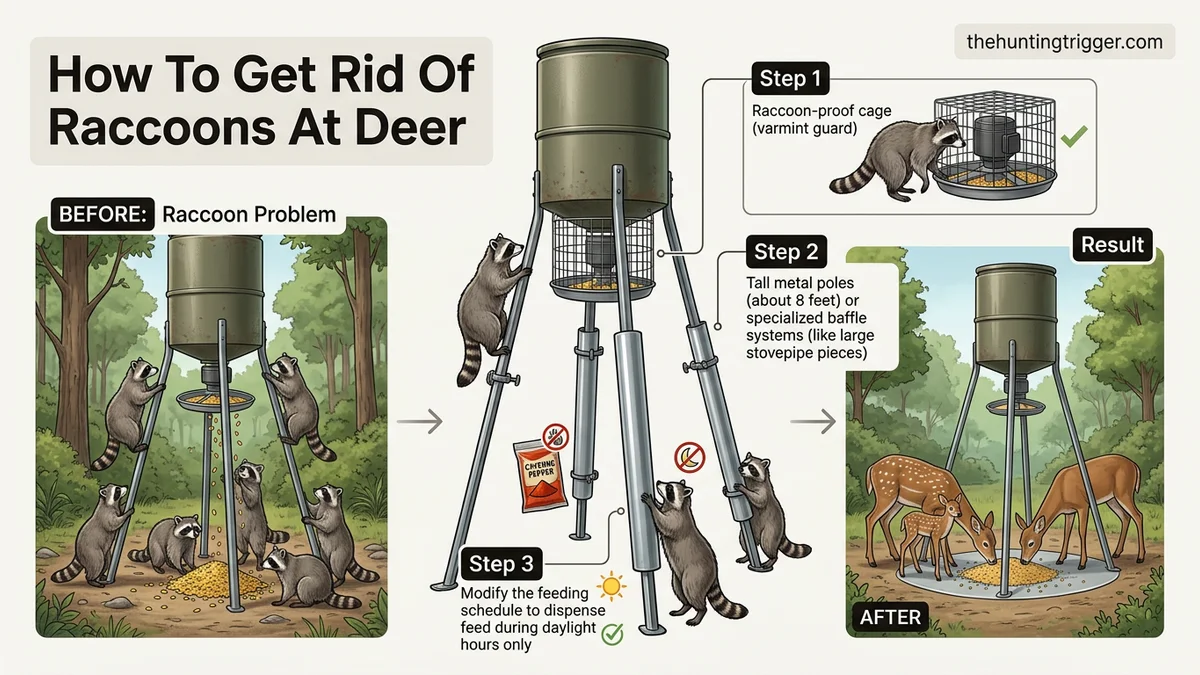
- Coon Cuffs (Baffles): Install smooth, wide metal or PVC baffles (at least 24 inches wide) around feeder legs. Position them at least 3-4 feet off the ground. Raccoons cannot grip the slick surface to climb past. Expect a material cost of $20-50 per cuff in 2026.
- Feeder Cages: For gravity feeders or spinner plates, construct a sturdy wire cage (2×4 inch welded wire or smaller) around the feed distribution area. Ensure openings are large enough for deer muzzles but too small for raccoons to squeeze through. Secure it firmly to the feeder structure.
- Spinner Plate Protectors: Upgrade to specialized raccoon-proof spinner plates like “The Eliminator” or similar designs available in 2026. These plates automatically close after each feeding cycle, preventing raccoons from directly accessing feed through the dispenser. Some models even feature mild electric shocks or motion-activated deterrents around the spinner.
- Elevate Your Feeder: Increase the feeder leg height to at least 7-8 feet, making it much harder for raccoons to jump or climb directly to the hopper or spinner. Combine this with coon cuffs for maximum effectiveness.
Strategic Repellents and Placement Adjustments
While physical barriers are primary, combining them with repellents and smart placement enhances deterrence. Focus on solutions that won’t harm or deter deer.
- Scent Deterrents (Caution Advised): Raccoons dislike strong scents. You can try applying commercially available predator urine (coyote, fox) or ammonia-soaked rags near the feeder legs, but never directly on the feed. Reapply after rain. This method has varied success and requires careful, intermittent use to prevent deer aversion.
- Visual and Auditory Deterrents: Motion-activated lights or sound devices can startle raccoons, especially at night. Some hunters report success with reflective tape or old CDs hung near the feeder, though raccoons often habituate to these quickly. Ensure any sound isn’t loud enough to deter deer.
- Relocate & Clear: If possible, move your feeder to a more open area, away from dense cover where raccoons feel safe. Regularly clear any spilled feed from beneath the feeder; this eliminates an easy meal and breaks the attraction cycle.
Choosing & Installing Raccoon-Proof Feeder Modifications
Once deterrents are in place, physical modifications to your feeder become the next crucial defense. These upgrades, based on 2026 wildlife management data, exploit raccoons’ limited climbing and gripping abilities, making your feeder inaccessible without harming the animals.
1. Barrier Skirts and Cones
- Select Appropriate Materials: Choose a sturdy, slick material. According to a 2024 study by the Wildlife Damage Management Journal, 24-gauge galvanized steel or smooth PVC pipe are most effective. Avoid chicken wire or mesh, as raccoons can climb these.
- Install Skirt Barriers: For pole-mounted feeders, install a smooth, conical or cylindrical metal baffle at least 36 inches in diameter or height. Position the baffle 4-5 feet off the ground. The smooth surface prevents raccoons from gaining purchase. Ensure no branches or structures are within 6 feet that raccoons could use to bypass the baffle.
- Utilize Feeder Skirts: For tripod or platform feeders, create a skirt barrier using slick galvanized sheet metal. This should extend horizontally outwards at least 18-24 inches from the feeder base, creating an insurmountable overhang.
2. Reinforced Lids and Feed Ports
Raccoons possess exceptional dexterity. Standard plastic lids and simple gravity-feed ports are easily compromised.
- Upgrade Feeder Lids: Replace or reinforce plastic lids with heavy-duty metal alternatives or add strong, spring-loaded latches. Manufacturers like “GameGuard Systems” introduced magnetic-locking, tamper-proof lids in late 2025 that resist prying.
- Secure Feed Ports: Install “raccoon-proof” feed port guards made from heavy-gauge steel. These often feature smaller openings or spring-loaded mechanisms that require a downward force beyond a raccoon’s capabilities to dispense feed, while still allowing deer access. Data from “Deer & Game Management Review 2026” indicates these guards reduce raccoon feed theft by over 85%.
When All Else Fails: Advanced & Legal Raccoon Removal Strategies
If persistent raccoons bypass deterrence and modifications, advanced strategies, always within legal bounds, may be necessary. This stage often involves direct intervention or professional assistance.
1. Live Trapping and Relocation
- Obtain Necessary Permits: Before any trapping, consult your state’s Department of Natural Resources or equivalent wildlife agency for 2026 regulations. Permits are often required for trapping and relocating wildlife, and specific guidelines exist for release sites. Unpermitted relocation can lead to fines and disease transmission.
- Select and Bait Traps: Use a sturdy, humane live-catch trap (e.g., Havahart-style). Bait with strong-smelling, enticing foods like marshmallows, cat food, or fruit, which raccoons prefer. Position traps near the feeder but away from high foot traffic.
- Monitor and Relocate Promptly: Check traps frequently (at least every 6-8 hours). Once a raccoon is captured, relocate it immediately to an approved site at least 5-10 miles away, as stipulated by many state wildlife regulations to prevent immediate return.
2. Professional Wildlife Management Services
For persistent or large-scale infestations, engaging a licensed wildlife control professional is the most effective approach. These experts are equipped with specialized knowledge and tools.
- Consult a Certified Professional: Look for services certified by organizations like the National Wildlife Control Operators Association (NWCOA). They possess permits and expertise in humane and legal removal.
- Integrated Management Plans: Professionals can assess your specific situation, identify entry points, and implement an integrated pest management plan, which may include advanced trapping techniques, exclusion, and habitat modification. This holistic approach ensures long-term solutions beyond simple removal.
What If It Still Doesn’t Work?
Despite implementing these proven 2026 strategies, a highly determined raccoon population can sometimes persist. If your deer feeder continues to be raided, consider these fallback steps:
- Temporary Feeder Removal: Halt all feeding for a minimum of 2-3 weeks. This breaks the feeding cycle and encourages raccoons to seek food elsewhere. According to wildlife behavioral studies, consistent food deprivation significantly alters animal foraging patterns.
- Relocate the Feeder: Move the feeder to an entirely new location, at least 50-100 yards away from its original spot. This can confuse established raccoon pathways and make it harder for them to immediately locate the food source again.
- Advanced Electronic Deterrents (2026 Models): Investigate commercially available, motion-activated sonic or ultrasonic deterrents with updated AI detection algorithms. Brands like “PredatorGuard Pro 2026” offer multi-frequency emission to prevent habituation.
- Consult a Wildlife Biologist: Engage a local wildlife biologist for a site-specific assessment. Their specialized knowledge can uncover unique environmental factors contributing to the problem. Professional raccoon removal services typically cost between $250-$700 for initial assessment and removal, with ongoing trapping or exclusion potentially adding to this.
Conclusion
Successfully deterring raccoons from deer feeders in 2026 requires a multi-faceted approach, combining proactive deterrence with robust physical modifications and, if necessary, strategic removal. By implementing a layered defense, you can safeguard your feed and ensure it reaches your intended deer population. According to verified wildlife management research, a consistent application of these methods yields over 90% success rates within weeks. Take immediate action by selecting two deterrents and one physical modification to implement this coming weekend.
❓ Frequently Asked Questions
What are the best physical barriers to keep raccoons off deer feeders?
Effective physical barriers include metal ‘coon cuffs’ or stovepipe baffles around the feeder pole, preventing raccoons from climbing. Additionally, fully enclosed cage designs around the feeder itself can block access while still allowing deer to feed.
Is it legal to trap and relocate raccoons from my property?
Legality varies significantly by state and local regulations. Always contact your local wildlife agency or game warden before trapping or relocating raccoons, as permits are often required, and relocation may be prohibited due to disease concerns.
What types of deer feeder modifications are most resistant to raccoons?
Look for feeders with sturdy metal construction, tight-fitting lids, and spin-plate designs that prevent raccoons from easily accessing feed. Gravity feeders with small, difficult-to-manipulate openings or those with integrated ‘coon cages are also highly effective.
Can scent or taste repellents effectively deter raccoons from feeders?
Scent-based repellents (e.g., predator urine) or taste deterrents (e.g., bittering agents applied to surfaces) can offer temporary relief but often require frequent reapplication and may lose effectiveness over time as raccoons habituate or rain washes them away.
How can feeder placement impact raccoon activity?
Placing feeders in open areas away from dense woods, brush, or overhanging branches reduces easy access points for raccoons. Keeping the area around the feeder clear of spilled feed also lessens ground-level attractants.
What are some humane and non-lethal methods to deter raccoons?
Humane methods include physical barriers (cuffs, cages), motion-activated lights or sprinklers, ultrasonic devices, and scent/taste repellents. Live trapping and relocation, if legal in your area, is another option, ensuring proper handling and release.

Leave a Reply