
The whitetail deer, a common and majestic sight across North America, often sparks curiosity regarding its physical attributes. So, what is the average weight of a whitetail deer? Generally, adult whitetails weigh between 100 and 200 pounds, though this can vary significantly. Mature bucks typically fall into the 150-250 pound range, while does average 90-150 pounds.

Understanding these averages provides crucial insights, whether you’re a hunter evaluating a harvest, a wildlife enthusiast appreciating these animals, or a conservationist monitoring herd health. This data offers a foundational understanding of whitetail biology and ecology.
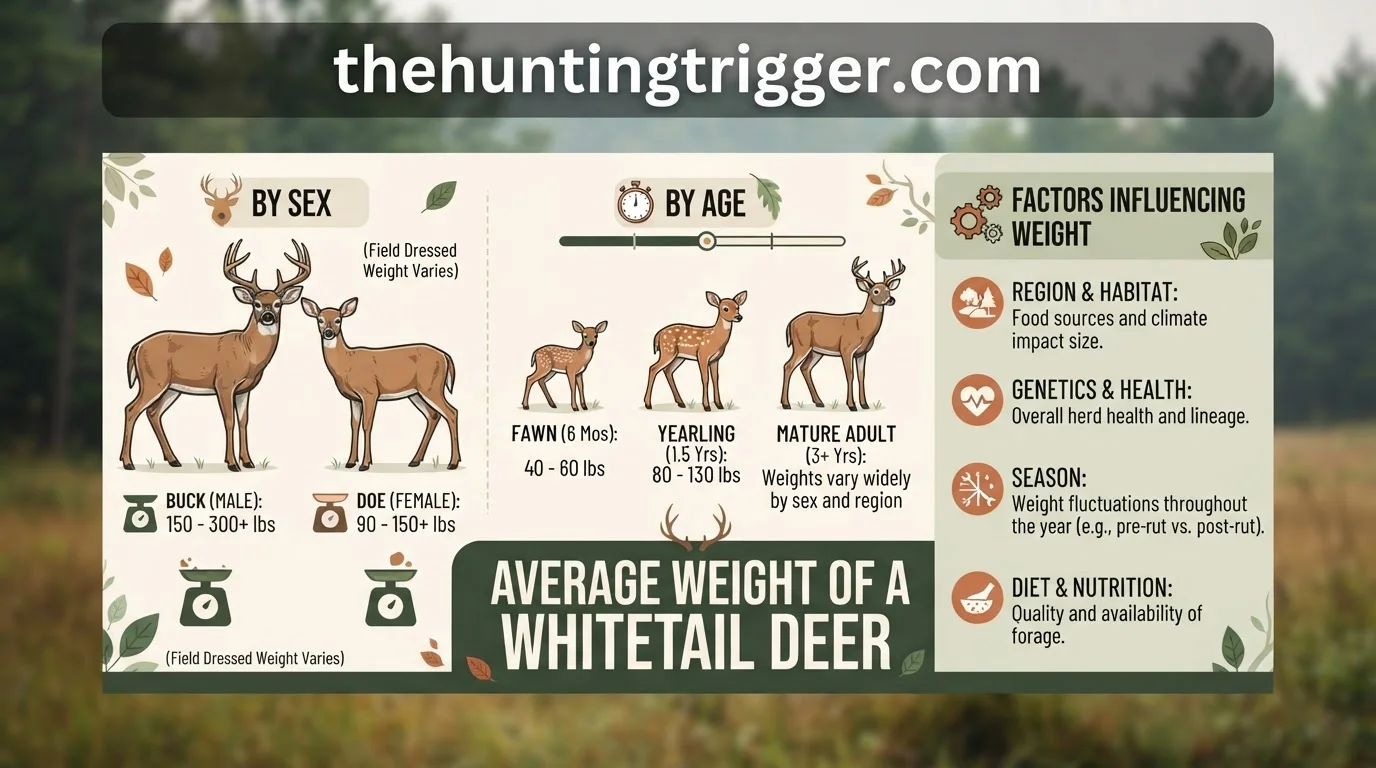
What Is The Average Weight Of A Whitetail Deer? An Overview
The average adult whitetail deer (Odocoileus virginianus) typically weighs between 100 and 200 pounds. This broad range provides a general starting point for understanding the species’ size across its extensive North American habitat.
However, this overall average is highly variable and serves only as an initial benchmark. Whitetail deer exhibit significant weight variation based on several critical factors, making a singular, precise average difficult to define.
The primary influences on an individual whitetail’s weight include its sex, age, and specific geographic location. Factors like habitat quality and available nutrition also play a substantial role in this Odocoileus virginianus weight variability, ensuring no two deer are exactly alike.
Understanding Whitetail Deer Weight by Sex and Age Class
The weight of a whitetail deer is fundamentally determined by its sex and age, creating distinct average ranges across the population. Adult male whitetail deer (bucks) are consistently heavier than adult females (does), a key biological difference influencing their average weights.
How Much Do Adult Whitetail Bucks (Male) Weigh?
Adult bucks typically exhibit a broad weight range, commonly falling between 150 and 300+ pounds. This significant variability is influenced by several factors, including their age, the specific region they inhabit, the quality and abundance of available nutrition, and the time of year.
A notable impact on buck weight is the ‘rut,’ or breeding season. Bucks can lose considerable weight during this period due to increased activity and reduced feeding as they focus on mating. They are often at their heaviest just before the rut begins in late fall.
What is the Average Weight of an Adult Whitetail Doe (Female)?
Adult whitetail does generally weigh less than bucks, with an average range of 80 to 150 pounds. Similar to bucks, their weight is subject to environmental factors such as age, geographic location, and the quality of their diet.
Pregnancy status is a major determinant of a doe’s weight, with pregnant does naturally weighing more than non-pregnant individuals. Lactating does may also show weight fluctuations.
Average Fawn Weight: From Birth to Juvenile
Whitetail fawns are relatively small at birth, typically weighing between 4 and 8 pounds. From this humble beginning, their weight rapidly increases during their first year of life.
Age significantly influences a deer’s weight gain throughout its life. Fawns transition from being dependent young to rapidly growing juveniles, reaching substantial percentages of their adult weight by their first winter, provided they have access to adequate nutrition.
How Geographic Location Impacts Average Whitetail Deer Weight
Northern vs. Southern Whitetail Deer: A Size Comparison
A fundamental principle in whitetail deer biology is that geographic location significantly influences their average weight. Deer in northern latitudes typically grow larger and heavier than those found in southern regions across North America.
This means a mature buck in the Midwestern United States, like Iowa or Wisconsin, will generally outweigh a comparably aged buck from the deep South, such as Florida or Louisiana, by a significant margin. This regional difference in pounds is a critical factor when considering average weights.
Climate and Forage: Driving Regional Weight Differences
The pronounced geographic variation in deer size is not arbitrary but directly linked to environmental factors. Climate, the availability of quality forage, and the distribution of specific whitetail subspecies all play critical roles in determining regional weight differences.
Colder northern climates often lead to adaptations for larger body mass, which aids in heat retention. More importantly, these regions frequently offer richer, more abundant food sources, including agricultural crops and diverse natural vegetation, providing the necessary nutrients for substantial growth.
Conversely, southern environments, while warmer, can sometimes present challenges like poorer soil quality, less nutritious native forage, or different subspecies adapted to smaller statures. This direct connection between habitat quality and deer biology largely explains why average weights vary so dramatically across the whitetail’s extensive range.
Live Weight vs. Dressed Weight: Key Differences for Whitetail Deer
Defining Live Weight for Whitetail Deer
Live weight refers to the total body mass of a whitetail deer before any processing has occurred. This is the animal’s full, natural weight as it stands, including all internal organs, blood, hide, and bones. When discussions revolve around the size of a deer in its natural state, live weight is the figure typically referenced.
Understanding Dressed Weight (Field-Dressed) for Deer
Dressed weight, often referred to as field-dressed weight, is the deer’s weight after specific internal components have been removed. This usually entails the removal of internal organs (viscera) from the body cavity, a common practice in the field after a successful hunt to cool the carcass and preserve the meat. Sometimes, this also accounts for significant blood drainage.
Confusing live weight with dressed weight is a common mistake when discussing the overall size or weight of a deer. Hunters and wildlife enthusiasts must understand this distinction for accurate communication.
Calculating the Live-to-Dressed Weight Ratio
There is a consistent relationship between a deer’s live weight and its dressed weight. Dressed weight typically represents about 70-80% of the animal’s live weight. This percentage can vary slightly depending on the individual deer’s condition and the exact method of dressing (e.g., gutting only versus also removing the head or hide).
For example, a whitetail deer with a live weight of 200 pounds would generally have a dressed weight ranging from 140 to 160 pounds. It is crucial to always clarify whether live or dressed weight is being referenced when discussing deer size to ensure precision and avoid misinterpretation.
What Factors Influence a Whitetail Deer’s Overall Weight and Health?
The Role of Nutrition and Habitat Quality in Deer Weight
Nutrition and habitat quality are paramount factors determining a whitetail deer’s potential weight and overall health. The availability of high-quality forage, rich in protein, essential minerals, and digestible energy, directly impacts a deer’s ability to grow, develop, and maintain body mass throughout its life.
Prime habitats offer a diverse array of nutritious plants. Conversely, poor habitat quality or environmental stressors, such as a prolonged drought season, can severely limit palatable vegetation. This scarcity often leads to reduced body weights and poorer health across the entire deer herd, even for genetically superior individuals.
How Population Density Affects Average Deer Size
Population density is another critical determinant of individual and average deer weight, often overlooked. When a deer population exceeds the carrying capacity of its habitat, intense competition for food resources inevitably occurs. This leads to a diminished quantity and quality of forage available per animal.
Overpopulation often results in stunted growth and lower average body weights across the entire herd, as resources are simply insufficient to support robust development for every deer. This scenario directly impacts the average health and weight of a deer herd, leading to smaller-bodied animals.
Genetics and Individual Health: Hidden Weight Determinants
Beyond environmental factors, an individual deer’s genetic makeup plays a significant role in its inherent potential for growth and size. Some deer are simply predisposed to be larger than others due to their inherited traits.
Additionally, a deer’s individual health status, including parasitic loads, past injuries, or chronic diseases, can directly impact its ability to thrive and gain weight. Seasonal changes also dramatically affect a deer’s weight, particularly for bucks.
Bucks typically build substantial fat reserves in the pre-rut period, reaching their peak annual weight. However, the energy demands and physical exertions of the breeding season cause a significant post-rut weight loss, often 15-25% of their body mass, before they begin to recover.
Separating Record-Breaking Weights from the Whitetail Deer Average
When discussing whitetail deer weight, it’s easy to be captivated by tales of colossal, record-breaking bucks often featured in hunting magazines. However, it’s crucial to understand that these exceptional animals are extreme outliers and not representative of the average or typical whitetail deer population.
These magnificent specimens achieve their extraordinary size due to a rare convergence of factors, including superior genetics, an ideal habitat providing abundant high-quality nutrition, and reaching an advanced age. Such perfect conditions are uncommon across the broader deer population.
Basing expectations or averages on these rare, record-setting animals would be misleading. The “average” weight is a statistical representation of the typical deer found, not the maximum potential weight. It reflects the norm, not the extraordinary, and should guide realistic understanding.
How Does Whitetail Deer Weight Compare to Other North American
To truly appreciate the average weight of a whitetail deer, it’s helpful to place it in context alongside other cervid species found across North America. While whitetails are a dominant and widespread species, their size varies significantly when compared to their relatives, from similarly-sized deer to much larger, more imposing animals.
Mule deer, another common and iconic North American deer, often share a similar weight class with whitetails, though they can average slightly larger. A typical adult mule deer buck might weigh between 150 and 300 pounds, while whitetail bucks commonly range from 150 to 200 pounds.
Beyond weight, mule deer are distinguished by their bifurcated (forked) antlers and a rope-like tail with a black tip, in contrast to the whitetail’s broad, flag-like tail, which is white underneath.
The comparison shifts dramatically when looking at Elk, also known as Wapiti. These magnificent creatures are in a different genus altogether and are substantially larger than whitetails. An adult elk bull can easily weigh between 700 and 1,000 pounds, making them several times heavier than even the largest whitetail buck. Their imposing size and massive antlers set them apart as one of the continent’s largest land mammals.
North America also hosts a few introduced cervid species, though they are less widespread. Red deer, for instance, are Eurasian natives that have established populations in some areas. They typically fall in a weight class between mule deer and elk, with adult stags weighing around 350 to 500 pounds.
Fallow deer, another introduced species, are generally closer in size to whitetails or slightly smaller, with bucks weighing roughly 150 to 200 pounds. They are often recognized by their distinctive palmate antlers and spotted coats.
Understanding these comparisons highlights the whitetail deer’s intermediate position in the spectrum of North American cervid sizes. They are a medium-sized deer, larger than some but dwarfed by species like the elk, offering a clear reference point for their average weight.
How to Read This Comparison Table
This table provides a comparative overview of the average live weights for several common and introduced cervid species found in North America, alongside their key distinguishing features. The “Species” column lists the type of deer or cervid being referenced. “Avg. Adult Male Weight (lbs)” and “Avg. Adult Female Weight (lbs)” represent the typical range in pounds for mature individuals of each sex. These ranges are general averages and actual weights can vary significantly based on factors such as geographic location, age, diet, and overall health.
The “Key Distinguishing Feature” column offers a brief physical characteristic that helps differentiate each species, beyond just weight. It is important to note that all weights provided are for live animals, not dressed weight, which would be lower. This table is intended to provide high-confidence, broad comparative data. For precise data on specific populations or regions, further verification is recommended, as local variations can influence these averages.
The Importance of Understanding Whitetail Deer Weight in Wildlife
Deer Weight as a Herd Health Indicator
Whitetail deer weight is a critical metric for assessing overall herd health. It provides a direct, measurable indicator of an individual animal’s well-being and, by extension, the ecological stability of its population.
Low average weights across a herd, especially in specific age classes, can signal underlying issues. For instance, sustained low average weights might point to overpopulation, stressing the available food resources, or indicate poor habitat quality.
This data contributes to a “Body Condition Score,” a widely used tool that helps wildlife biologists evaluate the nutritional status of deer. It provides crucial insights for proactive conservation efforts and identifying environmental stressors.
Implications for Hunting and Game Processing
For hunters, understanding whitetail deer weight has practical relevance both before and after a harvest. It aids in estimating the size and age class of a potential game animal in the field, helping to make informed decisions.
Post-harvest, knowing the typical average weights helps hunters prepare for proper game processing. It influences logistical aspects like transportation, butchering estimates, and the expected yield of usable meat.
Contributing to Effective Whitetail Deer Management
Deer weight data is fundamental to wildlife management: application. It directly informs decisions on harvest quotas and permit allocation. Managers analyze average weights to gauge if a population is thriving and balanced with its ecosystem.
If average weights consistently decline, it often suggests a herd is exceeding its habitat’s carrying capacity. This prompts managers to adjust harvest limits to balance the population with available resources, ensuring long-term sustainability.
Thus, ‘deer weight’ in the whitetail context is a key metric, allowing for adaptive management strategies that maintain healthy deer populations and robust ecosystems.
Key Takeaways
-
✓
Average whitetail deer weights vary significantly by sex and age, with adult does typically 90-140 lbs and bucks 150-200 lbs. -
✓
Geographic location, habitat quality, and diet are major determinants of a whitetail deer’s overall size and weight, forming a core concept. -
✓
It’s crucial to distinguish between ‘live weight’ (total body weight) and ‘dressed weight’ (weight after internal organs are removed) for accurate assessment. -
✓
Optimal nutrition, genetics, and overall health factors directly influence a deer’s ability to reach its full weight potential and maintain it. -
✓
Understanding average whitetail weights is fundamental for wildlife management, population assessment, and sustainable hunting practices, providing a comprehensive overview.
❓ Frequently Asked Questions
1
What is the average weight of a whitetail deer?
The average weight of a whitetail deer varies considerably. Adult does typically weigh between 90-140 pounds, while mature bucks generally fall within the 150-200 pound range. These figures are influenced by factors like age, sex, geographic region, and the quality of their diet and habitat, providing a basic definition.
2
How does whitetail deer weight vary by sex and age?
Whitetail deer weight primarily increases with age until maturity, usually around 4.5 to 5.5 years. Bucks are consistently heavier than does at all age classes due to sexual dimorphism and greater muscle mass, particularly during their prime reproductive years. Fawns of both sexes start small and grow rapidly, offering a fundamental concept.
3
Why is understanding whitetail deer weight important?
Understanding whitetail deer weight is crucial for wildlife management, assessing population health, and making informed hunting decisions. It helps biologists monitor habitat quality and nutrient availability, informs harvest quotas, and provides hunters with expectations for meat yield and trophy potential. This knowledge offers a vital overview.
4
What factors benefit a whitetail deer’s weight?
Several factors benefit a whitetail deer’s weight, including excellent nutrition from abundant forage, rich soils, and supplemental food sources. Favorable genetics, proper age structure in the herd, and a low-stress environment with minimal disease and predation also contribute significantly to heavier, healthier deer, forming the basics of their growth.
5
How can I estimate a whitetail deer’s weight in the field?
To estimate a whitetail deer’s weight in the field, observe its body condition: overall size, belly sag, and muscle definition. Compare it to known averages for its sex and estimated age. While direct weighing is most accurate, visual assessment, especially comparing to reference photos, can provide a reasonable estimate before harvest, giving a practical overview.
6
What is the typical weight range for an adult whitetail deer?
Adult whitetail deer generally weigh between 100 to 200 pounds, but this is a broad average. Bucks can range from 150-300+ lbs, and does from 80-150 lbs.


Leave a Reply