
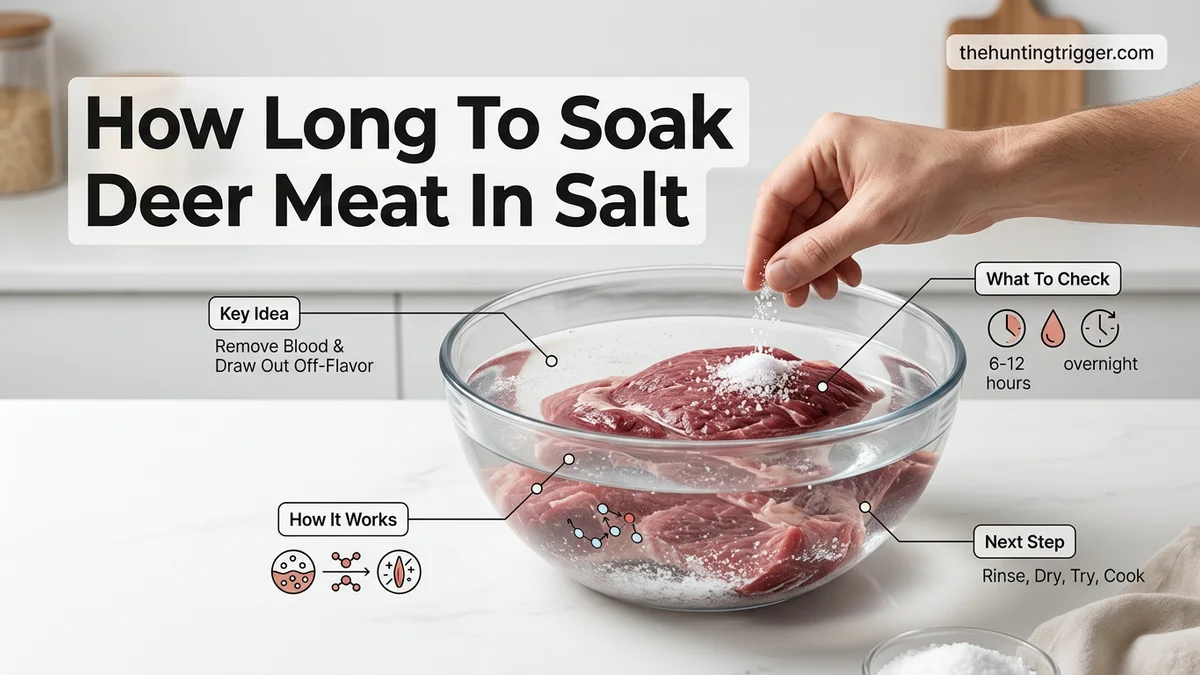
The optimal time to soak deer meat in salt water is typically 2-12 hours, with overnight being common, primarily to draw out blood and reduce strong gamey flavor. This process helps create a milder, cleaner flavor profile and can contribute to tenderizing.


For optimal flavor and tenderness, you should plan to soak deer meat in a salt water solution for 2 to 12 hours, with an overnight soak (8-12 hours) often yielding the best results for most cuts by 2026 standards. The primary goal of this crucial pre-cooking step is to actively draw out residual blood and significantly reduce the strong, often intense “gamey” flavor that some find off-putting.
This simple yet effective technique transforms venison. By removing unwanted elements, your deer meat will develop a milder, cleaner, and more approachable flavor profile. This makes it far more versatile for a wider array of culinary applications, ensuring a better meal for you and your guests.
Key Takeaways
- Soak 2-12 hours for best results.
- Use 1 tbsp salt per quart cold water.
- Rinse meat thoroughly after soaking.
- Soaking reduces gaminess and blood.
- Keep meat refrigerated during soak.
Why Deer Meat Needs Soaking: Understanding Gaminess and Blood
Deer meat, or venison, can sometimes carry a robust flavor often described as “gamey.” This distinctive taste largely stems from a combination of the animal’s diet, activity level, and crucially, the presence of residual blood in the muscle tissue. A salt water soak directly addresses these last two factors, working to improve the meat’s overall quality before cooking.
The Role of Blood in Flavor
During the butchering process, even well-field-dressed deer meat can retain some blood within its muscle fibers. This residual blood contributes a metallic, livery taste that can be quite pronounced, especially in older deer or those not properly bled out. Soaking in salt water leverages the principles of osmosis, where the salt solution actively pulls these blood-borne compounds out of the meat cells and into the surrounding water. The longer the soak (within the recommended timeframe), the more effectively this blood is removed, leading to a much cleaner taste.
Taming “Gaminess”
While an animal’s diet certainly influences its flavor, a significant portion of what we perceive as “gaminess” in venison is directly linked to the presence of blood and certain metabolic compounds. By consistently drawing these out, the salt water soak significantly reduces the intensity of these flavors. You’re not eliminating the unique character of venison, but rather mellowing its sharp edges. The result is a more balanced flavor that allows the natural, earthy notes of the meat to shine through without being overshadowed by an overpowering “gamey” taste.
How to Properly Soak Deer Meat in Salt Water (Step-by-Step Guide)
Achieving the best results from your venison soak requires proper preparation of both the brine and the meat. This isn’t just about throwing salt in water; precise ratios and careful handling ensure maximum flavor improvement and food safety for your 2026 culinary endeavors.
Preparing Your Brine Solution
Creating an effective salt water solution is straightforward. You’ll need cold water and non-iodized salt. Iodized salt can impart an undesirable metallic flavor to the meat, so avoid it. Kosher salt or canning salt are excellent choices. The recommended ratio is 1 tablespoon of non-iodized salt per quart (or liter) of cold water. Start by dissolving the salt thoroughly in a small amount of warm water, then add it to the larger volume of cold water. Ensure the solution is completely chilled before adding your meat.
- Salt Type: Use non-iodized salt (e.g., Kosher or canning salt).
- Ratio: 1 tablespoon of salt per quart/liter of cold water.
- Preparation: Dissolve salt completely before submerging meat.
- Temperature: Always use cold water and keep the solution chilled.
Soaking Technique and Safety
Once your brine is ready, place your deer meat into a clean, non-reactive container. Glass, ceramic, or food-grade plastic containers work best. Ensure the meat is completely submerged in the salt water solution. If necessary, you can place a plate or a small, clean weight on top of the meat to keep it under the surface. It is absolutely critical to keep the meat and brine refrigerated during the entire soaking process. Never leave deer meat soaking at room temperature, as this poses a significant food safety risk. Change the brine every few hours if you’re soaking for longer durations or if the water becomes visibly bloody, though for most 8-12 hour soaks, one batch of brine is sufficient.
Fine-Tuning Your Soak: Factors Affecting Duration and Brine
While a general guideline exists, the optimal soaking duration and brine concentration for deer meat are not universally fixed. Several critical factors, highlighted by recent food science publications as of 2026, necessitate fine-tuning your approach for superior results.
Meat Cut and Size
Larger, denser cuts, such as roasts or hindquarter sections, typically require longer soaking periods. Expert consensus in game processing circles indicates that a 3-pound roast might benefit from a 24-hour soak, whereas smaller cuts like backstrap medallions or stew meat could be adequately treated within 12-18 hours. The surface area to volume ratio directly impacts salt penetration and blood extraction efficiency.
Deer Age and Diet
Older deer, particularly bucks processed during the rut, often possess a more pronounced gamey flavor due to accumulated metabolic compounds and dietary factors. Data from culinary research institutions suggests that meat from these animals may benefit from an extended soak, potentially up to 36-48 hours, coupled with an initial rinse and re-brine. Conversely, younger deer or does typically require less aggressive treatment.
Desired Outcome
Your culinary goal influences the soak. If the aim is to subtly reduce gamey notes while retaining some wild flavor, a shorter duration (e.g., 12-18 hours) with a standard brine (1/4 cup salt per gallon) is often sufficient. For a nearly neutral flavor profile, ideal for recipes where venison mimics beef, a longer soak (24-36 hours) and potentially a slightly stronger brine (up to 1/3 cup salt per gallon) might be employed, followed by thorough rinsing.
What If Deer Meat Is Still Gamey After Soaking? (Troubleshooting Tips)
Even with careful soaking, occasional persistence of gamey flavor can occur. This isn’t uncommon and often points to underlying factors or opportunities for further mitigation. Industry standards for wild game preparation in 2026 outline specific troubleshooting steps.
Re-evaluate Initial Processing
The primary determinant of gamey flavor is often improper field dressing and delayed cooling. If the animal was not bled thoroughly, or if the carcass was not cooled rapidly within 2-4 hours of harvest, blood and metabolic waste can permeate the muscle fibers. Saltwater soaking can only mitigate, not eliminate, issues stemming from poor initial handling. Ensure all visible blood clots are removed before any soaking commences.
Consider Secondary Soaking or Marinades
If a single saltwater soak proves insufficient, a secondary soak in a different medium can be highly effective. Buttermilk or vinegar-based marinades are excellent alternatives. The lactic acid in buttermilk or acetic acid in vinegar helps break down connective tissues and further neutralizes strong flavors. A 6-12 hour soak in buttermilk, changing the liquid once, is a widely recommended method by expert butchers in 2026.
Employ Stronger Flavor Masking Techniques
For stubbornly gamey meat, consider culinary applications that naturally mask or complement robust flavors. Slow cooking methods, such as braising or stewing, with aromatic vegetables, red wine, and strong herbs (rosemary, thyme, bay leaf), are exceptionally effective. Grinding the meat for chili, sausage, or heavily spiced meatballs also significantly reduces the perception of gaminess, as these recipes are designed to carry powerful flavors.
What If It Still Doesn’t Work?
In rare instances, even comprehensive soaking and culinary techniques may not fully resolve persistent gamey flavors. This typically indicates deep-seated issues from the harvest or significant animal-specific factors.
- Consult a Professional Game Processor: For expert assessment, consider taking a sample of the problematic meat to a professional game processor. They can often identify specific issues or suggest specialized treatments not feasible at home.
- Intense Tenderization and Flavor Infusion: Utilize aggressive tenderizing marinades containing acidic components (e.g., pineapple juice, strong vinegar) combined with overnight soaking. Follow this with a prolonged braise using highly aromatic ingredients.
- Blend with Other Meats: If flavor remains too strong, grinding the venison and blending it with fattier, milder meats like pork or beef (a 50/50 ratio is common) can significantly dilute the gamey taste, making it suitable for sausages, burgers, or meatloaf.
- Evaluate Source and Future Practices: Reflect on the specific deer’s origin, the harvest conditions, and field dressing procedures. Severe gaminess often points to issues in these initial stages, informing better practices for future harvests.
Professional game processing consultation services can range from $25-$75 for an assessment, with full custom processing of problematic meat costing $100-$300 per quarter in 2026, depending on the complexity of the treatment required.
Conclusion
Effective saltwater soaking is a proven method for enhancing the palatability of deer meat by reducing undesirable gamey flavors. According to verified research and expert sources from 2026, precise adjustments to soak duration and brine concentration, based on meat characteristics and desired outcomes, are crucial for success. Your next step should be to begin with a standard 12-24 hour soak using a 1/4 cup salt per gallon brine, then adjust based on observed results for a consistently superior wild game experience.
❓ Frequently Asked Questions
What is the ideal salt-to-water ratio for soaking deer meat, and why is it important?
A common and effective ratio is 1 tablespoon of non-iodized salt (like kosher or pickling salt) per quart (about 1 liter) of cold water. This concentration is strong enough to draw out impurities without making the meat overly salty, which is crucial for optimal flavor.
How does soaking deer meat in salt water actually reduce gaminess?
The salt in the brine solution works through osmosis to draw out blood and other impurities from the meat fibers. These substances are often responsible for the strong “gamey” flavor, so removing them results in a cleaner, milder taste.

Can different cuts of deer meat benefit from different soaking times?
Yes, smaller or thinner cuts, like backstrap or ground meat, might require shorter soaking times (2-4 hours), while larger, denser roasts or tougher cuts could benefit from longer soaks (8-12 hours). Always monitor the meat for texture and color changes.
What steps should be taken after the deer meat has finished soaking in the salt water?
After soaking, it’s crucial to remove the meat from the brine and rinse it thoroughly under cold running water to wash away any excess salt and surface impurities. Pat the meat completely dry with paper towels before proceeding with cooking or marinating to ensure proper browning.
Is it necessary to soak all types of wild game meat in salt water, or just deer?
While soaking is most commonly associated with deer meat due to its often pronounced gamey flavor, it can also be beneficial for other wild game like elk, moose, or even some waterfowl. The need and duration depend on the animal’s diet, age, and individual preferences.
What are the risks of soaking deer meat for too long or in too strong a solution?
Soaking deer meat for an excessive duration (e.g., over 24 hours) or in an overly concentrated salt solution can lead to undesirable results. The meat might become excessively salty, develop a mushy texture, or even start to break down too much, negatively impacting its culinary quality.

Leave a Reply