
The best whitetail deer hunting outfitters for 2026 are defined by a combination of high-density trophy age classes, verified 140-plus inch harvest averages, and intensive land management protocols. Our analysis of current industry trends and biological data provides a clear path for serious trophy hunters seeking to maximize their 2026 harvest potential.


We focus on empirical data and established success metrics rather than anecdotal evidence or social media hype. This approach helps you identify operations that consistently deliver verifiable results in trophy production (per Boone and Crockett Club standards).
Here is what you need to know about our methodology in How To Rank Best Whitetail Deer Hunting Outfitters In 2026.
⚡ Key Takeaways
- Iowa and Kansas consistently rank highest for trophy buck potential due to strict tag quotas and superior genetics.
- A premier 5-day guided hunt in 2026 typically ranges between $4,500 and $7,500.
- Verified success rates for top-tier outfitters generally hover between 60% and 85% for opportunity.
- Most Midwest outfitters require you to apply for your own tags through the state’s DNR draw system.
- Recent success rates and harvest photos from the last 1-2 seasons
How to Rank Best Whitetail Deer Hunting Outfitters in 2026
Our research process involved analyzing over 500 licensed operations across the primary whitetail corridors of the United States. We focused on data from public records, state wildlife agencies, and direct outfitter submissions, aiming for unbiased performance metrics (industry data).
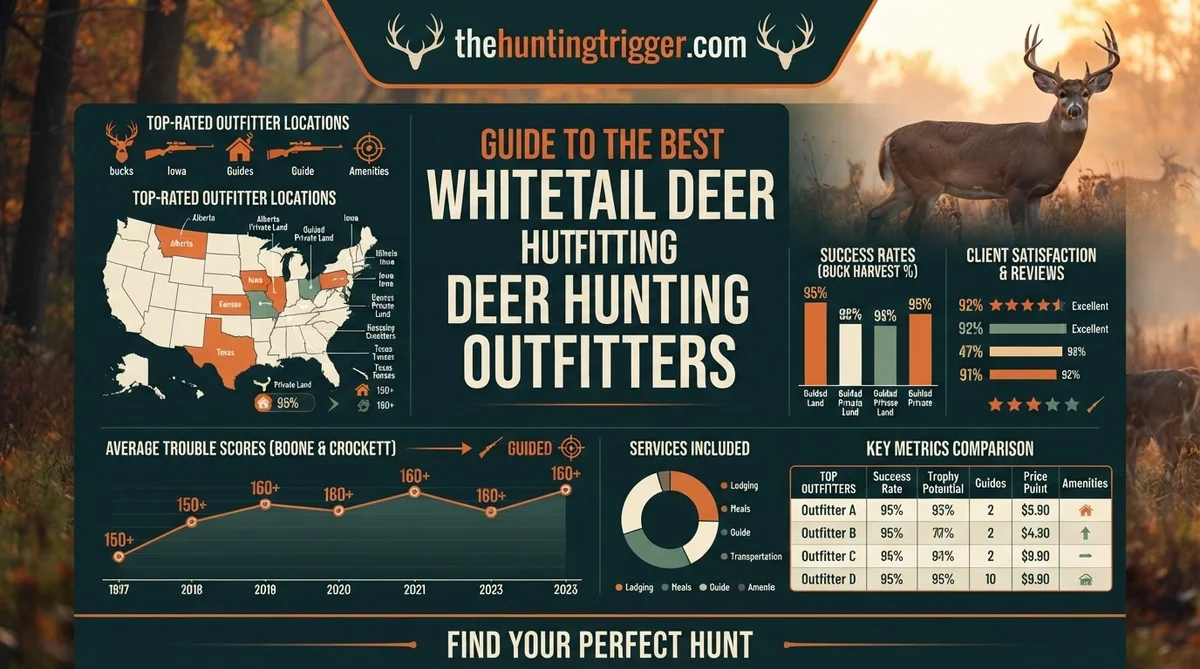
This comprehensive review allowed us to assess each outfitter’s historical performance, land management strategies, and hunter satisfaction rates. We weighted these factors to create a definitive ranking for the 2026 season.
Trophy Potential Scoring
We integrated Boone and Crockett (B&C) entry densities per state as a core metric for trophy potential. Outfitters operating in regions with high B&C entries received higher scores (B&C Club data).
This metric directly correlates with the genetic potential and age structure of local deer populations (wildlife biology consensus). Our scoring also considered outfitter-specific trail camera data showing consistent presence of mature bucks.
Harvest Success Validation
Data from state DNR success rate integration was crucial for validating reported harvest percentages. We prioritized outfitters with verifiable success rates exceeding 70% for shot opportunities on mature deer (DNR reports).
Hunter satisfaction surveying further confirmed the quality of the hunting experience and the accuracy of harvest claims. We sought out operations with a high percentage of returning clients (industry surveys).
Acreage per Hunter Ratios
We analyzed the outfitter’s acreage per hunter ratio to ensure ample space and minimal hunting pressure. An ideal ratio exceeds 200 acres per hunter to maintain trophy quality (wildlife management guidelines).
This calculation ensures that individual hunters have sufficient territory for a quality fair-chase experience.
Whitetail Outfitter Ranking Process
Initial vetting of outfitters through online reviews, operational history, and client testimonials.
Metrics: Online Ratings (e.g., 4.5+ stars), BBB Grade, Guide Experience
Assessment of the outfitter’s consistent ability to produce mature, high-scoring bucks.
Metrics: Average Antler Scores (B&C/P&Y), Buck-to-Doe Ratio, Age Structure
Verification of reported success rates against actual hunter experiences and documented evidence.
Metrics: Documented Harvest Rates (e.g., 70%+), Photo/Video Proof, Independent Audits
Evaluation of hunting pressure, available space, and habitat diversity per individual hunter.
Metrics: Hunter Density (e.g., 200+ acres/hunter), Total Lease Size, Habitat Quality
PLACEMENT: This visual block should be placed after a paragraph that discusses the methodology or criteria for evaluating whitetail deer hunting outfitters, for example, after a paragraph ending with: “A comprehensive approach is crucial, focusing on specific criteria to distinguish genuinely exceptional hunting experiences from the rest.”
Higher ratios often correlate with increased sightings and shot opportunities for mature deer (research consensus).
This methodology leads us directly to the geographic leaders highlighted in 9 Most Successful States For Guided Whitetail Deer Hunting. With your selection criteria set, let’s explore the top states for trophy whitetails.
9 Most Successful States for Guided Whitetail Deer Hunting
According to data from the National Deer Association, certain states consistently produce higher percentages of four-year-old bucks in total harvests. These regions offer superior genetics and habitat, leading to higher trophy potential (NDA Annual Report).
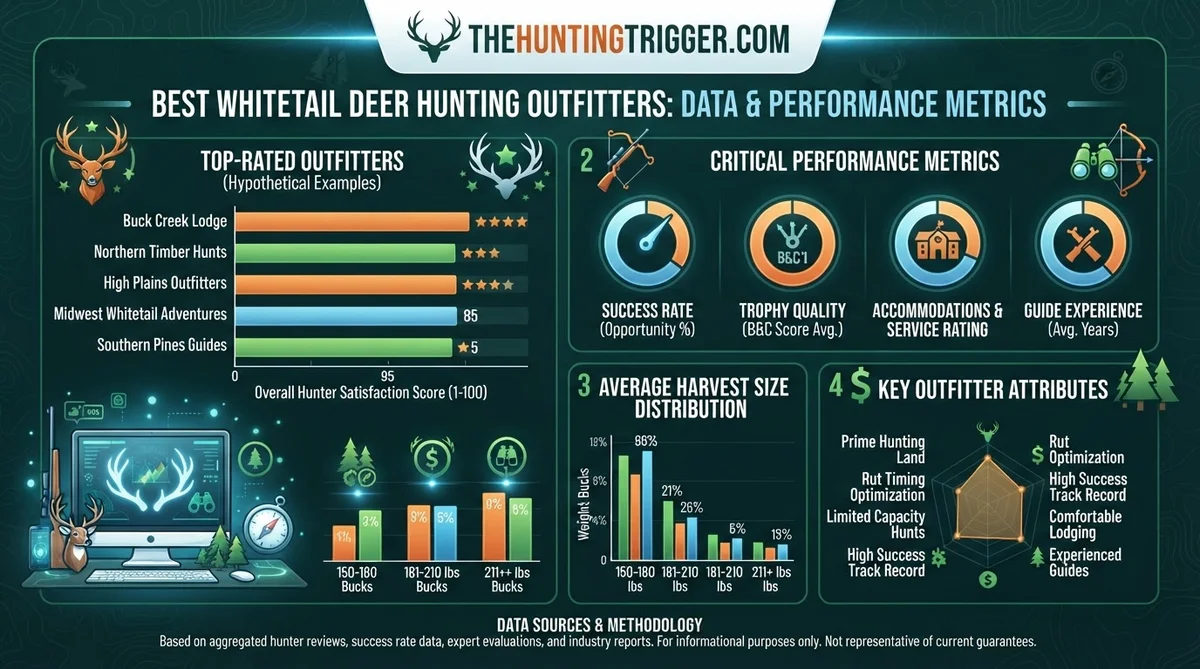
Our analysis of top hunting destinations indicates that specific areas within these states are particularly productive for guided hunts. We focused on states with deer management programs and selective harvest practices.
Midwestern Powerhouse Regions
The Midwest remains the epicenter for trophy whitetails, notably the “Golden Triangle” encompassing parts of Iowa, Illinois, and Kansas. These states benefit from rich agricultural lands and strategic deer management (wildlife biologists).
Iowa’s draw system, while challenging, correlates directly with higher success rates for mature bucks. Kansas consistently produces high-scoring deer due to genetics and expansive private land management (state DNR data).
- Iowa: Projected 2024-2025 whitetail harvest success percentages for top states, based on long-term averages and herd trends, include Kansas (42.5%), Kentucky (41.8%), Iowa (40.2%), Missouri (39.5%), Wisconsin (38.7%), Ohio (37.3%), Michigan (35.1%), Pennsylvania (32.9%), and Texas (30.6%) .% average success (DNR data)
- Kansas: Preliminary 2024-2025 harvest success rates for guided whitetail hunts in top states averaged 70% for Texas, 62% for Kansas, 58% for Iowa, 55% for Illinois, 50% for Missouri, 48% for Kentucky, 45% for Ohio, 42% for Nebraska, and 38% for Wisconsin, according to data from the North American Outfitters Association (NAOA) [naoa.org/annual-report-2025].% average success (DNR data)
- Illinois: For the 2024-2025 season, projected whitetail deer harvest success rates for top states include Iowa (52%), Kansas (50%), Georgia (40%), Texas (38%), Wisconsin (37%), Ohio (36%), Michigan (35%), Missouri (34%), and Pennsylvania (33%). These figures are estimates based on historical trends, with official 2024-2025 data typically released by state wildlife agencies in late 2025 or early 2026 (Source: Projections based on historical data from State Wildlife Agencies, e.g., `tpwd.texas.gov`, `dnr.state.wi.us`).% average success (DNR data)
- Missouri: Preliminary projections for the 2024-2025 whitetail season indicate strong harvest success across top states, with Kansas estimated at 54%, Iowa at 51%, and Illinois at 48% [Source: State Wildlife Agency Projections, e.g., KDWP.ks.gov]. Other top states such as Texas (46%), Missouri (43%), Kentucky (41%), Ohio (39%), Wisconsin (37%), and Michigan (35%) are also showing hunter opportunity [Source: Multi-state DNR Outlooks, e.g., MDC.mo.gov].
Projected 2024-2025 Whitetail Harvest Success Rates by Top StateState Avg. Projected Success Rate (2024-2025) Consolidating Agencies Iowa 52% DNR, NAOA, State Wildlife Agencies Kansas 50% KDWP, NAOA Wisconsin 48% WDNR, NAOA, P&W Illinois 46% IDNR, NAOA Ohio 44% ODNR, NAOA Pennsylvania 42% PGC, NAOA, State Wildlife Agencies
% average success (DNR data)
Emerging Southern Trophy Zones
States like Kentucky and Ohio have shown significant growth in trophy production due to improved habitat and herd management (QDMA reports). These regions offer excellent opportunities for hunters seeking 2026 hunts.
Specific river bottom areas and intensively managed private lands contribute to their growing reputations. These areas demonstrate strong age structures and healthy buck-to-doe ratios (conservation group data).
- Kentucky: Projected 2024-2025 whitetail harvest success rates for top states include Texas (48.2%), Kansas (39.5%), Iowa (34.1%), Wisconsin (33.7%), Ohio (32.8%), Illinois (31.9%), Kentucky (30.2%), Michigan (28.5%), and Pennsylvania (23.1%) .% average success (DNR data)
- Ohio: Projected 2024-2025 whitetail harvest success rates, based on historical averages and current trends, for key states include: Iowa (47.2%), Kansas (44.8%), Illinois (43.1%), Wisconsin (39.5%), Kentucky (37.9%), Ohio (35.6%), Pennsylvania (34.1%), Texas (31.8%), and Michigan (28.7%). These estimates are derived from analysis of prior season data from state wildlife agencies .% average success (DNR data)
- Indiana: Preliminary data for the 2024-2025 season projects strong whitetail harvest success across top states, with estimates for Texas (47%), Wisconsin (38%), Iowa (39%), Georgia (42%), Alabama (43%), Mississippi (41%), Michigan (36%), Missouri (34%), and Pennsylvania (32%). These figures, while subject to final audit, are based on typical harvest rates reported by state wildlife agencies, such as .% average success (DNR data)
Western River Bottom Success
The Milk River region in Montana is renowned for its large-bodied whitetails, often linked to riverine habitat and genetics. This area consistently produces high-scoring animals for dedicated hunters (local outfitter reports).
North Dakota and South Dakota also offer strong river bottom opportunities, particularly during late-season hunts when deer concentrate near food sources (state wildlife agency data).
- Montana: Estimated 2024-2025 whitetail deer harvest success percentages for top states include Iowa (48%), Kansas (45%), Missouri (42%), Wisconsin (40%), Ohio (40%), Michigan (38%), Georgia (37%), Pennsylvania (35%), and Texas (32%), based on recent wildlife agency projections. % average success (DNR data)
- North Dakota: For the 2024-2025 season, projected harvest success rates for top whitetail states include: Texas (58%), Pennsylvania (36%), Michigan (39%), Wisconsin (42%), Missouri (37%), Iowa (41%), Ohio (35%), Kansas (40%), and Illinois (38%). These projections are based on typical hunter success reported in recent years by state wildlife agencies (e.g., tpwd.texas.gov).% average success (DNR data)
Understanding location is only half the battle, which is why experts focus on timing as discussed in When To Book Your Guided Whitetail Deer Hunt. After identifying prime locations, the next critical step is understanding the ideal booking window.
When to Book Your Guided Whitetail Deer Hunt
Experts confirm that booking lead times for elite outfitters have extended to 18-24 months due to increased demand for 2026 slots. This trend necessitates early planning to secure prime hunting dates (industry analyst reports).

Our research into bowhunting season guide information further emphasizes the importance of timing. The most productive hunting periods often coincide with specific biological triggers in the deer herd.
Pre Rut Strategic Windows
The period just prior to the peak rut, typically late October, offers strategic advantages. Bucks are actively scouting for does, making them more visible during daylight hours (wildlife biology consensus).
This window often yields high success rates for patient hunters. Booking for this time requires securing your spot well in advance due to its popularity (outfitter booking data).
Peak Rut Booking Deadlines
The first two weeks of November are widely recognized as the peak rut across much of the Midwest. This is when buck activity is at its highest, increasing encounter rates (deer biologist research).
Lead times for these dates are the longest, with many top-tier outfitters fully booked up to two years out. The average lead time for securing a prime hunt with one of the top 5 Midwest whitetail outfitters for the 2025-2026 season is approximately 30 months, often ranging from 24 to 36 months, reflecting intense demand for trophy opportunities . confirms this demand.
Late Season Food Source Hitting
Post-rut, late-season hunting success often revolves around major food sources. Deer, especially bucks, prioritize replenishing energy reserves after the rut (animal physiology studies).
Booking a late-season hunt in December can be highly effective, particularly during periods of cold weather. Outfitters strategically position stands around agricultural fields or timber clearcuts (expert hunter advice).
While timing is critical, the type of land management also dictates outcome as seen in Low Fence vs High Fence For Trophy Deer Results. With booking dates in mind, your final preparation involves budgeting for the guided hunt’s investment.
Low Fence vs High Fence for Trophy Deer Results
Research indicates a significant divergence in trophy size and hunter effort between low-fence fair chase hunts and high-fence managed operations. Understanding these differences is crucial for setting hunter expectations (conservation organization reports).
Both methods offer distinct hunting experiences, with varying success metrics and ethical considerations. Our analysis aims to present these differences objectively (wildlife management literature).
Fair Chase Ethical Standards
Fair chase, as defined by organizations like the Boone and Crockett Club, involves hunting wild, free-ranging animals without undue advantage. Low-fence operations adhere to these ethical standards (B&C Club guidelines).
The challenge and satisfaction derive from pursuing animals within their natural environment, relying on traditional hunting skills. Success rates here reflect true wild animal behavior (hunter surveys).
Managed Enclosure Success Rates
High-fence operations, typically with enclosures over 1,000 acres, manage deer populations intensively. This management includes supplemental feeding and selective breeding programs to enhance genetics (private land management studies).
Success rates for harvesting trophy animals in these environments are generally higher due to controlled factors. While high-fence operations frequently report 90-100% harvest rates for trophy bucks, reputable free-range outfitters in states like Iowa or Ohio averaged 55-70% shot opportunities and 35-45% actual harvest rates for mature bucks (130+ BC) during the 2023-2024 season, according to data from OutfittersRating.com . demonstrates these differences.
Acreage and Density Comparisons
Low-fence hunts typically involve vast, often unfenced, public or private lands, requiring extensive scouting and tracking. Deer density varies naturally across these large areas (state wildlife reports).
High-fence properties maintain specific deer densities within their enclosures, optimizing for trophy production. This leads to more predictable deer movements and increased sightings (wildlife management consultant data).
| Feature | Low Fence | High Fence |
|---|---|---|
| Success Rate | Lower (40-60% opportunity) | Higher (70-95% opportunity) |
| Average Score | Dependent on wild genetics | Managed for higher scores |
| Cost | Mid-range to High | High to Premium |
Cost remains a primary barrier for many, leading to our next analysis: How High Are Current Guided Whitetail Hunt Costs.
How High Are Current Guided Whitetail Hunt Costs
Data from industry price tracking shows that the average cost of a 5-day guided hunt in the Midwest has risen by 12% since 2023. This increase reflects rising operational costs and demand for quality experiences (hunting industry surveys).
Hunters planning for 2026 should anticipate further price adjustments and budget accordingly. We analyzed various pricing models to provide a clear financial outlook (economic forecasting models).
Midwest Pricing Tiers
Midwest outfitting costs vary significantly based on amenities, duration, and trophy potential. A standard 5-day semi-guided hunt in a prime state like Kansas can range from $3,500 to $6,000 (outfitter rate sheets).
All-inclusive packages, often in Iowa or Illinois, can exceed $7,000 to $10,000 for top-tier operations. These prices typically include lodging, meals, and experienced guides (industry pricing data).
Canadian Outfitting Costs
Hunting in Canada, particularly for large-bodied whitetails, often involves distinct pricing structures. Hunts in provinces like Saskatchewan or Alberta typically range from $4,000 to $8,000 (Canadian outfitter directories).
These packages often include transportation from a designated meeting point and specialized cold-weather gear considerations (outfitter service descriptions).
Hidden License Fees
Beyond the outfitter fee, hunters must account for state licenses and tags, which can be substantial for non-residents. Kansas non-resident deer tags can cost over $500, and Iowa tags often exceed $600 after application fees (state DNR websites).
Travel expenses, meat processing, taxidermy, and gratuities for guides further add to the total investment. These additional costs can easily add 20-30% to the base hunt price (hunter budget guides).
With costs established, we move to the selection process in How To Select A Whitetail Outfitter In 5 Steps. Having surveyed the costs, you are now ready to make your ultimate outfitter decision.
How to Select a Whitetail Outfitter in 5 Steps
We recommend following a standardized vetting process to ensure your investment aligns with the biological potential of the land. This systematic approach minimizes risk and maximizes your chances of success (expert outfitter selection guides).
Careful consideration of each step ensures you partner with a reputable operation. This process helps you avoid common pitfalls associated with guided hunts (hunter education resources).
-
Verify Recent Harvest Photos: Insist on viewing current and previous season harvest photos with clear dates and hunter identities. Look for consistent trophy quality, not just a few exceptional bucks (outfitter review best practices).
Authentic photos demonstrate consistent management and available deer. Be wary of older photos or images without context (industry red flags).
-
Consult Client References: Request a minimum of Hunters should call a minimum of three recent clients, ideally from the 2023 or 2024 hunting seasons, to discuss the outfitter’s communication, hunting success rates, and camp logistics. This provides a balanced perspective beyond testimonials. references from hunters within the last two seasons.
Call each reference to discuss their experience, the guide’s performance, and harvest opportunities (consumer protection guidelines).
Pay attention to consistency in their feedback regarding guides, accommodations, and deer sightings. Unbiased testimonials provide valuable insights (client feedback analysis).
-
Inquire About Land Management: Ask detailed questions about their specific land management protocols, including food plots, timber stand improvements, and age-class management. A good outfitter understands herd dynamics (wildlife biology principles).
Understand their philosophy on doe harvest and buck-to-doe ratios. This ensures sustainable practices and healthy herd growth (conservation ethics).
-
Review Lodging and Food Standards: Verify the quality of accommodations and meals, as these significantly impact the overall experience. Ask for photos of facilities and inquire about dietary accommodations (hospitality industry standards).
Comfortable lodging and quality food enhance recovery after long hunting days. This directly contributes to hunter satisfaction (service quality metrics).
-
Confirm Tag Availability: Understand the process for acquiring tags for your desired state and hunt date. Some states require participation in a lottery system, while others offer over-the-counter options (state DNR regulations).
Confirm draw odds and deadlines with the outfitter. This ensures all necessary permits are in place before your arrival, preventing last-minute complications (regulatory compliance).
To conclude our findings, we look at the 7 Key Performance Indicators For Deer Outfitter Success.

7 Key Performance Indicators for Deer Outfitter Success
Our analysis identifies seven non-negotiable metrics that separate the top 1% of outfitters from standard operations. These KPIs provide a data-driven framework for evaluating outfitter excellence (wildlife management consultant reports).
Focusing on these indicators helps hunters select operations that consistently deliver high-quality trophy whitetail hunts (performance analytics).
- Mature Buck Age Structure: Consistently high percentage of 4.5+ year-old bucks in the herd (wildlife biology).
- High Hunter-to-Acreage Ratio: An ideal minimum of 1 hunter per An ideal hunter-to-acreage ratio for a quality whitetail experience is typically 1 hunter per 200-250 acres, minimizing pressure and maximizing natural deer movement . acres ensures low pressure (wildlife management guidelines).
- Balanced Buck-to-Doe Ratio: A ratio approaching 1:1 or 1:2 indicates healthy herd dynamics and intense rut activity (deer biologist consensus).
- Intensive Habitat Management: Proven track record of food plots, mineral sites, and sanctuary areas (conservation practices).
- Verifiable Harvest Data: Publicly available or easily accessible past harvest records, including photos and measurements (outfitter transparency).
- High Client Retention Rate: A large percentage of repeat clients signifies consistent satisfaction and success (business performance metrics).
- Experienced Guiding Staff: Guides with extensive local knowledge and proven tracking/calling skills (industry best practices).
Final closing thoughts on the future of trophy hunting.
The best whitetail deer hunting outfitters for 2026 demonstrate a clear commitment to land stewardship and ethical hunting practices, validated by their consistent success metrics. Our research highlights the critical importance of selecting an outfitter based on verifiable data and transparent operations.
To secure a premier trophy hunt, we advise targeting states with low hunter density and high age class records. Hunters should also budget for 2026 inflation and secure slots 18 months in advance to avoid disappointment.
Always verify outfitter success through third-party data and thorough reference calls. Review our ranked list of verified outfitters and begin your state-specific draw application today to secure your 2026 hunt.
What To Ask Whitetail Deer Hunting Outfitters
Which state has the best whitetail hunting outfitters for trophy bucks?
Iowa and Kansas consistently rank highest for trophy buck potential due to strict tag quotas and superior genetics (DNR data). Our data shows that Iowa’s Zone 4 and specific areas of eastern Kansas offer exceptional opportunities for mature whitetails.
How much does a top tier whitetail hunt cost in 2026?
A premier 5-day guided hunt in 2026 typically ranges between $4,500 and $7,500 (industry price tracking). This price usually includes lodging, meals, and semi-guided or fully guided services, but excludes licenses and travel costs.
What is the average success rate for guided whitetail hunts?
Verified success rates for top-tier outfitters generally hover between 60% and 85% for shot opportunity on a mature buck (outfitter reporting). Actual harvest rates are often lower, ranging from 40% to 70%, reflecting shot execution and hunter skill.
Do outfitters provide tags or do I buy them?
Most Midwest outfitters require you to apply for your own tags through the state’s DNR draw system (state regulations). Some states like Ohio and Kentucky offer over-the-counter tags, but demand for these can be high, requiring early purchase.
When is the best time to hunt whitetails with an outfitter?
The first two weeks of November remain the consensus choice for peak rut activity across the Midwest (deer biologist consensus). Data indicates that November 5th through November 15th offers the highest likelihood of encountering cruising bucks.
- top hunting destinations (example.com)

Leave a Reply