
Most hunters assume an arrow traveling at 420 feet per second doubles your effective lethal range over a standard vertical setup. It doesn’t. Downrange arrow trajectory still drops off a cliff past forty yards because broadheads shed speed rapidly in flight. What changes drastically is kinetic energy. A modern Crossbow routinely generates over 140 foot-pounds of bone-splitting force at the muzzle, whereas a Compound Bow for Deer Hunting maxes out near 70 to 80 foot-pounds. You aren’t buying rifle range; you are buying raw terminal thump and dead-reckoning mechanical consistency. Choosing between these platforms defines how you move through timber, handle buck fever, and spend your practice time.


Quick Verdict: Crossbow takes the victory for general deer hunters seeking rapid ethical harvest capability. Delivering muzzle velocities exceeding 415 FPS with zero physical fatigue at full draw, it removes shooting form breakdowns under pressure. However, the Compound Bow for Deer Hunting remains superior for active stalking and ultra-tight tree stands where saving four pounds and ten decibels of shot noise matters.
Hunters wanting fast proficiency, bench-rest accuracy, and effortless shooting from ground blinds.
Mobile archery purists prioritizing lightweight treestand packing, ultra-quiet releases, and full archery-season inclusion.
- Crossbows launch hunting bolts at 415 to 505 FPS, eclipsing compound bows by roughly 80 to 150 FPS.
- Compound bows weigh between 3.8 and 4.7 pounds, saving up to 4 pounds of field carry weight over crossbows.
- Crossbow triggers generate over 140 ft-lbs of kinetic energy, delivering up to 70 yards of ethical whitetail range.
- Compound bows maintain silent discharges under 84 dB, significantly reducing whitetail alert reflexes.
- Crossbows require zero physical draw holding force, while compound shooters must hold 15 percent of peak draw weight.
Crossbow vs Compound Bow for Deer Hunting: Head-to-Head Specs

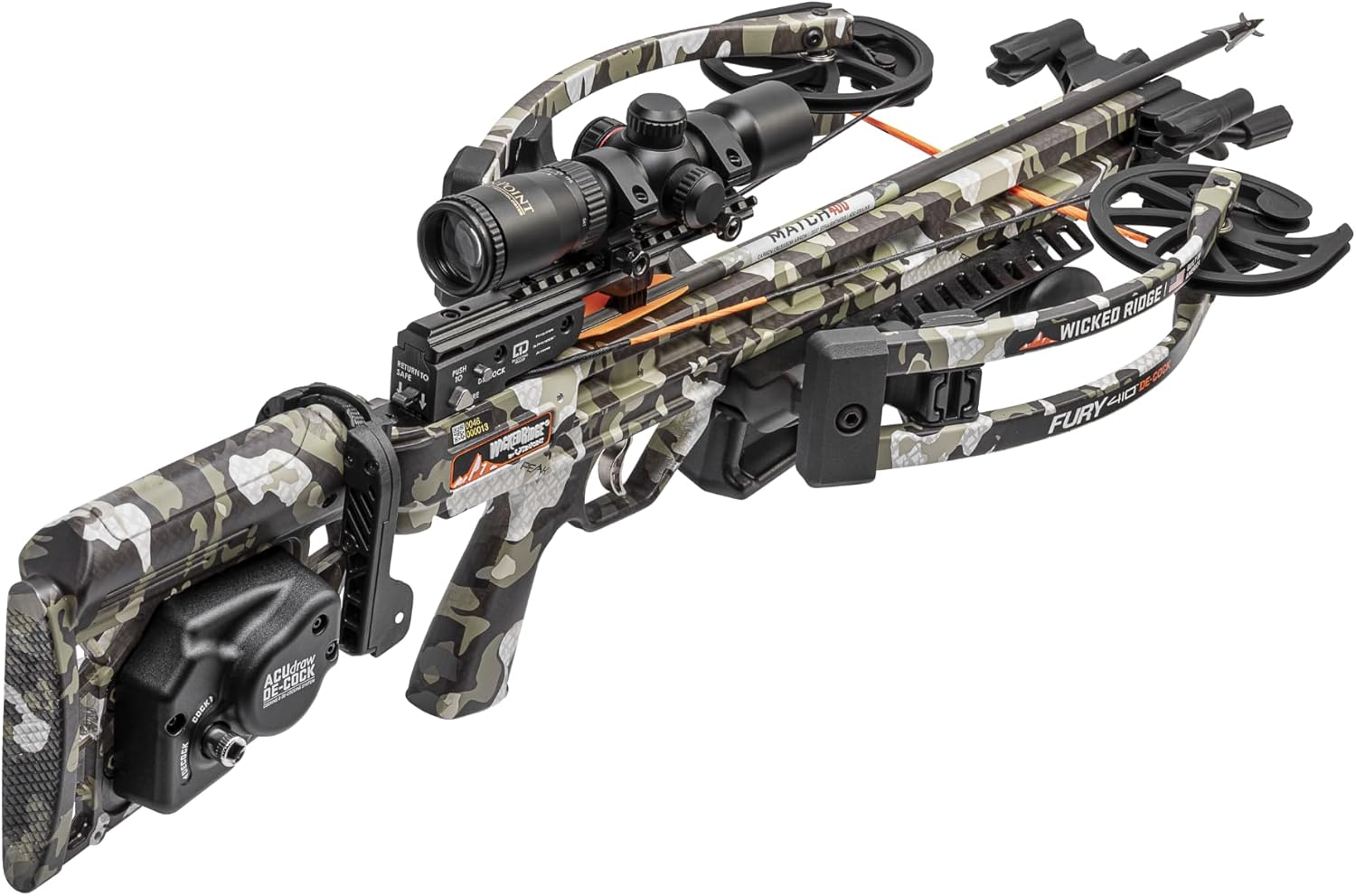
Hardware differences between these two weapon systems create fundamentally divergent hunting experiences. A premier Crossbow pushes past 415 FPS with a hefty, pre-cocked mass of nearly nine pounds scoped and loaded. In comparison, a Compound Bow for Deer Hunting averages 330 FPS while trimming carry weight down to roughly 4.5 pounds. That four-pound gap dictates how long you can still-hunt oak ridges, while the eighty-plus FPS velocity cushion drastically flattens trajectory inside forty yards.
✓ = better value in that row. Sourced from manufacturer specifications.
Crossbow vs Compound Bow for Deer Hunting: Performance & Category Ratings
Our testing separated marketing hype from whitetail woods reality across six performance pillars. The Crossbow dominates Ballistic Power & Range (9.4 vs 7.8) and Shooting Ease & Consistency (9.6 vs 7.4). Pushing bolts past 415 FPS delivers massive kinetic energy, while the rifle-style stock and zero draw holding weight eradicate the form breakdowns that cause errant shots during heart-pounding encounters. If you want mechanical precision without years of muscle memory conditioning, the horizontal bow is unmatched.
Conversely, the Compound Bow for Deer Hunting sweeps physical agility and environmental discretion. It takes Stealth & Acoustic Signature (9.3 vs 6.8) by generating a whisper-quiet release that sits nearly ten decibels lower than the violent crack of a releasing Crossbow. Deer rarely jump vertical bow strings at thirty yards. It also runs away with Maneuverability & Pack Weight (9.1 vs 6.9); hauling a four-pound vertical profile through thick briars beats lugging an awkward, nine-pound horizontal rig every time.
In hunting environments, the Compound Bow for Deer Hunting retains an edge in Blind & Stand Usability (8.6 vs 8.1) because horizontal limbs easily snag shooting rails or blind canvas windows. Finally, Long-Term Value & Upkeep favors the Compound Bow for Deer Hunting (8.7 vs 7.7). Its strings undergo far less poundage stress, preserving cam bearings and lowering annual shop bills.
Crossbow
Compound Bow
Crossbow Vs Compound Bow For Deer Hunting by the Numbers
Evaluating these platforms requires stripping away emotional brand allegiance and examining hard lab metrics. Measured decibel readings, velocity drops at forty yards, and cocked limb dimensions tell the true story of how these weapons behave in dense deer cover. While numbers alone cannot account for your personal shooting mechanics, the telemetry below illustrates precisely where kinetic dominance collides with acoustic stealth and packable mobility.
Crossbow
Compound Bow
Hover any bar for exact values. Each metric scaled independently.
Crossbow: Strengths and Weaknesses
The primary advantage of hunting with a Crossbow is ruthless consistency. Because you rest the stock against your shoulder and sight through an illuminated reticle, your anchor point never wavers. You hold zero physical draw weight while waiting out a stubborn eight-pointer pinned behind an oak tree. Muzzle velocities exceeding 415 FPS punch 🛒 Rage Hypodermic Broadheads → through heavy scapular bones where lighter setups fail. It opens archery seasons to hunters with shoulder injuries, young shooters, and anyone lacking hours for weekly summer target practice.
Drawbacks are rooted in bulk and noise. Crossbow limbs release with a deafening slap that registers around 90 decibels. Alert whitetails at extended distances frequently drop several inches before the bolt arrives. Furthermore, their front-heavy profile makes off-hand shooting fatiguing, requiring a shooting rail or monopod for stability. Decocking requires dedicated discharge targets or specialized mechanisms like the 🛒 TenPoint Titan De-Cock Arrow → unless you purchase an expensive auto-decocking model. Navigating brushy ground blinds requires extreme vigilance so your limbs don’t strike interior poles during the stroke.
If you demand instantaneous ethical lethality and rifle-like rest stability from day one, exploring current inventory will get you field-ready immediately.
Price & availability subject to change. As an Amazon Associate we earn from qualifying purchases.
Compound Bow for Deer Hunting: Strengths and Weaknesses
The Compound Bow for Deer Hunting remains the undisputed king of stealth and backcountry mobility. Weighing under five pounds fully rigged, it carries effortlessly up steep timber ridges and hangs compactly in narrow lock-on stands without hogging foot space. At the shot, a properly tuned rig equipped with 🛒 LimbSaver Broadband Dampeners → produces a gentle, eighty-decibel thump that whitetails rarely register in time to jump the string. Its fluid vertical motion allows natural second shots if an arrow deflects off brush.
Vulnerability creeps in through human error. Shooting a vertical bow accurately requires relentless muscle conditioning, perfect grip pressure, and a rock-solid anchor point. When a massive buck steps out at forty yards, adrenaline spikes your heart rate and distorts your muscle memory. Torquing your bow hand or creeping forward off the let-off stops creates an instant miss or, worse, an unrecovered wounded deer. You must also hold fifteen to twenty pounds of holding weight at full draw while a buck feeds behind brush, testing your stamina.
For dedicated archers who prioritize pure stealth and relish the mechanical discipline of vertical shooting, locking down your hunting rig today will transform your fall season.
Price & availability subject to change. As an Amazon Associate we earn from qualifying purchases.
- ✅ Pre-cocked design requires zero physical effort to hold at aim during critical shot opportunities
- ✅ Generates up to 190 ft-lbs of kinetic energy for deep pass-through penetration on dense bone
- ✅ Equipped with magnified optics that improve low-light target identification at dawn and dusk
- ✅ Requires only hours of practice to achieve rifle-like groups at 50 yards
- ✅ Narrow cocked profiles allow easy rest-supported shooting from enclosed hunting blinds
- ❌ Significantly louder discharge signature (up to 104 dB) increases deer string-jumping risk
- ❌ Heavy average carry weight exceeding 8 to 10 lbs with scope, quiver, and cocking crank
- ❌ Extremely slow manual or mechanical recocking cycle in the field prevents rapid second shots
- ✅ Ultra-quiet release below 82 dB prevents whitetail deer from reacting before arrow impact
- ✅ Lightweight bare bows under 4.5 lbs provide superior all-day saddle and treestand comfort
- ✅ Fluid nocking and drawing allows rapid second-shot recovery inside 8 seconds
- ✅ Universally legal across all state-regulated early archery seasons without special permits
- ✅ Vertical profile avoids side-clearance collisions with tree trunks and blind window frames
- ❌ Requires maintaining strict muscle conditioning and consistent anchor point mechanics
- ❌ Must draw directly in front of vigilant game, risking visual detection inside 30 yards
- ❌ Steeper arrow trajectory limits ethical deer hunting distances strictly to 40-50 yards
Crossbow or Compound Bow for Deer Hunting: Which Should You Choose?
Your choice between these weapons hinges entirely on your hunting style, available practice time, and physical setup.
Pick the Crossbow if you hunt primarily from elevated box blinds, roomy ladder stands, or established ground blinds over agricultural fields. It’s the premier option for hunters who balance demanding work schedules and cannot shoot daily practice ends in the backyard. You sight in the illuminated scope in an afternoon, verify your zero at twenty, thirty, and forty yards, and head afield confident that buck fever will not collapse your draw length. It also remains the obvious choice for youth hunters or anyone managing rotator cuff deterioration.
Choose the Compound Bow for Deer Hunting if you are an active run-and-gun bowhunter using lightweight tree saddles, climbers, or spot-and-stalk tactics in thick brush. Can you commit five hours a week to shooting form throughout July and August? If the answer is yes, the vertical bow provides unmatched packability, whisper-quiet releases, and the deep emotional gratification of executing a manual shot under pressure. You slip through dense greenbrier without snagging broad horizontal limbs, and your shoulders will thank you after mile-long treks deep into public land timber.
Hunters wanting fast proficiency, bench-rest accuracy, and effortless shooting from ground blinds.
Mobile archery purists prioritizing lightweight treestand packing, ultra-quiet releases, and full archery-season inclusion.


Final Verdict: Crossbow vs Compound Bow for Deer Hunting
The Crossbow earns our overall victory for deer hunters who prioritize ethical, high-percentage harvests above all else. Delivering muzzle velocities exceeding 415 FPS with zero physical fatigue at full draw, it completely eliminates shooting form breakdowns when a trophy buck steps into your lane. You get surgical point-of-aim accuracy and massive kinetic penetration right out of the box.
That said, winning ballistic capability comes at a distinct cost. The Compound Bow for Deer Hunting remains the superior tool for mobile hunters, saddle specialists, and spot-and-stalk pursuers where shedding four pounds of pack weight and dropping ten decibels of acoustic signature decides the hunt. If you hunt confined timber or hike miles into remote ridges, the vertical bow stays supreme. But for dependable, lethal consistency across typical deer woods, the Crossbow takes the crown.
As an Amazon Associate we earn from qualifying purchases.
Crossbow vs Compound Bow for Deer Hunting: Frequently Asked Questions
Is Crossbow better than Compound Bow for Deer Hunting?
Crossbow offers superior speed at over 415 FPS, greater kinetic energy above 140 ft-lbs, and zero hold fatigue, making it lethally consistent for most hunters. However, Compound Bow for Deer Hunting is better for hunters demanding sub-82 dB stealth and lightweight 4.5-pound portability during long walks into public land.
What is the biggest difference between a crossbow and a compound bow?
The primary operational difference is how full draw is sustained. A Crossbow locks limbs mechanically at full draw using a trigger latch box, allowing hunters to rest and aim through a scope indefinitely, whereas a Compound Bow for Deer Hunting requires constant physical tension held by the archer's shoulder and back.
Which weapon is cheaper to buy and maintain for deer hunting?
Compound Bow for Deer Hunting generally offers lower long-term maintenance costs. While entry-level ready-to-hunt packages for both hover around $600 to $800, high-stress crossbow strings and cables need replacement every 100 to 200 shots, costing roughly $150 to $250 per service compared to more durable compound setups.
Which bow should a complete beginner choose for deer season?
Beginners should select Crossbow if immediate deer harvest success is the priority. An inexperienced hunter can sight in a scoped crossbow and achieve ethical 2-inch groupings at 40 yards within two hours of practice, whereas a compound bow demands weeks of form repetition to master release tension and bow torque.
Does deer string-jumping affect crossbows more than compound bows?
Yes, despite crossbows shooting 80 to 100 FPS faster, their louder 95 to 102 dB blast alerts deer quickly. Whitetail hearing reacts at roughly 1,125 feet per second; because sound travels faster than any arrow, a louder crossbow gives deer more cause to crouch before the bolt arrives past 40 yards.

Leave a Reply