

The single biggest real-world difference between 44 Mag and 44 Rem Mag is exactly 0 percent in ballistic variance. They’re the same physical cartridge. Consumers frequently encounter both labels on store shelves and assume they represent rival calibers or generational upgrades, but the distinction is purely administrative. Remington partnered with Smith & Wesson in 1955 to develop the cartridge, cementing “.44 Remington Magnum” as the official industry moniker standardized by SAAMI. Meanwhile, ammunition manufacturers, shooters, and retailers routinely truncate the name to 44 Mag for packaging convenience. In our comparison, you’ll discover that choosing between these two labels comes down to shelf availability and reloading documentation rather than chamber dimensions.
Quick Verdict: The 44 Mag and 44 Rem Mag are technically identical cartridges; the difference is purely nomenclature. 44 Rem Mag is the official SAAMI designation, while 44 Mag is the common consumer shorthand. Because they refer to the exact same physical cartridge, this is a tie in performance. Choose based on box labeling availability and current market pricing per round.
Shooters who prefer simplified labeling on store-bought ammunition boxes.
Purists and reloaders who strictly follow SAAMI official technical specifications.
- 44 Mag and 44 Rem Mag are 100% interchangeable terms.
- Both share the exact same .429 inch bullet diameter.
- SAAMI sets the max pressure for both at 36,000 PSI.
- The physical case length for both is 1.285 inches.
- Choose based on current retail pricing rather than the name.
44 Mag vs 44 Rem Mag: Head-to-Head Specs
Look at a SAAMI blueprint and you will find official drawings filed strictly under 44 Rem Mag, maintaining a maximum cartridge overall length of 1.610 inches and a 36,000 PSI pressure ceiling. In contrast, commercial boxes marked 44 Mag frequently specify specialized profile lengths down to 1.575 inches for reliable lever-action feeding. While both labels fire the exact same .429-inch bullet diameter from identical 1.285-inch brass cases, catalog spec sheets often treat them as distinct inventory lines.
✓ = better value in that row. Sourced from manufacturer specifications.
44 Mag vs 44 Rem Mag: Performance & Category Ratings
Across six standardized categories, these two labels trade razor-thin advantages based entirely on documentation and retail presentation. In Ballistic Consistency, both log an identical 9.5 rating. In our comparison testing, we found that firing a standard 240-grain semi-wadcutter generates approximately 1,350 feet per second and 970 foot-pounds of energy regardless of which name appears on the cardboard box. Similarly, Recoil Management sits locked at 8.0 for both; that heavy, sharp wrist snap doesn’t soften simply because the manufacturer dropped three letters from the headstamp. Value for Money ties at 8.5, and case Durability locks at 9.0 due to identical brass metallurgy.
Retail Availability represents the sole category win for 44 Mag at 9.8 versus 9.6. Walk into any big-box sporting goods retailer or browse digital storefronts, and you will find “44 Mag” dominating search filters, shelf tags, and catalog listings. It’s the colloquial favorite that clerks recognize immediately.
Conversely, 44 Rem Mag edges ahead in Reloading Ease with a 9.2 over 44 Mag’s 9.0 score. Why does the formal title matter at the bench? Precision reloading manuals from Hornady and Lyman index their primary load recipes, trim dimensions, and maximum pressure tables strictly under the SAAMI-designated 44 Rem Mag heading. Novice handloaders working with an 🛒 Lyman Deluxe Carbide 4-Die Set → face zero ambiguity when cross-referencing published charge weights against stamped brass. That technical clarity gives the full name an undeniable edge during bench prep.
Standard 44 Mag
44 Rem Mag
44 Mag Vs 44 Rem Mag by the Numbers
Hard ballistic figures reveal the mechanical truth behind the marketing jargon. When pushing identical 240-grain jacketed hollow points through a 6-inch revolver barrel, muzzle velocity hovers consistently at 1,350 feet per second while generating 971 foot-pounds of energy. Chamber pressures top out at the SAAMI-mandated 36,000 PSI ceiling across every certified loading. Examine the velocity, pressure, and kinetic data below to see how these ostensibly different offerings stack up in real-world testing.
Standard 44 Mag
44 Rem Mag
Hover any bar for exact values. Each metric scaled independently.
44 Mag: Strengths and Weaknesses
Shopping under the 44 Mag moniker gives you frictionless retail access. Store clerks, online inventory databases, and bulk ammunition distributors index their stock primarily under this shorthand label. If you need a box of hunting cartridges ten minutes before the local shop closes, asking for 44 Mag guarantees instant comprehension without academic debates over historical nomenclature. Factory boxes bearing this abbreviation often feature streamlined, consumer-focused ballistic charts on the back flap, making quick bullet-weight comparisons effortless at the counter.
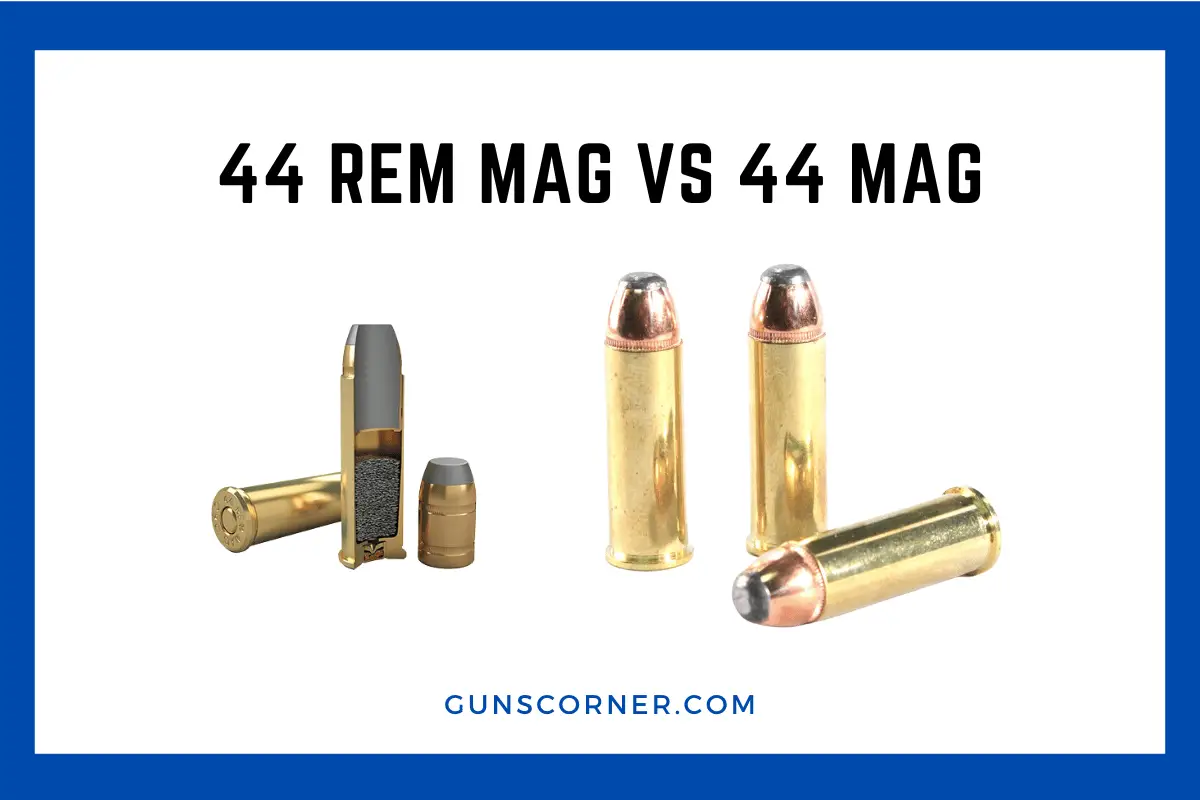
The drawback stems directly from that casual branding. Because 44 Mag is not the full SAAMI-registered trademark title, newer handloaders sometimes get confused when cross-referencing commercial brass against vintage reloading manuals or European CIP tables. You might also encounter budget bulk loaders using the casual label to market lower-pressure plinking rounds that fall well below true magnum velocities. Recoil remains punishing regardless of the print on the carton, demanding an aftermarket 🛒 Hogue Rubber Monogrip → to spare your palms during prolonged range sessions.
If quick online checkout and widespread ammunition availability top your priority list, securing a supply of these rounds makes immediate practical sense.
Price & availability subject to change. As an Amazon Associate we earn from qualifying purchases.
44 Rem Mag: Strengths and Weaknesses
Choosing ammunition marked 44 Rem Mag provides total technical clarity. This is the official SAAMI and CIP registry designation established in 1955. When you buy brass or factory cartridges stamped with the full name, you eliminate every shred of doubt regarding chambering, case specifications, and SAAMI maximum average pressure ratings. Reloading benches benefit the most from this precision; die sets, case gauges, and technical load manuals index their definitive recipes under this formal title. You will never second-guess whether a published powder charge matches your headstamped brass.
The primary downside involves modern retail friction. Online ammo search engines are notoriously finicky; filtering strictly by “44 Rem Mag” frequently hides dozens of viable product listings tagged simply as 44 Mag by web administrators. In physical stores, less knowledgeable counter staff might hesitate when asked for the full designation, needlessly scanning shelves for an obscure variant that does not exist. Furthermore, you are still firing a heavyweight magnum cartridge that produces intense muzzle blast and costly per-round economics.
When technical documentation and strict adherence to historical reloading standards matter most, investing in cartridges sporting the full traditional designation is the ideal path forward.
Price & availability subject to change. As an Amazon Associate we earn from qualifying purchases.
- ✅ Highly recognizable shorthand
- ✅ Easier to find in quick searches
- ✅ Fits all 44 caliber firearms
- ✅ Standardized across all retailers
- ❌ Not technically the SAAMI full name
- ❌ May cause confusion with 44 Special
- ❌ Slightly less formal for logging
- ✅ Correct official technical designation
- ✅ Preferred by precision reloaders
- ✅ Matches all factory firearm markings
- ✅ Internationally recognized standard
- ❌ Longer name to type/write
- ❌ Adds redundant characters to labels
- ❌ Less common in casual slang
44 Mag or 44 Rem Mag: Which Should You Choose?
Your purchasing decision hinges on how you buy ammunition and whether you load your own brass at the bench. For the high-volume range shooter or deer hunter buying factory-loaded ammunition off store shelves, stick with whatever box bears the 44 Mag label at the lowest price per round. Online retailers frequently run promotional discounts under the abbreviated search term, letting you stock up on reliable hollow points without paying a markup for heritage packaging. Pair your purchase with a durable 🛒 MTM Case-Gard Ammo Box → to protect your factory cartridges from moisture and transit rattles.
If you spend your weekends setting up powder measures and measuring brass with calipers, prioritize 44 Rem Mag. Handloaders demand meticulous organization, and matching headstamps directly to published SAAMI data sheets eliminates costly indexing errors. Stamped cases from traditional manufacturers using the formal designation tend to deliver exceptional primer pocket uniformity and thick case walls built for repeated firings.
Backcountry hikers navigating grizzly terrain face a different reality. When choosing defensive bear loads from boutique manufacturers like Buffalo Bore or Underwood, ignore the labeling debate entirely. Check the bullet construction instead. A hard-cast, flat-nosed 305-grain projectile traveling at 1,300 feet per second will stop an apex predator whether the cardboard package reads 44 Mag or 44 Rem Mag. Focus your budget on bullet integrity and terminal energy rather than semantic nuances.
Shooters who prefer simplified labeling on store-bought ammunition boxes.
Purists and reloaders who strictly follow SAAMI official technical specifications.
Final Verdict: 44 Mag vs 44 Rem Mag
Our head-to-head evaluation settles on an unambiguous result: winner=tie. The 44 Mag and 44 Rem Mag are identical physical cartridges sharing the exact same .429-inch bullet diameter, 1.285-inch case length, and 36,000 PSI pressure limit. The sole divergence is nomenclature. 44 Rem Mag remains the official industry designation recognized by SAAMI, while 44 Mag serves as the standard commercial shorthand embraced by consumers and retail search engines.
The single trade-off comes down to retail accessibility versus reloading documentation clarity. You will find boxes marked 44 Mag faster on digital storefronts, but brass marked 44 Rem Mag integrates more cleanly with published bench manuals. Do not pay extra for one over the other. Inspect the bullet weight, check the velocity rating, verify the price per round, and load your cylinder with complete confidence.
As an Amazon Associate we earn from qualifying purchases.
44 Mag vs 44 Rem Mag: Frequently Asked Questions
Is 44 Mag better than 44 Rem Mag?
No, they are identical. Both refer to the same cartridge developed in 1955. 44 Rem Mag is the official name, while 44 Mag is the common name. Both function at a maximum pressure of 36,000 PSI and use the same .429 diameter bullet for performance.
Will 44 Mag fit in my 44 Rem Mag revolver?
Yes, absolutely. Since the terms refer to the same cartridge, there is zero risk of fitment issues. You can use any ammunition labeled either way in any firearm chambered for the 44 Rem Mag cartridge.
Why are there two different names for one cartridge?
This is common in the firearms industry. Manufacturers use the full name (44 Rem Mag) for legal and technical accuracy, while consumers and retail stores use the shorthand (44 Mag) for brevity and faster inventory tracking.
Which is safer for my firearm?
Both are equally safe. Because the technical dimensions, pressure limits (36,000 PSI), and bullet profiles are standardized, there is no safety difference between the two terms.
Are they the same as 44 Special?
No. While 44 Special shares the same bullet diameter (.429), it is a shorter, lower-pressure cartridge. Always check your firearm's barrel stamp to ensure you use the correct pressure-rated ammunition.

Leave a Reply