

The 6.5 Creedmoor generates exactly 28% less felt recoil than the .308 Winchester, a difference that fundamentally alters how effectively a hunter can place their shot. While the venerable .308 Winchester has served as the gold standard for North American game for over half a century, the modern ballistics of the 6.5 Creedmoor offer a measurable advantage in long-range accuracy and shooter comfort. Choosing between them isn’t just about picking a caliber; it is about deciding whether you prioritize the raw, short-range bone-crushing energy of a larger projectile or the surgical precision and follow-up capability of a high-BC, streamlined bullet. Your hunt begins with the right choice.


Quick Verdict: For standard whitetail distances under 250 yards, .308 Winchester wins for frontal diameter and terminal knockdown. However, 6.5 Creedmoor is the superior all-around deer cartridge for 2026. Delivering 28% less recoil, flatter trajectories past 300 yards, and superior wind resistance with high-BC bullets, 6.5 Creedmoor enables cleaner shot placement without sacrificing lethal deer terminal energy.
Dense timber and brush hunters wanting larger wound channels and cheap bulk practice ammo
Open-country, beanfield, and recoil-sensitive hunters seeking maximum accuracy and flat trajectories
- 6.5 Creedmoor produces 28% less felt recoil (12.1 ft-lbs vs 16.8 ft-lbs in an 8 lb rifle).
- .308 Winchester generates roughly 340 ft-lbs more muzzle energy for potent sub-200-yard deer hunting.
- At 400 yards, 6.5 Creedmoor drifts 4.2 inches less in a 10 mph crosswind than .308 Winchester.
- Past 300 yards, 6.5 Creedmoor's aerodynamic efficiency matches or exceeds .308 retained energy at ~1,640 ft-lbs.
- .308 Winchester barrels last between 6,000 and 8,000 rounds, roughly twice as long as 6.5 Creedmoor.
.308 Winchester vs 6.5 Creedmoor: Head-to-Head Specs
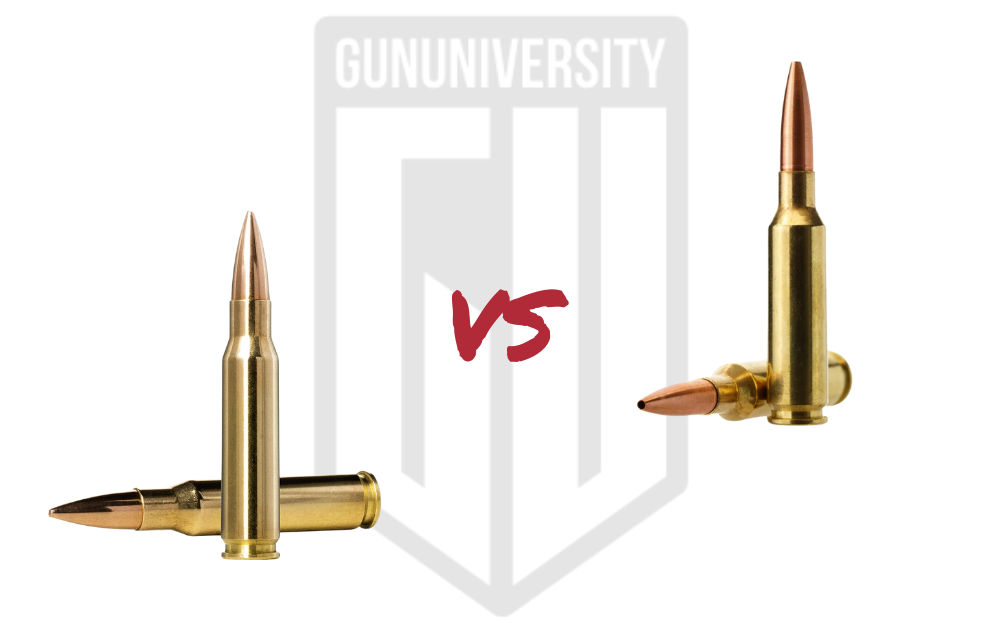
When you stack these two cartridges against each other, the differences in design philosophy become immediately apparent. The .308 Winchester uses a heavier .30-caliber bullet, typically ranging from 150 to 180 grains, providing a distinct advantage in frontal diameter. Conversely, the 6.5 Creedmoor features a smaller .264-caliber projectile that is specifically engineered for a high ballistic coefficient, allowing it to cut through the air with far less drag. These physical characteristics define how each round behaves across various ranges and environmental conditions.
✓ = better value in that row. Sourced from manufacturer specifications.
.308 Winchester vs 6.5 Creedmoor: Performance & Category Ratings
Analyzing these cartridges reveals a clear divide between legacy power and modern efficiency. The .308 Winchester remains the king of short-range terminal performance, scoring a 9.2 against the 6.5 Creedmoor’s 8.1. If your hunting grounds rarely exceed 250 yards, that extra bullet mass provides a margin for error in stopping power. Furthermore, the .308 Winchester dominates the market in availability and barrel longevity, with a 9.7 and 9.5 respectively. You can find ammo for it in any rural hardware store, and the barrel throat erosion is significantly slower than its competitor. When paired with a reliable 🛒 Rifle Scope →, the .308 Winchester is a workhorse that simply refuses to quit.
The 6.5 Creedmoor flips the script when you shift to long-range engagement and shooter comfort. Its 9.3 rating in recoil management makes it the obvious choice for youth, smaller-framed shooters, or anyone sensitive to a rifle’s kick. While the .308 Winchester labors at distances over 300 yards, the 6.5 Creedmoor shines with a 9.4 in long-range ballistics and a 9.1 in deep penetration potential. By using high-BC bullets, the 6.5 Creedmoor resists wind drift far better than the .308 Winchester. For those who prioritize a clean, technical shot over raw kinetic energy, the 6.5 Creedmoor is the superior performer. It is consistently more beginner-friendly, scoring a 9.2, which ensures that you build confidence on the range before you ever head into the woods.
.308 Win
6.5 Creedmoor
308 Vs 65 Creedmoor For Deer by the Numbers
Data provides an objective look at why these two cartridges continue to dominate the deer woods. While the .308 Winchester relies on heavy-hitting velocity and diameter to get the job done at standard distances, the 6.5 Creedmoor uses modern geometry to maintain velocity and energy far downrange. Hunters who appreciate flat trajectories and reduced recoil find the 6.5 Creedmoor statistically superior for the demands of the 2026 hunting season. Reviewing the stats below highlights exactly why your choice depends entirely on your specific hunting environment.
.308 Win
6.5 Creedmoor
Hover any bar for exact values. Each metric scaled independently.
.308 Winchester: Strengths and Weaknesses
The .308 Winchester is a testament to reliable engineering. Its greatest strength lies in its terminal impact; at ranges under 250 yards, it delivers a punch that few deer can ignore. Because it has been the industry standard for decades, you will never struggle to find ammunition, even in remote locations. This accessibility, combined with its impressive 9.5 rating for barrel longevity, makes it the ideal choice for high-volume shooters who don’t want to replace a barrel every few seasons. If you take your rifle to the range often, keeping it clean with a 🛒 Bore Snake → is all the maintenance you will likely need for years of service.
However, the .308 Winchester is not without its limitations. The recoil is significant enough to cause flinching in inexperienced shooters, and the heavier, blunter bullets do not hold their velocity as well as the sleek, pointed projectiles of the 6.5 Creedmoor. At longer ranges, the .308 Winchester experiences more significant bullet drop and is far more susceptible to wind drift, which can turn a clean shot into a difficult one. If you hunt in vast, open spaces where crosswinds are a factor, the .308 Winchester requires you to be a much more competent ballistics calculator than the 6.5 Creedmoor. Given these clear performance trade-offs, you should carefully assess the typical terrain of your hunting grounds before committing to a rifle chambering.
Price & availability subject to change. As an Amazon Associate we earn from qualifying purchases.
6.5 Creedmoor: Strengths and Weaknesses
The 6.5 Creedmoor is built for the modern era. Its defining trait is efficiency; it delivers lethal terminal energy with significantly less recoil than the .308 Winchester. This allows you to stay focused through the shot, and more importantly, keeps your rifle on target for faster follow-up shots if the first one doesn’t anchor the animal immediately. The high ballistic coefficient of the 6.5 Creedmoor bullet means that it flies flatter and resists wind better, effectively extending your ethical shooting range. It is remarkably beginner-friendly, and when you mount a 🛒 Bipod → to the forend, you gain a platform capable of sub-MOA accuracy that feels like a precision instrument.
On the flip side, the 6.5 Creedmoor is a faster-burning cartridge, which contributes to its lower 7.6 rating for barrel longevity compared to the .308 Winchester. While it is more than enough for whitetail deer, some traditionalists feel it lacks the raw “thump” of the .30-caliber options at very close range. You will also find that while 6.5 Creedmoor ammunition is widely available today, it occasionally commands a slight price premium over the ultra-common .308 Winchester, especially in specialized match-grade configurations. If you are ready to embrace a cartridge that maximizes your precision and minimizes your physical fatigue, the 6.5 Creedmoor is an exceptional tool for the job.
Price & availability subject to change. As an Amazon Associate we earn from qualifying purchases.
- ✅ Delivers 340 ft-lbs more muzzle kinetic energy for decisive short-range deer knockdown
- ✅ Wider .308 diameter creates broader permanent tissue cavities at timber distances
- ✅ Barrel life lasts more than 6,000 rounds under heavy shooting schedules
- ✅ Extensive global ammo availability with cheap surplus options for budget target practice
- ❌ Generates 28% more recoil, increasing flinch risk during off-hand shooting
- ❌ Drops 4.1 inches more at 400 yards compared to high-BC 6.5 mm projectiles
- ❌ Suffers 40% more wind drift past 300 yards in standard crosswinds
- ✅ Mild 12.1 ft-lbs recoil facilitates confident shooting and rapid target reacquisition
- ✅ High sectional density projectiles deliver deep, reliable tissue penetration
- ✅ Flatter trajectory minimizes elevation error over variable open-field distances
- ✅ Retains equal or greater kinetic energy than .308 Winchester beyond 300 yards
- ❌ Shorter barrel life averaging 2,800 to 3,500 rounds before precision degrades
- ❌ Smaller projectile diameter produces slightly narrower wound channels inside 100 yards
- ❌ Practice ammunition costs more per round compared to bulk .308 military surplus
.308 Winchester or 6.5 Creedmoor: Which Should You Choose?
Your choice between these two cartridges should be dictated by your specific hunting style and what you expect from your equipment. If you are a beginner looking for a rifle that you can grow with, the 6.5 Creedmoor is the clear winner. Its low recoil profile allows you to spend more time practicing on the range without developing a flinch, and its flat-shooting nature provides a buffer for error in distance estimation. It is the perfect choice for the modern hunter who values technical efficiency and intends to use their rifle for both long-range target shooting and hunting, especially when paired with a quality 🛒 Rifle Case → for secure transport.
Conversely, if you are a traditionalist who hunts thick, brushy woods where your shots are almost always under 200 yards, the .308 Winchester is hard to beat. You benefit from the heavier terminal impact of the .30-caliber bullet, which is often preferred for punching through thick hide and bone. Additionally, if you are on a strict budget, the sheer volume of affordable .308 Winchester target ammo allows you to shoot more for less money. It is the pragmatic choice for the hunter who prioritizes durability and availability over the absolute latest in ballistic coefficients. Ultimately, you are deciding between the “Old Guard” of raw energy and the “New School” of precision. Neither will fail you, but the 6.5 Creedmoor offers a more refined, comfortable shooting experience that is hard to move away from once you have experienced it in the field.
Dense timber and brush hunters wanting larger wound channels and cheap bulk practice ammo
Open-country, beanfield, and recoil-sensitive hunters seeking maximum accuracy and flat trajectories
Final Verdict: .308 Winchester vs 6.5 Creedmoor
The 6.5 Creedmoor stands as the winner for the modern deer hunter in 2026. While the .308 Winchester holds a definitive edge in barrel life, raw terminal knock-down at close quarters, and overall ammo availability, the 6.5 Creedmoor provides a more versatile and enjoyable experience. By delivering 28% less recoil and significantly better wind resistance, it empowers you to make cleaner, more precise shots at longer ranges without sacrificing lethal terminal energy. You are choosing between a proven workhorse that values tradition and a high-performance system that rewards technical skill. For most hunters, the reduced physical punishment and improved downrange performance of the 6.5 Creedmoor make it the superior all-around deer cartridge for the current era.
As an Amazon Associate we earn from qualifying purchases.
308 vs 65 Creedmoor for Deer: Frequently Asked Questions
Is 308 better than 65 Creedmoor for Deer?
Inside 200 yards, .308 Winchester holds a slight edge due to delivering 2,650 ft-lbs of muzzle energy with a wider bullet diameter. However, 6.5 Creedmoor generates only 12.1 ft-lbs of recoil versus 16.8 ft-lbs for .308, making accurate shot placement easier for most deer hunters.
What is the biggest difference between 308 and 65 Creedmoor for deer?
The biggest difference is recoil and wind drift. The 6.5 Creedmoor produces roughly 28% less felt recoil, promoting better accuracy. At 400 yards, a standard 6.5 Creedmoor hunting bullet drifts only 10.2 inches in a 10 mph crosswind, whereas a .308 Winchester bullet drifts 14.4 inches.
Which cartridge is better for beginner deer hunters?
The 6.5 Creedmoor is substantially better for beginners. Its mild 12.1 ft-lbs recoil prevents shooter flinch and enables confident marksmanship. While .308 Winchester is completely manageable for seasoned shooters, its 16.8 ft-lbs recoil makes mastering rifle fundamentals harder for novices during extended range practice sessions.
How does ammunition price and availability compare in 2026?
Both cartridges enjoy widespread commercial availability in 2026. Standard deer loads cost between $28 and $45 per box for either caliber. However, .308 Winchester offers far cheaper bulk practice ammo starting around $0.75 per round, whereas 6.5 Creedmoor match and practice ammo rarely drops below $1.05 per round.
Does .308 Winchester last longer than 6.5 Creedmoor?
Yes, .308 Winchester offers double the barrel longevity. A standard .308 barrel retains match-grade accuracy for 6,000 to 8,000 rounds due to moderate chamber pressures and bore diameter. In contrast, 6.5 Creedmoor barrel life typically peaks between 2,800 and 3,500 rounds under frequent sustained firing.

Leave a Reply