
Into the Wild With Confidence
Author: Drew Edward

-

50 Cal Trajectory Specification Chart By Year (2026 Full Reference)
💡 Quick Answer A standard .50 BMG (12.7x99mm NATO) cartridge firing a 647-750 grain projectile from a 29-to-32-inch barrel drops between 220 and 290 inches (21 to 28 MOA) at 1,000 yards with a 100-yard zero. Flight path, maximum rating, and velocity retention depend heavily on factory specification, projectile ballistic coefficient (0.620 to 1.050 G1),…
-
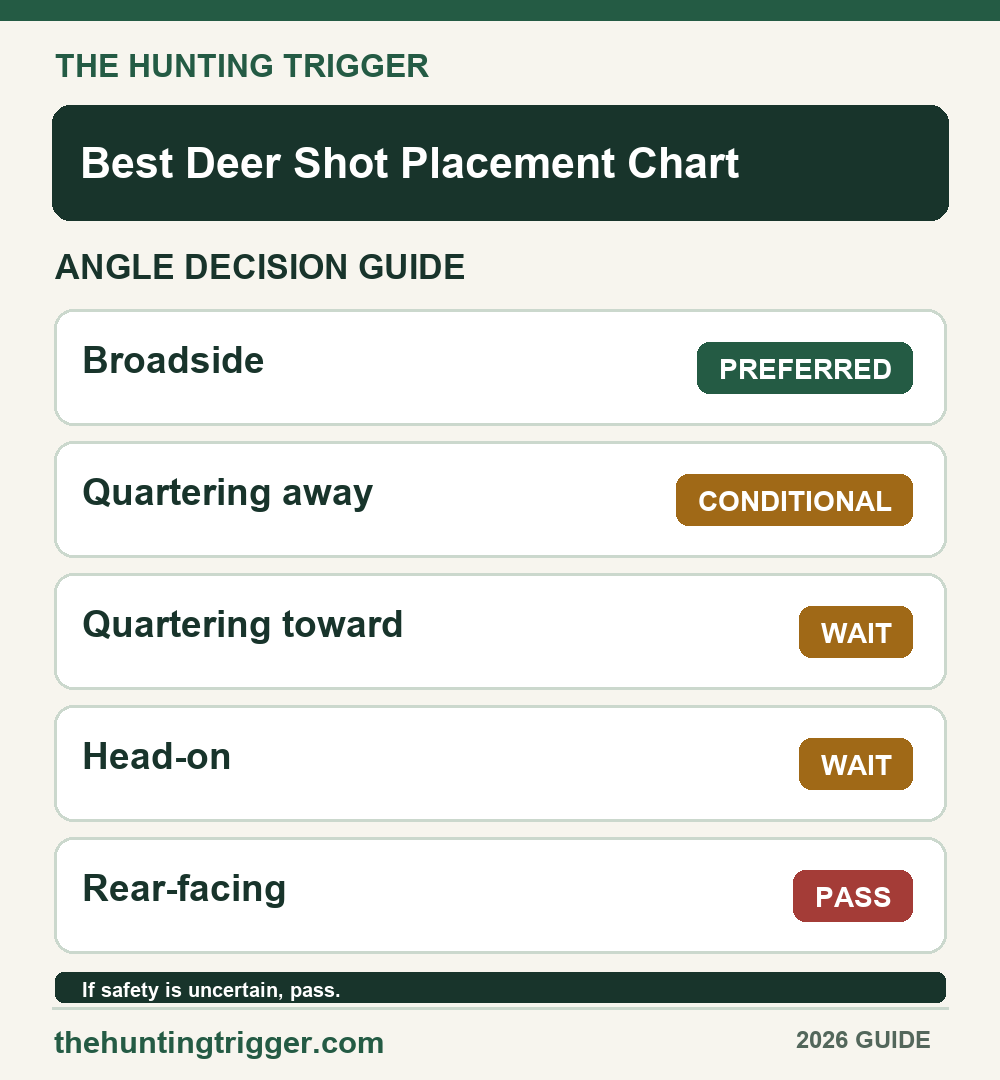
Deer Shot Placement Chart: Essential Anatomy and Angles (2026)
View an original deer shot placement anatomy chart, compare broadside and quartering angles, and learn when bow or firearm hunters should wait or pass.
-

308 vs 7mm Rem Mag: Which Is Better? (2026)
The 7mm Rem Mag generates roughly 26 foot-pounds of felt recoil—nearly 40% more violent push than the 16 foot-pounds produced by a standard 308. That sharp disparity transforms how both cartridges behave at the range and in the timber. While the belted magnum burns around 65 grains of powder to drive sleek bullets across wide…
-
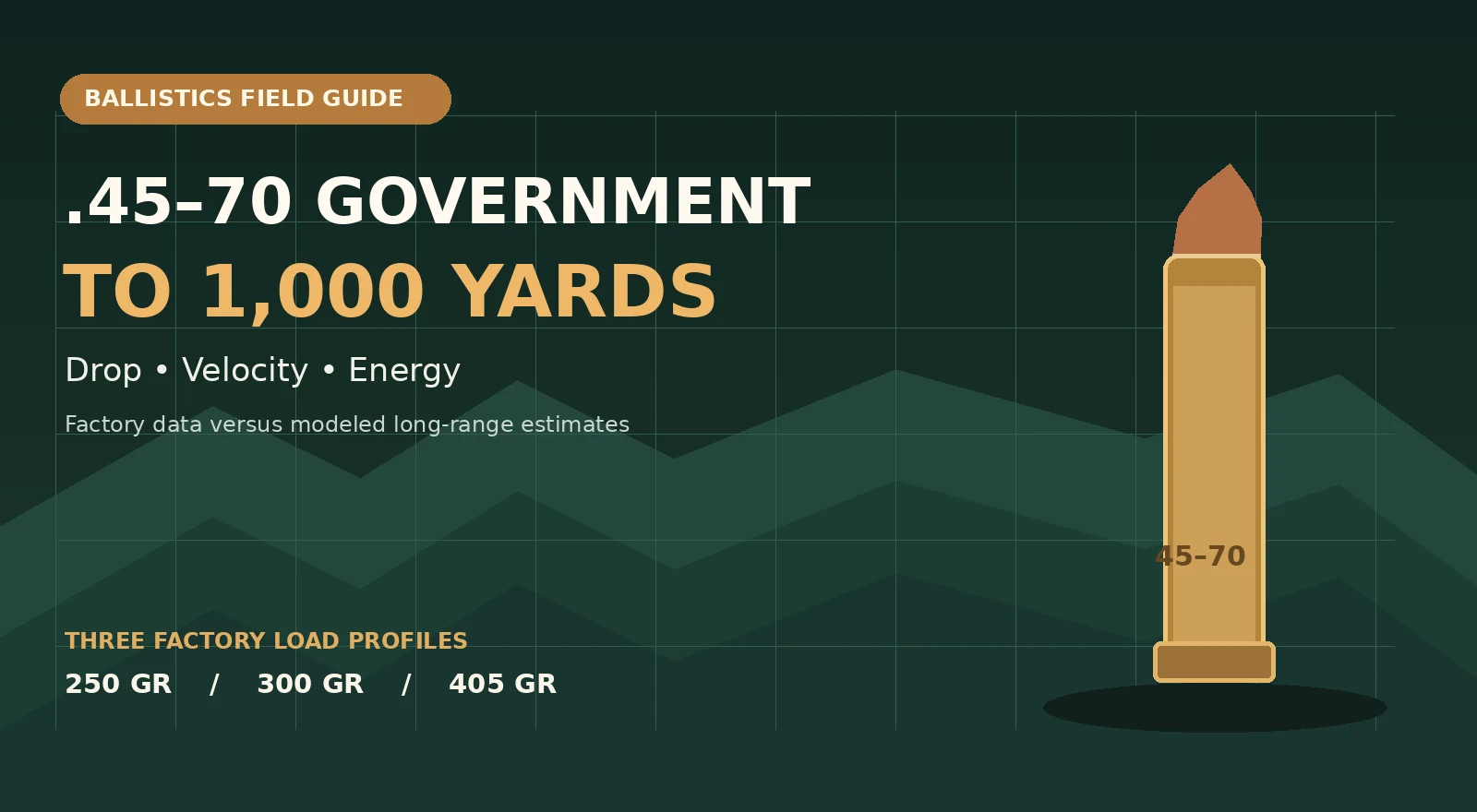
45-70 Ballistics Chart to 1,000 Yards 2026: Bullet Drop, Velocity & Energy
Looking for a 45-70 ballistics chart to 1,000 yards? You can find complete comparison tables below for three specific commercial loads: Federal Fusion 300-grain, Remington Core-Lokt 405-grain, and Hornady LEVERevolution 250-grain MonoFlex. Each table shows modeled bullet drop, remaining velocity, and retained energy from the muzzle to 1,000 yards. We also include published Hornady 325-grain…
-
350 Legend 105 Inch Barrel Ballistics Specification Chart By Year (2026 Factory Data)
💡 Quick Answer Out of a 10.5-inch barrel (frequently searched as 105 inch), the .350 Legend produces an average muzzle velocity of 1,850 to 2,050 fps and 1,200 to 1,450 ft-lbs of muzzle energy, depending on bullet weight (150gr to 180gr). This configuration experiences an average velocity loss of 250 to 300 fps compared to…
-

7mm 08 vs 7mm Rem Mag (2026): Which Is Better?
Burn 40 percent more powder in the 7mm Rem Mag, and you might expect double the downrange performance. It doesn’t happen. Out to 300 yards, a standard 140-grain hunting bullet fired from a compact 7mm 08 drops roughly 3.2 inches more than the exact same bullet launched from the belted magnum. That narrow gap shocks…
-

25 Creedmoor vs 25 PRC (2026): Which Is Better?
The single biggest real-world difference between these two quarter-bore hot rods comes down to raw muzzle velocity: the 25 PRC pushes identical 134-grain match bullets roughly 320 feet per second faster than the 25 Creedmoor. That extra speed turns wind drift into an afterthought across vast open canyons. Yet that blistering pace exacts an immediate,…
-

Hornady 22 Creedmoor Ballistics Specification Chart By Year (2026 Full Reference)
💡 Quick Answer Hornady 22 Creedmoor factory ammunition achieves muzzle velocities between 3,275 fps and 3,450 fps with factory projectile weights ranging from 60 to 80 grains. With a standard 200-yard zero, expect approximately 34 to 38 inches of drop at 500 yards and 245 to 275 inches at 1,000 yards. Real-world ballistics depend directly…
-

Choosing Deer Hunting Blinds: 2026 Essential Selection Guide
Updated September 24, 2026. Choosing deer hunting blinds starts with the hunt, not the camo pattern. The best blind matches the hunter’s weapon, access route, wind, terrain, safety plan, and local rules. This guide compares portable ground blinds, elevated box blinds, and open stands. It also gives a practical setup checklist, size examples from published…
-
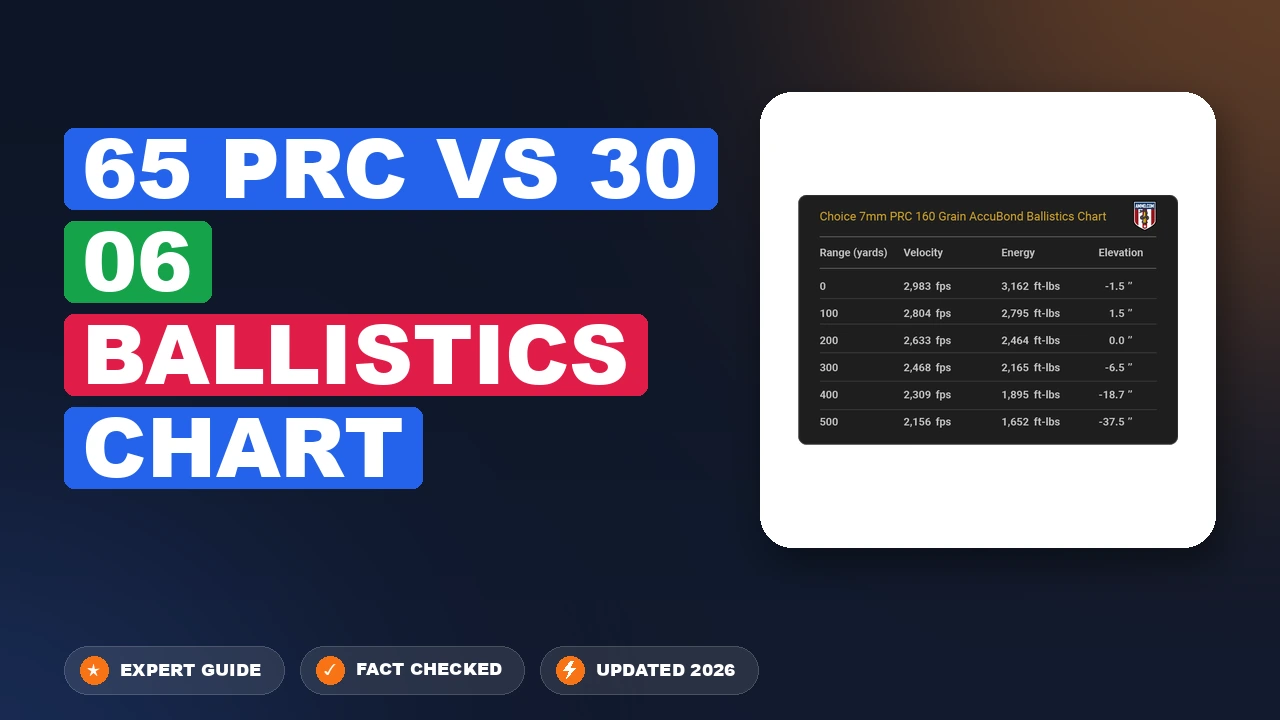
6.5 PRC vs 30-06 Ballistics Chart: Trajectory, Drop & Energy Compared (2026)
💡 Quick Answer The 6.5 PRC outperforms the .30-06 Springfield in trajectory and wind resistance beyond 400 yards due to superior ballistic coefficients (G1 ~0.530-0.625 vs ~0.410-0.490), while producing 25-30% less felt recoil. The .30-06 delivers greater muzzle kinetic energy (2,800-3,000 ft-lbs vs 2,700-2,850 ft-lbs) and heavier frontal mass under 300 yards. Always verify factory…