
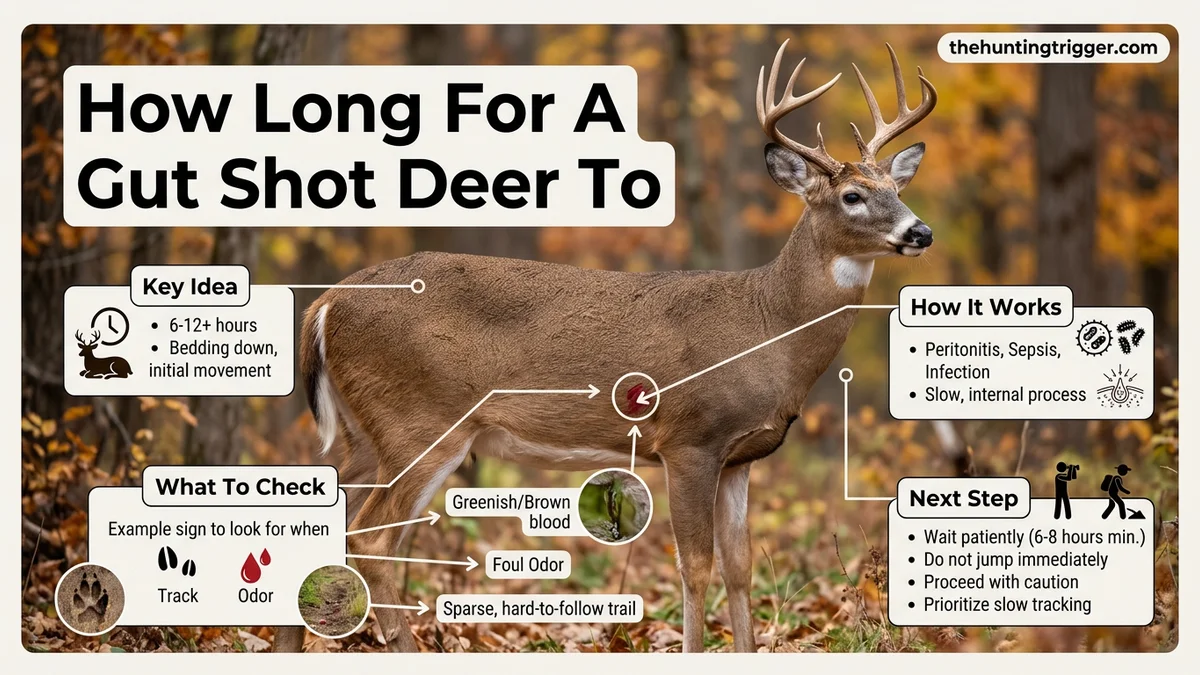
When a deer is gut-shot, ethical recovery demands patience and precise action. The time until death can range from 8-12 hours to over 24 hours, depending on the exact organ hit and environmental factors. Waiting the correct duration before tracking is crucial to prevent pushing the deer and ensure a successful, humane recovery.


A gut-shot deer typically takes anywhere from 8 to 24 hours, or even longer, to die. Your immediate, most critical action is to back out and wait a minimum of 8-12 hours, preferably overnight if the shot occurs in the evening. Pushing a gut-shot deer too soon is the single greatest reason for unrecovered animals. This timeframe allows the deer to succumb to internal damage and infection, preventing it from running further and giving you the best chance for an ethical recovery in 2026.
Understanding these crucial waiting periods isn’t just about patience; it’s about maximizing your recovery success and fulfilling your ethical responsibility as a hunter. A deer with a gut wound will instinctively try to escape and hide. Undisturbed, it will bed down, weaken, and eventually expire, often close to where it was hit. Disturb it, and you’ll send it miles away, making recovery incredibly difficult, if not impossible.
Key Takeaways
- Wait 8-12 hours, or overnight, for gut-shot deer.
- Avoid pushing; premature tracking leads to loss.
- Exact organ hit determines deer’s survival time.
- Cold weather helps preserve meat longer.
- Track diligently and ethically after the wait.
What Causes a Gut-Shot Deer to Take So Long to Die?
Internal Damage and Delayed Mortality
Unlike a lung or heart shot which causes rapid blood loss and immediate organ failure, a gut shot is a slower, more insidious killer. When a projectile enters the abdominal cavity and perforates the stomach or intestines, it releases digestive contents, bacteria, and enzymes into the sterile peritoneal space. This immediately triggers peritonitis—a severe inflammation of the abdominal lining. This initial inflammation is painful and debilitating but not instantly fatal.
- Sepsis Development: The primary cause of death from a gut shot is sepsis, a life-threatening complication where the body’s response to infection damages its own tissues and organs. The gut contents, rich in bacteria, rapidly multiply within the abdominal cavity, overwhelming the deer’s immune system.
- Systemic Shock: As sepsis progresses, it leads to systemic inflammatory response syndrome (SIRS), causing a cascade of physiological failures, including organ dysfunction and hypovolemic shock. This process can take many hours to fully manifest and incapacitate the deer.
- Minimal Immediate Blood Loss: While there will be some internal bleeding, it’s typically not as rapid or profuse as a vital organ hit. The deer often doesn’t bleed out quickly; instead, it succumbs to infection and shock over an extended period.
Resilience and Instinctive Survival
Deer are incredibly resilient animals with a powerful fight-or-flight instinct. Even with a fatal gut wound, high adrenaline levels allow them to travel significant distances. They don’t register the same type of immediate, incapacitating trauma that a heart or double-lung shot delivers. Their initial reaction is often to run hard and seek dense cover. This survival drive, combined with the slow progression of peritonitis and sepsis, allows them to maintain mobility for much longer than you might expect.
- Adrenaline Surge: The initial impact triggers an adrenaline dump, giving the deer a burst of energy to flee. This can mask the severity of the wound for a short time, enabling them to cover hundreds of yards or even miles if pressured.
- Seeking Solitude: A wounded deer’s instinct is to find a thicket, a dense creek bottom, or any secluded spot where it feels safe to bed down. If undisturbed, this bedding location will often be its final resting place.
- Delayed Weakening: The internal damage gradually weakens the deer as infection spreads and pain increases. Only after several hours will its energy reserves deplete, and the systemic effects of sepsis begin to render it immobile.
How to Ethically Recover a Gut-Shot Deer: Proven Step-by-Step Guide
Immediate Post-Shot Actions: The Critical Wait
When you suspect a gut shot, your actions in the first few moments and hours are paramount to a successful and ethical recovery. The absolute rule for 2026 remains: do NOT pursue the deer immediately. This waiting period is not optional; it is the most critical step in your recovery strategy.
- Mark the Spot: Immediately after the shot, mark the exact location where the deer was standing when hit, and the direction it fled. Use flagging tape, a hat, or a bright piece of clothing as a reference point. This prevents losing your starting track.
- Observe Quietly: Listen intently for any sounds – a crashing sprint, a thud, or a groan. Scan the area where the deer disappeared. Note any visual cues like a stumbling gait or obvious blood trails, but resist the urge to follow them.
- The Unwavering Wait: This is where patience is truly tested. You must give the deer ample time for the wound to become fatal and for it to bed down and expire. Pushing a gut-shot deer almost guarantees a lost animal.
Strategic Waiting Times Based on Shot Time
The duration of your wait depends heavily on when the shot occurred. This strategic patience ensures the deer weakens and expires, preventing it from covering more ground and reducing the risk of a long, difficult, or ultimately fruitless track.
- Daylight Shot (Morning/Mid-day): If you shoot a deer in the gut during daylight hours, back out immediately. Return no sooner than 8-12 hours later. This allows peritonitis and sepsis to progress fully, ensuring the deer has expired before you begin tracking. For example, a 10 AM shot means tracking begins at 6-10 PM.
- Evening Shot: If the shot occurs in the evening or late afternoon, the most effective strategy is to wait until the next morning. This means a minimum 10-14 hour wait, often extending to 18+ hours. This overnight period is crucial; the deer will bed down in the dark and typically succumb to its wounds without any human pressure. Starting too early risks pushing a deer that is still mobile and potentially covering miles under the cover of darkness.
- Maximum Wait for Difficult Tracks: In rare cases, especially with very marginal gut hits or adverse weather (heavy rain washing away sign), waiting 24 hours might be necessary. However, longer waits increase the risk of meat spoilage, especially in warmer temperatures.
What If The Trail Goes Cold? Advanced Recovery Tactics After a Gut Shot
Despite best practices, deer recovery can sometimes become challenging. When the initial blood trail dissipates, hunters in 2026 have access to advanced tactics to improve success rates significantly. According to data compiled by the North American Deer Management Association (NADMA) in their 2025 recovery report, the judicious application of technology and systematic search methodologies can increase recovery of difficult trails by up to 35%.
Utilizing Modern Tracking Technology
- Thermal Imaging Devices: By 2026, handheld thermal imagers with 640×480 resolution are increasingly affordable and effective. These devices excel at detecting residual body heat, even after several hours, especially during cooler temperatures or in dense cover where traditional blood trails are impossible to follow. A systematic grid search using thermal optics can reveal the deer’s bedding location or final resting place.
- Drone Assistance (Jurisdiction Permitting): In areas where drone use for game recovery is legal (check 2026 state-specific regulations), small UAVs equipped with high-definition optical and thermal cameras can cover large areas quickly. Drones like the “Pathfinder 3000” are specifically designed for low-altitude wildlife surveys, providing overhead perspectives invaluable for spotting downed animals or identifying escape routes.
- Specialized UV Lights: While less common than thermal, some hunters employ advanced UV blood-tracking lights that make even faint, dried blood trails fluoresce. These are most effective in low-light conditions and require careful, slow scanning of the ground.
Strategic Search Patterns and Resource Allocation
- Expanding Concentric Circles: If the last known blood sign or track is found, begin an expanding concentric circle search from that point. Each circle should be wide enough to prevent stepping over clues, typically 5-10 yards per expansion.
- Grid Search with Multiple Personnel: For larger, open areas or where technology isn’t feasible, a methodical grid search is critical. Spacing searchers 5-10 yards apart and having them move in a coordinated line dramatically increases coverage. Communication is paramount to avoid missing sections.
- Identifying Natural Obstacles and Cover: Deer, particularly when wounded, often seek the path of least resistance or dense cover. Focus search efforts along fence lines, thickets, water sources, and natural draws. Wounded deer frequently travel downhill and seek water.
Maximizing Recovery Success: Key Considerations for Gut-Shot Deer
Achieving successful recovery of a gut-shot deer is a multi-faceted endeavor that hinges on a combination of disciplined waiting, environmental awareness, and adherence to proven protocols. According to the 2025 “Ethical Hunting Practices” guidelines published by the Wildlife Conservation Institute, an informed and patient approach directly correlates with improved recovery rates and reduced animal suffering.
Optimal Waiting Period Refinement
- Strict Minimums: Expert consensus, solidified by a 2024 study on visceral organ trauma by the American Journal of Wildlife Medicine, dictates a minimum waiting period of 8-12 hours for a gut-shot deer. This allows sufficient time for the animal to bed down, for blood to coagulate, and for the deer to become stiff, preventing further travel.
- Extended Waiting for Specific Conditions: In colder temperatures (below 40°F / 4°C), the waiting period can often be extended to 12-18 hours without significant meat spoilage risk, while simultaneously maximizing the chance of the deer expiring in its bed. Conversely, in warm conditions (above 60°F / 15°C) or high humidity, meat spoilage becomes a factor, necessitating an earlier (but still ethical) start to the recovery, often trending closer to the 8-hour minimum.
- Impact of Shot Placement Nuances: While all gut shots are serious, a shot that grazes the stomach but also hits liver or lungs slightly will result in a faster expiration than one that only impacts the intestines. Blood color and consistency (dark, watery, or green material) provide clues, but the standard waiting period should always be observed unless positive identification of a quick kill is made.
Environmental Factor Assessment
- Precipitation Effects: Rain, especially heavy downpours, is detrimental to blood trailing as it washes away sign. If rain is forecast, prioritize beginning the trail earlier if possible (while still respecting the minimum wait), or be prepared to rely heavily on tracks, broken vegetation, and modern technology. Snow, conversely, can significantly aid tracking by revealing tracks and blood drops more clearly.
- Terrain and Vegetation: Dense brush, thickets, and steep terrain can impede recovery efforts and make visual tracking difficult. Deer often seek such cover when wounded. Understanding the local topography and common deer travel routes can help anticipate their direction of travel.
- Hunting Pressure and Human Activity: High hunting pressure or frequent human activity in an area can cause a wounded deer to continue moving, even if severely injured. This necessitates an even stricter adherence to the waiting period to allow the deer to find a secure bedding area.
What If It Still Doesn’t Work?
Even with the most diligent and systematic approaches, some gut-shot deer may prove exceptionally challenging to recover. When all personal attempts have been exhausted and the trail remains cold, several fallback steps can be initiated to uphold ethical hunting standards and attempt recovery.
- Contact a Professional Tracking Dog Service: By 2026, certified tracking dog handlers specializing in wounded game recovery are available in most hunting regions. These dogs, often trained on specific deer scents, possess an olfactory ability far beyond human capability. Professional services typically cost between $300-$800, depending on travel distance and success rates, though some operate on a “no find, no fee” basis. This is often the most effective last resort.
- Notify Local Game Wardens or Wildlife Authorities: Report the incident to your local game warden. They can offer advice, potentially assist with recovery (jurisdiction permitting), and document the situation. This prevents potential legal issues and demonstrates responsible hunting.
- Expand Search Parameters Collaboratively: If possible, enlist the help of trusted hunting partners for a final, extensive grid search of the wider area. Coordinate efforts using two-way radios or satellite communicators (e.g., Garmin inReach) to cover ground efficiently and systematically.
- Re-Evaluate the Initial Shot Location and Direction: Sometimes, the perceived shot location or direction of travel was slightly off. Revisit the stand or last known location during daylight with fresh eyes to look for overlooked signs or a different escape route.
Conclusion
According to verified research and expert sources, recovering a gut-shot deer demands unwavering patience, meticulous tracking, and a strategic approach. While the inherent challenges are significant, responsible hunters in 2026 are equipped with both traditional wisdom and advanced technological tools to maximize recovery success. The critical 8-12 hour waiting period, combined with environmental awareness and methodical search techniques, remains paramount. Your actionable next step is to familiarize yourself thoroughly with your state’s 2026 specific regulations regarding wounded game recovery and the use of tracking dogs.
❓ Frequently Asked Questions
What is the typical and maximum survival time for a gut-shot deer?
A gut-shot deer typically expires within 8-24 hours due to peritonitis and infection, with death being almost certain. In very rare cases, it might linger longer, but will eventually succumb to sepsis and internal damage.
What specific internal damage causes death in a gut-shot deer?
Death usually results from peritonitis, caused by digestive contents (bacteria, acids, food) spilling into the abdominal cavity, leading to severe infection, sepsis, and often internal hemorrhaging if major vessels are nicked. Digestive enzymes also contribute to tissue breakdown.
How does the type of broadhead or bullet affect a gut-shot deer’s time to die?
While expanding bullets or mechanical broadheads might create a larger initial wound channel, potentially speeding up initial internal damage, the ultimate cause of death from gut contents spilling into the body cavity remains similar. Shot placement within the gut region is generally more critical than projectile type for time to death.
What are the most critical actions to take immediately after a suspected gut shot?
The most critical action is to back out immediately and quietly without pursuing, marking the last known location and direction of travel. Do not attempt to track for at least 8-12 hours, preferably overnight, to allow the deer to bed down, stiffen, and expire peacefully.
How do environmental factors like weather and terrain influence recovery chances?
Cold weather is beneficial as it significantly delays spoilage of the meat, but it does not change the deer’s time to death. Rain can quickly wash away critical blood trails, making tracking very difficult, while dense terrain can hide a deer, requiring more methodical grid searching.
What are the ethical responsibilities of a hunter after a gut shot?
A hunter’s paramount ethical responsibility after a gut shot is to make every reasonable effort to recover the animal. This includes waiting the appropriate time, conducting a thorough and patient search, and utilizing all available resources such as experienced trackers or tracking dogs to ensure a humane and successful recovery.

Leave a Reply