
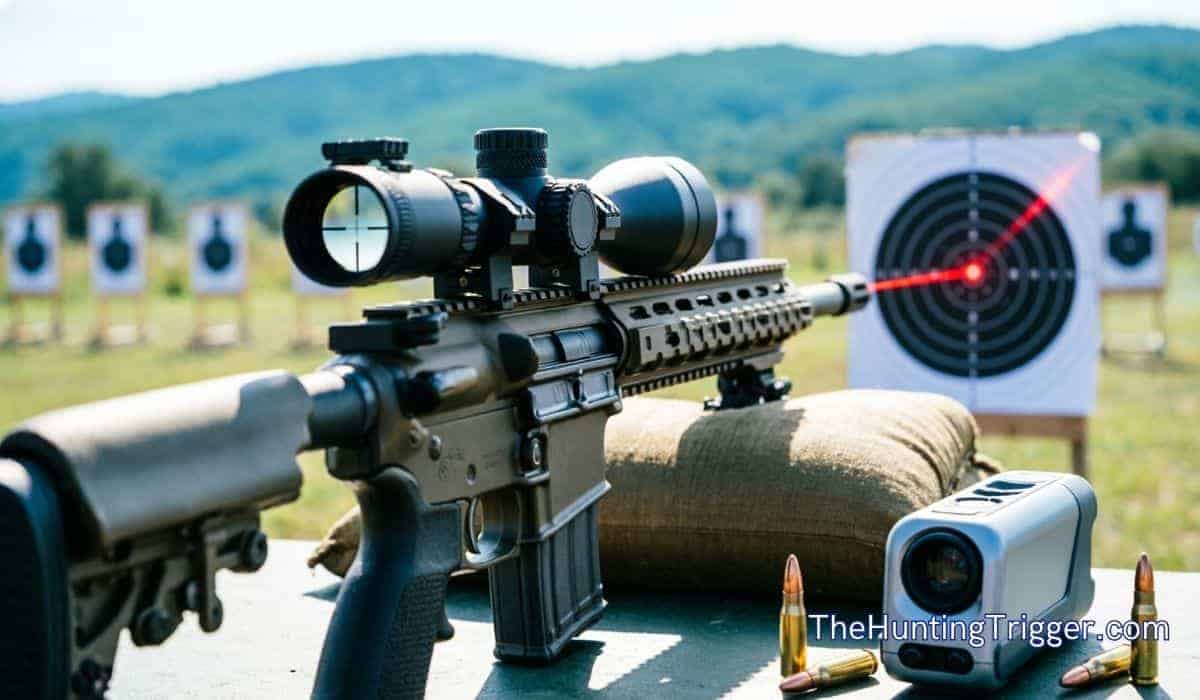
Setting up a rifle for precise shooting matters to most gun owners, hunters, and marksmen. One method often used is boresighting, a process designed to align a firearm’s sights with its barrel. Many see it as a shortcut to accuracy, but questions remain: How close to zero will it really get you? Is boresighting enough to ensure your first shots land on target? This article offers a clear, detailed explanation of boresighting accuracy, the methods, and what you can expect when using this technique.
Table of Contents
What Is Boresighting?
Boresighting is the process of aligning the bore (the inside of the barrel) with the firearm’s sights, usually a scope or iron sights. The goal is to make sure your first shots are at least on paper, reducing the time, effort, and ammunition needed to zero a rifle.
There are several ways to boresight a firearm, each with its own level of precision.
Common boresighting methods include:
- Visual boresighting: Looking down the bore and matching the sight to a distant object.
- Optical boresighters: Devices that attach to the muzzle and provide a reticle.
- Laser boresighters: Project a laser from the bore to show the point of aim.
- Magnetic boresighters: Attach to the muzzle using magnets and align with the scope.
Each technique aims to get your shots close to the bullseye before live-fire adjustments begin.
How Boresighting Works?
The basic idea behind boresighting is simple: line up the barrel with the optic. For bolt-action rifles, removing the bolt and looking through the barrel at a distant target is common. With other types, tools like laser or optical boresighters are used.
Here’s how the most popular methods function:
Visual Boresighting
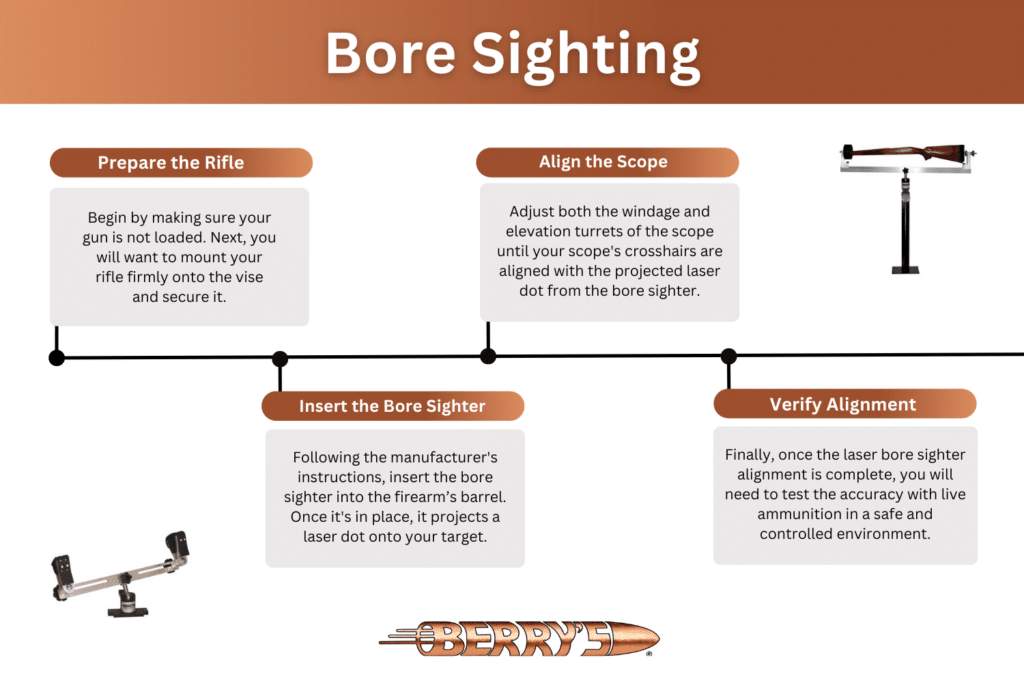
Remove the bolt, look through the bore at a target (usually 25 yards away), and adjust the scope so the crosshairs match what you see through the barrel. This requires a steady rest and good eyesight. It’s simple, but human error can affect results.
Laser Boresighters
Insert a laser boresighter into the chamber or muzzle. The laser dot shows where the bore is pointing. Adjust the sights or scope until the crosshairs and laser dot match at a set distance. This method is faster and often more precise than visual boresighting.
Optical And Magnetic Boresighters
These devices use a lens or magnets to align with the barrel. They show a reticle or grid for adjusting your sights. They’re reusable and can fit various calibers, but their accuracy depends on proper attachment.
How Accurate Is Boresighting?
The accuracy of boresighting depends on several factors: the method used, the skill of the shooter, and the quality of the equipment. Let’s break down what you can expect with each method.
| Boresighting Method | Average Initial Grouping (at 25 yards) | Typical Adjustment Needed to Zero (MOA*) |
|---|---|---|
| Visual (by eye) | 3-8 inches from bullseye | 6-12 MOA |
| Laser (chamber/muzzle) | 1-3 inches from bullseye | 2-6 MOA |
| Optical/Magnetic | 2-5 inches from bullseye | 3-8 MOA |
*MOA (Minute of Angle): 1 MOA ≈ 1 inch at 100 yards.
What Does This Mean In Real Terms?
Boresighting will not give you a perfect zero. It will usually put your shots somewhere on a standard paper target at 25 or 50 yards. Sometimes, you might be closer (especially with a laser boresighter). Other times, especially with visual boresighting, your shots could be several inches away from the bullseye.
Factors That Affect Boresighting Accuracy
Several things influence how close to zero your first shot will be:
- Barrel and scope alignment: If the scope isn’t mounted straight, or the barrel and receiver aren’t true, accuracy suffers.
- Boresighter quality: Cheap or poorly fitted boresighters can give misleading results.
- Distance used for boresighting: Most people use 25 yards. At longer ranges, small errors become bigger misses.
- Human error: Movement, parallax, or not centering your eye perfectly can change the result.
Even a well-boresighted rifle almost always requires live-fire fine-tuning.
Real-world Results: What Shooters Experience
Most shooters report that after boresighting, their shots land within 3-6 inches of the point of aim at 25 yards. This is usually close enough to “get on paper” and make live-fire zeroing quick.
Here’s a comparison of three shooters using different boresighting methods:
| Shooter | Method | First Shot Distance from Bullseye (25 yards) | Final Clicks to Zero |
|---|---|---|---|
| Alice | Laser boresighter | 2 inches | 8 (up), 4 (right) |
| Bob | Visual boresight | 5 inches | 12 (up), 7 (left) |
| Chris | Magnetic boresighter | 3 inches | 10 (up), 3 (right) |
This shows that while boresighting does not eliminate the need for range adjustments, it makes the process much faster and uses less ammunition.
Common Mistakes And How To Avoid Them
Boresighting is simple, but mistakes can cause frustration. Here are some to watch for:
- Not securing the rifle: Movement during boresighting leads to poor alignment.
- Incorrect distance: Using an inconsistent boresighting distance gives confusing results at the range.
- Misreading the boresighter: Not lining up the reticle or laser precisely can set you off by several inches.
- Failing to check parallax: Especially with scopes, not centering your eye can shift the reticle’s position.
- Skipping live-fire confirmation: Never assume you’re zeroed after boresighting. Always shoot to confirm.
A practical tip: When using a laser boresighter, dim indoor lighting helps see the laser dot more clearly, reducing mistakes.
Boresighting Vs. Live-fire Zeroing
Some believe boresighting is enough, but live-fire zeroing is always needed. Boresighting sets you up for faster zeroing but cannot account for real-world factors like:
- Bullet drop
- Ammunition differences
- Wind or environmental effects
- Barrel harmonics
Live-fire zeroing means shooting actual rounds, adjusting the scope or sights based on where bullets impact.
How Many Shots Does Boresighting Save?
A well-done boresight can reduce the number of rounds needed to zero a rifle by half or more. Instead of chasing impacts off the paper, you start much closer to your target. This saves time, ammo, and frustration.
When Is Boresighting Most Useful?
Boresighting shines in these situations:
- After mounting a new scope
- Switching optics between rifles
- Reassembling a rifle after cleaning
- When using a rifle or scope for the first time
Hunters who travel or military/law enforcement who change optics often benefit most. For casual shooters who rarely adjust their setup, boresighting is still helpful, but less critical.
Comparing Boresighting Tools
Here’s how popular boresighting tools compare for accuracy and ease of use:
| Tool Type | Precision | Ease of Use | Cost Range |
|---|---|---|---|
| Visual (by eye) | Low | Easy | $0 |
| Laser (chamber) | High | Very Easy | $20–$80 |
| Laser (muzzle) | Medium | Easy | $30–$100 |
| Optical/Magnetic | Medium | Moderate | $30–$120 |
Laser boresighters (especially chamber-insert types) offer the best combination of speed and accuracy for most users. Visual boresighting costs nothing but relies heavily on user skill.
Two Insights Most Beginners Miss
- Boresighting does not account for barrel and optic misalignment. Even a precisely boresighted rifle may shoot off-target if the barrel or scope is slightly canted or not perfectly installed. Always double-check mounting hardware before and after boresighting.
- Ammunition type affects point of impact. Boresighting with a laser or optical tool assumes all rounds will travel exactly down the bore axis. However, different bullet weights or loads can cause shots to land slightly left or right, up or down. Confirm zero with your actual hunting or duty ammunition.
Should You Trust Boresighting For Critical Uses?
For hunters, competitive shooters, and professionals, boresighting is only the first stage. You should never rely on it alone for crucial shots. Always shoot at the range and fine-tune the sights.
For casual or recreational shooting, boresighting gets you close enough to have fun or plink targets. But for ethical hunting or defensive use, live-fire confirmation is non-negotiable.
When Boresighting Falls Short
There are times boresighting won’t get you on paper, such as:
- Badly mounted scopes
- Damaged barrels or misaligned actions
- Very short or very long sighting distances
- Using boresighters not matched to caliber
If you fire and see no holes on the target, check your setup again, or move the target closer and repeat the process.

Practical Advice For Best Results
- Use a stable rest or bench.
- Double-check that your boresighter matches your caliber.
- Always finish with live-fire zeroing at your preferred distance.
- Record your adjustments for future reference.
If you plan to shoot at longer ranges, consider zeroing at 100 yards or more after boresighting at 25 yards.
Frequently Asked Questions
How Close Will Boresighting Get Me To Zero?
Boresighting will usually put your shots within 1–6 inches of the bullseye at 25 yards, depending on your method and setup. You will still need to shoot and fine-tune your sights to achieve a true zero.
Is Laser Boresighting More Accurate Than Other Methods?
Laser boresighters are generally more precise than visual or magnetic types. They reduce human error and make it easier to align your sights, especially in low light. However, live-fire adjustments are still needed.
Do I Need To Boresight Every Time I Clean My Rifle?
If you remove the scope or disturb the mounting, boresighting helps. For regular cleaning without removing optics, it’s usually unnecessary. Always check your zero after major changes.
Can Boresighting Damage My Rifle?
Properly used, boresighting is safe and will not harm your firearm. Always make sure the chamber and bore are clear before inserting any boresighting device and follow manufacturer instructions.
Last Word
Boresighting is a valuable tool to speed up the zeroing process, save ammunition, and avoid frustration. While it’s not a substitute for live-fire confirmation, it remains an essential step for any shooter setting up a new rifle or optic. Use it wisely, and you’ll spend more time hitting your mark and less time chasing your zero.

Leave a Reply