
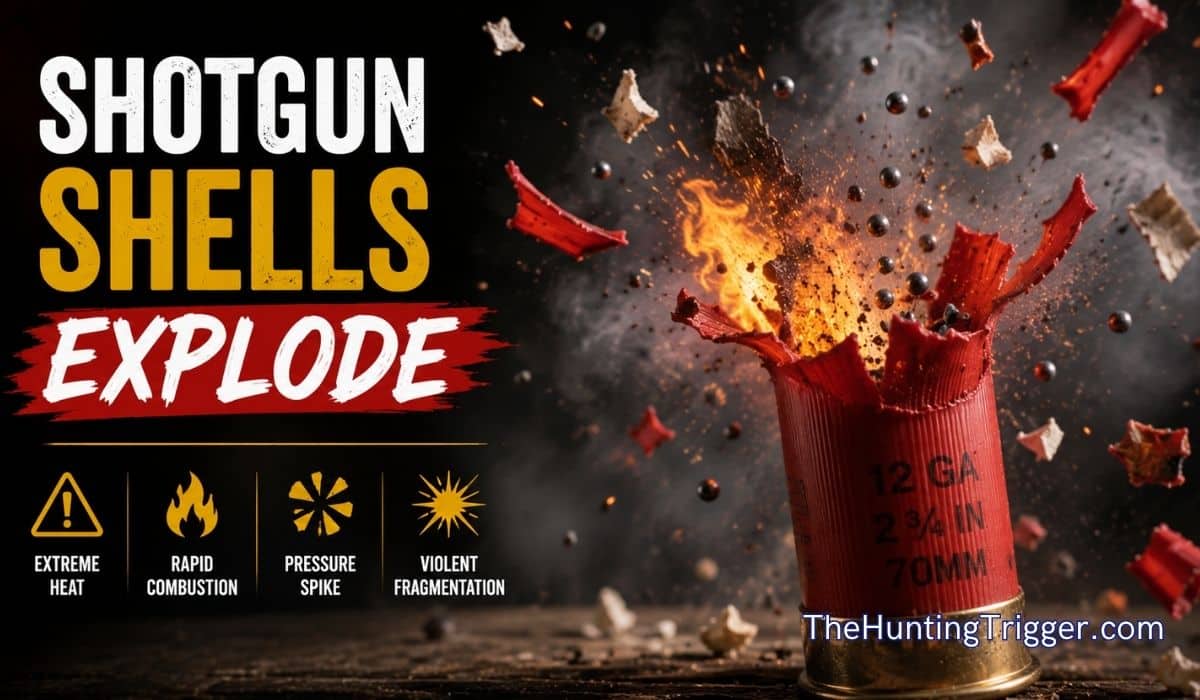
Shotgun shells are a common sight among hunters, sport shooters, and collectors. Over time, shells can sit in storage for years, sometimes even decades. Many people wonder if these old shotgun shells can actually explode and if they pose any real danger. The answer is not simple. Age, storage conditions, and handling all play a role in the safety and reliability of these ammunition pieces. This article explains what happens to shotgun shells as they age, the risks involved, and how to handle them safely.
Table of Contents
What Is Inside A Shotgun Shell?
A shotgun shell is made of several parts. It has a plastic or paper casing, a primer, gunpowder, and shot pellets or a slug. The primer is a small cap at the base that ignites when struck. The gunpowder burns quickly to push the shot out of the shell and down the barrel. These parts are tightly packed and sealed to keep moisture out. Over time, however, the seal can weaken and the materials can degrade.
| Component | Material | Function |
|---|---|---|
| Casing | Plastic/Paper | Holds all parts together |
| Primer | Metal cap | Ignites powder |
| Gunpowder | Chemical compound | Creates explosion |
| Shot/Slug | Lead/Steel | Projectile |
How Aging Affects Shotgun Shells?
Not all shotgun shells age the same. Some can last decades, while others go bad in a few years. Several factors can speed up the aging process or make shells unsafe.
Storage Conditions
Humidity, heat, and sunlight are the three biggest enemies of shotgun shells. High humidity can cause corrosion on metal parts and make the casing swell or break down. Heat can change the chemical makeup of the gunpowder, making it less reliable. Sunlight, especially UV rays, can weaken plastic casings.
Material Degradation
Older shells with paper casings are much more vulnerable to moisture than modern plastic shells. The primer can corrode, making ignition unreliable. Gunpowder can clump or lose its strength, and the pellets can oxidize.
Shelf Life
Manufacturers do not put an expiration date on shotgun shells. However, most experts agree that well-stored shells can last 10–20 years or more. If stored in poor conditions, they may fail within just a few years.
| Shell Age | Storage Quality | Risk Level |
|---|---|---|
| 0–5 years | Dry, cool | Low |
| 5–20 years | Dry, cool | Moderate |
| >20 years | Damp, warm | High |

Can Old Shotgun Shells Explode?
The main question is whether old shotgun shells can explode by themselves or when handled. It is important to separate two situations: spontaneous explosion and explosion during firing.
Spontaneous Explosion
Shotgun shells almost never explode on their own. The primer requires a sharp blow to ignite, and gunpowder needs heat and pressure to burn fast enough to cause an explosion. Even if the shell is very old, it is unlikely to explode simply by sitting in a drawer.
However, if exposed to extreme heat, fire, or if crushed, there is a small risk.
Explosion During Firing
This is where the real danger lies. When firing an old shell, several problems can occur:
- Misfire: The shell fails to fire at all.
- Hangfire: The shell fires after a delay, which can surprise the shooter.
- Squib Load: The shell fires weakly, possibly leaving part of the shell or shot stuck in the barrel.
- Overpressure: Rare, but if the gunpowder has degraded in a way that causes a rapid burn, it can damage the firearm or injure the shooter.
Most problems are misfires or squib loads, not explosions. However, a squib load can be dangerous if another shell is fired before clearing the barrel.
Real-life Examples And Data
In a 2018 study by the Sporting Arms and Ammunition Manufacturers’ Institute (SAAMI), tests showed that shells stored for 30 years in dry conditions still fired reliably. However, shells stored in damp basements failed to fire or fired weakly in over 60% of cases.
Anecdotes from hunters and shooters show mixed experiences. Some report using shells from the 1980s with no issues, while others report finding corroded primers and swollen casings that would not fit in a shotgun.
One non-obvious insight: Even shells that look fine on the outside can have hidden problems inside. For example, gunpowder can clump and lose energy, leading to weak firing or squib loads.
Signs That A Shotgun Shell Is Unsafe
Check old shotgun shells carefully. Here are signs that a shell may be unsafe to use:
- Corroded primer or metal base
- Swollen, cracked, or brittle casing
- Discoloration or mold on paper shells
- Loose shot rattling inside
- Sticky residue around the shell
If you see any of these signs, it is best not to use the shell.
Safe Handling And Disposal
Handling old shells requires caution. Even though spontaneous explosion is rare, improper handling can cause accidents. Here are safe practices:
- Wear gloves if shells show signs of corrosion or mold.
- Do not drop or crush old shells.
- Store in a cool, dry place away from heat sources.
- Keep away from children and pets.
Disposal Methods
Do not throw old shotgun shells in the trash. Contact your local police, shooting range, or hazardous waste facility for proper disposal. Many ranges accept old or damaged ammunition for safe destruction.
Risks When Firing Old Shells
Firing old shells can damage your firearm or cause injury. Here are risks to consider:
- Barrel blockage: A squib load can leave part of the shell or shot in the barrel. Firing another shell may burst the barrel.
- Delayed ignition: A hangfire can surprise the shooter and lead to accidents.
- Unpredictable power: Degraded gunpowder can cause erratic firing.
| Condition | Possible Effect | Safety Risk |
|---|---|---|
| Corroded primer | Misfire | Low |
| Swollen casing | Jammed gun | Moderate |
| Degraded powder | Squib load | High |
| Barrel blockage | Explosion | Very High |
How To Store Shotgun Shells For Long Life?
If you want to keep shotgun shells safe for years, storage is key.
- Store in a dry, cool place
- Use airtight containers to prevent moisture
- Avoid direct sunlight
- Keep shells in their original boxes
Some people use silica gel packs in their storage boxes to absorb moisture. This is a practical tip that can make shells last much longer. Another insight: Rotate your stock. Use older shells first and keep newer ones for later.
Common Myths About Old Shotgun Shells
There are several myths about old shells:
- “Old shells will explode if dropped.” False. Dropping a shell rarely causes an explosion unless it lands very hard on the primer.
- “All old shells are dangerous.” Not true. Well-stored shells can remain safe for decades.
- “You can revive old shells by drying them out.” Drying a damp shell does not restore gunpowder or primer reliability.
When Is It Safe To Use Old Shotgun Shells?
If the shells have been stored well and show no signs of damage, they may be safe to use. Test a few shells at a range before using them in the field. If you notice misfires or weak firing, stop using them.
For collectors, old shells can have value and should not be fired. For shooters, safety comes first. If you are unsure, consult with a professional or your local shooting range.
Legal And Environmental Considerations
Some states have rules about disposing of old ammunition. Check your local laws before throwing away or burning old shells. Improper disposal can harm the environment, especially if lead shot is involved. Always follow safe disposal methods.
Frequently Asked Questions
Can Old Shotgun Shells Explode If Left In The Sun?
It is very rare for shells to explode just from sunlight. However, extreme heat can weaken the materials and make them unsafe to fire.
What Should I Do If I Find A Box Of Old Shotgun Shells In My Garage?
Check them for signs of damage or corrosion. If they look bad, take them to a hazardous waste facility or shooting range for disposal.
Is It Safe To Fire Shells From The 1970s?
If they have been stored in dry, cool conditions and look undamaged, they may still work. However, always test them carefully before regular use.
Can I Throw Old Shotgun Shells In The Trash?
No, shotgun shells should not be thrown in the regular trash. They can leak chemicals and pose a hazard. Use proper disposal methods.
Do Old Shotgun Shells Have Any Value To Collectors?
Yes, some rare or vintage shells are valuable to collectors, especially if they are in good condition and have unique markings or packaging.

Last Word
Old shotgun shells rarely explode on their own, but using or handling them carelessly can lead to accidents. The key is proper storage, careful inspection, and safe disposal. If in doubt, seek advice from professionals. Keeping safety in mind protects both people and property.

Leave a Reply