
Witnessing a whitetail buck in his prime, antlers fully grown and gleaming, is a sight to behold. But before those impressive racks harden, they undergo a fascinating transformation. Whitetail deer typically shed their velvet in late summer to early fall, marking the transition from soft, vascular tissue to strong, bony antlers ready for the rut.


This remarkable biological event signals the peak of a buck’s antler growth and prepares him for the breeding season. Understanding this natural cycle reveals much about deer biology and behavior. This article delves into the precise timing, triggers, and intricate details of this annual transformation, exploring the factors that influence it and what unfolds afterward.
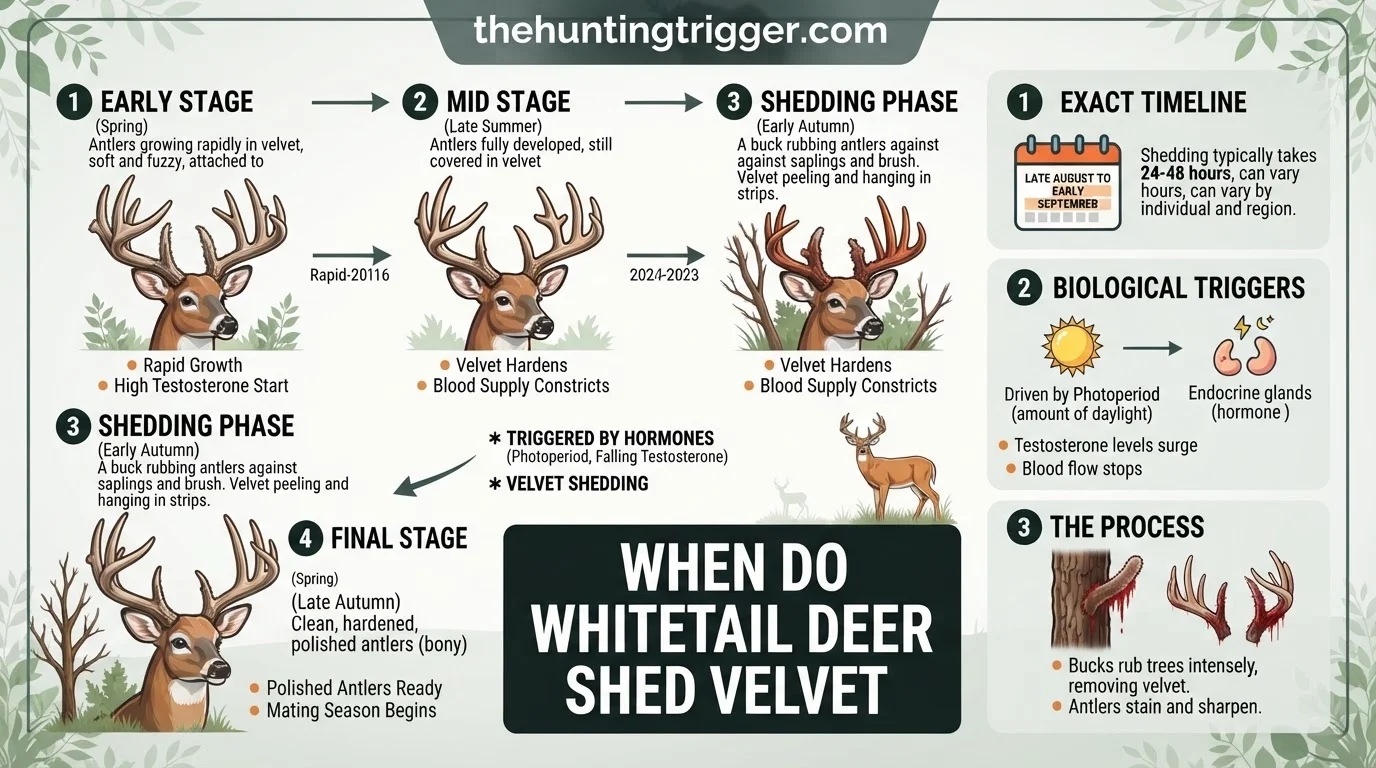
When Do Whitetail Deer Shed Velvet: The Typical Annual Timeline
Whitetail deer typically shed their antler velvet during the late summer to early fall. This highly anticipated event marks a crucial phase in the annual life cycle of mature bucks, signaling the hardening of their antlers in preparation for the upcoming breeding season.
In the Northern Hemisphere, the most common period for velvet shedding is generally from late August through early September. During this time, the once soft, fuzzy covering dries and peels away, revealing the fully calcified, hardened antlers beneath.
While this late August to early September window is standard, minor geographical variations are common. For instance, bucks in more northern states might shed their velvet slightly earlier, while those in warmer southern states may complete the process a little later in the season.
It’s also important to note that individual deer can vary. A buck’s age, its overall health, and specific genetic factors can all influence the exact timing of when it sheds its velvet, leading to some deviations from the general timeline.
What Triggers Whitetail Deer to Shed Their Velvet Antlers?
The Role of Photoperiod in Antler Cycle
The primary external cue that initiates the velvet shedding process in whitetail deer is photoperiod, which refers to the duration of daylight hours. As the summer progresses into late summer and early autumn, the days gradually become shorter. This reduction in daylight acts as a critical environmental signal.
Deer, like many other seasonal animals, possess an internal biological clock that responds to these changes in light exposure. This mechanism allows their bodies to anticipate and prepare for the upcoming seasons, including important reproductive cycles and antler development stages.
Testosterone: The Key Hormonal Signal
The shift in photoperiod directly influences the deer’s endocrine system, specifically leading to a significant increase in testosterone production. Rising testosterone levels are the crucial internal, hormonal signal that triggers the end of the antler growth phase and the subsequent shedding of velvet.
Once testosterone levels reach a certain threshold, the hormone causes the blood vessels supplying the velvet tissue to constrict and eventually cut off. This deprives the velvety covering of its vital nutrients and oxygen, leading it to dry up and become brittle.
This hormonal shift signals that the calcification process of the antlers is complete, and they are now fully hardened. The dry, dead velvet then begins to crack and peel, allowing the deer to rub it off, revealing the hard, polished antlers underneath.
The Process: What Happens When Whitetail Deer Shed Velvet?
Velvet’s Role in Antler Growth
Velvet is a crucial, living tissue that covers the growing antlers of whitetail deer. This soft, furry layer is rich in blood vessels and nerves, playing an essential role in transporting nutrients, minerals, and oxygen vital for the rapid development of the underlying bone structure during spring and summer.
As summer progresses and testosterone levels in the buck’s body peak, antler growth concludes. This hormonal surge triggers the constriction of the blood vessels supplying the velvet. Deprived of its vital blood flow, the velvet quickly dies, dries out, and eventually prepares to peel from the now fully formed, calcified antlers.
The Physical Shedding Action
With the dead, irritating velvet clinging to their antlers, whitetail deer actively work to remove it. They vigorously rub their antlers against various stationary objects like tree trunks, saplings, thick brush, and fence posts, using these rough surfaces to scrape off the dried tissue.
This rubbing behavior is often intense and can be quite dramatic to witness, leaving strands of bloody, discarded velvet hanging from vegetation. The physical shedding process usually occurs rapidly, often within a concentrated period of just a few hours to a couple of days, as bucks are highly motivated to rid themselves of the itchy, restrictive covering.
Once the entire velvet layer has been successfully shed, the antlers are revealed as ‘hard’ bone. They appear stark white initially, before becoming stained by sap and dirt from subsequent rubbing. These hardened antlers are now fully mature and ready for their primary purpose: use during the upcoming breeding season, or rut, for sparring with rivals and attracting does.
How Long Do Whitetail Deer Shed Velvet, and What Does it Look Like?
Typical Duration of Velvet Removal
The actual process of whitetail deer removing their antler velvet can be surprisingly rapid, often completing within just a few hours. Many deer will actively rub their antlers against trees and bushes to scrape off the irritating tissue. If observed, the entire transformation might occur in a single day.
This rapid removal means that some deer shed their velvet so quickly it is rarely observed in its entirety by humans. However, the duration varies significantly by individual deer, with some taking a more extended period, potentially lasting up to two or even three days, until all velvet is gone.
Visual Appearance During Shedding
During the velvet shedding phase, a whitetail deer’s appearance is quite distinct and often looks ragged. The primary characteristic is the presence of dark, bloody strips of tissue that hang from the antlers as the velvet is sloughed off. This creates a messy and somewhat unsettling sight.
Deer may appear disheveled, and to the casual observer, even somewhat distressed due to the raw and exposed nature of the antlers underneath. The visual state varies by the stage of shedding, from initial tears to large sections flapping, until the antlers are completely clean and hardened.
Factors Influencing When Whitetail Deer Shed Velvet
While there’s a typical annual window for whitetail deer to shed velvet—generally late August to early September in the Northern Hemisphere—this timing is not absolute for every individual. Numerous variables contribute to the specific day a buck sheds, leading to noticeable differences across the deer population.
Impact of Age and Health
A buck’s age and overall health are significant determinants of when he sheds velvet. Older, more mature bucks, who are typically in their prime and have better nutritional status, often shed their velvet earlier than their younger counterparts.
This accelerated timeline is largely due to their more robust physiology, which supports faster antler development and calcification. Conversely, younger bucks or those in poorer health, perhaps due to injury, illness, or inadequate nutrition, may shed velvet later as their bodies prioritize other functions.
Genetic Predisposition
Genetics also play a role in determining individual velvet shedding schedules. Just as antler size and shape can be influenced by inherited traits, so too can the rate of antler growth and mineralization.
Certain genetic lines may inherently develop antlers more rapidly, leading to an earlier shedding of velvet compared to deer with different genetic predispositions. This accounts for some of the variability seen among bucks in the same geographical area.
Regional Differences
The geographical location of a whitetail deer, particularly its latitude, can subtly influence velvet shedding timing. The primary driver for antler growth and hardening is the change in photoperiod, or the duration of daylight.
Different latitudes experience varying rates of photoperiod change, which can slightly shift the hormonal cues. For example, a buck residing in Texas might shed its velvet slightly earlier or later than one inhabiting the colder climates of Canada, even within the general late August to early September timeframe.
What Happens After Whitetail Deer Shed Velvet for Hard Antlers?
The Function of Hard Antlers
Once the velvet is completely shed, the underlying antlers are fully hardened, bony structures. This transformation marks a significant phase in a buck’s annual cycle, signaling the end of antler growth and the beginning of their active use.
These robust, ‘hard’ bone structures are now prepared for their primary function during the upcoming breeding season, known as the rut. Their solid composition allows them to withstand the physical demands of competition and display among males.
Antlers’ Role in the Rut
With hard antlers, whitetail bucks enter a period of increased aggression and territoriality. They utilize their hardened racks extensively for sparring with rival males, establishing dominance, and defending breeding rights to does.
This includes engaging in “mock fights” where bucks push and shove with their antlers to assess each other’s strength. They also use their antlers to mark territory by rubbing them against saplings and branches, leaving visible signs and scent cues for other deer.
Debunking Myths: Does Shedding Velvet Hurt Whitetail Deer?
A common misconception about whitetail deer is that the process of shedding their velvet antlers is painful. However, this is not the case. The removal of velvet is a natural physiological event, and deer do not experience pain during this crucial developmental stage of their antlers.
The reason for the lack of pain lies in the biological changes that occur just prior to shedding. As the antlers mature and harden, the blood vessels and nerve endings that supply the velvet begin to constrict and die off. By the time the velvet is ready to peel, it is essentially dead tissue.
Therefore, the aggressive rubbing and thrashing behavior observed in deer during this period is not a response to pain. Instead, it is an instinctive action driven by the need to physically remove the irritating, decaying velvet from their newly hardened antlers. It’s an itch or an annoyance, rather than a sharp pain.
Consider it akin to humans shedding dry, flaky skin after a sunburn. While the initial burn might have been painful, the subsequent peeling of dead skin cells is not. It’s simply the body’s way of discarding what is no longer needed, preparing for new growth.
Antlers vs. Horns and Velvet Shedding vs. Antler Casting: A
Understanding Antlers and Horns
While often used interchangeably, antlers and horns are distinct biological structures. Antlers are unique to the deer family (Cervidae). They are true bone structures that grow from pedicles on the skull.
A defining characteristic of antlers is that they are shed and regrown annually. Examples of animals that possess antlers include deer, elk, and moose. This yearly cycle of growth and shedding is a key evolutionary trait.
Horns, in contrast, are permanent structures found on other animals, such as cattle, sheep, goats, bison, and bighorn sheep. Unlike antlers, horns are composed of a bony core covered by a layer of keratin, the same protein found in fingernails and hair.
Horns grow continuously throughout an animal’s life and are never shed. This fundamental difference in composition and life cycle is crucial for distinguishing between these two types of headgear.
Distinguishing Velvet Shedding from Antler Casting
These two processes are often confused but refer to entirely different stages in a deer’s antler cycle. Velvet shedding occurs in late summer when a deer’s antlers have finished growing and calcified into hard bone.
During velvet shedding, the blood supply to the velvet (the soft, fuzzy skin covering the growing antlers) is cut off. This causes the velvet to dry out and peel away, revealing the hard, bony antlers underneath.
Antler casting, however, happens much later, typically in late winter or early spring. This is when the deer’s entire hard antler detaches and falls off the pedicle on its skull. This process marks the end of the antler’s functional life for that year.
Essentially, velvet shedding is the final step in antler growth, preparing them for the breeding season, while antler casting is the initiation of a new antler growth cycle for the following year.
How Other Deer Species Compare When Shedding Antler Velvet
While this article primarily focuses on whitetail deer, understanding the velvet shedding cycles of other common North American deer species provides valuable context. Each species, influenced by its unique biology and geographic range, exhibits distinct timing for this crucial annual event.
Mule deer, often sharing habitats with whitetails, generally follow a very similar timing for shedding their velvet. Their peak shedding periods typically align with those of whitetail deer, usually occurring in late August to early September across most of their range.
In contrast, elk (wapiti) tend to shed their velvet considerably earlier than both whitetail and mule deer. Elk often reach their peak velvet shedding period in late July to early August. These differences are primarily due to species-specific biological cycles, including varying rutting periods, and adaptations to their distinct geographic environments.


How to Read This Comparison Table
This table provides generalized “Typical Peak Shedding Periods” for mature male deer in North America. The period refers to when the majority of adult males within a given species population are observed actively shedding velvet or have recently completed the process. These are approximate windows, as individual factors like age, nutrition, and specific environmental conditions (e.g., warmer or colder springs) can cause slight variations. The “Key Differences/Notes” column highlights specific reasons or common characteristics for each species’ timing relative to others. For precise local timings, further observation within a specific region is always recommended to verify the exact configuration.
Key Takeaways
-
✓
Velvet shedding occurs primarily in late August to early September across most regions. -
✓
A surge in testosterone levels is the primary biological trigger for the velvet shedding process. -
✓
The active shedding process is rapid, typically completed within 24 to 48 hours. -
✓
After shedding, antlers are hardened and ready for use in sparring and breeding activities. -
✓
Factors like age, nutrition, and geographical location can influence the exact timing of shedding.
❓ Frequently Asked Questions
1
What is velvet on deer antlers?
Velvet is a highly vascularized skin that covers growing antlers, supplying blood, nutrients, and oxygen. It’s soft, fuzzy, and appears darker due to rich blood flow. This specialized tissue supports rapid antler development before being shed annually once the antlers are fully grown.
2
Why do whitetail deer shed their velvet?
Deer shed velvet to prepare their antlers for the breeding season (rut). Once antlers reach full size and harden, the velvet is no longer needed. Shedding allows bucks to use their hardened antlers for dominance displays, sparring, and protection during the crucial breeding period.
3
Does shedding velvet hurt whitetail deer?
No, shedding velvet is generally not painful for whitetail deer. As testosterone rises, blood flow to the velvet constricts, causing the tissue to dry out and die. This dead tissue then peels away, often with the deer rubbing its antlers against trees or bushes to hasten the removal.
4
How long does the velvet shedding process take?
The active shedding of velvet is surprisingly quick, typically occurring within a 24 to 48-hour window once it begins. While the initial drying and detachment might take a few days, the actual peeling and removal of the velvet is a rapid and dramatic event.
5
What happens to the velvet after it’s shed?
After shedding, the velvet usually falls to the ground in strips. It is often consumed by the deer itself or other animals, as it is rich in protein and minerals. This natural recycling of nutrients back into the ecosystem is a common occurrence in deer habitats.
6
When exactly do whitetail deer shed velvet?
Late August to early September in the Northern Hemisphere, though timing varies individually based on age, health, and location.


Leave a Reply