

For Indiana deer hunters, the thrill of the chase culminates not just in the harvest, but often in the hope of taking a truly exceptional whitetail — one worthy of the esteemed Indiana Whitetail Deer Record Book. However, many passionate Hoosier hunters are unfamiliar with the precise rules, scoring methods, and submission process required to officially enter their trophy into the state’s prestigious records. This complete guide will demystify the entire journey, from understanding Boone & Crockett and Pope & Young scoring to finding certified measurers and navigating the submission steps for your Indiana whitetail deer. We’ll provide all the reliable, expert information you need for 2026 and beyond.


Decoding the Indiana Whitetail Deer Record Book: Scoring & History

📤 Share Image
Entering a whitetail deer into the prestigious Indiana Whitetail Deer Record Book is the ultimate recognition for many Hoosier hunters. This isn’t just a list of big deer; it’s a testament to exceptional genetics, quality habitat, and skilled hunting. As a seasoned expert in whitetail management and trophy scoring, I can confidently state that understanding the foundational principles of this record-keeping system is the first step toward achieving this honor.
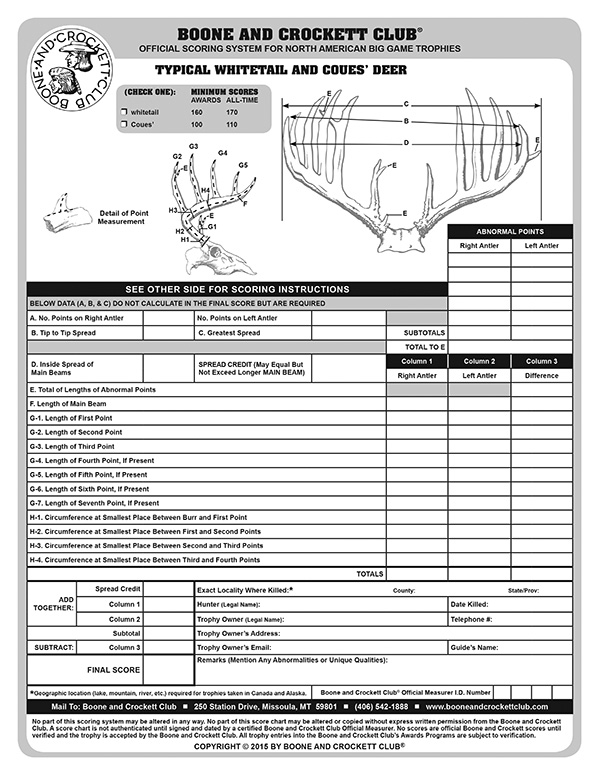
What Makes an Indiana Whitetail a ‘Record Book’ Deer?
A “record book” deer isn’t merely large; it possesses antler characteristics that meet specific, universally recognized criteria. For Indiana, as with most states, this means conforming to established North American big game scoring methods. The goal is to standardize measurements, ensuring every entry is evaluated fairly regardless of where or when it was harvested. While the Indiana Department of Natural Resources (DNR) manages hunting regulations, specific state hunting organizations, such as the Indiana Bowhunters Association (IBA) or similar entities, often administer the state record book. These bodies work in conjunction with national organizations to maintain consistent and professional standards.
Boone & Crockett vs. Pope & Young: Key Differences for Hoosier Hunters
Research indicates that the scoring system for Indiana records is primarily based on two esteemed organizations: the Boone & Crockett Club and the Pope & Young Club. The core methodology for measuring antlers is largely identical between the two, focusing on main beam length, circumference measurements, and tine lengths. The critical distinction lies in the method of harvest:
- Boone & Crockett (B&C): This club records big game trophies taken by firearms or muzzleloaders. If you harvest a buck with a rifle, shotgun, or muzzleloader, its potential entry will be under B&C guidelines.
- Pope & Young (P&Y): This club is dedicated exclusively to records of big game animals harvested with archery equipment (bow and arrow). If your trophy was taken with a bow, P&Y is the relevant standard.
It’s crucial for Indiana hunters to understand this distinction from the outset, as it dictates the official measurer you’ll need and the specific category your deer will fall into. While the measurement technique is similar, the records are kept separate to honor the challenge and skill inherent in each hunting method.
Typical vs. Non-Typical Antlers: Understanding the Categories
Records distinguish between ‘typical’ and ‘non-typical’ antler configurations based on symmetry and the presence of abnormal points. This classification is fundamental to the scoring process:
- Typical Antlers: These are characterized by their relative symmetry and a consistent growth pattern where tines grow off the main beam in a generally upward direction. Deductions are made for differences in length between corresponding tines and circumferences on opposite sides. The goal is to find the most perfectly symmetrical rack.
- Non-Typical Antlers: These antlers feature significant asymmetry and/or abnormal points, often referred to as “kickers,” “drop tines,” or “sticker points,” which do not follow the normal growth pattern. These abnormal points are measured and added to the score, rather than being deductions, allowing for unique and often spectacular racks to be recognized.
A deer’s classification as typical or non-typical significantly impacts its final score and where it ranks within the record book. A rack with many abnormal points might score higher as a non-typical but could be heavily penalized if forced into the typical category due to deductions for asymmetry.
Minimum Score Requirements for Indiana Whitetail Entry
There are specific minimum score requirements that a deer’s antlers must meet to qualify for entry into the record book. These minimums vary between typical and non-typical categories, and also often between state-level records and national B&C or P&Y records. National minimums are generally higher. For example:
- Boone & Crockett (National): Generally, a typical whitetail needs to net 170 points, and a non-typical needs 195 points.
- Pope & Young (National): Typically, a typical whitetail needs to net 125 points, and a non-typical needs 155 points.
While the precise Indiana Whitetail Deer Record Book minimums can vary slightly by the specific state organization maintaining the records, a good rule of thumb for potential state-level consideration would be approximately 140 inches net for a typical whitetail and around 160 inches net for a non-typical. It’s imperative to consult the specific Indiana record-keeping body for their exact, current minimums. This discerning process ensures that only truly exceptional trophies earn their place in the record book, a testament to quality and reliability in hunting information.
Official Whitetail Deer Scoring in Indiana: An Expert Measurement Guide
The integrity of the Indiana Whitetail Deer Record Book hinges entirely on a meticulous and standardized scoring process. As a professional who has witnessed countless measurements, I can attest that this phase is where attention to detail becomes paramount. It’s not just about adding numbers; it’s about precision, adherence to rules, and patience.
The Mandatory 60-Day Drying Period Explained
One of the most critical, yet often misunderstood, requirements is the mandatory drying period. Antlers, being bone, contain moisture immediately after harvest. As they dry, they can shrink slightly, affecting the overall dimensions. To account for this natural process and ensure fair, consistent scoring, all antlers must undergo a minimum 60-day drying period after harvest before any official measurement can take place. Attempting to score a rack before this period has elapsed will result in an unofficial score that is ineligible for record book entry. This requirement ensures that every entry represents the deer’s true, stable antler size, providing a reliable basis for comparison.
Finding and Working with Certified Indiana Measurers
To be eligible for record book entry, antlers must be measured by an official, certified measurer. These individuals have undergone rigorous training and certification processes by either the Boone & Crockett Club or the Pope & Young Club. They are experts in the scoring methodology, ensuring every measurement is taken correctly and consistently. Using an uncertified individual, no matter how experienced they may seem, will invalidate your entry. You can find lists of certified measurers on the official websites of Boone & Crockett, Pope & Young, or through Indiana’s specific state hunting organizations like the Indiana Bowhunters Association. When contacting a measurer, be prepared to discuss your harvest details and schedule an appointment at their convenience.
Gross Score vs. Net Score: What Truly Counts for Indiana Records
Understanding the difference between gross score and net score is absolutely critical. While the gross score gives you an impressive initial number, it is the net score that truly counts for ranking in most record books. Let me clarify:
- Gross Score: This is the sum of all individual measurements – main beam length, tine lengths, and circumferences – before any deductions for asymmetry are applied. It represents the total amount of antler material.
- Net Score: This is the official score used for ranking in most record books. It is derived from the gross score by deducting points for any lack of symmetry between corresponding measurements on opposite antlers. For non-typical racks, abnormal points are added to the typical frame score to create the net non-typical score, with symmetry deductions still applied to the typical frame.
For instance, if your buck has a G-2 tine that is 8 inches on one side and 5 inches on the other, that 3-inch difference would be a deduction from the gross score to arrive at the net typical score. This focus on net score underscores the emphasis on symmetrical perfection in the typical category, a hallmark of quality and desired antler growth patterns.
Key Antler Measurements for Official Entry
During an official scoring session, the certified measurer will systematically take several precise measurements. These include:
- Tip-to-Tip Spread: The greatest width between the tips of the main beams.
- Greatest Spread: The widest point anywhere on the antlers, perpendicular to the center line of the skull.
- Inside Spread of Main Beams: The widest point between the inside edges of the main beams. This is a crucial measurement often used in the final score.
- Main Beam Length: Measured along the outer curve of each main beam from the burr to the tip.
- Length of Tines (G-1, G-2, G-3, etc.): Each typical tine is measured along its shortest edge from the main beam to its tip.
- Circumferences (H-1, H-2, H-3, H-4): Four circumference measurements are taken on each main beam between specific points, ensuring an accurate representation of mass. The H-1 is taken between the burr and the G-1 (brow tine), H-2 between G-1 and G-2, and so forth.
- Length of Abnormal Points: For non-typical deer, all abnormal points are measured and added to the score.
Each of these measurements is taken with specialized flexible steel tape by an expert, ensuring accuracy down to the nearest eighth of an inch. This detailed approach is what makes the Indiana Whitetail Deer Record Book a trusted source for trophy recognition.
By The Numbers
Mandatory Drying Days
B&C National Typical Min.
P&Y National Typical Min.
Measurement Accuracy
How to Qualify & Submit Your Indiana Record Book Whitetail Deer
Bringing a whitetail trophy from the field to the pages of the Indiana Whitetail Deer Record Book is a structured process. As an expert, I’ve seen countless submissions, and the ones that succeed follow a clear, methodical approach. This step-by-step guide outlines the professional journey your trophy will take.
📋
Step-by-Step Guide
Immediately after harvest, consider if your buck has the potential to make the record book. This involves a rough estimation of its score. Remember, there are minimum score requirements for entry. For typical whitetail, a rough estimate of 140 inches net, and for non-typical, around 160 inches net, are good indicators for state-level consideration. Crucially, begin the mandatory 60-day drying period immediately. This means the antlers (still attached to the skull plate) should be cleaned and allowed to air dry in a stable, temperate environment.
Once the 60-day drying period is nearing completion, locate an official, certified measurer. You’ll need either a Boone & Crockett measurer (for firearm kills) or a Pope & Young measurer (for archery kills). Check the official websites for B&C or P&Y, or the website of the relevant Indiana hunting organization (e.g., Indiana Bowhunters Association) for a directory of certified individuals in your area. Contact them to schedule an appointment. Be prepared to bring the antlers, ideally still attached to a cleaned skull plate or as a European mount, to the measurer.
Before your appointment, ensure your antlers are clean and free of dirt, blood, or tissue. While you can remove the skull plate if desired, many measurers prefer to score them on a cleaned skull cap or European mount for stability. Crucially, do not apply any coatings, sealants, or treatments to the antlers that might alter their dimensions or texture, as this could lead to disqualification. Ensure they are secure and free from any damage that could impact the measurement, reinforcing the need for quality preservation.
During the scoring session, the measurer will complete an official score sheet. You will also need to provide additional details required for the submission process. A typical submission checklist often includes:
- Hunter’s Full Name, Address, Phone Number, and Email
- Date of Kill (DD/MM/YYYY)
- County and State of Kill (e.g., “Parke County, Indiana”)
- Method of Take (e.g., Rifle, Shotgun, Muzzleloader, Recurve Bow, Compound Bow, Crossbow)
- Names and Contact Information of any Guides or Witnesses
- High-resolution photographs of the deer (live, at harvest, and the antlers)
- A signed affidavit confirming the legality and fair chase nature of the harvest.
Ensure all information is accurate and complete. The net score provided by the measurer is what will be officially recorded.
Following these steps meticulously provides a reliable pathway for your exceptional Indiana whitetail to gain its rightful place in the record book. It’s a testament to the hunter’s dedication and respect for the game.
Avoiding Common Pitfalls in Indiana Whitetail Deer Record Book Entry
While the prospect of entering a trophy into the Indiana Whitetail Deer Record Book is exciting, it’s a process fraught with potential missteps. As a seasoned expert, I’ve observed various errors that can lead to disqualification or significant disappointment. Being aware of these common pitfalls is as crucial as understanding the rules themselves, ensuring a smooth and professional submission.
The Costly Mistake of Skipping the Antler Drying Period
One of the most frequent and easily avoidable errors is neglecting the mandatory 60-day drying period. Antlers, upon removal from the live animal, contain a significant amount of moisture. As they dry, they will naturally shrink slightly. Submitting antlers for scoring too soon results in measurements that are inflated, and thus unofficial. If scored prematurely, even if the score is initially high, it will not be accepted for official records, or worse, subsequent shrinkage might drop it below the minimum after the official drying period. Always mark the date of harvest and ensure a full 60 days have passed before seeking an official measurement. This simple step is vital for a reliable score.
Improper Drying Period: Submitting antlers for scoring too soon is a common error. This will lead to a lower final score due to subsequent shrinkage or outright disqualification. Patience is a virtue here; do not rush the drying process.
Why Only Certified Measurers Count for Indiana Deer Records
This point cannot be stressed enough: only measurements taken by an official, certified measurer (Boone & Crockett or Pope & Young) are valid for record book entry. Many taxidermists or experienced hunters may be able to provide a “green score” or a rough estimate, but these are not recognized. Uncertified Measurers: Having antlers measured by someone not officially certified, makes the score completely ineligible for official records. Always verify the measurer’s credentials before your appointment. This ensures the integrity and standardization that define the Indiana Whitetail Deer Record Book.
Demystifying Gross vs. Net Score: Avoiding Disappointment
Hunters often express disappointment when their impressive gross score is significantly reduced to a net score. This usually stems from a misunderstanding of typical vs. non-typical categories and the deduction system. For typical racks, any asymmetry – differences in length between corresponding tines or circumference measurements – is subtracted. For example, if a main beam measures 25 inches on the left and 24 inches on the right, that 1-inch difference is a deduction. Misunderstanding Scoring Rules: Incorrectly identifying typical vs. non-typical antlers, or not understanding deductions, can lead to significant disappointment. An otherwise magnificent rack might not qualify if the deductions for asymmetry are too severe. An expert measurer can guide you on whether your deer stands a better chance as a typical or non-typical entry.
Protecting Your Trophy: Damage and Disqualification Risks
The journey from harvest to scoring can be perilous for antlers. Any damage sustained during recovery, transport, or storage can have severe implications. A broken tine, for instance, cannot be repaired or “fixed” for scoring purposes. If a main beam tip is broken, it may significantly reduce the total length measurement. Even superficial damage could impact circumference measurements if it alters the antler’s natural form. Furthermore, any artificial alteration, such as coloring, waxing, or adding material, is grounds for disqualification. Ensure your trophy is handled with extreme care from the moment it’s harvested. This diligence protects the quality of the trophy and its potential entry.
If you find a G-point (a typical tine) growing off the main beam, but then notice a distinct “kicker” or abnormal point growing off that G-point, your deer may be reclassified. This single detail could shift a potential typical entry with heavy deductions into a high-scoring non-typical entry where that extra point is added, not deducted. Always let the certified measurer make the final call on classification.
Exploring Indiana’s Top Whitetail Deer Records: A Glimpse at Hoosier Giants
Indiana holds a special place in the annals of North American whitetail hunting. The state has consistently produced world-class bucks, a testament to its fertile soils, diverse habitat, and effective wildlife management strategies. A deep dive into the Indiana Whitetail Deer Record Book reveals a history rich with giant whitetails, inspiring generations of hunters.
The Legacy of Giant Whitetails in Indiana
Indiana has a rich history of producing large whitetail deer, with numerous entries in both state and national record books. The state is renowned for its potential to yield exceptionally large-antlered bucks, particularly from areas with abundant agricultural resources and quality timber. Counties like Parke, Fountain, and Montgomery, among others, frequently feature in discussions about prime trophy country. This legacy highlights the state’s potential to grow deer with impressive body size and genetic predisposition for large, complex antlers, making the pursuit of a record book buck a legitimate goal for dedicated Hoosier hunters.
Where to Find Official Indiana Record Book Listings
For those seeking to explore the illustrious entries, official Indiana Whitetail Deer Record Book listings are maintained by state-specific hunting organizations. The Indiana Bowhunters Association (IBA) is a key record keeping body/organization that tracks archery records for the state. Similarly, other organizations may exist for firearm entries, or state records might be integrated into broader national databases. These organizations often publish their records online, providing a searchable database or printable lists. Additionally, the Boone & Crockett Club and Pope & Young Club national records also feature many exceptional Indiana deer, showcasing how Hoosier bucks compare on a national stage.
Notable Indiana Trophy Deer: Stories of Exceptional Harvests
Indiana’s records include a fascinating array of trophy deer, from perfectly symmetrical typicals that challenge national standards to mind-boggling non-typicals with dozens of points. While individual scores are proprietary to the record books, the stories behind many of these exceptional harvests are often shared within the hunting community. These tales often highlight years of dedication, strategic land management, and sometimes, a stroke of pure hunting luck. These notable entries serve not just as benchmarks for aspiring trophy hunters, but as historical markers of Indiana’s rich outdoor heritage.
The Role of Records in Indiana Whitetail Management
The data collected through the Indiana Whitetail Deer Record Book extends beyond mere bragging rights. These records provide valuable information for wildlife biologists and managers. Trends in antler size and quality, location of record-book entries, and changes over time can offer insights into deer genetics, habitat quality, nutritional availability, and the effectiveness of current management practices. A consistent presence of high-scoring animals indicates a healthy, well-managed deer herd, fostering a trusted resource for hunters and conservationists alike. This systematic record-keeping contributes significantly to the ongoing quality and future of whitetail deer in Indiana.
The Indiana Whitetail Deer Record Book relies on B&C and P&Y scoring, distinguishing between typical and non-typical antlers with specific minimums. Official entry requires adherence to a 60-day drying period and measurement by certified professionals. A structured submission process, often managed by state hunting organizations, is essential for successful record book inclusion. Awareness of common pitfalls, such as uncertified measurers or antler damage, is crucial for preserving your deer’s eligibility. Embark on your journey to record your trophy. Review your deer’s potential, contact a certified measurer in Indiana, and follow these guidelines to immortalize your exceptional whitetail in the Hoosier state’s hunting history. Good luck, and happy hunting!
Indiana Whitetail Deer Record Book: Frequently Asked Questions
How do I get my whitetail deer antlers officially scored for the Indiana record book?
After a mandatory 60-day drying period, contact a certified measurer from organizations like Boone & Crockett or Pope & Young. These professionals will meticulously evaluate various dimensions of the antlers, including beam length, tine length, circumference, and spread, using precise tools and established guidelines. They will then calculate a gross and net score, providing you with the necessary documentation for potential record book submission.

What are the minimum score requirements for a typical or non-typical whitetail in Indiana?
Minimum score requirements vary by organization and antler type. For Boone & Crockett, a typical whitetail generally requires a net score of 160 points, while a non-typical needs 185 points. Pope & Young, which specifically covers bow-harvested animals, sets lower minimums, typically 125 for typical and 155 for non-typical whitetails. These are general guidelines; specific entry requirements can be found on each organization’s official website.
Who are the certified Boone & Crockett or Pope & Young measurers in Indiana?
Certified measurers are individuals rigorously trained and accredited by Boone & Crockett Club or Pope & Young Club to ensure consistent and accurate scoring. To locate a certified measurer in Indiana, the most reliable method is to visit the official websites of both the Boone & Crockett Club and the Pope & Young Club. They maintain searchable directories, usually by state, allowing you to find accredited professionals near you for official scoring.
Is there a separate record book for bow-killed deer versus firearm-killed deer in Indiana?
While there isn’t a single ‘Indiana-specific’ record book that strictly separates based on weapon type, the two primary national organizations do: Pope & Young Club exclusively recognizes bow-killed animals, while Boone & Crockett Club accepts animals harvested by any legal means, including firearms. Therefore, a bow-killed deer would typically be submitted to Pope & Young, and potentially Boone & Crockett, whereas a firearm-killed deer would only be eligible for Boone & Crockett.
Where can I find a list of Indiana’s top whitetail deer records?
Lists of Indiana’s top whitetail deer records are typically maintained by the official Boone & Crockett Club and Pope & Young Club. Their websites often feature searchable databases or record books where you can filter by state. Additionally, the Indiana Department of Natural Resources (IDNR) or local hunting organizations might compile or link to lists highlighting exceptional harvests from the state, providing a comprehensive overview of Indiana’s most impressive trophies.
How long do I need to wait after harvesting a deer before it can be officially scored?
To ensure an accurate and stable score, a mandatory 60-day drying period is required after harvesting a deer before its antlers can be officially measured for record book consideration. This waiting period allows the antlers to fully dry out and stabilize, preventing any potential shrinkage that could occur shortly after harvest, which would lead to an inaccurate score and potential disqualification.
What is the difference between a gross score and a net score?
The gross score is the total sum of all antler measurements, including main beam length, tine lengths, circumferences, and the greatest spread, without any deductions for asymmetry. The net score, conversely, is derived by taking the gross score and subtracting deductions for antler irregularities, such as differences in length between corresponding tines or variations in circumference. The net score reflects the antler’s symmetry and is generally the score used for official record book entry.
Can a deer killed by crossbow be entered into the Pope & Young record book?
No, the Pope & Young Club’s strict fair chase rules specify that only deer legally harvested with traditional archery equipment (recurves, longbows, and compound bows) are eligible for entry into their record book. Crossbows, despite being legal hunting implements in many areas, are not considered ‘archery’ by Pope & Young’s definitions for record-keeping purposes. Deer taken with a crossbow may still be eligible for other record books, such as Boone & Crockett, depending on local regulations.

Leave a Reply