
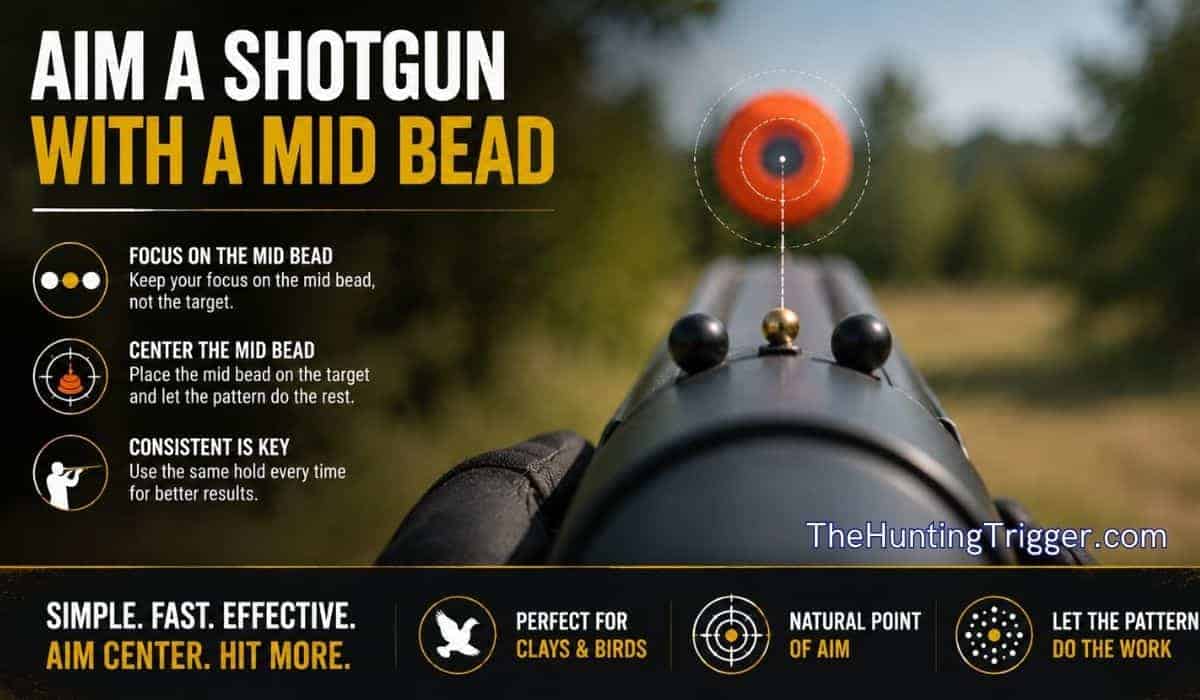
Aiming a shotgun accurately is a skill every shooter needs, whether for hunting, clay shooting, or home defense. Many shotguns come with a mid bead, a small dot placed halfway along the barrel. When used correctly, this mid bead helps align your eye with the shotgun’s sights, improving both accuracy and consistency. But aiming with a mid bead involves more than just lining up two dots. It requires proper technique, attention to detail, and practice. This article gives practical guidance on how to aim a shotgun with a mid bead, including essential steps, mistakes to avoid, and tips for different shooting scenarios.
Table of Contents
Why Shotgun Beads Matter?
Shotgun beads are not the same as rifle sights. Most shotguns use a front bead, but some also have a mid bead. The mid bead is usually smaller, and sits halfway down the barrel. Its main job is to help you check barrel alignment quickly.
When both beads are lined up, your eye is in the right place. This is especially important for shotguns, since they shoot a spread of pellets rather than a single bullet. Proper bead alignment ensures the shot pattern goes where you want.
Having a mid bead can help with:
- Eye alignment: Reduces parallax errors.
- Consistency: Makes mounting the shotgun easier.
- Quick checks: Useful for fast shooting situations.
Many expert shooters say the mid bead is like a “training tool,” helping to build muscle memory for proper mounting and aiming.
Shotgun Aiming Vs. Rifle Aiming
Aiming a shotgun is not the same as aiming a rifle. With rifles, you focus on the target and line up the sights carefully. Shotguns are designed for moving targets, so you need to keep your eyes on the target, not the beads.
But the mid bead helps with gun fit and mounting. If your shotgun fits you well, and you mount it correctly, the mid bead and front bead will line up naturally. This gives confidence that you are pointing the gun where you look.
Shotgun aiming is more about pointing than sighting. The mid bead gives you a quick reference, especially for new shooters or when checking gun fit.
| Aspect | Shotgun | Rifle |
|---|---|---|
| Target focus | Eyes on target | Eyes on sights |
| Alignment check | Mid bead helps | Rear/front sight |
| Use of beads | Quick reference | Precise aiming |
| Movement | Often moving targets | Usually stationary targets |
How The Mid Bead Works?
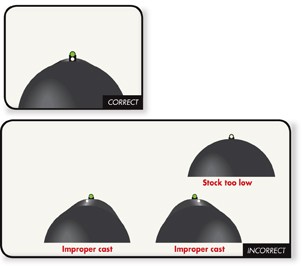
The mid bead sits halfway down the barrel and is smaller than the front bead. When you mount the shotgun, the mid bead and front bead should be visible. If you see both beads aligned in a straight line, your eye is centered along the barrel.
Some shooters use the “figure 8” method, where the mid bead sits just below the front bead, touching but not overlapping. This method helps check if the gun is mounted correctly.
Key points about the mid bead:
- It is not meant for aiming at the target directly.
- It helps check barrel and eye alignment.
- It is useful for checking gun fit, especially when buying or adjusting a shotgun.
If you see only the front bead, your head may be too low. If you see space between the beads, your head is too high or off-center.
Setting Up For Proper Aiming
Before you start aiming, you need to set up your shotgun and your stance.
Shotgun Fit
A shotgun that fits you well makes aiming easier. If the stock is too long or short, you will struggle to align the beads. Most shooters overlook this, but proper gun fit is key. Visit a gunsmith or experienced shooter to check fit.
Common mistakes:
- Using a shotgun with too long/short stock.
- Ignoring cheek weld (how your cheek sits on the stock).
Stance And Mount
Your stance should be balanced, feet shoulder-width apart, and weight slightly forward. Mount the shotgun so your cheek sits snugly on the stock. The mid bead should line up naturally.
Steps:
- Stand with feet shoulder-width apart.
- Lean forward slightly.
- Mount the shotgun, cheek tight to the stock.
- Look straight ahead, keeping both eyes open.
Eye Dominance
Most shooters have a dominant eye. If you use the wrong eye, bead alignment will be off. To check eye dominance, point at an object with both eyes open, then close one eye at a time. The eye that keeps your finger on target is dominant.
If your dominant eye is not on the same side as your shooting hand, you may need to adjust your stance or use a patch to block the non-dominant eye.
Aiming Technique With The Mid Bead
The mid bead should be used as a reference point. Here’s how to aim:
- Mount the shotgun with your cheek firmly on the stock.
- Look down the barrel. The mid bead should be just under the front bead.
- The beads should touch, forming a “figure 8.”
- Keep both eyes open, and focus on the target, not the beads.
- If you see space between the beads, adjust your mount.
- Practice mounting and aligning beads until it feels natural.
| Bead Alignment | Result |
|---|---|
| Figure 8 | Correct eye position |
| Only front bead visible | Head too low |
| Mid bead below front bead | Head too high/off-center |
Using The Mid Bead For Moving Targets
Shotguns are often used for moving targets, like clay pigeons or birds. The mid bead is not used for aiming at the target, but for checking your mount before shooting.
- Mount the shotgun, check bead alignment.
- Focus on the moving target.
- Swing the shotgun smoothly, keeping your body moving.
- Pull the trigger as you follow through.
If you stop to check the beads while aiming at a moving target, you will likely miss. Use the mid bead only to check alignment before you shoot.
Tip: Practice mounting and bead alignment at home. Use a mirror or point at a wall. This builds muscle memory, so you don’t need to check beads during fast shooting.
Common Mistakes And How To Fix Them
Many shooters make mistakes with the mid bead. Here are some to watch for:
- Looking at the beads too much: Keep your focus on the target.
- Poor gun fit: Get your shotgun fitted by a professional.
- Incorrect mount: Practice mounting until bead alignment is automatic.
- Wrong eye dominance: Check your eye dominance before shooting.
- Head movement: Avoid lifting your head to “see” the target after shooting. This ruins bead alignment.
Some shooters believe they can aim a shotgun like a rifle, but this is a common error. Shotguns are designed for fast, instinctive shooting.
Adjusting For Different Shotgun Types
Not all shotguns are the same. Some have different bead sizes or placements. Here’s a comparison of common types:
| Shotgun Type | Bead Type | Best Use |
|---|---|---|
| Pump-action | Front + mid bead | Hunting, clay shooting |
| Over/Under | Front + mid bead | Sporting clays, trap |
| Semi-auto | Front bead only | Waterfowl, home defense |
| Single barrel | Front bead only | Basic hunting |
Shotguns with only a front bead need more muscle memory and proper mounting. The mid bead helps, but is not always needed for experienced shooters.
Practical Tips For Better Accuracy
Improving your accuracy with a mid bead takes practice and attention.
- Dry practice: Mount your shotgun at home, check bead alignment.
- Live fire: Shoot at clay targets, focusing on proper mount and swing.
- Use a mirror: Check your mount and bead alignment visually.
- Record yourself: Watch your mount and alignment on video.
- Change targets: Practice on both stationary and moving targets.
Two insights that many beginners miss:
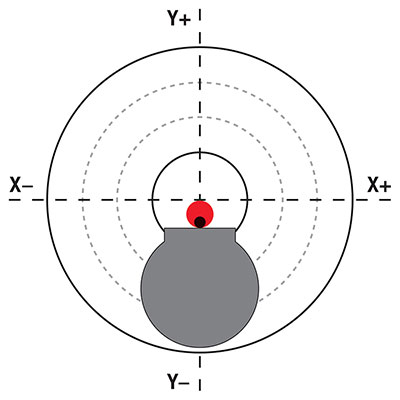
- If your mount is inconsistent, your point of impact will change even if beads are lined up.
- The mid bead can also show if your shotgun’s stock needs adjustment—if you always see space between beads, your stock may be too high or low.
When To Ignore The Mid Bead?
As you gain experience, you will rely less on the mid bead. Expert shooters often use the mid bead only for checking gun fit or during practice. During actual shooting, especially at moving targets, focus on the target and let bead alignment happen naturally.
Some shooters even remove the mid bead after they are comfortable with their mounting and aiming technique. For beginners, however, the mid bead is a valuable tool for building correct habits.
Safety Reminders
Always follow safety rules when handling shotguns:
- Keep the muzzle pointed in a safe direction.
- Check that the shotgun is unloaded when practicing.
- Wear eye and ear protection.
- Never rely only on beads for aiming—know your target and what’s beyond.
For more safety tips and shooting advice, visit National Shooting Sports Foundation.
Frequently Asked Questions
How Do I Know If My Shotgun Has A Mid Bead?
Check halfway down the barrel. The mid bead is usually a small dot, often white or brass, placed between the front bead and the receiver.
Should I Use The Mid Bead When Shooting At Moving Targets?
No, focus on the target. Use the mid bead only to check gun mount and alignment before shooting. The beads should line up naturally.
What If My Shotgun Only Has A Front Bead?
You can still aim accurately by practicing proper mounting and checking your cheek weld. The mid bead is helpful, but not required.
Can The Mid Bead Help If I’m Missing Shots?
Yes, if you miss often, check bead alignment. If beads don’t line up, your mount or gun fit may be off. Adjust and practice until alignment is correct.
Is The Mid Bead Useful For Home Defense Shotguns?
For home defense, speed and reliability are more important than bead alignment. However, practicing with the mid bead can build confidence and improve accuracy.

Last Word
Aiming a shotgun with a mid bead is about building good habits and checking alignment, not about slow, precise sighting. With the right technique and regular practice, you’ll find your shooting becomes more consistent and accurate. The mid bead is a small tool that makes a big difference, especially as you start out.

Leave a Reply