
When winter’s icy grip takes hold, deer movements fundamentally shift. On extremely cold days, deer typically reduce their overall travel distance, becoming more strategic to conserve precious energy. Their activity focuses on seeking dense thermal cover, ample resting, and making efficient, often shorter, forays for high-energy food sources.


This comprehensive guide will explore the sophisticated physiological and behavioral adaptations that enable deer to navigate frigid conditions. You’ll discover how they manage their energy, choose their sanctuaries, and adjust activity levels to endure the harshest parts of the year.
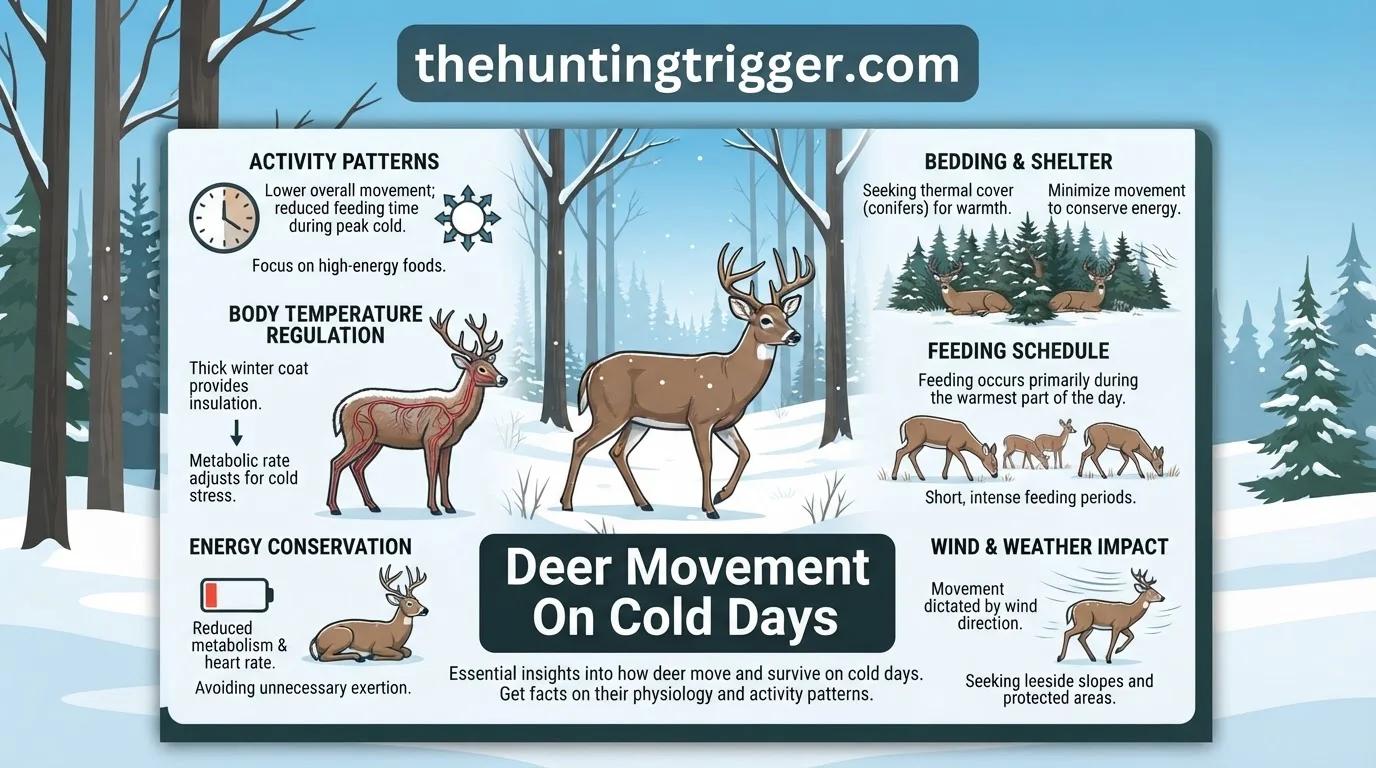
Understanding Deer Movement on Cold Days: An Overview
On cold days, deer movement is fundamentally driven by a critical, overriding priority: energy conservation.
Deer prioritize minimizing caloric expenditure during cold periods to safeguard vital fat reserves.
This core survival strategy dictates their behavior, ensuring resilience against frigid temperatures
and resource scarcity.
As a direct result, overall movement typically decreases significantly to minimize caloric expenditure.
Deer exhibit a general reduction in travel distance and frequency compared to mild days,
favoring efficient, direct routes between essential resources. This strategic approach limits
unnecessary energy loss from activity.
Behavioral shifts are also pronounced in cold weather. Deer actively seek optimal thermal cover,
such as dense conifer stands, for shelter from wind and cold. They adapt foraging for readily available,
high-energy foods, reducing exposure time, and social grouping often increases for collective warmth.
Thus, movement on cold days is generally shorter and more purposeful. Deer focus on direct travel
between bedding areas, cover, and food sources, ensuring every action contributes efficiently
to their survival in challenging conditions.
Deer Physiology: The Science of Surviving Winter Cold
Thermoregulation: Maintaining Core Body Temperature
Deer possess sophisticated thermoregulation mechanisms, which are core survival tools in cold conditions. Their bodies work diligently to maintain a stable internal temperature despite frigid external environments. This involves a delicate balance of heat production and heat loss to ensure vital organs function correctly.
To conserve precious energy, deer can significantly lower their metabolic rate. This internal adjustment reduces the amount of fuel their bodies need to burn, thereby decreasing overall heat production. They also employ behavioral tactics, such as shivering, which generates heat through muscle contractions, or adopting specific postures like tucking their legs close to their body to minimize exposed surface area and reduce heat loss.
Winter Coat and Fat Reserves: Natural Insulation
Physiological adaptations are crucial for deer survival in winter. One primary adaptation is their dense winter coat, known as pelage. This specialized fur is thicker and has more hollow guard hairs than their summer coat, effectively trapping a layer of insulating air close to their skin. This natural barrier prevents body heat from escaping.
Beneath this protective pelage, deer accumulate substantial subcutaneous fat reserves during warmer months. This fat layer acts as a vital internal insulator, further preventing heat loss. These fat stores also serve as an essential energy reservoir, providing necessary fuel when food is scarce, allowing deer to endure prolonged periods of cold with reduced foraging.
Thermal Cover: Key Habitats for Deer Shelter in Winter
Deer actively seek specific thermal cover to minimize heat loss during cold periods. Understanding these key habitats is crucial, as the importance of thermal cover for survival should not be underestimated; it’s not just about finding food. Deer instinctively gravitate towards areas offering natural insulation and protection from the elements.
Conifer Stands: Natural Windbreaks and Warmth
Dense conifer stands, such as pine or spruce forests, provide exceptional windbreaks and insulation. Their thick, evergreen canopies effectively intercept harsh winds and heavy snowfall. This creates a sheltered microclimate beneath, where temperatures can be several degrees warmer than in open areas, trapping heat and reducing a deer’s energy expenditure.
South-Facing Slopes: Harnessing Solar Radiation
These particular slopes are vital because they maximize exposure to solar radiation throughout the day. Deer will often bed down or browse on south-facing inclines to directly absorb warmth from the sun. This natural heat source significantly aids in thermoregulation, allowing deer to conserve crucial metabolic energy that would otherwise be spent generating body heat.
Dense Thickets: Protection from Wind and Predators
Thickets and areas of dense underbrush offer critical multi-layered protection. These habitats act as effective barriers against biting winds and accumulating snow, providing physical shelter. Beyond thermal benefits, their density also offers concealment from predators, making deer feel safer and more secure in harsh winter conditions.
Foraging Tactics: How Deer Find Sustenance in Frigid Conditions
Prioritizing High-Energy Browse
In cold conditions, deer significantly adapt their foraging patterns to efficiently access available food, often targeting high-energy browse. Their primary goal is to consume calorie-dense foods that provide the necessary fuel to maintain body temperature and energy levels.
This shift means they seek out readily available sources rich in carbohydrates and fats. Examples include the evergreen leaves of species like cedar and hemlock, as well as the nutrient-rich buds and tender twigs of deciduous trees and shrubs that offer concentrated energy.
Navigating Snow to Find Food
Snow depth is a critical factor, fundamentally hindering both movement and access to food sources. In areas with shallow snow, deer are often observed pawing away the white layer to uncover fallen acorns, residual forbs, or other ground-level forage.
However, deeper snow forces a change in strategy. Deer will then primarily rely on browsing vegetation that remains above the snow line, such as the branches of coniferous trees like cedar and hemlock, or the exposed buds and twigs of various shrubs.
Changes in Foraging Duration
While energy conservation is paramount, foraging duration on cold days can be shorter yet more intense. Deer minimize time exposed to the elements or expending energy on travel, focusing on maximizing caloric intake during active feeding periods.
This efficiency ensures they gather sufficient sustenance without unnecessary energy expenditure. They concentrate their feeding efforts on known, reliable high-energy food patches.
Peak Activity Times and Travel on Cold Days
Mid-Day Movement: Leveraging Solar Warmth
During cold periods, deer often adapt their activity patterns to conserve crucial energy. Movement periods may shift significantly, with deer becoming more active during the warmest parts of the day, particularly around mid-day when solar radiation is strongest. This strategic timing allows them to leverage natural warmth, reducing the physiological cost of staying active.
This mid-day movement is typically purposeful, focusing on essential activities. Deer will move efficiently between vital resources such as sheltered bedding areas, preferred foraging sites, and accessible water sources. This minimizes exposure to the harshest temperatures of early morning and late evening.
Shorter Travel: Minimizing Energy Expenditure
Overall, deer movement typically decreases substantially on cold days to minimize caloric expenditure. Travel distances become notably shorter compared to milder conditions. While a deer might cover a 2-mile range on mild days to browse and feed, this could shrink to a quarter-mile or less on severe cold days.
This reduction in travel distance is a direct energy-saving tactic. Movement is deliberate and efficient, focusing solely on immediate needs rather than extensive exploration. Deer prioritize remaining near adequate food, water, and thermal cover to maintain their body temperature.
Crepuscular Activity in Milder Cold
While mid-day activity increases during severe cold, deer can still exhibit crepuscular activity (dawn and dusk) if conditions are less severe or during periods of milder cold. In these instances, the energy cost of moving during twilight hours is not as prohibitive, allowing them to utilize these naturally low-light periods for feeding.
Even during these crepuscular movements in moderate cold, the overarching principle of energy conservation remains paramount. Deer will still choose efficient routes and prioritize areas that offer both sustenance and proximity to secure bedding.
Social Grouping: Deer Behavior for Energy Conservation in Winter
The Benefits of Collective Warmth
During cold days, deer significantly increase their social grouping. Herd sizes tend to increase in winter, providing collective warmth and vigilance. This collective grouping is a crucial energy conservation strategy when temperatures drop.
The primary advantage is shared thermal comfort. By huddling closely, deer reduce individual surface area exposed to cold, minimizing heat loss. A group of 15 deer in a conifer stand, versus scattered summer units, exemplifies this communal warmth.
Enhanced Vigilance Against Predators
An increased group size also provides enhanced vigilance against predators. More eyes and ears detect threats sooner. This allows the herd to react collectively, conserving energy otherwise spent on constant individual scanning.
Understanding ‘Yarding Up’ Behavior
In areas with heavy snowfall, deer often engage in ‘yarding up’. They concentrate in sheltered locations, typically dense evergreen forests, creating networks of packed trails. These “yards” host many deer, centralizing activity.
Yarding up facilitates easier movement through deep snow, minimizing energy expenditure. It maximizes limited food utilization within a manageable area, reinforcing shared warmth and predator detection benefits.
Key Factors Impacting Deer Movement in Cold Weather
The Severity of Temperature and Wind Chill
Temperature plays a direct and significant role in dictating a deer’s activity levels during cold weather. As temperatures drop, deer generally exhibit a decreased overall activity level to conserve vital energy reserves. This reduction in movement is particularly pronounced when combined with other harsh conditions.
Wind chill severely exacerbates the effects of cold, making ambient temperatures feel much colder to a deer. For instance, a calm day at 10°F might allow for more moderate foraging and travel than a windy 20°F day, where the effective temperature could be significantly lower, driving deer to seek immediate thermal cover.
Consequently, travel distances on cold days are typically shorter, varying greatly based on the severity of the cold, habitat quality, and the dispersion of available resources. Deer prioritize energy conservation, limiting unnecessary exposure to harsh wind and low temperatures.
Snow Depth: A Barrier to Movement and Food
Snow depth is a critical factor that can profoundly dictate deer movement patterns. Deep snow physically impedes travel, making it energetically costly for deer to move through their environment. Even moderate snow accumulation can significantly increase the effort required for locomotion.
Beyond travel difficulty, deep snow also acts as a barrier to food access. Many preferred forage items become buried and inaccessible, forcing deer to either dig through snow or seek alternative food sources. This often leads to shorter travel distances and more concentrated foraging in areas with less snow or more exposed browse.
Food Availability and Predator Pressure
The availability, quantity, and type of food are primary drivers of foraging effort in cold conditions. When food is scarce, deer may be forced to extend their foraging duration or increase their travel distance despite the cold, overriding the natural inclination to conserve energy. Foraging duration can be variable, ranging from shorter, more intense bursts to opportunistic feeding sessions.
Predator activity adds another layer of complexity, often forcing movement that conflicts with energy conservation strategies. The presence of predators like wolves or coyotes can override a deer’s need to remain still and sheltered, compelling them to move to avoid detection, even in extremely cold or snowy conditions. This dynamic interaction between hunger, safety, and energy balance shapes their daily winter routines.
Common Myths About Deer Activity on Cold Days Debunked
Myth: Deer Become Completely Immobile in Cold
Many observers mistakenly assume that deer enter a state of total dormancy during sub-zero conditions. In reality, deer remain active because their metabolic requirements necessitate constant caloric intake. Even in extreme weather, they must move to access food sources, meaning they never become entirely immobile.
For instance, a hunter might avoid the field on a brutal day, convinced the deer are “shut down.” This is a strategic error; while movement may be more deliberate and energy-efficient, deer continue to travel between their thermal cover and reliable forage sites to maintain their body heat.
Myth: Wind Chill Isn’t a Major Factor
There is a common misconception that deer only react to the ambient air temperature. In truth, wind chill is a critical survival variable. High winds strip away the layer of heat trapped near a deer’s fur, drastically increasing the energy required to stay warm.
Ignoring wind chill leads to inaccurate predictions of deer behavior. When winds are high, deer prioritize protected areas over exposed food sources, regardless of the thermometer reading. They will endure the cold, but they will not tolerate the convective heat loss caused by wind.
Myth: All Deer React Identically to Cold
Believing that every deer population behaves the same way is a dangerous oversimplification. Behavioral patterns are dictated by regional climate, local habitat quality, and specific subspecies adaptations. A deer in the deep forests of the north faces different survival pressures than one in a temperate basin.
Because their biological thresholds vary, deer activity is never a static state. Factors like available thermal cover determine how much a specific group will move. Recognizing that these survival strategies change based on environment is essential for anyone tracking movement.
Comparing Deer Movement: Cold vs. Mild Seasons and the Rut
Deer movement patterns fluctuate dramatically throughout the year, driven by a complex interplay of environmental conditions, resource availability, and biological imperatives. Understanding these seasonal differences is crucial for appreciating how movement on cold days fits into the broader behavioral ecology of deer.
On mild days, deer exhibit more widespread movement across their home ranges, often seen grazing openly with less urgent emphasis on seeking thermal cover. Foraging periods are generally more consistent, and while group sizes can vary, smaller gatherings or solitary individuals are frequently observed.
In stark contrast, the breeding season, or rut, dictates movement primarily through reproductive urges. Males become exceptionally mobile, often traversing extensive distances to find receptive females, sometimes irrespective of cold temperatures unless conditions are extreme. Their focus shifts from consistent feeding to mate-seeking.
During the fawning season, female deer become markedly more solitary and secretive. Their movement is highly restricted, centered around selecting and utilizing safe birthing sites and nurturing their young. While still sensitive to extreme conditions, general cold is less of a primary driver compared to the need for seclusion and fawn protection.
Ultimately, the primary drivers of deer movement change drastically across seasons. Whether it’s the need for constant forage, the imperative to reproduce, or the protection of offspring, these biological demands significantly reshape how and where deer move, highlighting cold days as just one piece of a dynamic annual cycle.
How to Read This Table
This table provides a generalized comparative overview of deer movement features across three distinct seasons: Mild Season, Rut (Breeding Season), and Fawning Season. The “Feature” column describes the behavioral characteristic being compared.


“Primary Movement Driver” indicates the main biological or environmental factor influencing deer activity during that period. “Typical Daily Movement Distance” offers approximate ranges for daily travel in kilometers. It’s crucial to understand that these distances are general tendencies and can vary significantly based on deer species, habitat type, geographical location, and individual deer.
Therefore, the phrase “Verify for exact configuration” is included to emphasize that precise numbers require specific local research for the exact deer population and environmental conditions in question. “Group Size Tendency” describes the typical social groupings observed, noting differences between male and female behavior where applicable. Finally, “Emphasis on Thermal Cover” gauges how critically deer prioritize sheltered areas, with a higher emphasis indicating a greater reliance on such habitats for survival or safety.
Key Takeaways
-
✓
Deer prioritize energy conservation through reduced movement and strategic foraging in cold weather. -
✓
Thermal cover, like dense conifer stands, is critical for deer to minimize heat loss and find shelter. -
✓
Physiological adaptations, such as increased metabolism and thicker coats, enable deer to endure frigid temperatures. -
✓
Peak activity times often shift to warmer parts of the day, particularly midday, during extreme cold. -
✓
Social grouping helps deer conserve energy through shared body heat and vigilance against predators.
❓ Frequently Asked Questions
1
What is deer movement on cold days?
Deer movement on cold days refers to their altered patterns and behaviors to survive low temperatures. This includes prioritizing energy conservation, seeking thermal cover, adapting foraging strategies, and adjusting activity times. Understanding these movements provides valuable insights into their winter survival tactics and ecological adaptations.
2
How does cold impact deer physiology?
Cold weather significantly impacts deer physiology, prompting various adaptations. They grow thicker winter coats, increase their metabolic rate to generate heat, and may enter a state of torpor to conserve energy. Their body systems become highly efficient at retaining warmth and processing limited food resources to sustain life in harsh conditions.
3
Why is thermal cover important for deer?
Thermal cover is crucial for deer on cold days as it provides essential shelter from harsh winds, precipitation, and extreme cold. Dense vegetation, like conifer stands, traps heat and blocks wind, allowing deer to conserve vital energy. Access to good thermal cover can be a matter of survival, especially during prolonged cold snaps.
4
What are the benefits of understanding deer movement in cold?
Understanding deer movement in cold weather offers several benefits. For wildlife enthusiasts, it provides deeper insights into animal behavior and survival. For land managers, it informs habitat preservation and restoration efforts. It also helps researchers study deer population dynamics and their resilience to environmental stressors, offering valuable facts and information.
5
How can one observe deer movement in winter?
Observing deer movement in winter involves patience and understanding their cold-weather habits. Look for tracks in snow near thermal cover or food sources, especially in the midday. Utilize binoculars for distant observation to avoid disturbing them. Understanding their need for energy conservation and shelter provides key details for successful, respectful wildlife watching.
6
Do deer move more or less when it’s cold?
Generally, deer move less when it’s cold to conserve energy. Their movements become more purposeful and shorter in distance, primarily focused on feeding and seeking shelter.


Leave a Reply