
The wilderness holds many secrets, and few are as fascinating as the intricate instincts of a pregnant deer. As fawning season approaches, female deer, or does, undergo remarkable behavioral changes, driven by an ancient imperative to protect their unborn young and ensure their survival. These shifts are subtle but significant, signaling their impending motherhood.
Observing these pre-birth behaviors offers crucial insights into their natural world and helps us understand their needs during this vulnerable period. From seeking isolation to altering their feeding patterns and becoming intensely vigilant, a doe’s actions are meticulously adapted for a successful birth.
This article delves into these specific changes, explaining the underlying reasons and how to interpret them, offering a deeper appreciation for this vital phase in a deer’s life cycle.
Understanding Deer Behavior Before Giving Birth: A Comprehensive
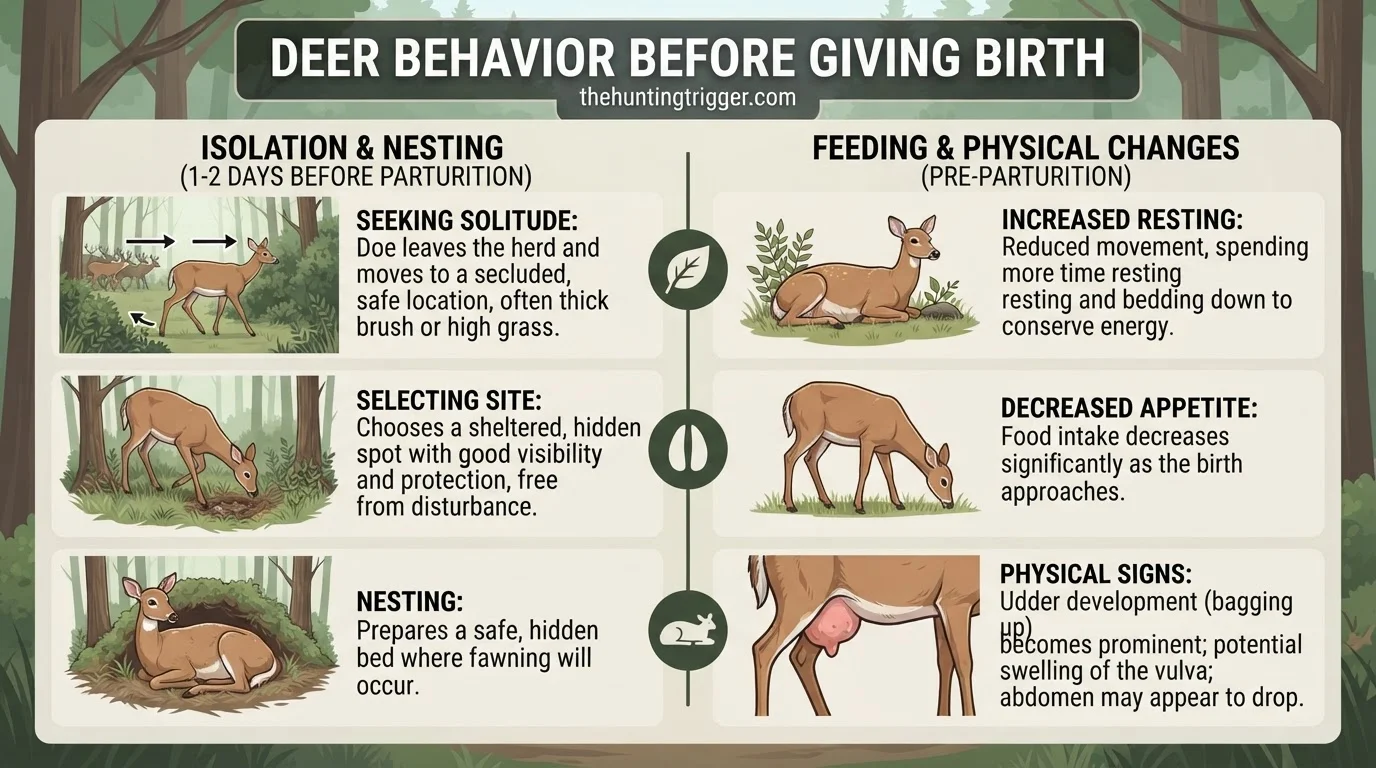
As the time for parturition approaches, female deer, known as does, display distinct and purposeful behavioral modifications. These changes are fundamentally driven by the primary biological imperative to protect their extremely vulnerable newborn fawn(s). This period is marked by heightened caution, seclusion, and a proactive approach to ensuring offspring survival.

The most immediate indicators of impending birth include a doe’s increased isolation from the herd, deliberate and secretive selection of a fawning site, and a noticeable elevation in vigilance. Observers may also detect subtle yet significant shifts in her typical daily activity patterns. These precursors serve as crucial survival strategies.
These pre-birthing behaviors are primarily motivated by predator avoidance and maximizing fawn survival. Newborn deer are born with limited mobility and a strong scent, rendering them exceptionally susceptible to predation. The doe’s actions are meticulously tailored to minimize exposure and establish a secure environment for her offspring.
Subtle activity changes might involve altered foraging habits or reduced social interactions. Her increased vigilance means she constantly scans her surroundings, reacting to even minor disturbances. Every action is a calculated effort to ensure the safest possible conditions for birth and the fawn’s initial, most fragile hours of life.
For instance, observing a doe alone in an unusual, dense patch of woods or thick underbrush, where she wouldn’t typically linger, is a strong indicator of impending birth. This choice exemplifies her urgent need for concealment and privacy, reflecting her intense focus on securing a safe haven for her offspring.
The Crucial Role of Isolation in Deer Behavior Before Giving Birth
Does typically seek isolation from their herd or social group before giving birth. This deliberate act of separation is a critical behavioral change, marking a significant departure from their usual communal living patterns in preparation for fawning.

It’s a foundational strategy to ensure the safety and survival of the newborn fawn, highlighting the instinctual drive to protect offspring.
Why Does Seek Seclusion
The primary reason for a doe to seek seclusion is to reduce visibility and minimize disturbance during the highly vulnerable birthing process. By separating herself, she makes both herself and the impending fawn far less conspicuous to potential predators.
This isolation serves as a primary defense mechanism, crucial for the extremely fragile newborn. Unlike a common sight of several deer grazing openly together, observing a solitary doe often indicates she is preparing to give birth, prioritizing the security of her offspring over social proximity.
Typical Isolation Duration
The duration of this critical isolation period can vary, ranging from just a few hours immediately prior to birth to several days leading up to it. This flexibility allows the doe to adapt to environmental conditions and perceived threats.
During this time, the distance a doe travels from her usual social group increases significantly, largely dependent on the available habitat. She seeks out the most secluded and protected areas to ensure the highest chance of survival for her fawn.
Optimal Fawning Site Selection: Where Deer Choose to Give Birth
Prior to parturition, one of the most critical behaviors exhibited by a pregnant doe is the meticulous selection of a fawning site. This decision is paramount for the survival of her offspring, directly influencing their initial protection against predators and the successful establishment of their early life.
Characteristics of a Secluded Birthing Spot
Does actively search for dense, concealed areas that offer robust protection from potential predators. This strategic choice of a secluded cover is essential to enhance fawn survival during their most vulnerable stage, directly after birth.
Optimal locations typically include habitat types such as thickets, dense brush, or expansive stands of tall grasses. These environments provide both excellent visual and olfactory cover, making it significantly harder for predators to detect newborns.
The chosen site, often referred to as a ‘fawning bed,’ is usually a well-hidden spot within such vegetation. Site selection is critical for initially hiding the fawns, providing a safe haven for their first few days of life, rather than for long-term care.
Natural Concealment vs. ‘Nests’
It is important to understand that deer do not construct elaborate ‘nests’ like many bird species. Instead, they skillfully select and utilize existing natural concealment present in their environment to create a safe birthing area.
A doe will seek out a natural depression in the ground or a spot already dense with vegetation. This existing natural cover becomes the fawning bed, providing an immediate hiding place where the fawn can instinctively lie low and remain camouflaged.
The effectiveness of this strategy lies in its simplicity and reliance on natural camouflage. By choosing such a site, the doe ensures that her offspring’s vulnerability during the initial postpartum period is significantly mitigated through effective hiding and seclusion.
Subtle Shifts in Deer Activity and Feeding Before Fawning
Changes in Daily Movement Patterns
As parturition approaches, a pregnant doe’s overall activity level typically shifts. While some individuals may exhibit increased nervousness, a general decrease in strenuous activity is common as she conserves vital energy for the impending birth.
Movement patterns become more deliberate and focused. For instance, a doe usually observed grazing idly might now be seen resting for longer periods or moving with a specific purpose, often searching for and accessing her chosen birthing site. These focused movements minimize unnecessary risks.
Variations in Foraging Habits
Feeding patterns can become noticeably erratic or even reduced in the days immediately preceding fawning. This behavioral change varies by individual temperament, the specific stage of labor, and the availability of food sources. A doe might skip meals or eat only sparingly.
These alterations in foraging allow the doe to direct her physiological energy towards preparing for birth and away from extensive digestion. Both the reduced activity and altered feeding habits are crucial adaptations, aiming to concentrate all available resources for a successful delivery.
Heightened Awareness: Increased Vigilance in Deer Before Giving Birth
As parturition approaches, a doe’s behavior shifts, marked by an acute increase in environmental awareness. This heightened vigilance is a critical pre-birthing strategy, making her notably more wary, nervous, and sensitive to her surroundings. Increased wariness and nervousness are common behavioral indicators.
This intense watchfulness is a direct, instinctual response to the extreme vulnerability of both herself and her impending fawns. Protecting the chosen birthing site and her newborn becomes paramount, influencing every immediate action.
Signs of Increased Watchfulness
Observable cues include frequent scanning, often with her head held higher and more alertly. Her ears will be in near-constant motion, twitching and swiveling independently to catch the slightest sound or scent.
This sensitivity extends to minor disturbances. A doe will react much more quickly to unexpected noises, movements, or unusual odors. Even a distant, faint sound can cause her to freeze, assess, and prepare to flee.
The Role of Predator Pressure
This amplified state of alertness is a fundamental survival strategy against predators. Fawns are born highly vulnerable, making the birthing period a high-risk time for the mother and her offspring. Vigilance helps detect threats before they become immediate dangers.
By maintaining constant awareness, the doe maximizes her chances of either successfully hiding her fawns or leading a predator away. This instinctual defense mechanism ensures the continuation of the species.
Fawning Season Timing: When to Observe Pre-Birthing Deer Behavior
Understanding the Gestation Period
The birthing period for deer, commonly known as the fawning season, primarily unfolds during spring or early summer. This critical window is directly determined by the species’ gestation period, which refers to the length of time from conception to birth.
Understanding this timeline is crucial for observing and correctly interpreting the specific behavioral changes deer exhibit before parturition. The precise duration of pregnancy dictates when these pre-birthing actions are most likely to be witnessed.
Regional Variations in Fawning Dates
While generally occurring in spring or early summer, the exact timing of the fawning season can vary significantly based on both the deer species and its geographical location. This regional difference reflects adaptations to local climate conditions and resource availability.
For instance, white-tailed deer in North America typically give birth from late May through early June. Observing pre-birthing behaviors during these specific regional fawning windows greatly enhances the accuracy of interpreting a doe’s actions.
This period is undeniably vital for the survival of the fawns and, by extension, the continuation of the deer species. The timing ensures newborns have access to ample forage and favorable weather conditions.
Factors Influencing Deer Behavior Before Parturition
Individual and Species-Specific Differences
The behavior of deer prior to giving birth is not uniform; individual differences play a significant role. Behavioral changes are often subtle and can vary considerably between individual does, influenced by their unique temperament and past experiences.
For instance, a first-time mother, known as a primiparous doe, might exhibit more nervousness and heightened caution compared to an experienced doe that has successfully given birth before. Her inexperience may lead her to choose different isolation strategies or fawning sites.
Furthermore, while general patterns exist, behavioral tendencies can also vary slightly across different deer species. These species-specific nuances often reflect adaptations to their distinct environments and evolutionary histories.
Impact of Habitat and Predator Pressure
The local environment significantly modifies a doe’s pre-birthing actions. Habitat quality, particularly the availability of dense cover and suitable birthing sites, dictates how a deer might choose to isolate herself or select a fawning area.
Predator pressure in a given area is another critical factor. In regions with high predator populations, does tend to be more secretive, seeking out exceptionally secluded or well-camouflaged locations for giving birth to enhance fawn survival.
External disturbances, such as human activity, noise, or agricultural operations, can also influence a doe’s choices and actions. Such disruptions may cause her to alter her intended fawning site, delay parturition, or display more erratic movements.
Interpreting Pre-Birthing Deer Behavior: What to Do and Avoid
Ethical Observation Guidelines
When observing a deer exhibiting signs of impending birth, the paramount rule is to maintain a respectful and safe distance. Any approach or disturbance can induce significant stress in the doe, potentially causing her to abandon her chosen fawning site.
It’s crucial to differentiate between general nervousness or discomfort and specific behaviors indicating imminent parturition. Avoid attributing human-like emotions or complex planning to deer behavior, as their actions are primarily driven by instinct and survival strategies.
Common Misconceptions About Deer and Fawns
A frequent misunderstanding is the concept of a fawn being “abandoned.” Fawns are frequently left alone by the doe for extended periods shortly after birth. This is a critical survival strategy, reducing the chances of predators locating the vulnerable fawn through the mother’s scent.
For example, seeing a fawn alone in a field or garden is normal behavior, and approaching it is strongly discouraged. Its mother is almost certainly nearby, watching, and will return when she deems it safe.
Furthermore, do not expect to find an elaborate ‘nest’ for fawns. Unlike birds, deer do not build complex structures. Instead, they select and utilize existing natural concealment like tall grasses, thick brush, or dense undergrowth to hide their fawns.
When to Contact Wildlife Professionals
Intervention is rarely needed. You should only contact local wildlife rehabilitation services if a fawn shows clear signs of distress or injury, such as prolonged crying, visible wounds, or if it’s entangled.
If you have observed the fawn for many hours (e.g., 8-12 hours) and the mother has not returned, or if the fawn is in immediate danger (e.g., in a roadway), then professional advice may be warranted. Otherwise, observe from a distance and allow nature to take its course.
Key Takeaways
-
✓
Pregnant does exhibit increased isolation from herds. -
✓
They meticulously select secluded, safe fawning sites. -
✓
Noticeable shifts occur in activity levels and feeding habits. -
✓
Vigilance significantly heightens as fawning approaches. -
✓
Understanding seasonal timing aids in observing these behaviors.
❓ Frequently Asked Questions
1
What is deer behavior before giving birth?
Female deer, or does, undergo specific behavioral shifts as parturition approaches. These typically include seeking increased solitude, selecting a secluded fawning site, exhibiting changes in activity and feeding, and displaying heightened wariness. These natural adaptations ensure the safety and survival of their newborn fawns.
2
How does deer behavior change before birth?
Before giving birth, does often separate from their social groups, seeking dense cover or isolated areas for fawning. Their movements might become more deliberate, feeding patterns could shift, and their overall alertness and vigilance significantly increase. These changes minimize risks from predators and human disturbance.
3
Why is understanding pre-birthing deer behavior important?
Understanding these behaviors is crucial for wildlife enthusiasts, researchers, and land managers. It allows for responsible observation, helps predict fawning periods, and ensures humans do not inadvertently disturb vulnerable does or fawns. It also provides valuable ecological insights into deer reproductive strategies.
4
What are the benefits of recognizing these behaviors?
Recognizing pre-birthing behaviors offers several benefits, including improved chances of safely observing fawns and mothers, contributing to conservation efforts by minimizing disturbance, and enhancing one’s overall knowledge of deer ecology. It also helps in identifying critical fawning habitats for protection.
5
How can I observe deer during this period responsibly?
To observe responsibly, maintain a significant distance, use binoculars or telephoto lenses, and avoid direct intervention or startling the doe. Never approach a fawn, as this can lead to abandonment. Respect their isolation and prioritize their safety over getting a closer view.
6
How can you tell if a deer is about to give birth?
Look for specific behaviors: a doe isolating herself from the herd, seeking dense and secluded cover, increased vigilance (nervousness, frequent scanning), and subtle changes in activity or feeding patterns. She will appear focused and cautious.


Leave a Reply