
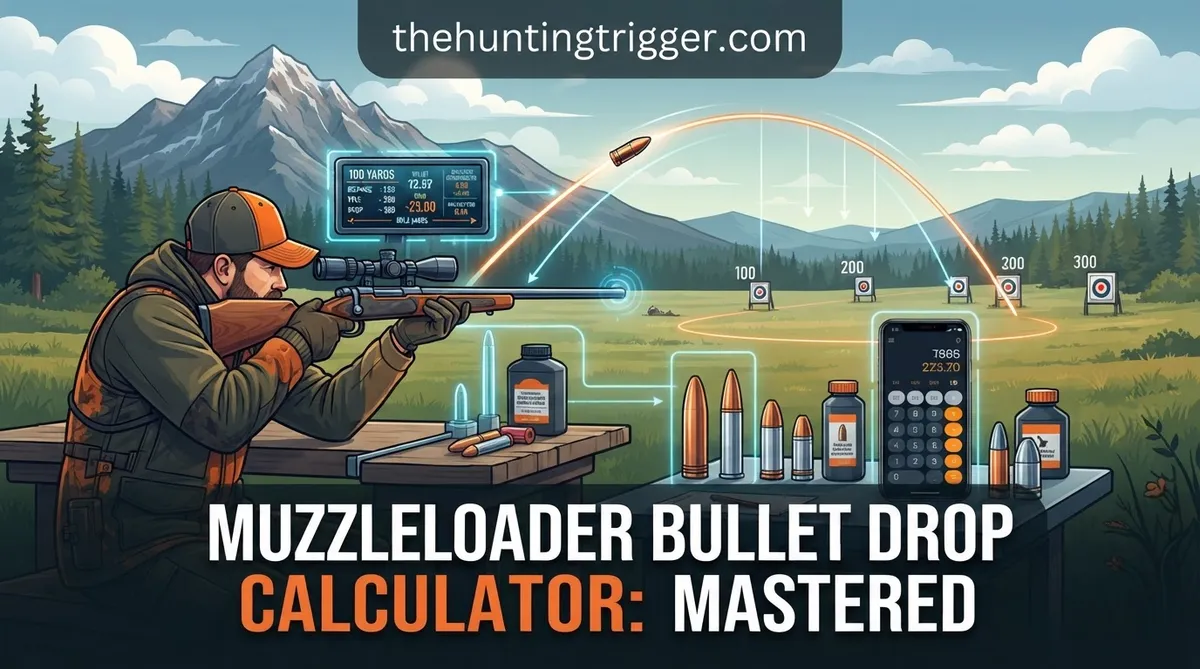
For the discerning muzzleloader enthusiast, hitting your mark consistently hinges on more than just a steady hand; it demands a profound understanding of external ballistics. The inherent ballistic characteristics of muzzleloader projectiles, often characterized by lower velocities and less aerodynamic designs, mean bullet drop is a critical, and often miscalculated, factor beyond short ranges. This article will thoroughly equip you with the expertise to accurately predict and compensate for muzzleloader bullet drop using modern calculation tools and proven methodologies, transforming uncertainty into precise, ethical shot placement.

The Physics Behind Muzzleloader Bullet Drop: A Foundation for Reliable Calculations
📤 Share Image
To effectively utilize any muzzleloader bullet drop calculator, one must first grasp the fundamental physical forces acting upon a projectile in flight. Unlike modern cartridges with flatter trajectories at comparable ranges, muzzleloaders often exhibit pronounced bullet drop due to a combination of lower velocities and less aerodynamic designs. Understanding these principles forms the bedrock of accurate trajectory prediction and shot placement, providing a trusted guide for every serious shooter.
Gravity’s Unyielding Pull: The Core of Muzzleloader Trajectory
From the instant a muzzleloader projectile leaves the barrel, it is relentlessly pulled downwards by gravity. This gravitational acceleration acts independently of the bullet’s horizontal velocity, meaning it falls at a constant rate regardless of how fast it’s moving forward. The standard acceleration due to gravity is approximately 32.2 feet per second squared (ft/s²) or 9.8 meters per second squared (m/s²). While horizontal velocity dictates how far the bullet travels before hitting the ground, gravity determines how much it drops vertically in that time. This constant downward force is the primary reason why a quality muzzleloader bullet drop calculator is indispensable for precise shooting.
Conquering Air Resistance: Understanding Aerodynamic Drag in Muzzleloader Projectiles
Aerodynamic drag, or air resistance, is the force that opposes the bullet’s forward motion, causing it to shed velocity. For muzzleloaders, drag is a particularly significant factor. Many traditional muzzleloader projectiles, such as patched round balls, are inherently less aerodynamic compared to modern rifle bullets. Even contemporary sabot and full-bore designs, while improved, often contend with lower muzzle velocities, which means they spend more time in the air and are thus subjected to drag for longer durations. Bullet shape, frontal area, and surface finish all influence drag. A blunt, heavy projectile will experience greater drag at a given velocity than a sleek, pointed one, leading to a faster deceleration and, consequently, more bullet drop. For instance, a .54 caliber round ball at 1,400 fps will experience far greater drag and more rapid velocity loss than a 250-grain sabot moving at 1,900 fps, significantly impacting its trajectory.
Muzzle Velocity and Ballistic Coefficient: Critical Factors in Muzzleloader Ballistics
Muzzle velocity (MV), the speed at which the bullet exits the barrel, is a crucial input for any professional muzzleloader bullet drop calculator. It directly influences the bullet’s initial kinetic energy and, more importantly for trajectory, its time of flight to target. Higher muzzle velocity translates to a shorter time in the air, allowing gravity less time to act upon the bullet, resulting in less drop. Typical muzzle velocities for common muzzleloader loads range from approximately 1,200 to 2,200 feet per second (fps) depending on caliber, bullet type, and powder charge.
The ballistic coefficient (BC) is a quantitative measure of a projectile’s ability to overcome air resistance. A higher BC indicates a more efficient, streamlined bullet that retains velocity better downrange. This makes it a vital parameter for accurate trajectory prediction. For muzzleloaders, BCs vary widely: a sabot with a sleek, polymer-tipped bullet will have a significantly higher BC than a traditional patched round ball. An expert understanding of your projectile’s BC is non-negotiable for accurate calculations. This numerical value is instrumental in how a calculator models the bullet’s velocity decay over distance, directly influencing the predicted bullet drop.
Spin and Stability: A Brief Look at Gyroscopic Drift
Rifling within a muzzleloader barrel imparts a spin to the projectile, which is essential for gyroscopic stability. This spin keeps the bullet pointed nose-forward throughout its flight, preventing tumbling. While critical for accuracy, this spin can also lead to a phenomenon known as gyroscopic drift. As the bullet travels, aerodynamic forces acting on its nose create a slight yawing moment, and the gyroscopic stability causes this yaw to precess in a circular motion. Over long distances, this precession can cause a small, consistent lateral deflection. For typical muzzleloader ranges, gyroscopic drift is often a minor factor compared to gravity and wind drift, but for the pursuit of absolute precision, a comprehensive muzzleloader bullet drop calculator might account for it, especially at extreme ranges.
By The Numbers: Muzzleloader Ballistics Essentials
ft/s² Gravitational Acceleration
fps Typical Muzzle Velocity
G1 BC for Common ML Projectiles
MV Error = Inches at 200yds
Mastering Your Muzzleloader Bullet Drop Calculator: A Professional Guide to Precision
Having a fundamental understanding of ballistic physics is merely the first step. The true power lies in accurately leveraging a muzzleloader bullet drop calculator. This expert guide details the process, ensuring you input the correct data, account for environmental variables, and interpret the results to enhance your shooting accuracy significantly.
📋
Step-by-Step Guide: Using Your Muzzleloader Bullet Drop Calculator
The accuracy of your predictions hinges on the quality of your input data. You’ll need:
- Projectile Weight (grains): Precisely weigh your bullets if factory specs are unavailable.
- Muzzle Velocity (fps): This is arguably the most critical parameter. Chronograph your specific load for real-world data (discussed further in troubleshooting). A 10% error in muzzle velocity can lead to several inches of point-of-impact difference at 200 yards.
- Ballistic Coefficient (BC): Typically provided by the bullet manufacturer (G1 or G7). Ensure you select the correct model.
- Sight Height (inches): The vertical distance from the center of the bore to the center of your optic. For scopes, this usually ranges from 1.5 to 2.5 inches.
- Zero Range (yards): The distance at which your bullet strikes precisely where you aim.
Environmental conditions significantly impact air density, directly affecting drag and, consequently, bullet drop. Modern muzzleloader bullet drop calculators often incorporate inputs for:
- Temperature: Colder air is denser, increasing drag.
- Humidity: Higher humidity slightly decreases air density (humid air is lighter than dry air), marginally reducing drag.
- Barometric Pressure/Altitude: Lower pressure (higher altitude) means thinner air, reducing drag.
Utilize a weather app or a Kestrel device to obtain precise local environmental data for the most reliable calculations.
Ballistic coefficients are typically referenced against standard projectile shapes.
- G1 (Ingalls): This model is based on a flat-base, 2-caliber (length-to-diameter ratio) spitzer bullet. It’s generally suitable for most hunting projectiles, including many conical and saboted muzzleloader bullets.
- G7 (Bryan): This model is based on a boat-tail, VLD (Very Low Drag) projectile. It offers greater accuracy for extremely aerodynamic, boat-tail bullets often found in precision rifle shooting, but less common for typical muzzleloader projectiles.
Always use the BC model specified by your bullet manufacturer. If only a G1 BC is provided, stick with G1. Using the wrong model can lead to significant errors, especially at longer ranges.
Once all parameters are entered, the calculator will generate a trajectory table. This table typically displays:
- Drop in Inches: The vertical distance the bullet has fallen below the line of sight at various ranges.
- MOA (Minutes of Angle) or MRAD (Milliradians): Angular adjustments needed for your optic to compensate for drop. For instance, if your calculator shows 6 MOA drop at 200 yards, you’d dial 6 MOA “up” on your scope.
- Windage: The lateral deflection due to crosswinds, often provided for a standard wind speed (e.g., 10 mph). Example: For a .50 cal 300gr PowerBelt Aerolite (G1 BC 0.25) at 2000 fps, zeroed at 100 yards, a calculator might show a drop of approximately 15 inches (7.2 MOA) at 200 yards and 45 inches (11.5 MOA) at 300 yards. A 10 mph full-value crosswind could push it 6-8 inches at 200 yards.
These “come-ups” are essential for extending your effective range beyond your zero. An expert understanding of these tables allows for swift, confident adjustments in the field.
For utmost reliable calculations, especially for hunting, input real-time environmental data. Many modern ballistic apps can pull local weather station data or connect to external sensors like a Kestrel, ensuring the most accurate air density calculation for your immediate conditions.
Top Muzzleloader Bullet Drop Calculator Software and Online Tools
The market offers a variety of quality ballistic calculators, ranging from free online resources to sophisticated mobile applications. Some popular and trusted options include:
- JBM Ballistics (Online): A highly respected and comprehensive web-based calculator known for its accuracy and detailed output. It’s an excellent free resource for in-depth analysis.
- Strelok Pro (Mobile App): A popular choice for its intuitive interface, vast bullet library, and ability to account for many environmental factors. It’s often favored by field shooters for quick calculations.
- Hornady 4DOF (Mobile App): This system uses a unique “4 Degrees of Freedom” model, which claims even greater precision by considering projectile yaw and drag more dynamically than traditional G1/G7 models. While often geared towards modern cartridges, it can be configured for muzzleloader data.
- Applied Ballistics Mobile (Mobile App): Developed by Bryan Litz, a leading ballistician, this app is considered the gold standard for many long-range shooters due to its scientific rigor and extensive library of verified BCs.
Each offers varying levels of complexity and features, but all provide the information needed to predict trajectory effectively. Selecting one that best suits your needs and comfort level is key to making it a reliable tool in your shooting arsenal.
Optimizing Muzzleloader Ballistics: Advanced Strategies Beyond the Calculator
While a muzzleloader bullet drop calculator is an indispensable tool, achieving peak accuracy involves considerations that go beyond simple ballistic inputs. As an expert in the field, I can attest that attention to nuanced details in loading and shooting practices contributes significantly to predictable trajectory and consistent shot placement.
The Foundation of Consistency: Powder Charge and Load Development
The type and quantity of propellant used are fundamental to muzzleloader performance. Whether you’re using traditional black powder, Pyrodex, or modern Triple Seven, consistency is paramount. Even a small variance in powder charge can lead to noticeable differences in muzzle velocity and, consequently, bullet drop. Research indicates that varying a powder charge by just 5 grains (e.g., from 90 to 95 grains of Triple Seven) can alter muzzle velocity by 50-75 fps. This velocity shift directly impacts bullet drop at extended ranges, potentially causing several inches of vertical displacement at 150+ yards. Using a precise powder measure and maintaining a consistent loading technique are critical. Additionally, a 10-degree Fahrenheit change in ambient temperature can alter muzzle velocity by 5-10 fps for some propellants, highlighting the dynamic nature of muzzleloader ballistics.
Bullet Selection and Seating: Enhancing Muzzleloader Bullet Drop Predictability
The bullet itself plays a pivotal role. Its design, including length, diameter, and base style, directly influences its ballistic coefficient and how it interacts with the bore. Saboted bullets, for instance, rely on the sabot to achieve a proper gas seal and transfer spin from the rifling. Consistent bullet seating depth and pressure are crucial. Inconsistent seating can lead to variations in initial pressure and velocity, increasing the standard deviation (SD) of your shots. An expert professional strives for loading practices that reduce velocity SD from 30+ fps down to under 10 fps, dramatically improving the predictability of the muzzleloader bullet drop calculator‘s output.
Barrel Harmonics and Accuracy Nodes: Unlocking Muzzleloader Precision
While more commonly discussed in centerfire rifle shooting, barrel harmonics can subtly influence muzzleloader accuracy. As a bullet travels down the bore, the barrel vibrates, or “whips.” Certain powder charges and projectile combinations can result in the bullet exiting the muzzle at an optimal point in this vibration cycle, leading to tighter groups. These are known as “accuracy nodes.” Discovering your rifle’s preferred load combination, even if it’s not the highest velocity, can yield superior consistency. This concept highlights why a load that theoretically performs well in a calculator might not shoot accurately without real-world validation.
Precision Rangefinding and Angle Compensation for Muzzleloader Shooters
An accurate rangefinder is essential for applying any bullet drop compensation. Knowing the exact distance to your target is as critical as knowing the bullet’s trajectory. Furthermore, angle compensation becomes vital when shooting uphill or downhill. A bullet fired at an angle (up or down) experiences less gravitational effect relative to the line of sight than one fired on level ground, effectively reducing the “horizontal equivalent distance.” Modern laser rangefinders often incorporate built-in inclinometers and angle compensation features, providing an “adjusted” or “true ballistic range.” If your rangefinder lacks this, a basic cosine correction can be applied (true range cos(angle)). For example, shooting a 200-yard target uphill at a 30-degree angle requires aiming as if the target is roughly 173 yards away (200 cos 30°), demanding a different holdover than a flat shot at 200 yards.
While ballistic gel provides valuable information on bullet expansion and penetration, it does NOT provide data for a muzzleloader bullet drop calculator. The only way to get accurate external ballistic data is through chronographing and live-fire validation. Do not confuse terminal performance data with trajectory data.
Troubleshooting Your Muzzleloader Bullet Drop Calculator: When Reality Diverges
Even with the most professional muzzleloader bullet drop calculator and meticulous input, discrepancies between calculated and actual bullet impact can occur. An expert shooter knows that the ultimate test is always live fire. When your calculations don’t align with reality, a systematic troubleshooting approach is necessary to identify and correct the issue.
Chronograph Verification: The Absolute Necessity for Accurate Muzzleloader Velocity
The single most common reason for calculator discrepancies is inaccurate muzzle velocity data. Factory-published velocities are often approximations, tested under specific conditions, and may not reflect your firearm, barrel length, or environmental factors. Chronographing your specific load is absolutely essential. A reliable chronograph should have an accuracy of +/- 1-2 fps. Set it up correctly (typically 10-15 feet from the muzzle) and fire at least 5-10 shots to get an average velocity and standard deviation (SD). A 50 fps difference in muzzle velocity for a typical muzzleloader bullet can equate to several inches of drop at 200 yards, making this step non-negotiable for quality data.
Truing Your Ballistic Coefficient: Fine-Tuning the Muzzleloader Bullet Drop Calculator
While manufacturers provide BCs, these are typically derived under controlled conditions. Real-world BC can vary slightly. Truing your BC involves shooting at known distances (e.g., 100, 150, 200 yards), observing the actual drop, and then adjusting the BC in your muzzleloader bullet drop calculator until the predicted drop matches your real-world observations. Some advanced calculators have built-in truing functions that simplify this process. This step elevates your predictions from good to exceptional, offering a truly trusted ballistic profile for your specific setup.
Beyond Ballistics: Addressing Sight Alignment and Shooter Error
Sometimes, the problem isn’t the ballistic calculation but rather the interface between the shooter and the rifle.
- Scope Mounting: Loose rings, improper torque, or a canted scope can all lead to inconsistent point of impact.
- Parallax: Incorrect parallax adjustment can cause reticle shift relative to the target, especially at varying ranges.
- Shooter Technique: Inconsistent cheek weld, flinching, poor trigger control, or inconsistent follow-through can introduce errors often mistaken for ballistic miscalculations. For instance, if a shooter’s calculated 200-yard drop is 15 inches but actual impact is 19 inches low, after verifying chrono data and BC, checking scope mounting and shooter fundamentals becomes the next logical step.
These mechanical and human elements must be ruled out before blaming the physics or the calculator.
Environmental Shifts and Zero Integrity: Maintaining Muzzleloader Accuracy
Significant changes in environmental conditions (temperature, altitude, pressure) can cause a zero shift. If you zeroed your muzzleloader at sea level on a warm summer day and then hunt in the mountains during a cold snap, expect your point of impact to change. This is due to altered air density affecting drag, and in some cases, temperature effects on your powder. For extreme environmental shifts, re-zeroing or making calculated adjustments based on your muzzleloader bullet drop calculator is advisable. Always confirm your zero in conditions as close as possible to your hunting environment.
The Ultimate Validation: Live Fire Testing and Creating a Muzzleloader Dope Chart
The ultimate validation of any calculated trajectory is rigorous live-fire testing across various ranges. This process allows you to create a personalized “dope chart” (Data On Previous Engagements) or “come-up” table. This chart records the actual observed drop and windage corrections for your specific rifle, load, and environmental conditions at different distances. It serves as your most reliable reference in the field. A simple dope chart might look like this:
- 50 yards: +1.5 MOA
- 100 yards: 0 MOA (zeroed)
- 150 yards: -3.0 MOA
- 200 yards: -7.5 MOA
This practical, tested information is what truly masters the muzzleloader bullet drop calculator, bridging the gap between theoretical prediction and real-world performance.
Enhanced Precision
Rigorous validation ensures your calculations are not just theoretical but proven accurate in real-world scenarios, leading to more precise shots.
Increased Confidence
Knowing your rifle and load intimately through tested data builds immense confidence, especially under pressure in hunting situations.
Ethical Hunting
A finely tuned ballistic profile minimizes the risk of wounding, ensuring more humane and ethical shot placement on game.
Optimized Performance
Beyond simple drop, deep validation helps uncover the true potential and optimal range of your muzzleloader and load combination.
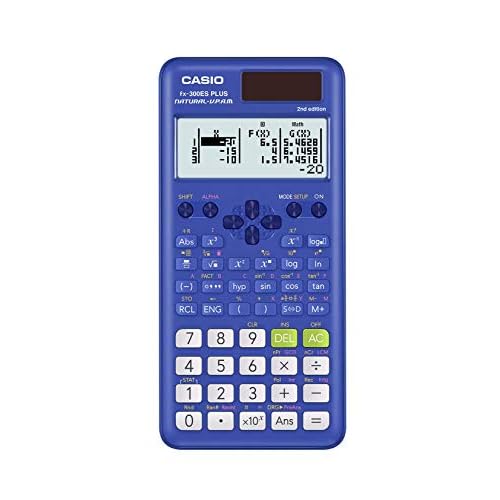


Mastering the muzzleloader bullet drop calculator is a journey that integrates foundational physics with meticulous data input, environmental awareness, and rigorous real-world validation. Muzzleloader bullet drop is primarily governed by gravity, aerodynamic drag, and initial muzzle velocity. Accurate bullet drop calculation relies on precise inputs (ballistic coefficient, velocity, sight height) and understanding environmental influences like temperature and altitude. Optimizing ballistics involves consistent powder charges, suitable bullet selection, and accounting for angle compensation. Finally, troubleshooting discrepancies requires chronograph verification, BC truing, and extensive live-fire testing to create a personalized, reliable dope chart.
Elevate your muzzleloader shooting proficiency. Apply these principles, rigorously test your loads, and master the art of trajectory compensation for unmatched precision in the field. This comprehensive guide provides the expert information you need to become a truly professional and quality muzzleloader marksman.
Muzzleloader Bullet Drop Calculator: Frequently Asked Questions
What is the most critical factor for accurate muzzleloader bullet drop calculation?
The most critical factor is an accurate, measured muzzle velocity specific to your firearm and load. Published velocities are often estimates. Using a chronograph to get your actual average muzzle velocity for your chosen powder charge and bullet combination is paramount. Without this precise data, even the most sophisticated ballistic calculator will provide unreliable predictions, leading to significant point-of-impact errors at extended ranges.
How does temperature affect muzzleloader bullet drop?
Temperature significantly affects muzzleloader bullet drop primarily by influencing powder burn rates and air density. Colder temperatures generally result in lower muzzle velocities, increasing bullet drop. Additionally, denser air in colder conditions or at lower altitudes increases aerodynamic drag, further contributing to drop. Many advanced calculators allow for temperature input to compensate for these environmental variables accurately.
Can I use a standard rifle bullet drop calculator for my muzzleloader?
While standard rifle bullet drop calculators use the same underlying ballistic formulas, you must ensure they can accept the specific ballistic coefficients (often G1 for muzzleloader projectiles), velocities, and projectile weights relevant to muzzleloaders. Some calculators are optimized for centerfire cartridges and might not have the precise data profiles or flexibility needed for muzzleloader-specific inputs, making specialized muzzleloader calculators or those with customizable inputs more reliable.
What is ‘truing’ a ballistic coefficient, and why is it important for muzzleloaders?
Truing a ballistic coefficient (BC) involves shooting your specific muzzleloader load at known distances and comparing actual bullet drop to the calculator’s predicted drop. If there’s a discrepancy, you adjust the BC value in the calculator until the predicted trajectory matches your real-world results. This process is crucial for muzzleloaders because published BCs can vary, and environmental factors or unique firearm characteristics might cause your bullet to perform differently than factory specifications, ensuring more precise long-range compensation.
At what range does bullet drop become significant for most muzzleloaders?
For most muzzleloaders using common hunting loads, bullet drop typically becomes significant and requires compensation beyond 75-100 yards, especially when aiming for precise ethical shots. Beyond 150 yards, drop can easily be measured in double-digit inches, making a bullet drop calculator indispensable. Factors like lower muzzle velocities and less aerodynamic projectiles compared to modern rifles contribute to this more pronounced drop at closer ranges.

Leave a Reply