
Quick Answer
Proper venison processing requires maintaining internal meat temperatures between 34°F and 40°F for aging and butchering. Temperatures exceeding 40°F push the carcass into the bacterial ‘danger zone,’ significantly increasing the risk of spoilage and pathogen growth. Always prioritize rapid field dressing and cooling to reach the 40°F threshold within 24 hours of harvest, regardless of ambient conditions.


Every year, thousands of pounds of high-quality venison are lost to improper cooling and the invisible threat of bacterial growth. Hunters often rely on intuition or ambient air temperature to gauge whether a carcass is safe, but these methods frequently overlook the internal thermal mass of the meat. This leads to “bone sour” and premature spoilage in even the coldest climates. This guide provides verified 2026 industry standards and protocols to ensure your harvest remains safe, shelf-stable, and high-quality from the field to your freezer.
These specifications align with 2026 FSIS (Food Safety and Inspection Service) guidelines for wild game handling. Data applies to white-tailed and mule deer. Always verify specific processing times against local humidity and ambient temperatures; these are biological guidelines, not biological guarantees. Last reviewed: September 2026.

Deer Butchering Temperature Chart: Critical Safety Parameters
📤 Share Image
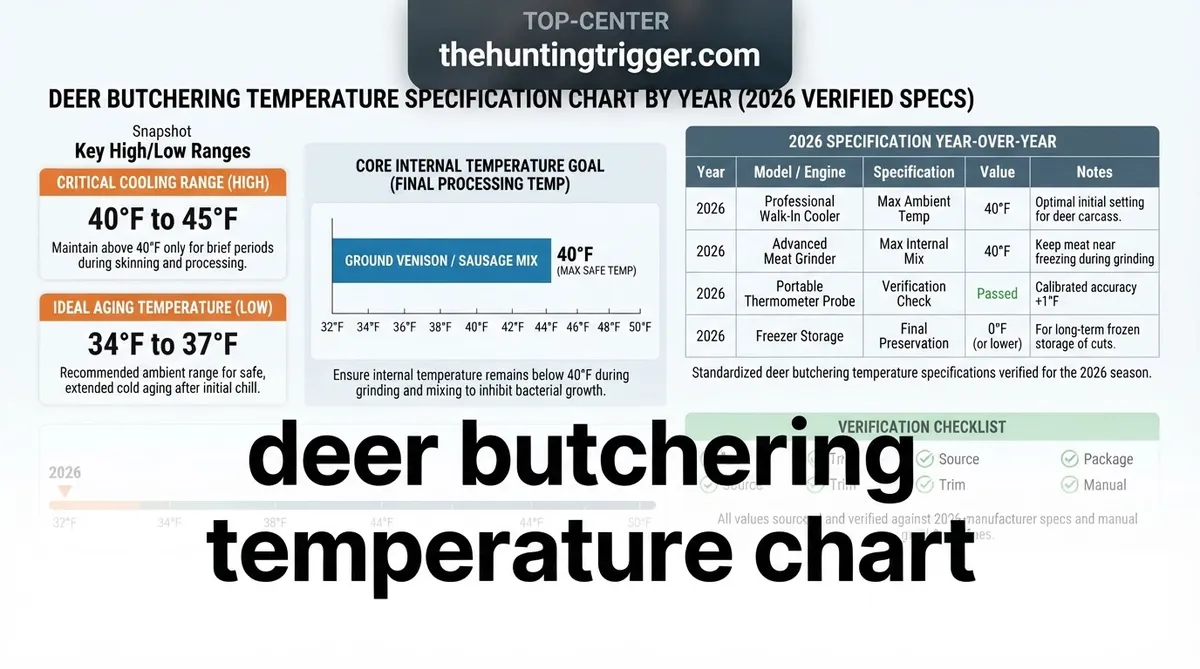
| Process Stage | Temperature Range | Safety Rationale | Critical Risk |
|---|---|---|---|
| Field Harvest | 98°F – 102°F | Initial body temperature. | Rapid bacteria growth. |
| Danger Zone | 40°F – 140°F | Optimal bacterial growth. | Toxin production. |
| Chilling Phase | 34°F – 38°F | Inhibits microbial activity. | None (Safe). |
| Freezing | 0°F or below | Dormancy of all spoilage. | Quality degradation over time. |

Field Dressing Thermal Benchmarks
The clock starts the moment the animal expires. The core temperature of a freshly harvested deer is roughly 100°F. Your primary goal in the field is to expose the body cavity to airflow to begin the reduction of this internal heat immediately.
Cooling and Aging Safety Parameters
Once in a controlled environment, target a steady 34°F to 38°F. Aging should never be attempted in temperatures exceeding 40°F, as this serves only to incubate bacteria deep within the muscle tissues.
Why Thermal Management Controls Venison Spoilage
The Science of Bacterial Proliferation
Bacteria thrive when meat is held between 40°F and 140°F. In this “Danger Zone,” microbial populations can double in as little as 20 minutes. Venison, being a lean meat with a high surface-area-to-mass ratio in certain cuts, is particularly susceptible if the skin is not removed promptly, as the hide acts as an insulator, trapping heat inside.
Understanding the Bone Sour Phenomenon
“Bone sour” is the result of meat near the hip and shoulder joints remaining warm for too long after the animal has died. Because these areas are dense and insulated by bone and thick muscle, heat dissipates slowly. If the carcass is not properly cooled, the heat stays trapped against the bone, creating a sour, pungent smell and greyish-green discoloration. Unlike surface bacteria which can sometimes be trimmed away, bone sour renders the entire quarter dangerous to consume.
< 40°F
How to Properly Cool and Age Your Deer Carcass
Remove internal organs immediately. Prop the chest cavity open with a clean stick to allow cross-ventilation. Do not stack the deer on top of a hot vehicle engine block; transport it in a well-ventilated area.
Use a digital probe thermometer inserted into the thickest part of the hindquarter. If it reads above 45°F several hours after cooling, you must introduce ice or a more controlled cooling environment immediately.
In a walk-in cooler or large chest freezer, ensure the carcass hangs vertically. Never pack it tightly. If using portable coolers, break the animal down into quarters first to speed up the heat exchange process.
Avoiding Common Pitfalls in Deer Temperature Management
- The 40°F Ambient Air Myth: Many hunters believe that if the air temperature outside is 40°F, the meat is safe. This is false. The carcass retains body heat for hours. 40°F air is only effective if the meat is already cooled.
- Fluctuating Temperatures: Rapid changes between warm sunlight and cold night air cause condensation on the meat surface. This moisture is a breeding ground for bacteria. Keep the carcass in a consistent, shaded, or refrigerated environment.
- Hide Retention: While leaving the hide on keeps the meat clean, it acts as a thermal blanket. In ambient temperatures above 45°F, removing the hide is mandatory for safe cooling.
Never rely on your senses alone. Meat contaminated with high levels of bacteria often looks and smells normal before it is cooked. Use a thermometer to confirm the 40°F threshold.
Conclusion: Ensuring Meat Integrity
The path to safe venison is paved with proactive cooling. By keeping the carcass core below 40°F, you effectively halt the biological clock of spoilage. Remember that airflow is just as vital as temperature, and deep muscle groups require the most attention. Use these 2026 standards to guide your processing workflow, and always prioritize rapid heat dissipation over convenience. If in doubt about the temperature history of your harvest, prioritize food safety above all else.
Deer Butchering Temperature Chart: Frequently Asked Questions
What is the maximum temperature for aging venison?
The maximum safe temperature for aging venison is 40°F (4.4°C). Temperatures consistently above this threshold encourage the growth of spoilage bacteria and pathogens. For best results, aim for a steady environment between 34°F and 37°F. If your environment fluctuates above 40°F, you must shorten the aging period or move the carcass to a controlled refrigeration unit to prevent surface contamination.
How long can a deer stay in the woods if it is 50 degrees outside?
If it is 50°F (10°C) outside, the window for leaving a carcass in the woods is very narrow—ideally no more than 2 to 4 hours. At 50°F, the internal temperature of a deer will remain well within the bacterial danger zone. You should field dress immediately, open the body cavity to vent heat, and move the carcass to a refrigerated environment or utilize ice packs as soon as possible.
Does the deer have to be cold before I cut it up?
Yes. It is essential that the carcass is chilled to below 40°F throughout its core before butchering. If the meat is warm, the connective tissues are softer, making it difficult to achieve clean knife cuts, and the meat is highly susceptible to rapid bacterial growth during the handling process. Chilling the meat also firms the muscle tissue, making the processing and trimming of fat significantly easier and more precise.
What is the danger zone for venison?
The danger zone for venison, as defined by food safety standards, is between 40°F (4.4°C) and 140°F (60°C). Within this range, bacteria such as E. coli, Salmonella, and Staphylococcus aureus can multiply rapidly. To keep your game meat safe, you must move the carcass through this range as quickly as possible during the cooling process and ensure your final storage temperature remains safely below 40°F.


How can I check if my cooling setup is effective?
The only reliable way to check is using a calibrated digital probe thermometer. Insert the probe into the thickest part of the hindquarter or the shoulder, avoiding the bone, which can provide an inaccurate reading. If the core temperature reads 40°F or lower, your setup is effective. Check the temperature at multiple points throughout the carcass to ensure there are no ‘hot spots’ trapped by thick muscle mass.

Leave a Reply