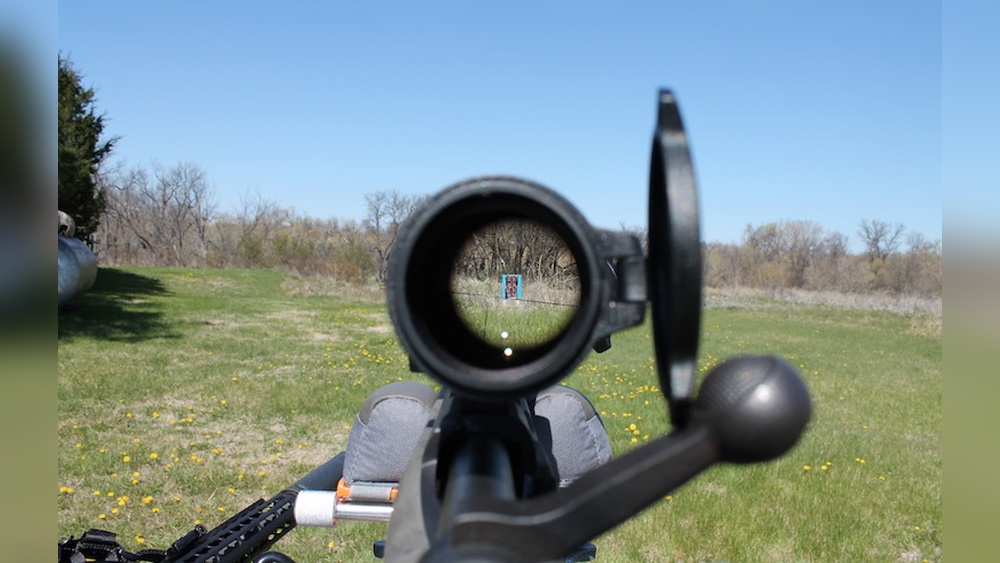
A rifle scope is a key tool for hunters, sport shooters, and anyone who needs precise aiming. But many people struggle with parallax—a concept that can affect your accuracy, especially at longer distances. If you’ve ever noticed your reticle shifting when you move your eye, you’ve seen parallax in action. This article gives clear information on what parallax is, why it matters, and how to handle it in your scope.
Table of Contents
What Is Parallax In A Scope?
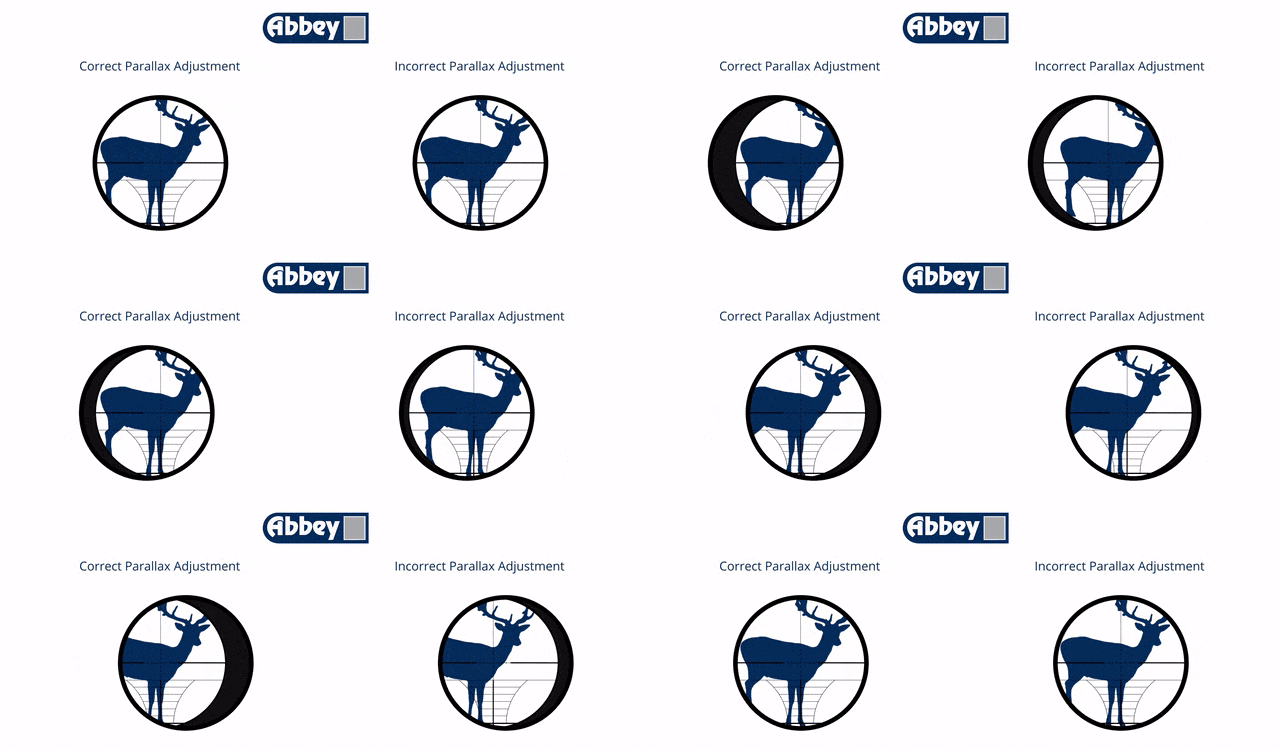
Parallax is the apparent movement of the reticle (crosshair) against the target when you move your eye behind a scope. This happens when the reticle and the target are not on the same optical plane inside the scope. When parallax error is present, even a small change in your eye position can cause the reticle to seem off-target, even though your rifle hasn’t moved.
For example, if you’re aiming at a target 100 yards away, but your scope is set for 50 yards, the reticle and the target are focused at different distances. Moving your head side-to-side makes the reticle shift in relation to the target, which can cause you to miss your shot.
Parallax is not the same as focus. You can have a clear target and reticle, but still have parallax error if they’re not optically aligned.
Why Does Parallax Matter?
Parallax error can make your shots less accurate. At close range, the effect is often small. But as the distance increases, the error grows. For precision shooting, even a tiny mistake can mean missing your target.
Consider these points:
- At 25 yards, parallax error may only shift your aim by a fraction of an inch.
- At 200 yards, that same error can shift your point of impact by several inches.
In competitive shooting or hunting, this difference is critical. Missing by a few inches can mean a lost game or a missed target. Parallax is especially important for scopes used at ranges over 100 yards or in situations where exact accuracy is needed.
How Does Parallax Work?
Inside a scope, there are two main elements:
- The objective lens (front lens)
- The reticle (crosshair)
Both must be focused at the same distance for parallax to be eliminated. If the reticle is focused at one distance and the target at another, moving your eye changes the apparent position of the reticle relative to the target.
Scopes often come with a parallax adjustment feature. This can be a knob on the side or an adjustable ring on the objective lens. It lets you set the optical alignment so the reticle and target are focused together at a certain range.
Types Of Scopes And Parallax
Not all scopes have the same parallax features. Here’s a comparison:
| Scope Type | Parallax Adjustment | Typical Use |
|---|---|---|
| Fixed Power Scope | No (or set for one distance) | Short to mid-range hunting |
| Variable Power Scope | Sometimes (side or objective knob) | Mid to long-range shooting |
| Target Scope | Always (precise adjustment) | Competition, benchrest |
Fixed power scopes usually have parallax set at a certain distance, like 100 yards. This means parallax error is minimized only at that range. Variable and target scopes often let you adjust parallax for different distances, which is useful for shooters who need accuracy at many ranges.
How To Adjust Parallax?
Adjusting parallax is simple but needs attention. Here’s a practical method:
- Set up your rifle on a stable rest.
- Look through the scope at your target.
- Move your head slightly side-to-side. If the reticle moves against the target, parallax is present.
- Use the parallax adjustment knob or ring. Turn it until the reticle stays fixed on the target, even when you move your eye.
- Check again at different distances. Repeat as needed.
Most scopes with parallax adjustment are marked with yardage numbers, like 50, 100, 200 yards. These numbers are a guide but not always exact. Always check visually for best results.
Parallax Settings At Different Ranges
Different shooting situations need different parallax settings. Here’s a comparison:
| Range | Typical Parallax Setting | Parallax Error (if wrong setting) |
|---|---|---|
| 25 yards | Set at 25 yards | Small (less than 0.5 inch) |
| 100 yards | Set at 100 yards | Moderate (1-2 inches) |
| 300 yards | Set at 300 yards | Large (3+ inches) |
The numbers show how critical parallax adjustment is at longer ranges. At 25 yards, the error may not matter for casual shooting. At 300 yards, it can cause a major miss.
Common Mistakes With Parallax
Many shooters make errors with parallax. Here are some you should avoid:
- Ignoring parallax at long range: Some believe it’s only an issue for close targets, but it’s more important at distance.
- Trusting the scope’s yardage marks: These marks are often approximate. Always check visually.
- Confusing parallax with focus: You can have a sharp image but still have parallax error.
- Not checking parallax after changing magnification: Higher magnification can make parallax error more obvious.
- Failing to adjust parallax for different shooters: Eye position varies. If several people use the same rifle, each should check parallax.
Practical Examples
Let’s look at two real-world situations:
- Benchrest Shooting: In benchrest competitions, shooters aim for tiny targets at 100 or 200 yards. Even a 1-inch error can be the difference between winning and losing. Parallax adjustment is critical for every shot.
- Hunting: A hunter shooting a deer at 150 yards may miss the vital area if parallax is not set correctly. This can lead to poor shot placement and animal suffering.
Many shooters new to scopes think that clear vision is enough. But parallax error can still ruin accuracy, even with a perfect image.
Parallax Vs. Other Scope Adjustments
Parallax is often confused with other scope adjustments. Here’s a comparison:
| Adjustment | Purpose | Effect on Accuracy |
|---|---|---|
| Parallax | Align reticle & target focus | Prevents reticle shift |
| Focus | Sharp image | Better sight picture |
| Windage/Elevation | Move reticle left/right/up/down | Zero point of impact |
Parallax is about optical alignment. Focus is about clarity. Windage and elevation move the reticle to match where the bullet hits. Each is important, but parallax is often overlooked.
How To Choose A Scope With Parallax Adjustment?
If you’re planning to buy a scope, think about these factors:
- Intended range: If you mostly shoot at short distances, a fixed parallax scope is fine. For mid or long-range, adjustable parallax is better.
- Type of shooting: Precision sports, varmint hunting, or tactical use all benefit from adjustable parallax.
- Budget: Adjustable parallax scopes are often more expensive. But the investment pays off in accuracy.
- Ease of use: Side parallax knobs are easier to adjust than front rings, especially in the field.
- Magnification: High-magnification scopes usually need parallax adjustment more.
Look for scopes with reliable adjustment and clear markings.
Non-obvious Insights About Parallax
Here are a couple of tips many beginners miss:
- Eye relief affects parallax: The distance between your eye and the scope, called eye relief, can change how much parallax error you see. If your eye is too close or too far, the error can increase. Always keep your eye at the recommended distance.
- Shooting position changes parallax: If you shoot from a standing position, your eye may move more than when shooting from a bench. This makes parallax error more likely. Adjust parallax for your usual shooting stance.
Many shooters focus only on equipment, but your habits and setup affect parallax too.
Frequently Asked Questions
What Causes Parallax In A Rifle Scope?
Parallax is caused when the reticle and the target are focused at different distances inside the scope. This happens if the scope’s parallax adjustment is not set for the target range, so moving your eye makes the reticle seem to shift.
How Do I Check For Parallax In My Scope?
To check, aim at a target and move your head slightly side-to-side. If the reticle moves against the target, parallax error is present. Adjust the parallax knob or ring until the reticle stays fixed, even as your eye moves.
Is Parallax Adjustment Needed For All Scopes?
No. Scopes used at short ranges or with low magnification often don’t need parallax adjustment. But for long-range, high-magnification, or precision shooting, adjustable parallax is important for accuracy.
Can Parallax Affect Hunting Accuracy?
Yes. If you’re hunting at longer distances, parallax error can shift your aim enough to miss the vital zone. This can lead to a poor shot or missing your target completely.
What’s The Difference Between Parallax And Focus?
Focus is about getting a sharp image. Parallax is about aligning the reticle and target so there’s no shift when you move your eye. You can have a clear image but still have parallax error if the scope is not adjusted correctly.

Final Thoughts
Parallax is a simple concept but has a big impact on shooting accuracy. Many shooters ignore it, thinking their scopes are fine as long as the image is clear. But parallax error can cause missed shots, lost competitions, and poor hunting outcomes.
Adjusting parallax is easy and only takes a minute, but it makes your shooting much more reliable. If you use a scope for any kind of precision work, check and set your parallax every time you shoot. It’s a small detail that separates good shooters from great ones.

Leave a Reply