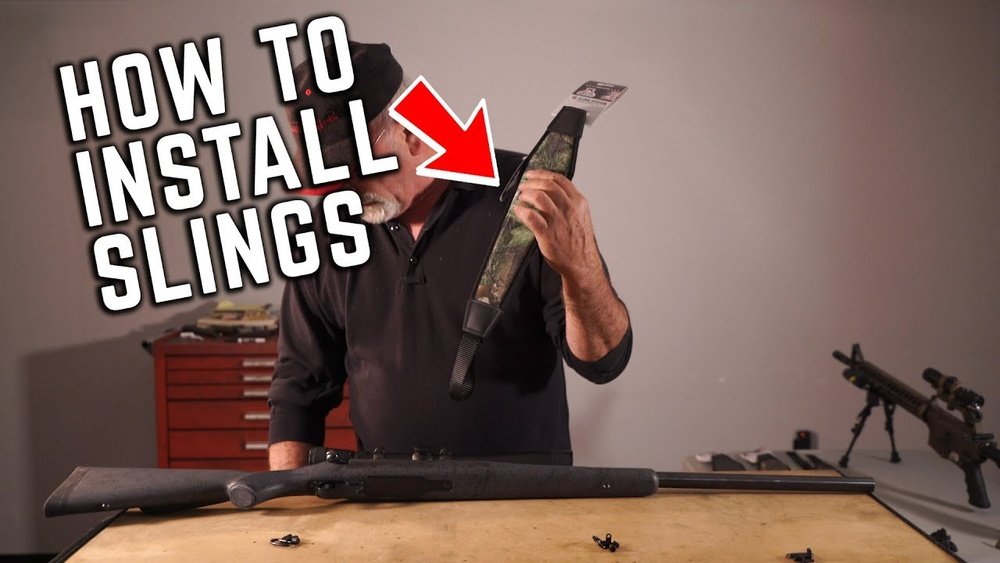
When you buy a new rifle or want to upgrade your shooting experience, a rifle sling is one of the most valuable accessories you can add. Slings help you carry your firearm more easily, improve shooting stability, and keep your hands free for other tasks. But mounting a sling to a rifle with swivels can be confusing if you’ve never done it before. Many beginners make mistakes that lead to twisted straps, uncomfortable carrying, or even damage to the sling or rifle.
This guide will show you, step by step, how to put a sling on a rifle with swivels. It will explain each part of the process, highlight common errors, and share practical tips you won’t find in most basic instructions.
Whether you’re a hunter, target shooter, or just want to carry your rifle more comfortably, you’ll learn how to do it right.
Understanding Rifle Slings And Swivels
Before you start, it’s important to know what rifle slings and swivels are, and why they matter. A sling is a strap that attaches to your rifle, allowing you to carry it over your shoulder or use it for extra stability when aiming. Slings come in many materials, lengths, and styles.
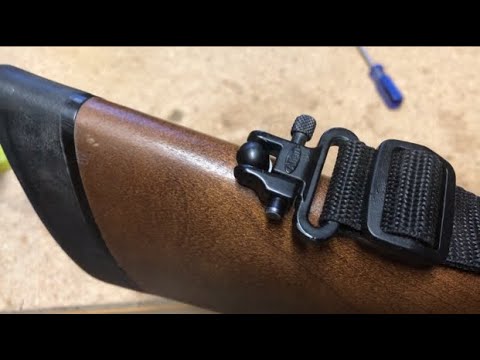
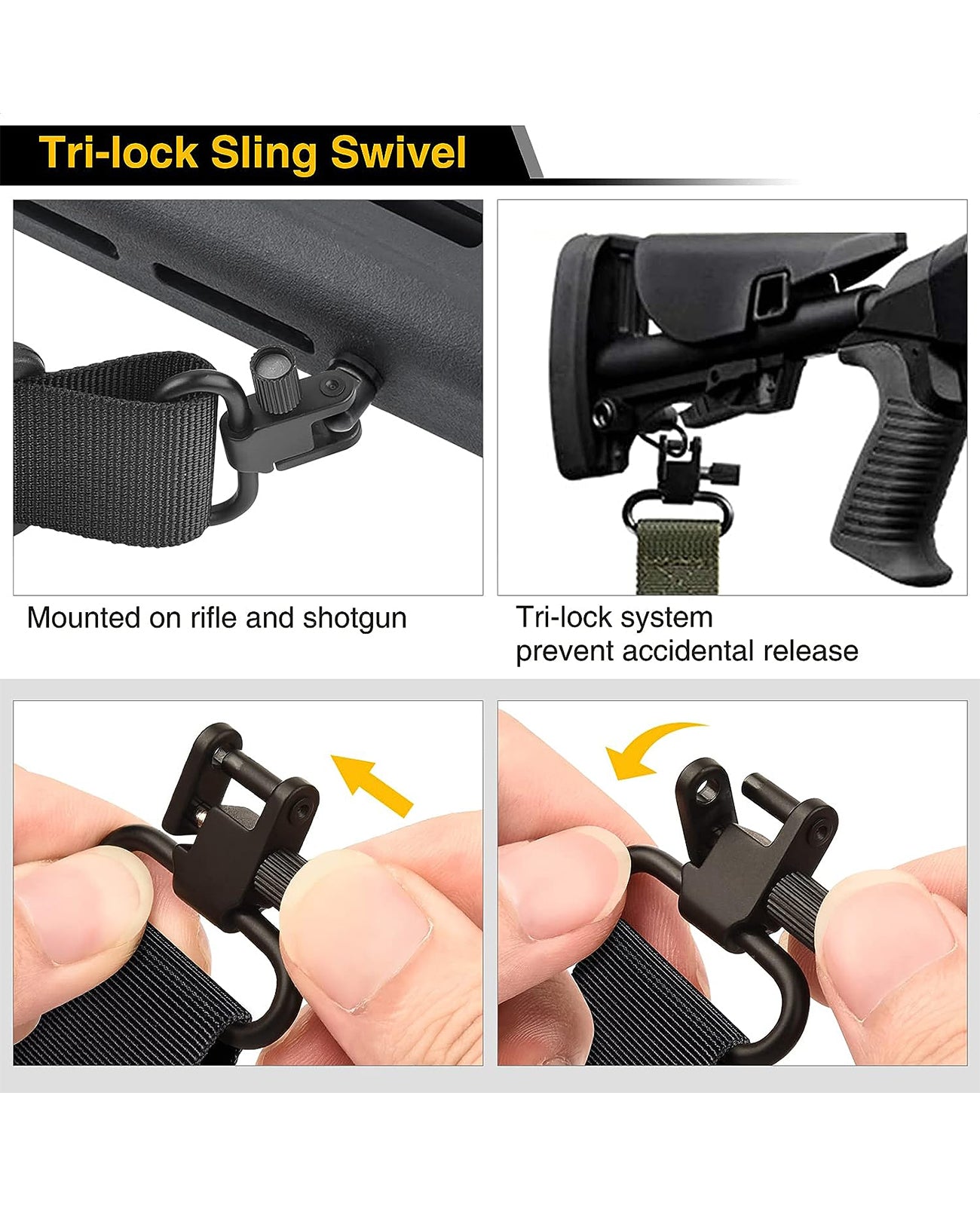
Swivels are small metal or polymer loops attached to the rifle, usually at the front (near the barrel) and rear (near the stock). They rotate, which keeps the sling from twisting when you move. Most modern rifles have swivels pre-installed, but some older or custom rifles may need them added.
There are two main types of swivels:
- Quick-detach (QD) swivels: These can be removed and reattached quickly, often with a push-button or lever.
- Fixed swivels: These are permanently installed and do not come off easily.
Choosing the right sling for your rifle depends on how you plan to use it. For hunting, a wide, padded sling is comfortable for long walks. For target shooting or tactical use, a slimmer, adjustable sling allows for quick changes and better control.
Tools And Materials Needed
To put a sling on a rifle with swivels, you’ll need:
- A rifle with front and rear swivels installed
- A sling (make sure the width matches the swivel size, usually 1 inch or 1.25 inches)
- A flat workspace (like a table)
- A clean cloth (optional, to protect your rifle’s finish)
If your rifle does not have swivels, you must install them first. This process usually requires drilling small holes in the stock and attaching the swivel bases. For safety and best results, have a gunsmith do this.
Step-by-step Instructions To Attach A Sling
Attaching a sling is not difficult, but there are some small details that make a big difference. Follow these steps for a secure and comfortable fit.
1. Unload And Inspect Your Rifle
Always unload your rifle before working on it. Remove all ammunition and check the chamber. Place the rifle on a flat surface.
2. Identify Front And Rear Swivels
The front swivel is usually closer to the barrel’s end, while the rear swivel is near the stock or butt of the rifle. They may look similar, but the placement matters for comfort and proper function.
3. Prepare The Sling
Take your sling out and fully extend it. Some slings have a fixed length, while others are adjustable. Lay the sling flat, making sure it is not twisted.
4. Attaching The Sling To The Swivels
Most slings use a loop and buckle system, but some have quick-detach hardware. Here’s how to attach a basic strap sling:
- Insert the loose end of the sling through the rear swivel (closest to your shoulder when carrying).
- Pull enough length through so you have about 6–8 inches to work with.
- Feed the strap back through the sling’s adjustment buckle, locking it in place.
- Repeat the process with the front swivel.
- Adjust the sling’s length so it fits your body and shooting style.
If your sling has special hardware (like QD swivels), attach the sling’s clips or buttons to the swivels until you hear a click. Always test the connection by gently pulling on the sling.
5. Adjust The Sling For Comfort
With the sling attached, put the rifle over your shoulder. Adjust the length so the rifle hangs at a comfortable height. For most people, the rifle should sit just below the hip when standing. If you’re using the sling for shooting support, experiment with the length until you find what works best.
6. Test The Sling’s Security
Before using the rifle in the field, gently tug on the sling and swivels to make sure everything is locked and secure. Walk around, bend over, and move your arms to check for twists or discomfort.
7. Final Safety Check
After attaching the sling, do a final check to ensure the rifle is still unloaded and that all sling hardware is tight. Loose swivels or buckles can fail at the worst moment.
Common Mistakes To Avoid
Many new rifle owners make small but important mistakes when putting on a sling:
- Twisting the sling: Make sure the sling lies flat against your body, with no twists. A twisted sling is uncomfortable and can cause wear.
- Wrong direction: Attach the sling so the adjustment buckle is easy to reach and does not dig into your shoulder.
- Mismatch of sizes: The sling width must match the swivel size. Forcing a wide sling into a narrow swivel can damage both parts.
- Loose attachments: Always double-check that the sling is locked into the swivels. A loose sling can come off, dropping your rifle.
- Using the wrong sling for your rifle: Heavy rifles need wider, padded slings for comfort. Tactical rifles may need quick-adjustment slings.
How To Choose The Right Sling For Your Rifle
Selecting the best sling is not just about style. Here are key factors to consider:
- Material: Nylon and leather are common. Nylon is lightweight and weather-resistant; leather is more traditional and comfortable but needs care.
- Width: Wider slings spread the weight and are better for heavy rifles.
- Adjustability: Some slings adjust quickly, allowing you to change length for different situations.
- Padding: Padded slings are better for long hikes or heavy firearms.
- Type: There are single-point, two-point, and three-point slings. For rifles with swivels, two-point slings are most common.
Example Comparison Of Sling Types
Here’s a quick look at how different sling types compare for rifles with swivels:
| Sling Type | Best Use | Pros | Cons |
|---|---|---|---|
| Two-point | Hunting, target shooting | Stable, easy to carry | Slower to adjust |
| Single-point | Tactical, competition | Quick movement | Less stable for carrying |
| Three-point | Tactical | Multiple carry positions | Complex to set up |
Practical Tips For A Better Sling Setup
There are a few small tricks that can make your sling more effective and comfortable.
- Break in new leather slings: Leather slings can be stiff at first. Rub them with a little saddle soap or leather oil, and flex them by hand before use.
- Use a keeper or rubber band: If your sling has a long loose end, a rubber band or keeper loop can keep it from flapping around.
- Practice transitions: Try moving the rifle from your shoulder to a shooting position several times to make sure the sling doesn’t catch or tangle.
- Clean your swivels: Dirt and moisture can cause swivels to stick or rust. A drop of light oil keeps them moving smoothly.
Advanced: Using Quick-detach (qd) Swivels
If your rifle uses QD swivels, the process is a bit different, but offers more flexibility. QD swivels use a push-button system to attach or remove the sling in seconds.
- Insert the QD stud into the swivel base on the rifle.
- Press the button to lock it into place.
- Pull gently to make sure it’s secure.
- Attach the other end of the sling to the remaining swivel.
This setup is great if you want to quickly switch slings between different rifles, or remove the sling for storage.
Sling Setup For Special Use Cases
Not all shooters use their slings the same way. Here are a few special scenarios:
Hunting
Hunters often walk long distances. A padded, adjustable sling reduces shoulder fatigue. Make sure the sling is tight enough so the rifle doesn’t bounce but loose enough for quick access.
Target Or Bench Shooting
Some shooters use the sling as extra support. In this case, adjust the sling length so you can wrap your arm through it when aiming. This adds stability for more accurate shots.
Tactical Or Competition Shooting
Quick transitions are important. A sling with quick-adjustment features is best. Practice adjusting the length on the move so you’re always ready.
Real-world Example: Setting Up A Hunting Rifle Sling
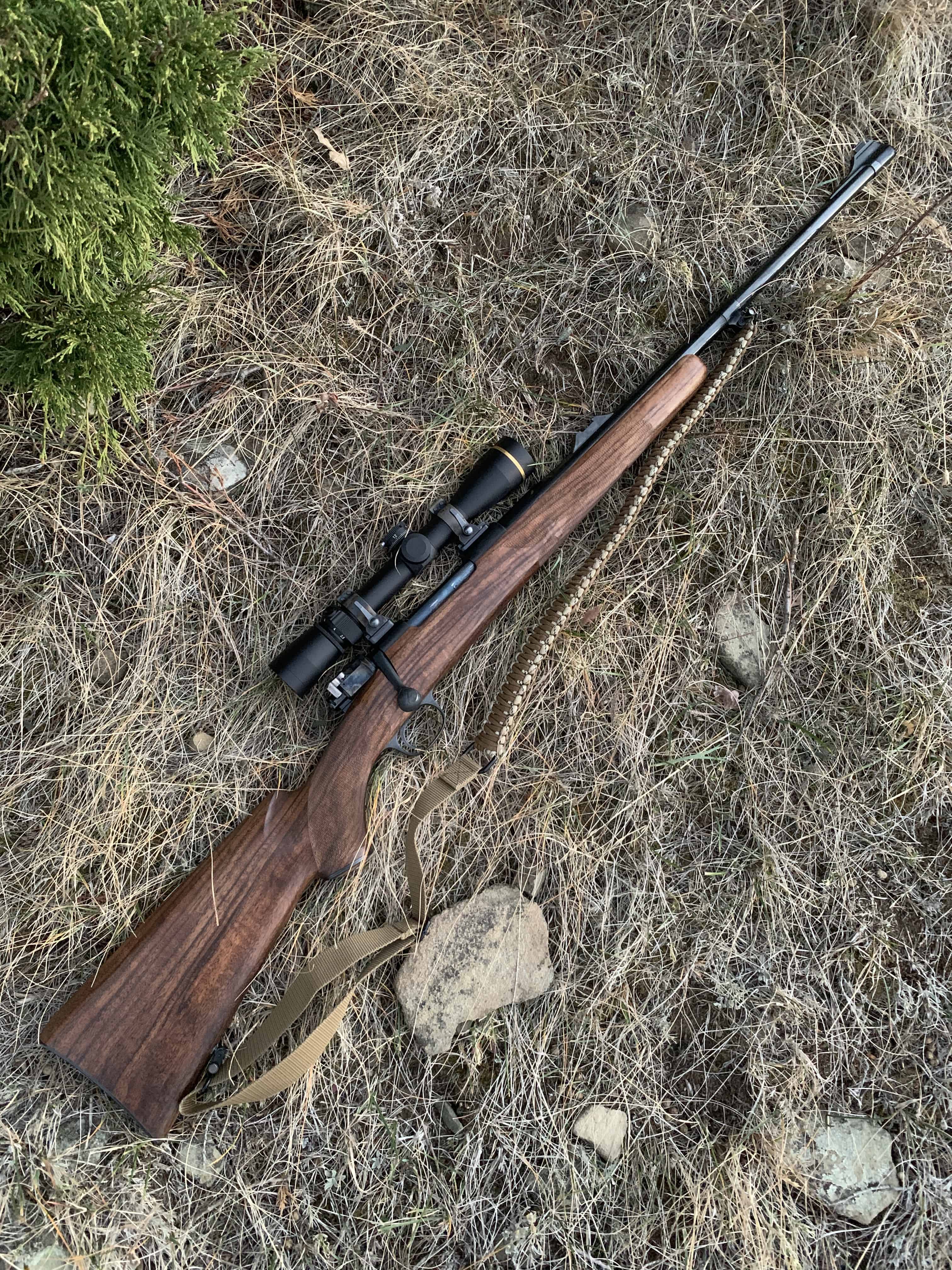
Let’s look at how a typical hunter sets up a sling on a bolt-action rifle:
- The hunter uses a 1.25-inch padded nylon sling.
- He attaches the rear end to the stock swivel using the loop and buckle method.
- The front end is attached to the barrel swivel.
- He adjusts the sling so the rifle sits just below his hip when carried.
- A rubber band holds the loose end in place.
- He practices raising the rifle to his shoulder smoothly, making small adjustments until it feels perfect.
This setup ensures the rifle is comfortable during long walks and ready for quick shots.
Data: Why Sling Fit And Setup Matter
Sling fit isn’t just about comfort. According to a 2017 study on shooter accuracy, using a properly set up two-point sling improved offhand shooting scores by an average of 15% compared to shooting without a sling. Poorly fitted slings, however, reduced comfort and slowed response times in field tests.
Another survey of hunters found that 70% preferred padded slings for long-distance hikes, while 80% of competitive shooters valued quick-adjustment features above all else.
Maintenance: Keeping Your Sling And Swivels In Top Shape
A sling is only useful if it’s in good condition. Check your sling and swivels regularly for:
- Fraying or cuts in the material
- Rust or dirt on metal parts
- Loose screws or attachment points
Replace or repair damaged parts immediately. Clean leather slings with leather conditioner, and wipe down nylon slings with a damp cloth. Lubricate swivels with a drop of gun oil as needed.
If you want to see examples of different sling and swivel types, the Wikipedia page on firearm slings has more details.
Frequently Asked Questions
What Is The Main Purpose Of A Rifle Sling?
The main purpose is to make carrying the rifle easier and more comfortable. Slings also help stabilize the rifle when aiming, especially in standing or kneeling positions.
How Do I Know If My Sling Fits My Rifle’s Swivels?
Check the width of your sling and compare it to the swivel openings. Most swivels are either 1 inch or 1. 25 inches wide. The sling should slide in easily but not be loose.
Can I Use My Rifle Sling As A Shooting Aid?
Yes, many shooters use the sling to add stability. By wrapping your arm through the sling and tightening it, you can reduce movement and improve accuracy.
Is It Safe To Install Swivels Myself?
If you have experience with tools and understand your rifle’s construction, you can install swivels yourself. However, for best results and safety, especially with valuable rifles, ask a gunsmith to do it.
How Often Should I Check My Sling And Swivels?
Check your sling and swivels every time before you head out for shooting or hunting. Look for signs of wear, rust, or loose parts, and fix any problems before use.
A well-attached sling will make your rifle easier to carry, safer to use, and more enjoyable in any situation. Whether you’re walking through the woods or standing on the range, following these steps ensures your sling and swivels work together perfectly.

Leave a Reply