Many new gun owners quickly realize that shooting a handgun accurately is harder than it looks. Your sights may line up perfectly, but if your hands are shaking or your grip is off, your shots will miss the target. Learning how to hold a handgun steady is one of the most important skills for safe and accurate shooting.
This guide will walk you through the right techniques, tips, and common mistakes, so you can build confidence at the range and improve your aim.
Why A Steady Hand Matters
When you pull the trigger, even a small movement can make your bullet miss by several inches, especially at longer distances. The challenge is that handguns are light and have a short barrel, so they show every shake or tremor. A steady hold helps you:
- Hit your target more often
- Build better shooting habits
- Stay safe by controlling the gun
Many shooters focus on aim and trigger pull, but ignore the importance of a stable grip and proper stance. Let’s look at how you can hold your handgun steady every time.
Choosing The Right Grip
Your grip is the foundation of handgun control. A proper grip does more than just hold the gun; it manages recoil, prevents slips, and keeps your sights on target.
- High Grip: Place the web of your shooting hand as high as possible on the back of the grip, just under the slide. This reduces muzzle rise after each shot.
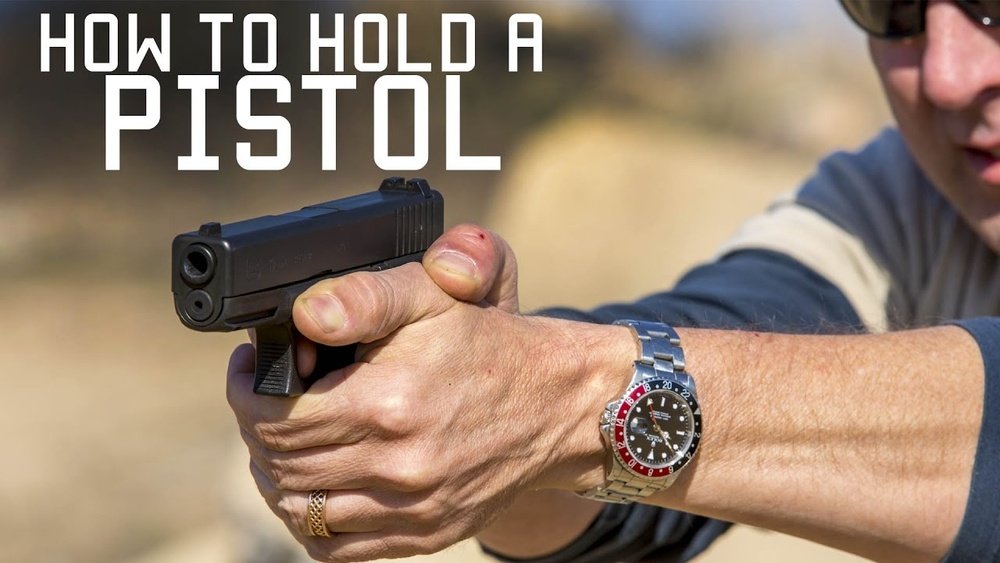
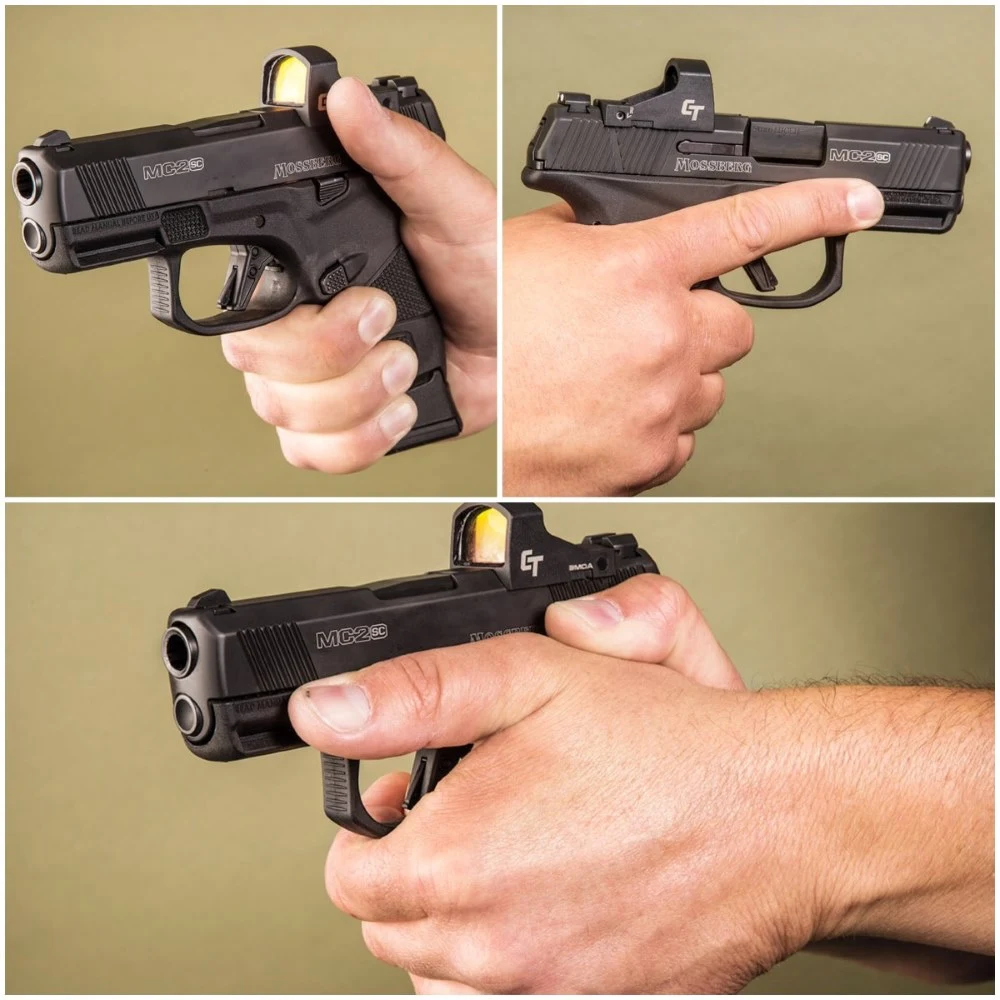
- Support Hand Placement: Wrap your other hand around the shooting hand, with your fingers under the trigger guard and your thumbs forward. This gives you more control and steadiness.
- Firm, Not Tense: Squeeze the grip firmly, like a firm handshake, but don’t crush it. Too much tension causes muscle tremors.
- Consistent Pressure: Both hands should apply even pressure. If your support hand is weak, the gun will twist during recoil.
- Thumb Position: Keep both thumbs pointing forward and lying flat. Avoid crossing your thumbs, as this can cause injury from the slide.
A simple test: if you can hold the gun with your arms extended for 30 seconds without your hands shaking, your grip strength and technique are good.
Body Position And Stance
Your body supports your hands. The right stance makes it easier to hold the gun steady.
Isosceles Stance
Stand with your feet shoulder-width apart. Face the target directly. Extend both arms straight out, forming a triangle with your arms and chest. This stance is popular for its simplicity and balance.
Weaver Stance
Place your strong-side foot back slightly. Bend your knees a little. Your support arm is bent, and your strong arm is straight. This stance helps absorb recoil and keeps you grounded.
Athletic Stance Tips
- Lean slightly forward at the waist.
- Keep your weight on the balls of your feet, not your heels.
- Relax your shoulders and bend your elbows a bit.
A poor stance will make your arms tired and shaky. Practice dry firing (shooting without bullets) at home to find your most stable position.
Hand And Arm Position
Small adjustments in your hands and arms can make a big difference.
- Lock your wrists so the gun doesn’t wobble when you pull the trigger.
- Keep your elbows slightly bent, not locked straight. This lets your arms absorb recoil.
- Bring the gun close to your line of sight, but not so close that your arms get tired.
Many shooters forget to relax their shoulders. Tension here quickly travels to your hands, causing shakes.
Breathing And Trigger Control
Breathing and trigger pull affect your steadiness more than you think.
Breathing Tips:
- Take a deep breath and exhale slowly.
- Pause your breath for a moment (“respiratory pause”) as you squeeze the trigger.
- Avoid holding your breath too long, or you’ll get tense and shaky.
Trigger Control:
- Use the pad of your index finger, not the joint.
- Apply slow, steady pressure straight back.
- Avoid “slapping” the trigger, which jerks the gun.
Many beginners make the mistake of anticipating recoil, causing them to flinch. Focus on a smooth trigger pull and let the gun surprise you when it fires.
Strength, Endurance, And Grip Training
A steady hold depends on your muscles. Weak hands and arms will tire quickly.
Simple Handgun Stability Exercises
- Grip Trainers: Squeeze a tennis ball or a grip strengthener for a few minutes daily.
- Wrist Curls: Use a light dumbbell to strengthen your wrists.
- Plank Holds: Build core and shoulder strength for better support.
Practice Holding
Set a timer for 1 minute. Hold your unloaded gun (or a training replica) in your shooting stance, arms extended. Rest, then repeat. Increase the time as your strength grows.
Non-obvious insight: Many shooters forget about core strength. A strong core keeps your upper body steady, especially during long sessions.
Managing Recoil For Steadiness
Recoil can ruin your steady hold, especially with powerful handguns. Learning to manage it keeps your sights on target.
- Use your support hand to absorb most of the recoil.
- Lean into the shot; don’t stand straight up.
- Practice double-taps (two shots quickly) to see if you can keep the gun steady between shots.
Non-obvious tip: Try dry firing with a coin balanced on your front sight. If the coin stays when you pull the trigger, your hold is steady.
The Role Of Sight Alignment And Focus
A steady hold is useless if you can’t keep your sights aligned.
- Focus on the front sight, not the target or rear sight.
- Accept some sight movement. No one is perfectly still—learn to shoot during the “stillest” part of your sight movement.
Sighting devices like red dots can help, but the fundamentals remain the same.
Environmental Factors
Wind, cold, and fatigue affect your ability to hold steady.
- Wear gloves in cold weather to prevent shivering.
- Stay hydrated. Even slight dehydration makes your hands shake.
- Take breaks. Shooting while tired leads to poor habits.
If you notice your shots drifting, check your grip and rest if needed.
Comparing Common Mistakes
Many shooters think only about aiming, but mistakes in grip and stance are more common. Here’s a quick comparison:
| Mistake | Effect on Steadiness | How to Fix |
|---|---|---|
| Weak Grip | Gun twists, shots miss target | Strengthen grip, use both hands |
| Locked Elbows | Fatigue, shaky hands | Slight bend in elbows |
| Poor Stance | Unbalanced, hard to recover from recoil | Feet shoulder-width, lean forward |
| Slapping Trigger | Gun jerks, low accuracy | Slow, steady trigger pull |
Equipment And Accessories
Some tools can help you hold your handgun steadier, especially for beginners.
- Grip tape: Adds texture, reduces slipping.
- Weighted training guns: Build strength without live fire.
- Laser trainers: Show if your aim moves during trigger pull.
But tools are not a substitute for good technique. Use them to support—not replace—your practice.
Dry Fire And Live Fire Practice
Dry firing means practicing with an unloaded gun. It’s safe and builds muscle memory. Try these drills:
- Wall Drill: Stand close to a wall, aim, and pull the trigger without touching the wall.
- Coin Drill: Balance a coin on the barrel and pull the trigger smoothly.
- Mirror Drill: Use a mirror to check your stance and grip.
At the range, focus on slow, controlled shots. Don’t rush. Track your shot groups to see progress.
Comparing Stances For Steadiness
Different stances work for different people. Here’s how the most popular ones compare:
| Stance | Stability | Best For |
|---|---|---|
| Isosceles | High | Beginners, target shooting |
| Weaver | Medium-High | Defensive shooting |
| Chapman | Medium | Competitive shooters |
Try each stance and see which feels most stable to you.
Progress Tracking And Setting Goals
Improvement comes from practice and self-assessment.
- Keep a shooting log. Note your grip, stance, and results.
- Set small, clear goals. For example, “Hold the gun steady for 45 seconds without shaking.”
- Review your targets. Are your shots grouping closer together over time?
Use phone videos to see your technique. Sometimes what you feel is not what you actually do.

Real-world Example: Steady Hold Under Stress
Imagine shooting in a competition or a real emergency. Stress can make your hands shake. The best shooters train to control their nerves:
- Practice holding your gun after running or doing push-ups.
- Simulate distractions—have a friend shout or make noise as you aim.
- Visualize yourself staying calm and steady.
With practice, your muscle memory will help you stay steady even under pressure.
Safety Tips
A steady hold also means safer shooting.
- Always keep your finger off the trigger until ready to shoot.
- Never point the gun at anything you don’t want to shoot.
- Check your surroundings before firing.
Safe habits are as important as accuracy.
Comparing Handgun Types For Steadiness
Some handguns are harder to hold steady due to size, weight, or recoil.
| Handgun Type | Steadiness (Beginner) | Notes |
|---|---|---|
| Full-size pistol | High | Heavier, less recoil |
| Compact pistol | Medium | Lighter, more recoil |
| Revolver | Medium-Low | Heavier trigger, more muzzle flip |
| Subcompact pistol | Low | Very light, hard to control |
If you struggle to hold a subcompact handgun steady, try a heavier, full-size model for better control.
Final Thoughts
Learning how to hold a handgun steady is not just about strong hands. It’s a mix of good grip, proper stance, careful breathing, and regular practice. Don’t rush the process—accuracy comes with time and effort. Remember, every shooter has shaky hands at first.
With the right techniques and steady training, you’ll see real improvement.
For deeper study, visit this Wikipedia Handgun Guide.

Frequently Asked Questions
How Can I Stop My Hands From Shaking When Shooting?
Try strengthening your grip and core muscles. Make sure you’re not holding your breath too long. Stay relaxed and take short breaks to avoid fatigue.
Is Dry Firing Safe For My Handgun?
For most modern handguns, dry firing is safe. But always check your gun’s manual first, as some rimfire guns can be damaged by dry firing.
What Stance Is Best For Beginners?
The Isosceles stance is easiest for most new shooters. Stand with feet shoulder-width, arms straight, and face the target directly.
How Do I Improve My Trigger Control?
Practice slow, steady trigger pulls with dry fire drills. Focus on using the pad of your finger and pulling straight back, not sideways.
Does Using A Laser Sight Help Me Hold Steady?
Laser sights show if your aim wobbles during trigger pull. They are useful for training, but you should not rely on them alone. Learn the basics first, then add tools as needed.

Leave a Reply