
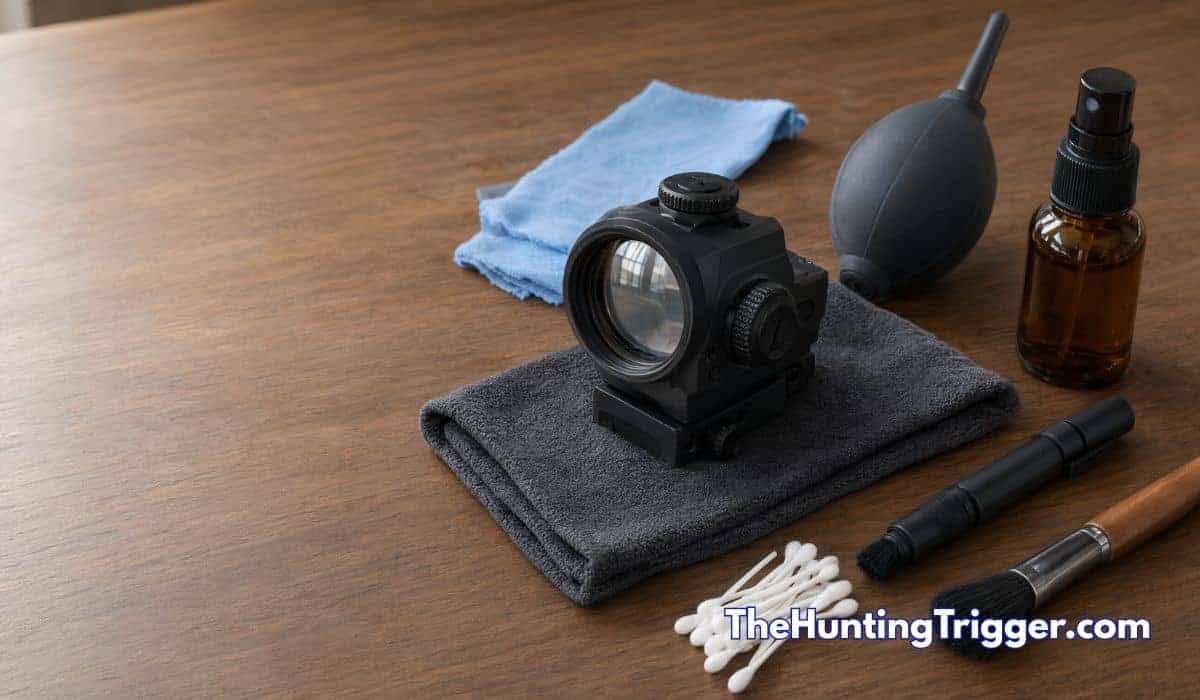
Cleaning a red dot sight is simple but important. If you use your sight for hunting, target shooting, or tactical training, dust and smudges can affect your accuracy. Keeping the lens and housing clean helps you see clearly and protects your investment. Many people skip cleaning or use the wrong methods, which can damage the sight. Here’s how to do it safely, with tips that help both beginners and experienced shooters.
Table of Contents
Why Clean Your Red Dot Sight?
A dirty red dot sight can blur your vision and even lead to missed shots. Tiny dust particles, fingerprints, or water spots on the lens reduce clarity. Over time, dirt can get inside the housing and harm electronics. Regular care keeps the sight working well and ensures the red dot stays crisp. Statistics show that optics with proper care last up to 50% longer than neglected ones.
If you ignore cleaning, you might notice the dot looks fuzzy or distorted. In extreme cases, build-up can make the sight unusable, especially in low light. Even a thin layer of oil from your skin can scatter light and make aiming harder.
Some shooters report their zero shifting slightly because dirt changes the way the dot appears. For those who rely on the sight for self-defense, a dirty lens can mean the difference between quick target acquisition and hesitation.
What You Need
Before you start, gather a few basic tools. Using the right items prevents scratches and keeps the lens safe.
- Lens cleaning solution (made for optics)
- Microfiber cloth (soft, lint-free)
- Lens brush or air blower
- Cotton swabs
- Compressed air (optional, for stubborn dust)
Avoid paper towels or rough fabrics, as these can scratch the glass. Even a small scratch can scatter the red dot and reduce accuracy. Some people try using household cleaners or tissues, but these often leave fibers behind or react poorly with lens coatings.
You might find small cleaning kits designed for cameras or binoculars. These are usually safe, but always check if they say “optics-approved. ” Cheap kits sometimes include rough cloths or brushes that can damage your sight.
| Tool | Purpose | Common Mistake |
|---|---|---|
| Microfiber cloth | Wipe lens gently | Using old T-shirts |
| Lens brush | Remove dust | Using fingers |
| Cotton swabs | Clean edges | Pressing too hard |

Cleaning Process
Follow these steps for safe, effective cleaning:
Some beginners forget to clean the edges of the lens. Dust often collects here and can reflect light, making the dot less visible. In addition, dirty edges can cause glare or halo effects around the dot, especially in bright sunlight.
If you use your sight in rain or mud, extra care may be needed. A sight with water-resistant seals still needs gentle cleaning to avoid breaking those seals.
Cleaning Frequency
How often should you clean your red dot sight? It depends on use and environment. If you shoot outdoors or in dusty areas, check the sight after each session. For occasional indoor use, monthly cleaning is enough.
Some shooters who practice in sandy regions like deserts clean their sights even more often—sometimes after every hour of use. Indoor shooters usually notice less debris, but powder residue from firing can build up and affect clarity. If your sight is mounted on a home defense firearm, check it monthly, even if unused, to make sure it’s always ready.
| Usage | Recommended Cleaning | Reason |
|---|---|---|
| Outdoor hunting | After each outing | Dust, moisture |
| Range shooting | Weekly | Powder residue |
| Home defense | Monthly | Low exposure |
If you notice the dot fading or looking less crisp, it’s a good sign to clean the lens. A quick wipe can restore clarity and avoid performance issues.

What Not To Do?
Many users make mistakes that can ruin the lens or electronics:
- Do not use window cleaners or alcohol; these can damage coatings. Some chemicals react with lens coatings and cause fogging or rainbow effects.
- Avoid rough wipes that scratch glass. Even small scratches can make the dot appear fuzzy.
- Never immerse the sight in water. Electronics inside can be ruined, even if the sight is labeled “water-resistant.”
- Do not touch the lens with bare fingers. Oil from skin leaves marks that are hard to remove.
Some users try to clean with saliva or spit, thinking it’s harmless. In reality, this can leave protein stains and cause streaks. If you need more guidance, the American Optics cleaning guide has detailed instructions.
Extra Tips For Long-term Care
- Store your sight in a dry place. Humidity can cause fogging or corrosion. If you live in a humid climate, consider using silica gel packs in your storage case.
- Use a lens cover when not in use. This prevents dust and accidental scratches.
- If your sight is waterproof, you can use a damp cloth for housing, but never on the lens. The lens needs special care to keep coatings intact.
- Inspect battery contacts for corrosion; clean gently with a dry swab. Corroded contacts can cause sudden failures, so regular inspection is smart.
Some shooters notice that lens coatings fade if exposed to strong chemicals or sunlight. Using only approved solutions keeps coatings intact for years. For long-term storage, wrap the sight in a soft cloth before placing it in a case. This adds extra protection from bumps.
| Care Tip | Effect | Best Practice |
|---|---|---|
| Lens cover | Protects from dust | Always cover when stored |
| Dry storage | Prevents fogging | Keep sight in case |
| Gentle cleaning | Preserves lens coating | Use mild solutions |
If you use your red dot sight on multiple firearms, check mounting surfaces for dirt before switching. A dirty mount can transfer debris and scratch the lens.

Frequently Asked Questions
How Do I Clean A Red Dot Sight Without Scratching It?
Use a microfiber cloth and a lens cleaning solution. Gently brush away loose dust first. Avoid rough materials and never press too hard. If you see stubborn grime, use a cotton swab carefully.
Can I Use Alcohol To Clean The Lens?
No. Alcohol can damage the lens coating. Stick to solutions made for optics. Alcohol can dry out coatings and cause permanent haze.
How Often Should I Clean My Red Dot Sight?
Clean after every outdoor use or at least once a month for indoor storage. More frequent cleaning is needed in dusty or wet conditions. If the dot looks dim or blurry, clean immediately.
What If Water Gets Inside My Red Dot Sight?
If water enters the housing, remove the battery and let the sight dry in a warm, dry place. Never use a hairdryer or direct heat. Heat can warp plastics or damage electronics. If you suspect water inside, check for fogging and test the sight before use.
Are All Cleaning Kits Safe For Red Dot Sights?
Not all kits are equal. Only use optics-approved tools and solutions. Avoid generic cleaners or rough brushes. Some cheap kits use hard bristles that scratch glass.
Last Word
Keeping your red dot sight clean ensures you always have a clear view and reliable performance. Good habits prevent costly repairs and help you get the most from your equipment. Regular cleaning is quick and easy, so make it part of your routine for better results every time you use your sight. Even a few minutes of care can add years to your sight’s lifespan and help you shoot with confidence.

Leave a Reply