Aiming with a red dot sight is one of the fastest ways to improve your shooting accuracy, whether you’re using a rifle, pistol, or shotgun. For beginners, the idea of “point and shoot” might seem simple, but mastering a red dot sight involves understanding its setup, sight picture, and proper shooting techniques. In this article, you’ll learn exactly how to aim a red dot sight, avoid common mistakes, and make sure your shots land exactly where you want them. No matter if you’re a new shooter or someone with basic experience, this guide will help you unlock the full power of red dot optics.
What Is A Red Dot Sight?
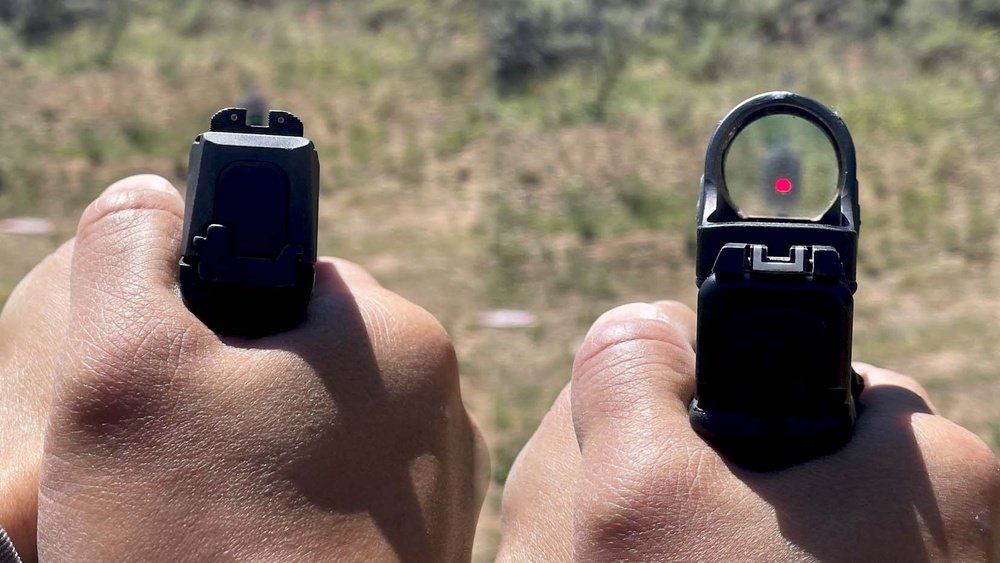
A red dot sight is an optical device that projects a red dot onto a lens, which you use as your aiming point. Unlike iron sights, you don’t need to line up front and rear sights. Instead, you simply place the red dot on your target and fire. This makes red dot sights much faster for target acquisition and more forgiving for shooters with imperfect eyesight.
Modern red dot sights are popular in military, police, and sports shooting. According to a 2023 shooting industry report, over 70% of competitive shooters use red dot optics for faster aiming and improved accuracy. They are also increasingly common for home defense firearms.
Setting Up Your Red Dot Sight
Proper setup is essential for accurate aiming. Many shooters miss this step and struggle with poor accuracy.
Mounting
First, securely mount the sight to your firearm. Most red dot sights use Picatinny or Weaver rails. Always tighten the screws according to the manufacturer’s instructions. Loose mounts cause the sight to shift and ruin your accuracy.
Zeroing
Zeroing means adjusting the sight so the red dot matches the point of impact. Usually, you zero at a distance of 25, 50, or 100 yards, depending on your shooting purpose.
Steps to zero your red dot:
- Set up a stable rest (like a sandbag or shooting bench).
- Fire a group of three shots at your target.
- Adjust the windage (left-right) and elevation (up-down) controls on your sight.
- Repeat until the dot matches your point of impact.
Here’s a comparison of common zeroing distances:
| Zero Distance | Best Use | Pros | Cons |
|---|---|---|---|
| 25 yards | Pistol, close-range | Quick setup, easy for beginners | Limited for long-range |
| 50 yards | General rifle, home defense | Good balance, versatile | May need adjustment for long shots |
| 100 yards | Rifle, hunting | Best for distance | Harder for beginners |
Brightness Settings
Red dot sights come with adjustable brightness. Set it bright enough to see the dot clearly, but not so bright that it looks fuzzy or star-shaped. Outdoor shooters usually need higher brightness, while indoor shooters can use lower settings.

Achieving The Correct Sight Picture
A good sight picture is the foundation of accurate shooting. The main advantage of red dot sights is that you only need to focus on the dot and your target—not three things like with iron sights.
Eye Relief
Red dot sights have unlimited eye relief. This means you can place your eye anywhere behind the sight and still see the dot. This is especially helpful for shooters wearing glasses or using rifles with unusual stocks.
Parallax
Many high-quality red dot sights are “parallax-free” at certain distances. If you move your head, the dot stays on the target. However, cheaper sights may have some parallax, causing the dot to shift when you move your eye. Always check your sight’s manual and test it at your zero distance.
Proper Alignment
Place the red dot in the center of the lens. Some shooters make the mistake of moving their head until the dot is centered. Instead, keep your head comfortable and natural. If the dot is visible anywhere in the lens, it will hit the target.
For best results:
- Keep both eyes open. This increases your field of vision and speeds up aiming.
- Don’t rush. Take time to see the dot and place it on your target.
How To Aim With A Red Dot Sight
The process of aiming is simple but needs practice to become automatic.
- Raise your firearm to your shooting position.
- Look through the sight with both eyes open.
- Place the red dot directly on the target.
- Focus on the target, not the dot.
- Squeeze the trigger smoothly.
Unlike iron sights, you don’t need to align front and rear sights. With a red dot, wherever the dot lands is where your bullet will go (if your sight is zeroed).
Here’s a step-by-step example for a pistol:
- Hold the pistol with both hands.
- Raise your arms to eye level.
- Find the red dot in the lens.
- Put the dot on your target’s center.
- Fire when ready.
For rifles:
- Shoulder the rifle naturally.
- Look through the optic.
- Place the dot on your intended point.
- Fire with steady pressure.

Red Dot Sight Vs. Iron Sights
Many shooters wonder how red dot sights compare to traditional iron sights. Here’s a quick comparison:
| Feature | Red Dot Sight | Iron Sights |
|---|---|---|
| Speed | Faster target acquisition | Slower, needs alignment |
| Accuracy | Easier for beginners | Requires skill |
| Low Light | Works well | Harder to see |
| Eye Relief | Unlimited | Fixed |
One non-obvious insight: Red dot sights are easier for people with vision problems. Iron sights require clear vision for both front and rear sights, which is difficult for older shooters.
Common Mistakes When Aiming A Red Dot Sight
Many beginners make errors that reduce their accuracy. Avoid these mistakes:
- Not zeroing the sight. If your dot isn’t zeroed, your shots won’t hit the target.
- Focusing on the dot instead of the target. You should look at the target and let the dot float over it.
- Closing one eye. This limits your field of vision and slows you down.
- Using wrong brightness. Too bright or too dim makes it hard to aim.
- Moving the head to center the dot. The dot doesn’t need to be perfectly centered in the lens.
- Not practicing enough. Red dot sights require muscle memory.
A less-known tip: Always check the battery before shooting. Many shooters forget, and a dead battery means no dot.
Practical Tips To Improve Accuracy
Getting the basics right is just the start. Here are some practical tips to boost your aiming skills:
- Practice dry firing at home. Point your unloaded firearm at a safe wall, place the dot on a spot, and squeeze the trigger. This builds muscle memory.
- Use “dot drills.” Place small stickers on your target and try to hit them precisely.
- Adjust your grip and stance. A stable platform makes aiming easier.
- Try shooting with both eyes open. It can feel strange at first, but it speeds up target acquisition.
- Clean your lens regularly. Dust and smudges can distort the dot.
One advanced tip: If your dot is blurry, try lowering brightness or consider astigmatism-friendly optics.
Red Dot Sights In Different Shooting Scenarios
Red dot sights perform differently depending on the situation:
Home Defense
For home defense, red dot sights are ideal. They help you aim quickly in stressful situations and low light.
Hunting
Hunters use red dots for quick shots at moving targets. They are especially popular for turkey and deer hunting at close range.
Competition Shooting
Competitive shooters use red dots for speed and precision. According to data from the International Practical Shooting Confederation, shooters using red dot optics complete courses up to 30% faster than those with iron sights.
Tactical Use
Military and police teams rely on red dots for fast aiming and wide field of view. Reliability and battery life are key factors here.
Choosing The Right Red Dot Sight
Picking the best sight depends on your needs. Here’s a quick comparison of features:
| Feature | Budget Sights | Premium Sights |
|---|---|---|
| Battery Life | 500-1,000 hours | 10,000+ hours |
| Parallax | May have issues | Usually parallax-free |
| Brightness Settings | Few | Multiple |
| Build Quality | Plastic, basic | Aluminum, waterproof |
Key things to consider:
- Battery life: Choose sights with long battery life.
- Durability: Get waterproof and shockproof models for outdoor use.
- Size: Compact sights are better for pistols, larger ones for rifles.
- Reticle type: Some dots are larger or smaller. Pick what fits your eye and shooting style.
For a detailed breakdown of optics and features, you can check Wikipedia.
Frequently Asked Questions
What Distance Should I Zero My Red Dot Sight?
Most shooters zero at 25 or 50 yards for pistols and home defense rifles. For hunting or long-range, zero at 100 yards. Pick the distance based on your main use.
Can I Use A Red Dot Sight With Both Eyes Open?
Yes. In fact, it’s recommended to use both eyes open with red dots. This gives you a wider field of vision and faster aiming.
Do Red Dot Sights Work In Low Light?
Red dot sights are excellent in low light. You can adjust brightness to see the dot clearly, and you don’t need to line up sights.
Why Is My Red Dot Blurry?
A blurry dot is often caused by too much brightness or astigmatism. Lower the brightness, or try a different optic designed for people with vision issues.
How Often Should I Check The Battery?
Always check the battery before shooting. For home defense, check monthly. For competition, check before every event. Many premium sights have auto-shutoff to save power.
Aiming with a red dot sight is simple in theory, but mastering it takes practice and proper setup. Start by zeroing your sight, learn to focus on the target, and use both eyes open. Avoid common mistakes, and remember to check your battery.
With the right techniques, you’ll see faster, more accurate shots—no matter your experience level. As you keep practicing, aiming with a red dot will become second nature, helping you shoot confidently in any scenario.


Leave a Reply