
Adjusting windage on a scope can turn a frustrating shooting experience into a precise, rewarding one. If your shots consistently hit left or right of your target, it’s not always your aim—it’s often your windage setting. Whether you’re a hunter, a target shooter, or a beginner learning how to use a rifle scope, understanding windage is essential for accurate shooting.
This guide will help you master windage adjustments, avoid common mistakes, and gain confidence with every shot.
What Is Windage And Why It Matters
Windage refers to the horizontal adjustment of your rifle scope. It lets you move the reticle (crosshairs) left or right so your point of aim matches your point of impact. If your bullets are hitting to the left, you adjust the windage to the right—and vice versa.
Why is this so important? Even a small error in windage can lead to missed shots, especially at longer distances. Factors like wind, rifle setup, or even the way you mount your scope can push your shot off target. Proper windage adjustment ensures your shots land where you intend.
Key Parts Involved In Windage Adjustment
Before you start, it helps to know the main parts of your scope involved in windage:
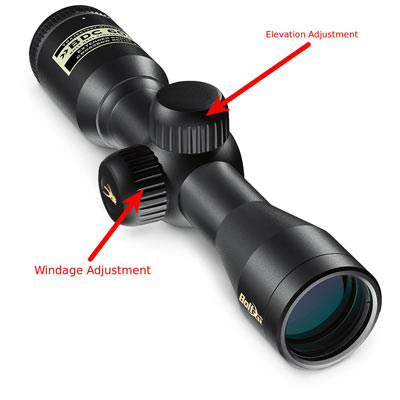
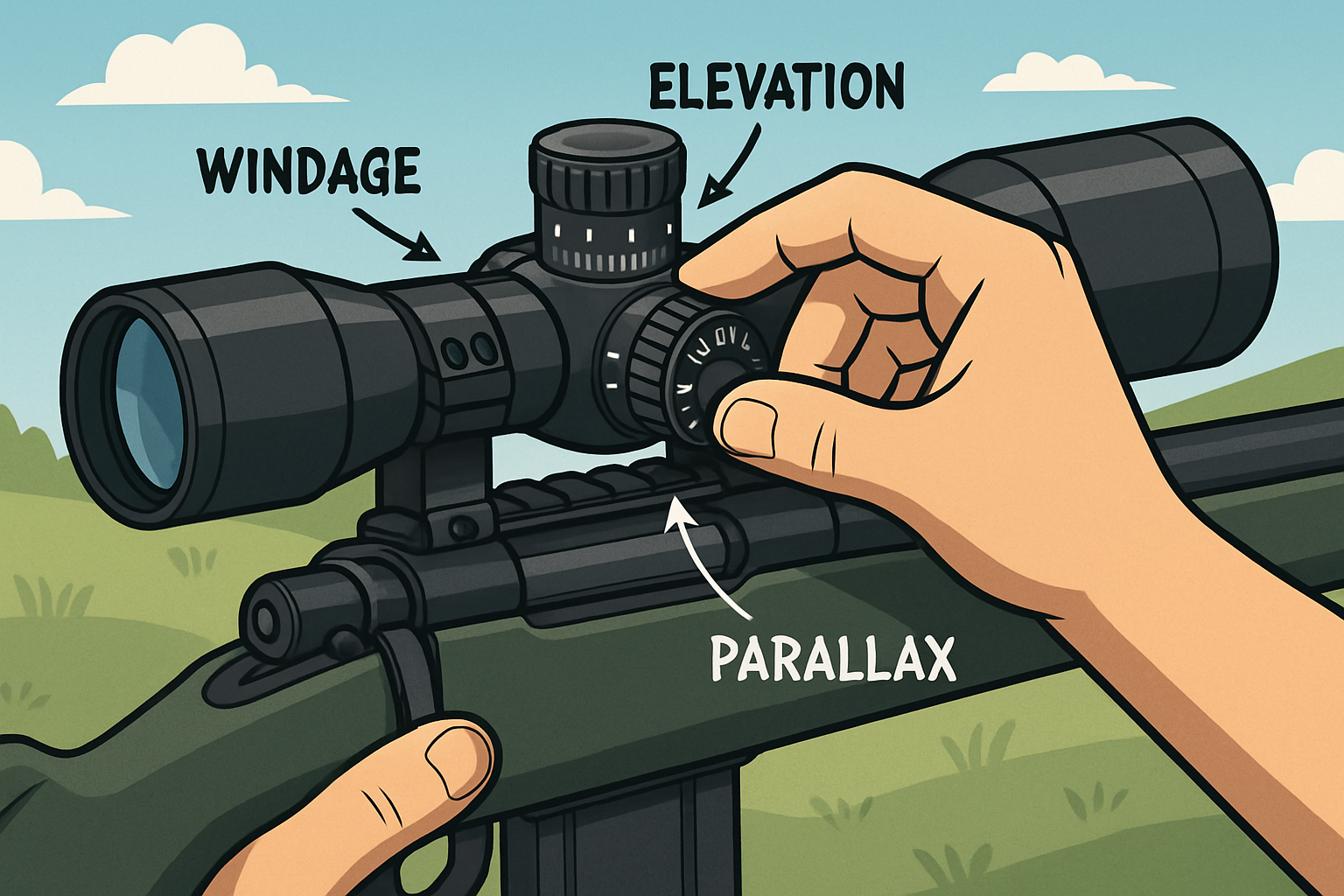
- Windage turret: The knob (usually on the right side) you turn to adjust left or right.
- Elevation turret: The top knob, which moves the reticle up or down.
- Reticle: The crosshairs you see when you look through the scope.
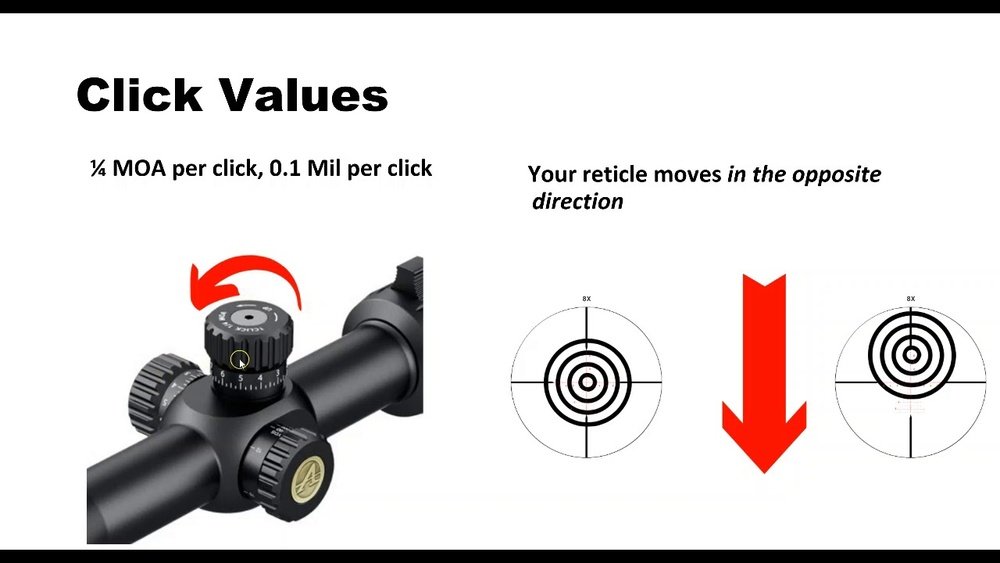
Most modern scopes have “click” adjustments—each click moves the reticle a certain amount, often ¼ MOA (Minute of Angle) or 0. 1 MRAD.
Tools You’ll Need
You don’t need expensive gear to adjust windage, but a few tools make the process smoother:
- Rifle rest or sandbags: To keep your rifle steady.
- Bore sighter (optional): Helps you align your scope to the barrel.
- Target with clear markings: For easy spotting of shot placement.
- Spotting scope or binoculars: To see where your shots land at distance.
- Screwdriver or coin: Some turrets need a tool to turn.
Step-by-step: How To Adjust Windage On A Scope
Let’s break down the process into clear steps. Patience and careful adjustments are key.
1. Set Up Your Shooting Position
Find a safe and stable shooting area. Use a shooting bench if possible. Rest your rifle on sandbags or a solid rest so movement is minimal.
2. Mount Your Scope Properly
Improper mounting is a common mistake. Make sure the scope is level and tightened correctly. Even a slight tilt can throw off your windage.
3. Bore Sighting (optional, But Helpful)
Bore sighting aligns the scope’s reticle with the rifle barrel. You can use a bore sighter tool or, with bolt-action rifles, remove the bolt and look through the barrel to center the target. Adjust the windage turret until the crosshairs match what you see through the barrel.
4. Fire A Test Group
At 25 or 50 yards, fire a group of three shots at the center of your target. Keep your rifle as steady as possible. Don’t adjust between shots—this group shows where your scope is set.
5. Check Your Shot Placement
Use binoculars or walk to the target. Find the average point where your shots hit (the “group center”). If the group is left or right of the bullseye, you need a windage adjustment.
6. Adjust The Windage Turret
Turn the windage turret in the direction you want the bullet impact to move. Most turrets are clearly marked with “L” (left) and “R” (right) arrows. Each click usually moves the point of impact ¼ inch at 100 yards if you have a ¼ MOA scope.
Example: If your shots are hitting 2 inches to the right at 100 yards, and your scope moves ¼ inch per click, turn the turret 8 clicks to the left.
7. Fire Another Group
Shoot another three-shot group at the same aiming point. Compare this group’s center to the bullseye.
8. Fine-tune Adjustments
Repeat the process—adjust, shoot, and check—until your group is centered left-to-right on the target.
9. Confirm At Your Typical Shooting Distance
Zeroing at 25 yards is easier for beginners, but always confirm at the distance you plan to shoot most (often 100 yards). Windage can shift slightly at different ranges.
10. Lock The Setting (if Possible)
Some scopes have a lock feature on the windage turret. If yours does, lock it to prevent unintentional movement.
Understanding Scope Adjustment Units: Moa Vs Mrad
Scopes use different adjustment systems: MOA (Minute of Angle) and MRAD (Milliradian).
Here’s a comparison to make it clear:
| Adjustment Type | Value per Click (at 100 yards) | Typical Use |
|---|---|---|
| 1/4 MOA | 0.25 inch | Most hunting/target scopes |
| 0.1 MRAD | 0.36 inch | Long-range/tactical scopes |
If you’re not sure which your scope uses, check the manual or the turret markings.
Example Calculation: How Many Clicks To Adjust
Suppose your shots are 1. 5 inches right of the bullseye at 100 yards. Your scope is 1/4 MOA per click.
- 1 click = 0.25 inch
- Needed adjustment = 1.5 inches
- 1.5 / 0.25 = 6 clicks
Turn the windage turret 6 clicks to the left.
Common Beginner Mistakes (and How To Avoid Them)
Many shooters struggle with windage because of simple errors. Here’s how to dodge the most frequent problems:
- Not keeping the rifle steady: Even small movements shift your groups. Use a rest or sandbags.
- Adjusting after every shot: Always shoot a group (3–5 shots) before making changes.
- Misreading the turret direction: Double-check your turret’s arrows. Some scopes turn “right” to move impact right, others move the reticle.
- Forgetting to check at different distances: Windage may be different at 25, 50, and 100 yards.
- Ignoring parallax: If your scope has parallax adjustment, set it for your shooting distance to avoid errors.
Environmental Factors That Affect Windage
Windage isn’t only about your scope. Real-world factors can change your bullet’s path:
- Wind: A crosswind can push your bullet left or right. Learn to read the wind’s direction and speed.
- Shooting angle: Shooting uphill or downhill can slightly shift impact.
- Ammunition differences: Different bullet weights and speeds can affect windage.
Advanced shooters often use windage holds (holding the reticle off-center) to compensate for wind, but for most, adjusting the turret is the simplest method.
When To Use The Windage Turret Vs. Windage Hold
Some scopes have “tactical” turrets for quick field adjustment. In competition or hunting, you might use the turret for a permanent zero and “hold” off with the reticle for changing wind.
A simple guideline:
- Permanent zero: Use the turret to center your group in no-wind conditions.
- Temporary wind: Use the reticle to “hold off” for wind, especially if it changes often.
How Windage Adjustments Compare To Elevation
Both windage and elevation adjust the reticle, but one moves it horizontally, the other vertically. Here’s a summary:
| Adjustment | Direction | Main Use |
|---|---|---|
| Windage | Left/Right | Corrects horizontal error |
| Elevation | Up/Down | Corrects bullet drop/rise |
It’s important to adjust both for a perfect zero.
Signs Your Windage Is Off
If you see these signs, it’s time to check your windage:
- All shots group left or right of the bullseye
- Your scope’s windage turret is at one extreme
- You compensate every shot by aiming off-target
Regularly check your zero, especially after bumps or travel.
Advanced Tip: Tracking Scope Adjustment
Keep a shooting log. Write down:
- Number of windage clicks
- Distance
- Ammo type
- Conditions (wind, temperature)
Over time, you’ll spot patterns and can return to your best settings quickly.
Troubleshooting: When Adjustments Don’t Work
If your groups stay off-center even after adjusting:
- Check scope mounting: Loose or canted mounts cause problems.
- Inspect barrel and action: A loose barrel or stock can shift zero.
- Try different ammo: Some rifles shoot better with certain brands or weights.
If you keep having trouble, ask a gunsmith or experienced shooter for help.
Real-world Example: Adjusting Windage For A Hunting Rifle
Imagine you’re at the range with a new 3-9×40 hunting scope. At 100 yards, your group is hitting 2 inches left.
- Your scope is 1/4 MOA per click: 2 inches / 0.25 = 8 clicks.
- Turn the windage turret 8 clicks to the right.
- Fire another group to confirm. If still off, repeat in smaller steps.
Small, careful adjustments are better than big, rushed ones.
Practical Insights Most Beginners Miss
Two things many new shooters don’t realize:
- Barrel heating can shift your groups. Let your rifle cool between groups, or your point of impact may change as the barrel heats up.
- Not all scopes track perfectly. Cheap scopes sometimes don’t move the reticle exactly as expected—quality matters.
Also, always return your windage to zero after adjusting for wind in the field. If you forget, your next shots in calm weather may be way off.
Where To Learn More
For more in-depth information on rifle scopes, adjustments, and ballistics, check out Wikipedia’s rifle scope page.

Frequently Asked Questions
How Often Should I Check My Windage Zero?
Check your windage zero whenever you change ammo, travel with your rifle, or notice shots drifting left or right. At minimum, verify once every season or after your rifle takes a bump.
Does Windage Adjustment Affect Elevation?
Not directly. Windage moves the reticle left or right, while elevation moves it up or down. However, some scopes may have slight interaction if the turrets are not perfectly aligned.
Can I Adjust Windage Without Shooting?
You can bore sight to get close, but for true accuracy, you must fire groups and adjust based on real bullet impact. Bore sighting is only a starting point.
What Does “1/4 Moa Per Click” Mean?
It means each click of the windage turret moves the point of impact by 0. 25 inch at 100 yards. At 50 yards, each click moves the impact by 0. 125 inch.
Why Do My Shots Keep Drifting After I Adjust Windage?
This could be due to unstable shooting position, wind changes, loose scope mounts, or a poor-quality scope. Double-check your setup and try shooting in calm conditions.
Mastering windage adjustment is a key skill for any shooter. With patience, practice, and the right knowledge, your groups will tighten and your confidence will grow. Remember: small, careful steps lead to big improvements in accuracy.

Leave a Reply