
How Far Can Shotgun Pellets Travel
Many people use shotguns for hunting, sport shooting, and home defense, but few realize just how far shotgun pellets can actually travel. This question is not just about curiosity—it’s a matter of safety and responsible firearm handling. Understanding pellet range helps shooters avoid accidents, respect property lines, and make smart decisions in the field or at the range.
Shotguns use shells filled with many small balls called pellets. When fired, these pellets spread out and slow down quickly, but they can still travel surprising distances. The exact distance depends on the type of shotgun, the size of the pellets, the angle of fire, and even the weather. By learning how far shotgun pellets can go, you’ll be better prepared to use a shotgun safely and effectively.
What Are Shotgun Pellets?
A shotgun shell contains multiple small round projectiles called pellets. When you pull the trigger, the gunpowder in the shell explodes and sends these pellets out of the barrel at high speed. The pellets spread out in a pattern, which is why shotguns are good for hitting moving targets at close range.
Pellets come in different sizes. Birdshot uses many tiny pellets, while buckshot uses fewer but bigger pellets. There are also slugs, which are single, large projectiles, but this article will focus only on multiple-pellet loads.
Key Factors That Affect Pellet Range
Shotgun pellets do not all travel the same distance. Several factors influence how far they can go:
- Pellet Size: Bigger pellets are heavier and can travel farther than smaller ones.
- Shotgun Gauge: The size of the gun (such as 12-gauge, 20-gauge) affects the speed and number of pellets.
- Shell Type and Powder Load: More powerful shells push pellets faster and farther.
- Choke: The choke at the end of the barrel controls the spread of pellets. Tighter chokes can keep pellets together for longer.
- Angle of Fire: Shooting into the air sends pellets farther than shooting straight ahead.
- Weather Conditions: Wind and humidity can slightly change how far pellets fly.
Understanding these factors helps shooters predict where pellets might land and how to keep others safe.
Typical Pellet Ranges By Shot Type
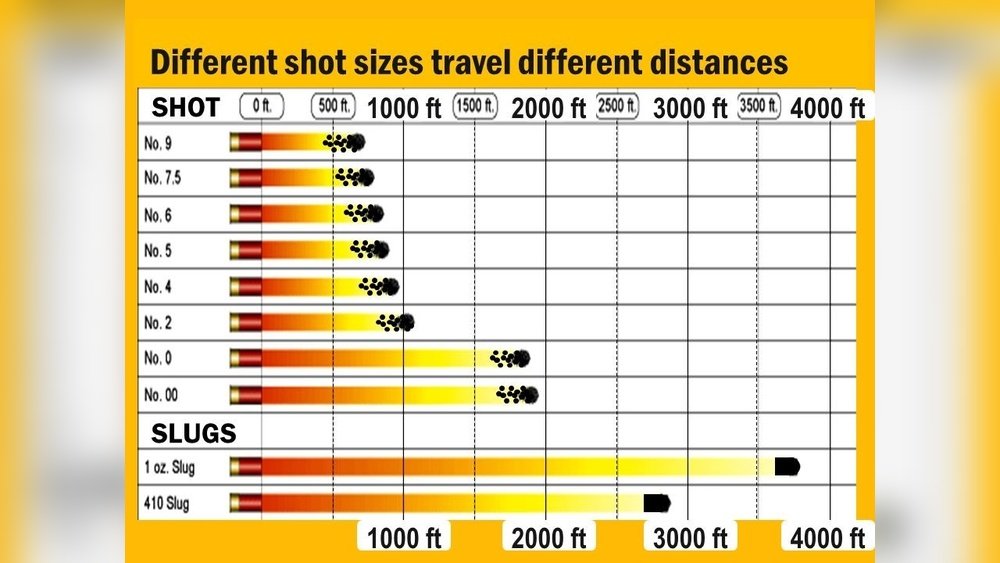
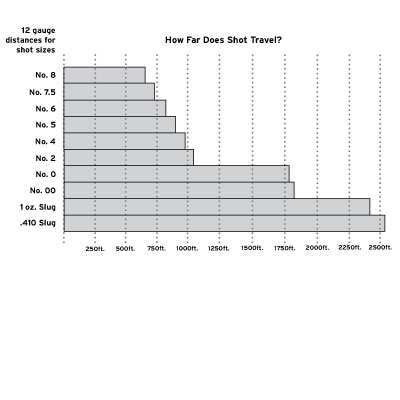
Let’s look at how far different types of shotgun pellets can go under ideal conditions. The numbers below are for a standard 12-gauge shotgun and may vary with other gauges or shell types.
Birdshot
Birdshot uses the smallest pellets and is designed for hunting birds at close range. Because they are light, birdshot pellets lose speed quickly.
- Maximum range: 200–350 yards (180–320 meters) when fired at a high angle.
- Effective range: 35–50 yards (32–46 meters) for hunting or target shooting.
Buckshot
Buckshot pellets are larger and heavier, used for bigger game or self-defense.
- Maximum range: 400–700 yards (365–640 meters) at a high angle.
- Effective range: 30–60 yards (27–55 meters) for hunting or defense.
Slugs (for Reference)
While this article focuses on pellets, it’s useful to know that slugs (single projectiles) can travel much farther—up to 800 yards (730 meters) or more. Never expect regular pellets to reach these distances.
Comparison Table: Birdshot Vs. Buckshot Range
| Shot Type | Pellet Size | Effective Range | Maximum Range |
|---|---|---|---|
| Birdshot | Small (#7.5–#9) | 35–50 yards | 200–350 yards |
| Buckshot | Large (#4–00) | 30–60 yards | 400–700 yards |
What Happens To Pellets In Flight?
When a shotgun is fired, the pellets leave the barrel in a tight group. As they travel, they start to spread apart—a process called shot pattern. Air resistance slows them down quickly, especially for light birdshot.
At close range, the pellets are still moving fast and grouped closely. As distance increases, pellets slow down and spread out, losing energy. Past their effective range, pellets can still travel far, but they are no longer powerful enough to hunt or cause serious injury (except in rare cases).
Gravity also pulls the pellets down. If you fire up into the air, pellets can go farther before falling back to the ground. If you shoot straight or at a downward angle, the range is much less.
Real-life Examples And Safety Incidents
There are many documented cases where shotgun pellets traveled farther than expected. For example, during hunting seasons, people have reported finding pellets on rooftops or in yards hundreds of yards from the shooting site.
- A bird hunter in open country fired at a duck. Some pellets landed on a parked car more than 250 yards away.
- In a clay target competition, a missed shot sent pellets over 300 yards, lightly striking a distant barn.
These stories show why it’s important never to fire a shotgun in the air unless you are sure of what is beyond your target.
Different Gauges And Their Pellet Ranges
The gauge of a shotgun refers to the size of the barrel. Common gauges are 12, 16, 20, and .410. The bigger the gauge number, the smaller the barrel.
How Gauge Affects Pellet Range
- 12-gauge: Most common, sends pellets the farthest due to higher velocity and more pellets.
- 20-gauge: Slightly less range, but still powerful enough for most uses.
- .410 bore: Much less range, used for small game at close distances.
| Gauge | Common Use | Effective Pellet Range | Maximum Pellet Range |
|---|---|---|---|
| 12-gauge | Hunting, defense, sport | 35–60 yards | 350–700 yards |
| 20-gauge | Small game, youth | 30–45 yards | 250–500 yards |
| .410 bore | Training, pests | 20–30 yards | 120–200 yards |
Shot Angle And Its Impact On Range
The angle at which you fire a shotgun has a big impact on how far the pellets go. If you shoot at a 45-degree angle, pellets can travel their maximum possible distance. If you shoot straight ahead or downward, the range is much shorter.
- Straight up: Pellets rise and fall nearly straight down, landing nearby.
- 45 degrees: Pellets travel the farthest, up to their maximum range.
- Flat or downward: Pellets hit the ground quickly, usually within 100 yards.
This is why hunters and sport shooters are taught never to fire at high angles unless the area is clear for a long distance.
Environmental Factors: Wind And Weather
Weather can also change pellet travel. Wind can push pellets off course, especially at long distances. Humid air slows pellets a bit more than dry air, but the effect is usually small.
- Strong winds: Can move pellets sideways, making them land in unexpected places.
- Rain: Has little effect, but can make pellet patterns less predictable.
It is important to check the weather before shooting outdoors and remember that even a light breeze can change where pellets land.
Common Mistakes And Misunderstandings
Many people believe shotgun pellets simply fall to the ground after a short distance. In reality, pellets can fly much farther than most shooters think.
Common mistakes include:
- Shooting over hills or trees, not realizing people or property may be behind them.
- Using birdshot for home defense, thinking it will not go through walls (it can at close range).
- Underestimating the risk of ricochet—pellets can bounce off hard surfaces and travel in unpredictable directions.
Never assume pellets are harmless after their effective range. Treat every shot as if it can reach someone or something important.
How To Shoot Safely And Respect Range Limits
Responsible shotgun users always think about what is beyond their target. Here are some best practices:
- Only shoot in areas with a safe backstop (like a hill or thick woods).
- Avoid firing at high angles unless it is safe for 300–700 yards.
- Check for houses, roads, and people in all directions before shooting.
- Use the right shell for the job. Lighter loads reduce the risk of long-range pellets.
- Respect property lines and posted signs.
Even if you are hunting in remote areas, always expect the unexpected—somebody could be walking or working far away.
Special Cases: Steel Vs. Lead Pellets
Most traditional shotgun pellets are made of lead. In recent years, many areas require steel shot for hunting waterfowl to prevent pollution.
- Steel pellets are lighter but harder than lead. They fly slightly farther but lose energy faster.
- Lead pellets are heavier, so they retain energy and can travel farther with more force.
Hunters must know which pellets are legal and safe for their area. Using the wrong type can damage the gun or break the law.
Legal And Ethical Considerations
Many states and countries have strict rules about where and how you can shoot shotguns.
- It is illegal to shoot across roads or within certain distances of buildings.
- Some areas ban lead shot or require special shot types.
- Always follow local laws and hunting regulations.
Being ethical means thinking about the safety of others—even when you are sure no one is around.

Practical Insights Most Beginners Miss
- Pellet drop is not instant: Even at long range, pellets can land with enough force to hurt people, pets, or livestock. A distant “peppering” is still dangerous.
- Shotgun sound does not show range: Just because you cannot hear pellets land does not mean they are not traveling far. Always imagine a wider safety zone than you think is necessary.
- Pattern density changes with range: At maximum range, pellets are so spread out that only a few may hit a target. This is why hunting or defense beyond the effective range is risky and often ineffective.
Frequently Asked Questions
How Far Can Shotgun Pellets Travel In The Air?
Shotgun pellets can travel as far as 700 yards (640 meters) for large buckshot fired at a high angle. Birdshot can reach 200–350 yards (180–320 meters). The actual distance depends on pellet size, gun type, and shooting angle.
Are Shotgun Pellets Dangerous At Long Range?
Yes, pellets can still cause injury at long distances, especially if they hit sensitive areas like the eyes. Even when falling to the ground, pellets may have enough energy to break skin or damage property.
What Is The Safe Distance Behind A Shotgun Shooter?
A safe distance is at least 700 yards directly behind the shooter when firing at a high angle. For hunting or clay shooting, always make sure no one is within this range and use hills or barriers as a backstop.
Does Using Steel Shot Make Pellets Go Farther?
Steel shot is lighter than lead, so it can fly a bit farther but loses energy faster. This means steel pellets may travel a longer distance but are less dangerous at the end of their flight.
Where Can I Learn More About Shotgun Pellet Safety?
For more detailed information, you can visit the Wikipedia Shotgun Shell page, which explains shotgun ammunition, pellet types, and safety considerations.
Using a shotgun responsibly means understanding how far pellets can travel—and always putting safety first. By respecting these distances and knowing your equipment, you help keep yourself and others safe every time you shoot.

Leave a Reply