
Loading a gun magazine might seem simple, but doing it right matters for both safety and reliability. Many beginners struggle with their first attempts, and small mistakes can lead to frustration or even danger. This guide will walk you through everything you need to know about loading a gun magazine, from understanding the parts to tips that make the process smoother.
Whether you’re a new firearm owner or want to refresh your skills, you’ll find practical advice and expert insights here.
Understanding Gun Magazines
Before you start, it’s important to know what a gun magazine is and how it works. A magazine is a device that holds extra ammunition and feeds it into the firearm. There are two main types: detachable and fixed magazines. Most handguns and many rifles use detachable magazines, which you can remove and reload separately from the gun.
A standard magazine has several main parts:
- Body: The outer shell, usually metal or polymer.
- Follower: A platform inside the magazine that pushes bullets upward.
- Spring: Sits under the follower to provide upward pressure.
- Baseplate: The bottom cover, sometimes removable for cleaning.
Not all magazines are the same. Some hold as few as 5 rounds; others can carry 30 or more. Always check your magazine’s capacity—overloading can cause malfunctions.
Safety First
Handling magazines means handling ammunition. Start by making safety your number one priority:
- Always keep the gun pointed in a safe direction.
- Remove the magazine from the gun before doing anything else.
- Check that the gun is unloaded—open the action and visually inspect the chamber.
- Work in a clean, well-lit area. This helps you keep track of small parts and reduces mistakes.
A common beginner mistake is forgetting to check the chamber. Even if you think the gun is unloaded, always double-check.
Choosing The Right Ammunition
Using the correct ammunition is critical. Ammunition comes in various calibers and sizes. Putting the wrong ammo in your magazine can damage your firearm or even cause injury.
Check your gun and magazine for markings that indicate the right caliber (for example, “9mm” or “. 45 ACP”). Only use ammunition that matches these markings.
Here’s a quick comparison of common handgun calibers:
| Caliber | Typical Capacity (Handgun) | Recoil (Perceived) | Common Use |
|---|---|---|---|
| 9mm | 12–17 rounds | Low–Medium | Self-defense, sport |
| .45 ACP | 7–10 rounds | Medium–High | Self-defense |
| .380 ACP | 6–8 rounds | Low | Concealed carry |
If you’re unsure, ask an experienced shooter or check your firearm’s manual.
Steps To Load A Gun Magazine
Let’s go through the process step by step. These instructions apply to most detachable box magazines (found in pistols and rifles).
1. Prepare Your Workspace
Find a table or flat surface. Lay out your ammunition and magazine. If you have multiple magazines, load one at a time to avoid confusion.
2. Inspect The Magazine
Look at the magazine for damage, dirt, or rust. A dirty magazine can cause jams. Clean it if needed before loading.
3. Hold The Magazine Properly
Hold the magazine in your non-dominant hand. For right-handed people, this is usually the left hand. The open end (where bullets enter) should point upwards.
4. Align The Ammunition
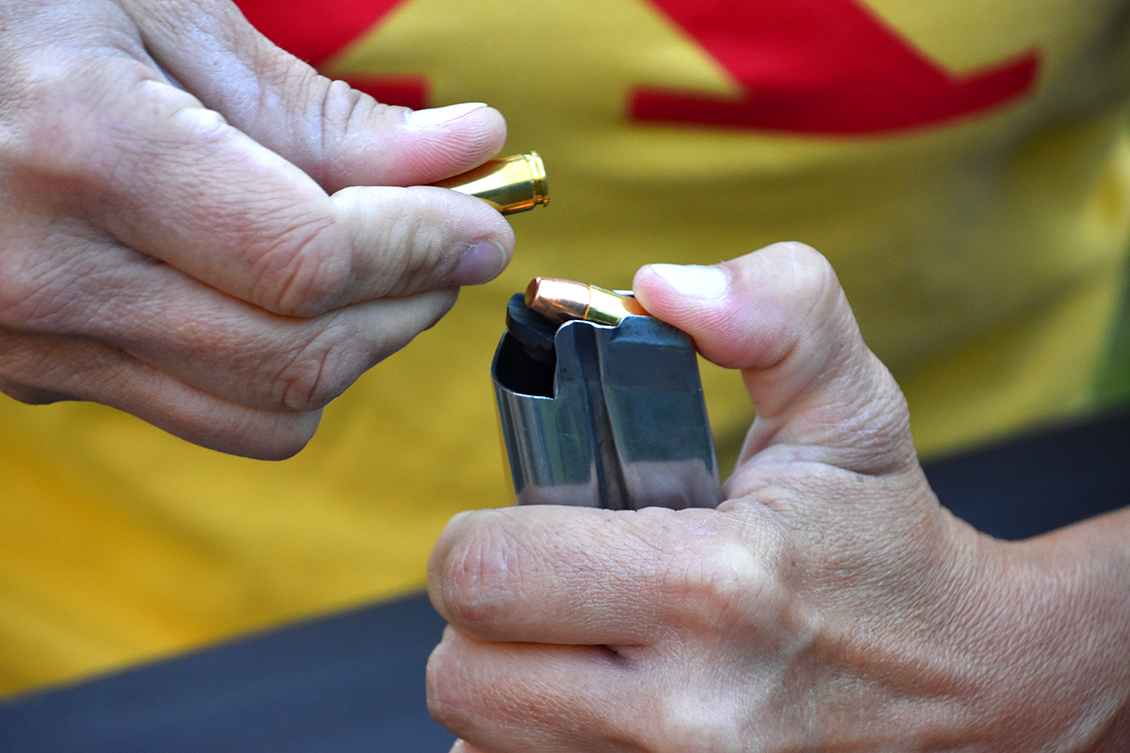
Hold a cartridge between your thumb and forefinger. The bullet (pointed end) should face forward—this is the direction it will go into the chamber.
5. Insert The Cartridge
Press the back of the cartridge (the flat base) down against the magazine’s follower, then slide it back under the feed lips until it clicks into place. The first round is often the hardest because the spring is fully extended.
6. Repeat Until Full
Continue loading rounds, one at a time. With each new round, push down on the previous one and slide the new round in. As the magazine fills, the spring gets tighter, making it harder to insert rounds.
Be careful not to overload. Stop when you reach the magazine’s capacity. Overloading can damage the spring or cause feeding problems.
7. Tap To Seat Rounds
Once full, give the back of the magazine a light tap against your palm. This helps ensure all rounds are seated properly and aligned.
8. Visually Inspect
Look at the loaded magazine. The rounds should be even and pointing forward. If anything looks wrong, remove the rounds and start again.
9. Insert Magazine Into Firearm (if Ready To Shoot)
If you plan to use the gun, insert the magazine into the gun’s magazine well. Push firmly until you hear a click.
10. Store Magazines Safely
If not using right away, store loaded magazines in a cool, dry place. Avoid direct sunlight or moisture, which can damage ammunition.
Tips For Easier Loading
Loading magazines can be tough, especially for beginners or people with limited hand strength. Here are some ways to make it easier:
- Use a magazine loader: This tool helps push rounds in, reducing strain on your fingers.
- Load in small batches: Take breaks if your hands get tired.
- Lubricate the magazine: A light wipe with gun oil can help springs move smoothly.
- Practice with snap caps: These dummy rounds let you practice loading without risk.
Many new shooters don’t realize that the last 2–3 rounds are the hardest to load. This is normal. If you can’t get the last round in, don’t force it—stop at one less.
Common Mistakes And How To Avoid Them
Even experienced shooters sometimes make errors when loading magazines. Here are mistakes to watch for:
- Loading bullets backward: The bullet tip should always face forward.
- Overloading: Never put more rounds than the magazine’s capacity.
- Damaging feed lips: Forcing rounds in sideways can bend the feed lips, causing jams.
- Dirty magazines: Dirt or grit inside can block the follower.
- Mixing ammunition types: Don’t load different calibers or brands in the same magazine.
If you experience feeding problems at the range, check the magazine first before blaming the gun.
Special Types Of Magazines
Not all magazines load the same way. Here are some variations:
Double-stack Magazines
These hold rounds in two offset columns, allowing higher capacity. They are common in modern pistols. The loading process is the same, but rounds may stagger slightly.
Single-stack Magazines
Rounds line up in a single row. These are easier to load but hold fewer rounds.
Extended Magazines
Some magazines are extra long for competition or special use. They can be harder to load fully and may require a loader tool.
Drum Magazines
These large, circular magazines hold 50–100 rounds. They load differently—often through a side door or with a winding key. Always follow the specific instructions for drum magazines.
Here’s a quick comparison of magazine types:
| Magazine Type | Typical Capacity | Loading Difficulty | Common Firearm Use |
|---|---|---|---|
| Single-Stack | 6–10 rounds | Easy | Compact pistols |
| Double-Stack | 12–17 rounds | Medium | Full-size pistols |
| Extended | 20–33 rounds | Hard | Competition |
| Drum | 50–100 rounds | Very hard | Rifles, SMGs |
Cleaning And Maintaining Your Magazine
A clean magazine is a reliable magazine. Dirt, sand, or rust inside can block the follower and cause jams. Here’s how to keep your magazines in top shape:
- Disassemble the magazine (if possible) by removing the baseplate.
- Wipe all parts with a clean cloth. Use a brush for stubborn dirt.
- Lightly oil the spring and follower.
- Reassemble and check for smooth movement.
Do this after every range session or if you drop a magazine on the ground.
Loading Under Stress: What Changes?
Real-life situations—like self-defense or competition—can be stressful. Practice loading your magazines until it feels automatic. Use a timer to see how fast you can load, but never sacrifice safety for speed.
Many shooters fail to practice with their weak hand or in low light. These are important skills. Train in realistic conditions if you want to be ready for anything.
Magazine Longevity: How Many Loads Before Problems?
A common question is how long magazines last. Quality magazines can handle hundreds or even thousands of load cycles. However, magazine springs do wear out over time, especially if left fully loaded for years.
Some shooters rotate loaded magazines every few months to avoid spring fatigue. While modern springs are tough, it’s wise to inspect your magazines regularly for signs of wear or weak feeding.
Here’s a summary of expected magazine lifespans:
| Magazine Quality | Expected Loads | Signs of Wear |
|---|---|---|
| Factory Original | 1000+ | Weak spring, misfeeds |
| Aftermarket (Good) | 800–1200 | Occasional jams |
| Cheap/Knockoff | 200–500 | Bent lips, cracks |
If you notice problems, replace the magazine or its spring.

Legal Considerations
Magazine capacity laws vary by country, state, and even city. In some places, owning magazines over 10 rounds is illegal. Always know your local laws before buying or using high-capacity magazines.
For more information, you can check official legal sources like Wikipedia: Magazine (firearms).
Frequently Asked Questions
How Do I Know If My Magazine Is Full?
Most magazines have small holes on the side called witness holes. These let you see how many rounds are loaded. If not, count each round as you load. Never force extra rounds if you feel resistance.
Is It Safe To Leave Magazines Loaded For A Long Time?
Yes, most modern magazines can be left loaded for months or years without problems. However, it’s a good idea to rotate magazines and check springs every few months.
What Should I Do If A Round Won’t Load?
If a round gets stuck, remove it and check for dirt or damage. Try again. If it still won’t load, inspect the magazine for bent feed lips or a weak spring.
Can I Use Different Brands Of Ammo In One Magazine?
It’s best to use the same brand and type of ammo in each magazine. Mixing can cause uneven feeding and jams, especially with hollow points or specialty rounds.
Do I Need To Clean My Magazines Every Time I Shoot?
Not every time, but regular cleaning is smart. If you drop a magazine or shoot in dirty conditions, clean it right away to avoid problems.
Loading a gun magazine is a basic but vital skill for any shooter. With practice and attention to detail, you’ll find it becomes quick and reliable. Always put safety first, use the right ammo, and treat your equipment with respect.
When you take care of your magazines, they’ll take care of you—shot after shot.


Leave a Reply