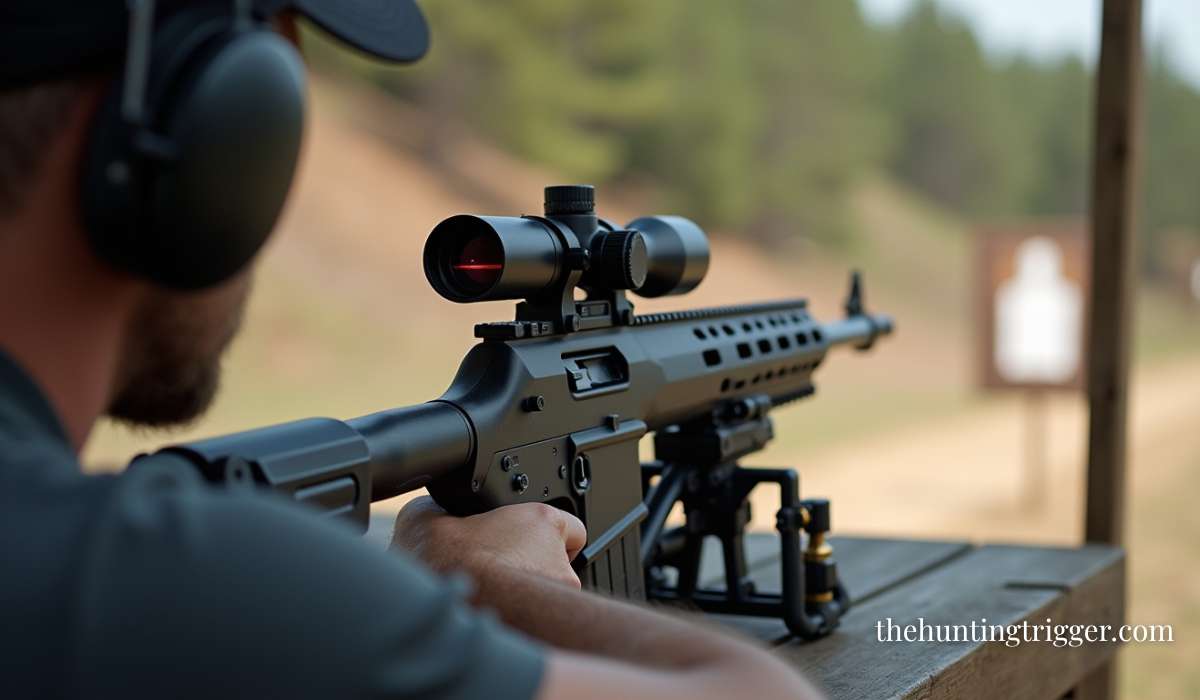
Getting your firearm ready for accurate shooting means your sight must line up with your barrel. If you use a red dot sight, you may wonder if you can bore sight it just like you do with a scope. The answer is yes, and knowing how to do this can save you time and ammunition. Bore sighting is a smart way to get your shots on paper before you fire your first round, and it makes the final zeroing process much easier.
Many shooters, especially those new to optics, often skip this step or do it incorrectly. This guide will explain what bore sighting is, how it works with a red dot, the best methods, and what mistakes to avoid. You will also learn when to use this process, what tools you need, and how to finish the job at the range. By the end, you’ll be able to bore sight your own red dot with confidence.
Table of Contents
What Is Bore Sighting?
Bore sighting is a way to align your firearm’s barrel (the bore) with your sight system. The main goal is to get the red dot and the barrel pointing at the same spot at a known distance. This helps you get close to your final zero, so you don’t waste ammo trying to find your point of impact later.
There are two main types of bore sighting:
- Optical bore sighting: Looking directly through the barrel and matching it with the sight.
- Laser bore sighting: Using a laser device to project a dot where the barrel is pointing.
Both methods work with red dot sights, but the laser is faster and more precise, especially for beginners.
Why Bore Sight A Red Dot?
Many people think only rifle scopes need bore sighting. But red dot sights benefit from it as well. Here’s why:
- Saves ammunition: You avoid wasting rounds trying to get your shots on the paper.
- Speeds up zeroing: You start closer to your final zero, so you need fewer adjustments.
- Reduces frustration: Your shots land near the target, not in the dirt or off paper.
- Works with many firearms: Red dots are used on rifles, shotguns, and even pistols.
A common mistake is thinking the factory mount is “good enough. ” In reality, mounting a red dot can leave you way off target, especially at 25 yards or more.
How Does Bore Sighting Work With A Red Dot?
Bore sighting with a red dot is similar to doing it with a scope. You want to match the red dot with the center of the barrel at a short distance, usually 25 yards (23 meters) or less. The process includes:
- Securing the firearm: Keep it steady and unloaded.
- Setting up a target: Place a clear target at a known distance.
- Using your chosen bore sighting method: Either look through the barrel or use a laser.
- Adjusting the red dot sight: Move the dot to where the barrel or laser points.
Once you bore sight, you still need to fine-tune at the range, but you’ll start close to the bullseye.
Main Methods To Bore Sight A Red Dot
There are two popular ways to bore sight a red dot: the manual (visual) method and the laser method. Each has its pros and cons.
Manual (visual) Bore Sighting
This method uses your own eyes. It works best with rifles where you can remove the bolt or open the action to see through the barrel.
Steps:
- Make sure the firearm is unloaded.
- Set the gun on a stable rest or sandbags.
- Remove the bolt (for bolt-action) or open the action (for ARs or shotguns).
- Look through the barrel at a clear target at 25 yards.
- Without moving the gun, adjust the red dot until it lines up with the center of the target.
Advantages:
- No extra tools needed.
- Works in any setting.
Disadvantages:
- Less precise, especially for beginners.
- Hard to do with pistols or guns where you can’t see through the barrel.
Laser Bore Sighting
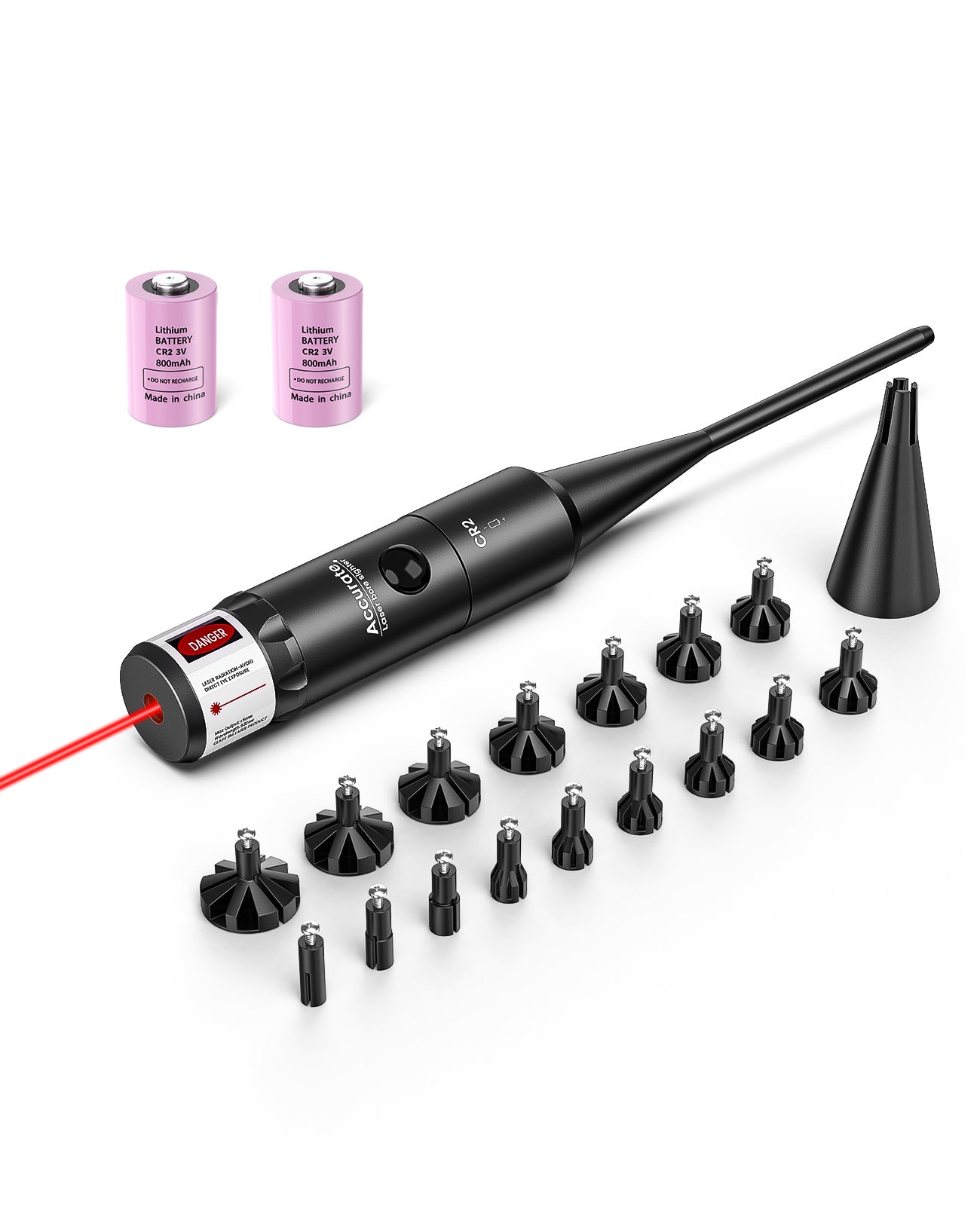
A laser bore sighter is a tool that shines a laser from the barrel, showing exactly where the gun points. There are two types:
- Chamber laser: Fits into the gun’s chamber like a cartridge.
- Muzzle laser: Inserts into the end of the barrel.
Steps:
- Insert the laser bore sighter into the chamber or muzzle.
- Place the firearm on a steady rest.
- Point at a target 15–25 yards away.
- Turn on the laser. You will see a red or green dot on the target.
- Adjust your red dot sight until the reticle matches the laser dot.
Advantages:
- Fast and accurate.
- Works with pistols, rifles, and shotguns.
- No need to remove parts.
Disadvantages:
- Requires buying a laser tool.
- Batteries can run out.
How to align a scope with a laser bore sight cartridge
Comparing Manual And Laser Bore Sighting
Here’s a quick look at how both methods compare:
| Feature | Manual Bore Sighting | Laser Bore Sighting |
|---|---|---|
| Precision | Low to Medium | High |
| Speed | Slower | Faster |
| Tools Needed | None | Laser sighter |
| Works with pistols | No | Yes |
| Cost | Free | Extra purchase |
Step-by-step Guide: How To Bore Sight A Red Dot
Let’s walk through the process from start to finish. This guide works for most rifles and carbines, and you can adjust for pistols or shotguns.
1. Make The Firearm Safe
- Always unload your firearm.
- Double-check the chamber and magazine.
- Keep ammunition away from your work area.
2. Stabilize The Firearm
- Use a gun vise, shooting rest, or sandbags.
- The gun must not move during the process.
3. Set Up A Target
- Use a clear, high-contrast target at 15 to 25 yards.
- The target can be a simple black dot on white paper.
4. Choose Your Bore Sighting Method
- If you have a laser bore sighter, insert it now.
- If not, prepare to look through the barrel.
5. Align The Barrel
- For manual: Look through the barrel and center it on the target.
- For laser: Turn on the laser and see where it lands on the target.
6. Adjust The Red Dot
- Without moving the gun, turn the windage (side-to-side) and elevation (up-down) dials on your red dot.
- Move the red dot reticle until it sits exactly on the same spot as the barrel (or laser).
7. Double-check
- Repeat the process to make sure nothing shifted.
- Small bumps can move the gun, so always check again.
8. Remove The Laser (if Used)
- Take out the laser bore sighter before handling ammunition.
9. Go To The Range For Final Zeroing
- Bore sighting only gets you close. You must fire live rounds to fine-tune your zero.
- Start at 25 yards and adjust as needed.
Tools Needed For Bore Sighting
You don’t need a lot of gear, but some tools make it easier and more precise.
| Tool | Purpose |
|---|---|
| Laser bore sighter | Projects a laser dot for fast alignment |
| Gun vise or rest | Keeps firearm stable |
| Target | Gives a clear aiming point |
| Small screwdriver | Adjusts red dot windage and elevation |
| Marker | Marks the target for easy reference |
Common Mistakes And How To Avoid Them
Even experienced shooters make errors when bore sighting. Here are some to watch out for:
- Not securing the firearm: If the gun moves, the process is useless.
- Skipping double-checks: Many adjust the dot, then accidentally bump the gun without rechecking alignment.
- Using a dirty barrel: Debris can block your view or affect the laser.
- Not removing the laser: Firing with the laser in the chamber can damage both the gun and the tool.
- Confusing bore sighting with zeroing: Bore sighting gets you close, but only live fire confirms your zero.
Advanced Tips For Better Results
Some tips go beyond the basics and can help you get the most out of bore sighting:
- Use a plumb line: Hanging a string helps check both vertical and horizontal alignment.
- Check mount tightness: Loose red dots move under recoil, ruining your zero.
- Confirm at multiple distances: After bore sighting at 25 yards, fire at your desired zero distance (often 50 or 100 yards).
- Consider parallax: Some red dots have parallax error at close range. Be aware if your model does.

When Should You Bore Sight A Red Dot?
Bore sighting is valuable in these situations:
- Mounting a new red dot: Always bore sight before you shoot.
- Changing mounts or rifles: Any time you move the sight, start with bore sighting.
- After heavy impact: If the gun was dropped or bumped, check your alignment.
- Before a hunting trip or match: Save time at the range by starting bore sighted.
How Accurate Is Bore Sighting?
Bore sighting will not give you a perfect zero. Most shooters are within 2–4 inches of the bullseye at 25 yards after bore sighting. This is good enough to get on paper and make fast final adjustments.
Your accuracy depends on:
- Quality of your tools (laser is more precise)
- How steady the gun is
- How well you align the sight
Bore sighting is a starting point, not the last step.
Finishing At The Range: Zeroing Your Red Dot
After bore sighting, take your firearm to the range for live fire zeroing.
- Start at 25 yards: Fire a group of three shots.
- Check your point of impact: See where the group lands compared to the target center.
- Adjust your red dot: Move the sight’s windage and elevation dials as needed.
- Fire another group: Repeat until your shots hit the bullseye.
- Back up to your zero distance: For rifles, many people zero at 50 or 100 yards.
Pro tip: Always use the same ammo you plan to shoot with. Different loads can change your point of impact.
Red Dot Bore Sighting For Pistols
It’s harder to use the manual method with pistols because you can’t see through the barrel easily. Most shooters use a laser bore sighter that fits in the chamber or muzzle.
- Make sure your pistol is unloaded.
- Insert the laser and follow the steps above.
- Some red dot sights on pistols need special mounting. Double-check your mount is tight before you start.

When Not To Bore Sight
If you cannot see through the barrel or do not have a laser bore sighter, your results will be less precise. For very close-range firearms, like some shotguns, bore sighting may not matter as much. But for any firearm with a red dot used beyond 10 yards, bore sighting is a smart idea.
Frequently Asked Questions
Can You Bore Sight Any Type Of Red Dot?
Yes, you can bore sight almost any red dot sight, whether it’s on a rifle, shotgun, or pistol. The method may change based on your firearm and red dot model, but the basic idea stays the same.
Do You Need Special Tools To Bore Sight A Red Dot?
You don’t need special tools, but a laser bore sighter makes the job faster and more accurate. For rifles where you can see through the barrel, you can use the manual method with no extra equipment.
How Close Will Bore Sighting Get Me To Zero?
Bore sighting usually gets you within 2–4 inches of the bullseye at 25 yards. You’ll need to fine-tune your zero with live fire, but your shots should land on the target paper.
Is Laser Bore Sighting Better Than Visual Bore Sighting?
Laser bore sighting is usually more precise and works with more firearms, especially pistols. It’s also faster and easier for beginners. However, visual bore sighting is free and works well for rifles.
Finally
Getting your red dot aligned doesn’t have to be confusing or wasteful. With bore sighting, you start off right, use less ammo, and save time. Whether you use the manual or laser method, the process is simple, effective, and smart for any shooter who cares about accuracy.

Leave a Reply