When you’re looking for a better way to aim your firearm, you’ll probably hear the terms reflex sight and red dot. Many new shooters and even experienced hobbyists get confused by these names. Are they the same thing? What’s the difference? Choosing the right sight can make a huge difference in your accuracy, speed, and even safety. This guide explains reflex sights vs red dots in simple words, clears up the confusion, and helps you make the best choice for your needs.
Table of Contents
Understanding Red Dot Sights
Red dot sights are a type of non-magnifying optic. Instead of using iron sights to line up your shot, you look through a glass window and see a glowing dot that shows where your bullet will go. These sights are very popular on rifles, pistols, and even shotguns.
The name “red dot” describes the small, illuminated dot (usually red, sometimes green) in the center. This dot is created using an LED and a special lens that reflects only the colored light back to your eye. The main advantage is speed — you don’t have to perfectly align front and rear sights.
Just put the dot on your target and pull the trigger.
Key features of a red dot sight:
- No magnification: The target appears in its real size.
- Parallax-free: The dot stays on the target, even if your head moves a little.
- Easy to use: Just place the dot where you want to shoot.
- Battery powered: Most models need small batteries for the LED.
Many people use “red dot” as a general term, but it actually covers several types of sights, including reflex and holographic.
What Is A Reflex Sight?
A reflex sight is a specific kind of red dot sight. The word “reflex” comes from “reflector,” which describes how the sight works. Inside, a small LED shines a dot onto a specially coated lens. That lens reflects the dot back to your eye, while letting you see through to the target.
There are two main styles of reflex sights:
- Open (or exposed) reflex sights: These have a small, open window. You can see the dot and the target together, with nothing covering the top or sides.
- Tube reflex sights: These look like small scopes. The dot and lens are inside a tube, which protects the glass and blocks some outside light.
Both styles work in the same way. The main difference is the shape and how much of the field you can see.
Reflex Sight Vs Red Dot: Are They Different?
This is where things get confusing. All reflex sights are red dot sights, but not all red dot sights are reflex sights. The term “red dot sight” means any sight that projects a dot for aiming, but the way the dot is created can be different.
Here’s a simple way to understand:
- Red dot sight: The big family. Includes reflex, prism, and holographic sights.
- Reflex sight: One member of the family. Uses a lens to reflect an LED dot.
Many people use “red dot” and “reflex sight” as if they mean the same thing, but technically, reflex is just one style.
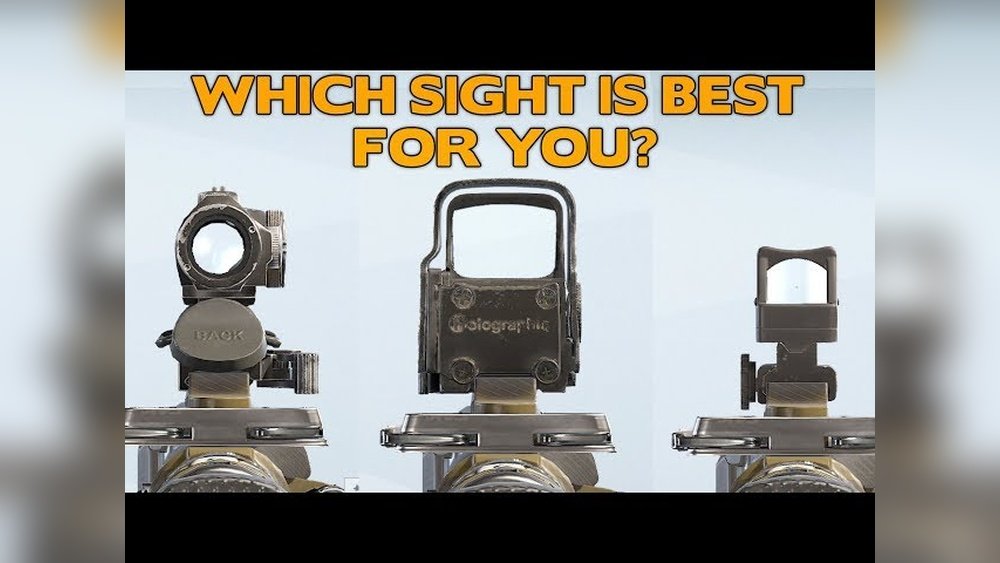
Types Of Red Dot Sights
To see where reflex sights fit, let’s look at the three main types of red dot sights:
| Type | How It Works | Pros | Cons |
|---|---|---|---|
| Reflex | Uses LED and lens to reflect dot | Fast, light, simple, affordable | Can be less rugged, open models less protected |
| Prism | Etched reticle inside a prism | Works without battery, sharper reticle | Heavier, smaller window, fixed magnification |
| Holographic | Laser projects reticle onto holographic film | Advanced reticles, works with broken glass | Expensive, uses more battery |
Reflex sights are the most common type. Most people who say “red dot” are thinking of reflex sights, especially the open style.

How Does A Reflex Sight Work?
A reflex sight uses a simple idea: reflection. An LED emits a small red or green dot. This dot bounces off a lens that only reflects that color of light. The rest of the lens is clear, so you see your target as normal. Because the dot is reflected, it always appears on your target, no matter where your eye is behind the sight.
Imagine shining a laser pointer at a window. Only a special coating on the glass reflects the light back to you, while everything else passes through. That’s what happens inside a reflex sight, but with a safe LED dot.
How to adjust a red dot sight for maximum accuracy
Why Choose A Reflex Sight?
Most shooters like reflex sights for several reasons:
- Quick target acquisition: Just point and shoot — no need to line up front and rear sights.
- Wide field of view: Especially with open models, you see more around your target.
- Lightweight: Many reflex sights add almost no extra weight to your firearm.
- Easy for beginners: No special skills needed to use them well.
For close or medium distances (like 10 to 100 meters), reflex sights are ideal. Many pistol shooters, competitive shooters, and home defense users choose reflex sights because of their speed and simplicity.
Red Dot Sight Advantages
Red dot sights in general (including reflex, prism, and holographic) offer some clear benefits:
- Both eyes open shooting: You don’t have to squint or close one eye, so you keep your full view.
- Low light performance: The dot is bright, so you can aim even in dim rooms.
- Parallax-free aiming: The dot stays on the target, even if your head moves.
- No magnification: Good for fast, close-range shooting.
But remember, not all red dot sights are the same. Prism and holographic models have their own strengths and weaknesses.
Common Uses For Reflex And Red Dot Sights
Reflex sights are everywhere — from competitive shooting to military use to hunting. Here are some examples:
- Home defense: Fast aiming in stressful moments.
- Pistol competitions: Speed is key, and reflex sights help shooters react quickly.
- AR rifles and carbines: Many police and military rifles use red dot sights.
- Shotguns: Great for shooting moving targets (like birds or clay).
- Airsoft and paintball: Lightweight and simple for quick games.
Some people put a reflex sight on top of a magnified scope for close-range shots, too.
Key Differences: Reflex Sight Vs Red Dot
Let’s clear up the confusion with a side-by-side comparison:
| Feature | Reflex Sight | Red Dot Sight (General) |
|---|---|---|
| Definition | Type of red dot using reflected LED | Any optic with a projected dot reticle |
| Styles | Open or tube design | Reflex, prism, holographic |
| Power | Battery required for LED | Battery (or etched for prism) |
| Magnification | No | Usually no, but prism may have fixed 1-4x |
| Best For | Speed, close to mid-range | Varies by type (speed, precision, distance) |
When Should You Choose A Reflex Sight?
If your shooting is fast, close-up, or you want something simple and reliable, a reflex sight is often the best choice. For new shooters, a reflex sight helps build confidence — you’ll hit targets faster and with less frustration.
Choose a reflex sight if:
- You want to improve your pistol or AR accuracy quickly.
- Your main use is home defense, competition, or close-range hunting.
- You value a wide, open view.
When To Consider Other Red Dot Types?
While reflex sights are great, sometimes a prism or holographic red dot is better:
- If you want a fixed magnification for longer range, prism sights offer 1-4x zoom.
- If you have astigmatism (blurry dot with reflex), a prism or holographic reticle may be clearer.
- For extreme durability and advanced reticles, holographic sights (like EOTech) are popular but cost more.
Two Insights Most Beginners Miss
Many new buyers don’t realize:
- Window size matters: A bigger lens gives a wider view, making it easier to shoot with both eyes open. Small windows can feel “tunnel-like” and slow you down.
- Dot size affects speed and precision: The dot’s size is measured in MOA (minutes of angle). A bigger dot (4 MOA or more) is faster to see, but covers more of the target. Small dots (2 MOA) are better for precise shots.
Common Mistakes When Buying
A few errors can lead to disappointment:
- Choosing based on price alone: Cheap sights may lose zero or break easily.
- Ignoring mounting type: Not all sights fit all guns. Check your slide or rail.
- Overlooking battery life: Some sights last thousands of hours, others only a few weeks. Some models offer “shake awake” features that save power.
Practical Examples
- Competition pistol: Most shooters use an open reflex sight, with a 3 MOA dot for fast transitions.
- Home defense AR-15: A tube-style reflex sight keeps the lens safe and works well with a backup iron sight.
- Hunting shotgun: Reflex sight helps track moving birds or small game quickly.

Maintaining And Using Reflex Sights
To keep your reflex sight working well:
- Clean the lens: Use a microfiber cloth, not paper or your shirt.
- Check battery: Change it before competitions or long trips.
- Zero the sight: Adjust so the dot matches the bullet’s impact.
- Protect from impacts: Some open reflex sights are more fragile; use a cover or case.
Real-world Data And Performance
Studies have shown that shooters using reflex sights can hit targets up to 30% faster compared to iron sights at close range. Law enforcement agencies and militaries trust reflex and other red dot sights for their reliability. For example, the U.S. military uses the Aimpoint CompM4 (a tube reflex sight) for its durability and long battery life — up to 80,000 hours on one AA battery.
Frequently Asked Questions
What Is The Main Difference Between A Reflex Sight And A Red Dot Sight?
A reflex sight is a type of red dot sight that uses a reflective lens to show the dot. Red dot sights include reflex, prism, and holographic types, but reflex is the most common.
Can You Use A Reflex Sight On Any Gun?
Most reflex sights fit pistols, rifles, and shotguns, but you need the right mounting system. Check your gun’s rail or slide before buying.
Are Red Dot And Reflex Sights Good For Beginners?
Yes. They are much easier to use than iron sights, especially for new shooters. You just focus on the target and put the dot on it.
How Long Does The Battery Last In A Reflex Sight?
It depends on the model. Some can last 5,000 to 50,000 hours. Features like automatic shutoff or “shake awake” save power.
Is A Reflex Sight Better Than A Scope?
For close to medium ranges (under 100 meters), reflex sights are faster and lighter. Scopes are better for long distances because they add magnification.
Finally
A good reflex or red dot sight can make shooting easier and more enjoyable for almost anyone. By understanding the differences and picking the right optic for your needs, you’ll shoot faster, more accurately, and with greater confidence every time you head to the range or field.

Leave a Reply