
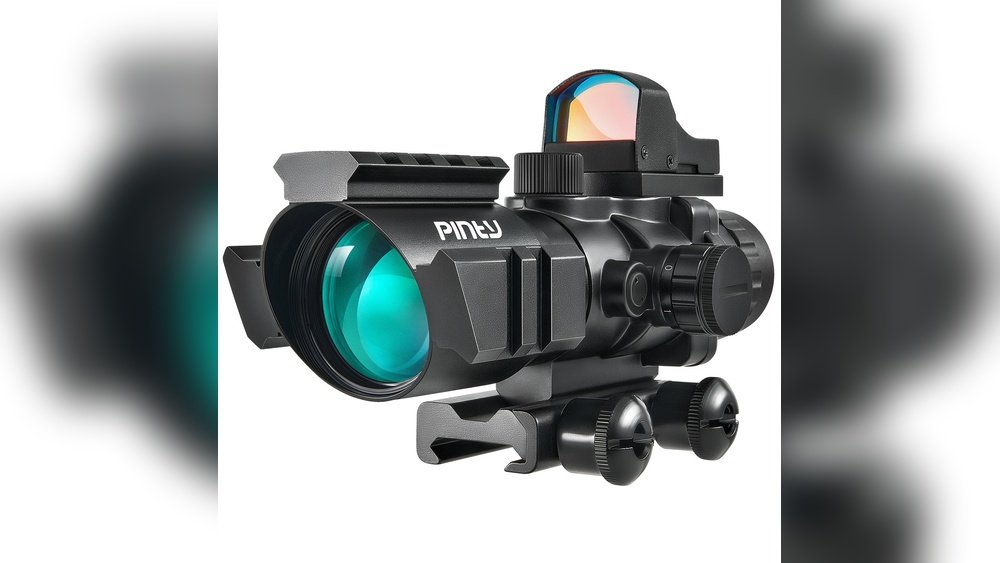
A red dot scope can change the way you shoot. It helps shooters, hunters, and airsoft fans hit their targets faster and with more accuracy. But to get these results, you must sight (or “zero”) your red dot scope correctly.
Many new users struggle with this process, and small mistakes can lead to missed shots. If you want to get the best out of your scope, this guide will walk you step-by-step through sighting your red dot scope, explain the science behind zeroing, and share expert tips.
Table of Contents
What Is A Red Dot Scope And Why Use One?
Red dot scopes are non-magnifying optical sights. When you look through the lens, you see a small illuminated dot (usually red or green) that shows you where your bullet will go. These scopes are popular for:
- Quick target acquisition
- Wide field of view
- Ease of use
- Low-light performance
Unlike traditional iron sights, a red dot lets you focus on the target and the aiming point at the same time. This is especially useful in action shooting, home defense, or dynamic hunting.
How A Red Dot Scope Works?
Inside the scope, a light-emitting diode (LED) projects a tiny dot onto a specially coated lens. This dot lines up with your barrel once sighted in. The dot is not projected into the environment; only the shooter sees it. Most red dot scopes have brightness settings to adjust for lighting conditions.
How do you fine-tune a red dot sight for precise shooting
Tools And Materials Needed
Before you start, gather these items:
- Red dot scope (already mounted on your firearm)
- Stable shooting platform (bench or prone position)
- Quality ammunition
- Targets (paper targets with clear bullseyes)
- Boresighter (optional, but helpful)
- Screwdriver or adjustment tool (for windage/elevation changes)
- Marker or pen
- Rangefinder or measuring tape (to set distance)
Having the right tools makes sighting easier and faster. Using inconsistent ammo or unstable rests can lead to poor results.
Can you use a bore sighter with a red dot sight
Understanding Zeroing: The Key Idea
Zeroing means adjusting your scope so the dot matches where your shots hit at a set distance. For example, if you “zero” at 25 yards, the dot should point exactly where your bullet lands at that range. This is important because bullet paths curve due to gravity, so your zero distance affects accuracy at other ranges.
Choosing Your Zero Distance
The distance you choose depends on your needs:
| Zero Distance | Best For | Pros | Cons |
|---|---|---|---|
| 15–25 yards | Home defense, short-range shooting | Quick sight picture, less over-penetration risk | Less accurate at long range |
| 36–50 yards | General use, competition, tactical | Balanced for both close and mid-range | May need holdover at very short or long range |
| 100 yards | Hunting, target shooting | Accurate for distance shots | Can be off at close range |
Most users pick 25 or 50 yards for carbines and rifles, and 15 yards for pistols. If unsure, start with 25 yards—it balances speed and accuracy.
Step-by-step Guide: How To Sight A Red Dot Scope
1. Set Up Your Shooting Position
Find a stable place to shoot. Use a shooting bench, sandbags, or a bipod. The less movement, the better. If you sight from a shaky position, your adjustments will be off.
2. Mount Your Red Dot Properly
Make sure your red dot is tightly mounted. Use the correct mounting base for your firearm (Picatinny or Weaver rail). A loose scope can lose zero after just a few shots.
Tip: After mounting, push the scope slightly forward before tightening screws. This keeps it locked in place under recoil.
3. Pre-zero With A Boresighter (optional)
A boresighter can save time and ammo. Insert it into your barrel and align the red dot with the boresighter’s point. This gets you “on paper,” so your first shots land close to the target.
4. Place Your Target At The Chosen Distance
Use a tape or rangefinder to set your target at the correct distance (for example, 25 yards). Use a target with a bold center dot for easy aiming.
5. Fire A Three-shot Group
Aim at the bullseye and shoot three rounds, using the same point of aim each time. This shows your natural shot spread and avoids over-adjusting for single flyers.
6. Check Your Grouping
Mark where your shots land. Measure the distance from the center of your group to the bullseye—both up/down (elevation) and left/right (windage).
7. Adjust Windage And Elevation
Most red dot scopes have turrets or small dials:
- Windage: Moves the dot left/right
- Elevation: Moves the dot up/down
Check your scope’s manual for the adjustment value (often 1 click = 1 MOA or about 1 inch at 100 yards).
Calculate how many clicks you need:
- If your group is 2 inches low at 25 yards, and 1 click = 1 MOA (~0.25″ at 25 yards), you need 8 clicks up.
- Move the dials slowly and count each click.
Non-obvious insight: Always adjust in small amounts and re-shoot. Over-correcting is a common mistake.
8. Shoot Another Group
Fire three more shots at the bullseye. If the group is centered, you are zeroed. If not, repeat the adjustment process.
9. Confirm And Lock Your Zero
When your shots consistently hit the bullseye, your red dot is zeroed. If your scope has locking turrets, tighten them. Mark the zero position with a paint marker if you want to remember your setting.
10. Test At Different Distances
Try shooting at other ranges. Note how your point of impact changes. This helps you learn your holdovers—how much to aim above or below the target at non-zero distances.
Common Mistakes And How To Avoid Them
Sighting a red dot is simple, but these mistakes can spoil your results:
- Rushing the process: Take your time. Let the barrel cool between groups.
- Shooting from an unstable rest: Even a small wobble changes your zero.
- Using random ammo: Stick to one brand and type when zeroing.
- Making big adjustments: Change only a few clicks at a time.
- Ignoring parallax: With some red dots, the dot moves if your eye moves. Keep your head in the same position for every shot.
- Not re-checking zero: After a range session, check if your zero held. Mounts can loosen from recoil.
Red Dot Scope Vs. Iron Sights: Sighting Differences
Many shooters ask if red dots are sighted like iron sights. There are some differences:
| Feature | Red Dot Scope | Iron Sights |
|---|---|---|
| Eye Focus | Both dot and target in focus | Front sight in focus, target blurred |
| Speed | Faster target acquisition | Slower to align |
| Low-Light Use | Bright dot is visible | Harder to see |
| Adjustment | Windage/elevation knobs | Drift or file sights |
Red dots are generally easier to zero, but you must remember to turn them off when not in use to save battery.
Practical Tips For Sighting Success
- Use the same ammunition every time you check zero.
- Bring extra batteries for your red dot in case it dies at the range.
- Record your zero settings in a notebook or on your phone.
- Practice shooting from different positions (standing, kneeling) once you are zeroed.
- Check your zero if you drop your firearm or after long transport.
Non-obvious insight: Environmental factors like temperature and altitude can slightly change your zero. If you travel to a new location, test your zero before use.
When To Re-zero Your Red Dot Scope
You don’t need to sight your scope every time you shoot. But re-zero if:
- You change ammunition brands or bullet weight
- You change the red dot to a new firearm
- The scope is removed and re-installed
- The firearm is dropped or hit hard
Many experienced shooters check zero every few months, even if nothing has changed.

Troubleshooting: If You Can’t Get Zeroed
If your shots are all over the target, check:
- Mounting screws: Are they loose?
- Barrel: Is it clean and undamaged?
- Shooter error: Are you flinching or jerking the trigger?
- Scope quality: Cheap red dots can have inconsistent adjustments.
If everything looks right, but the scope won’t zero, try another scope or ask a gunsmith for help.
Real-world Example
Imagine you have a carbine with a new red dot scope. You set up at 25 yards, fire three shots, and they hit 1 inch low and 2 inches right. Your scope adjusts 1/4″ per click at 25 yards. You turn elevation up 4 clicks and windage left 8 clicks.
After shooting again, your group is now centered. This process takes less than 30 minutes but gives you confidence your shots will go where you aim.
How Often Should You Practice?
Sighting in is not a one-time job. Practicing with your red dot scope improves your speed and accuracy. Dry fire (unloaded practice) helps you get used to the dot. Live fire at the range keeps your skills sharp. Most experts recommend checking your zero every 2–3 months, or after any hard use.
Battery Life And Red Dots
Most quality red dot scopes run for hundreds or thousands of hours on a single battery. But a dead battery means no dot and no aiming point. Get in the habit of carrying a spare battery in your range bag, and turn your sight off when not in use.
Some models have automatic shutoff to help with battery life.

Frequently Asked Questions
How Do I Choose The Best Zero Distance For My Red Dot Scope?
Choose a distance based on your main activity. For home defense or pistols, 15–25 yards is common. For rifles, 25–50 yards works well for most uses. Hunters may prefer 100 yards.
Do I Need A Boresighter To Zero My Red Dot Scope?
No, but a boresighter saves time and ammo. It is helpful for new shooters and those mounting a red dot for the first time, but you can zero just as well without it.
How Often Do I Need To Check My Zero?
Check your zero every few months or after your firearm is dropped, the scope is removed, or you switch ammunition. This keeps your aim accurate.
Can I Use A Red Dot Scope At Night?
Yes, red dots are great for low-light use. Just make sure your dot’s brightness does not wash out the target. Some red dots have night vision settings for special uses.
Is A Red Dot Better Than Iron Sights For Beginners?
For most shooters, yes. Red dots are faster to use and easier to learn. However, it is good to know how to use iron sights as a backup in case your battery dies.
Conclusion
Getting your red dot scope sighted in is the first step to shooting with more confidence and accuracy. Take your time, follow each step, and your shots will start landing right where you want them.

Leave a Reply