Aiming a handgun well is one of the most important skills for safe and accurate shooting. Many beginners struggle with hitting their target, even when they have a good handgun and steady hands. Improving your aim is not just about pointing and shooting.
It’s about understanding your gun, your body, and the environment. With the right guidance, anyone can boost their accuracy and confidence.
Whether you shoot for sport, self-defense, or training, better aim means safer handling and more reliable results. This article offers practical advice for new and intermediate shooters who want to aim a handgun better. Each section addresses key factors, common mistakes, and non-obvious tips that can make a real difference.
Simple language and clear examples are used throughout, so even readers with basic English can follow easily.
Table of Contents
The Basics Of Handgun Aiming
Aiming a handgun starts with sight alignment and sight picture. These are the foundation for every shot.
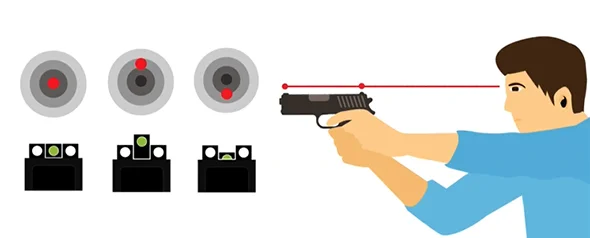
Sight alignment means lining up the front and rear sights so they are level and centered. The top of the front sight should be even with the rear sight, and the gap between the sides should be equal.
Sight picture is how you see the sights and the target together. The front sight is sharp and clear, while the target and rear sight may be a bit blurry. The front sight should cover the spot you want to hit.
Many beginners focus too much on the target and forget the front sight. This leads to poor accuracy. Keeping your eye on the front sight improves control and consistency.
Grip: The Foundation Of Accuracy
Your grip affects how steady the handgun is, how much recoil you feel, and how well you can aim.
- Hold the handgun with your dominant hand high on the grip, so your hand is close to the barrel.
- Use your support hand to wrap around the dominant hand, applying firm but not excessive pressure.
- Keep your wrists straight and your thumbs pointing forward.
A strong, steady grip reduces movement and helps with faster recovery after each shot.
Common Grip Mistakes
- Gripping too tightly causes shaking and fatigue.
- Gripping too loosely leads to poor control and more recoil.
- Letting your wrists bend downward increases the chance of missing.
Practice your grip with an unloaded handgun to build muscle memory.
Stance: Building A Stable Base
A good stance keeps your body stable and ready to absorb recoil.
There are several basic stances:
| Stance | Description | Best Use |
|---|---|---|
| Isosceles | Feet shoulder-width apart, arms extended, body facing target | Range shooting, beginners |
| Weaver | One foot back, arms bent, torso angled | Self-defense, rapid fire |
| Modified Weaver | Slightly less angled, more natural arm bend | Mixed environments |
Choose a stance that feels comfortable and gives you balance. Your knees should be slightly bent, and your weight should be forward on the balls of your feet.
A stable stance helps you aim better and recover quickly between shots.
Trigger Control: The Silent Factor
Trigger control is often overlooked. Many shooters aim well but miss because they pull the trigger too fast or too hard.
The best way to press the trigger is to use the pad of your index finger. Apply steady, gentle pressure until the gun fires. Do not jerk or slap the trigger.
Dry firing (shooting without ammo) is a safe way to practice trigger control. It builds good habits and reduces flinching.
Trigger Pull Comparison
| Type of Trigger Pull | Effect on Accuracy |
|---|---|
| Quick, jerky pull | Causes barrel to move, poor accuracy |
| Slow, steady pull | Minimal barrel movement, better accuracy |
| Too much finger | Gun twists, shots go wide |
| Too little finger | Gun pushes, shots go off target |

Breathing And Mental Focus
Controlling your breathing helps you stay calm and steady while aiming.
- Take a deep breath
- Exhale halfway
- Hold your breath gently while you aim and shoot
This reduces movement and keeps your focus sharp. Shooting while breathing in or out can cause your arms to move, affecting accuracy.
Mental focus is also important. Do not rush your shot. Take your time, block out distractions, and concentrate on the front sight and your target.
Using The Right Handgun
Some handguns are easier to aim than others. Factors include weight, size, sight type, and trigger pull.
| Handgun Feature | Effect on Aiming |
|---|---|
| Longer barrel | More accurate, easier to aim |
| Heavier weight | Less recoil, steadier aim |
| Fiber optic sights | Brighter, easier to see |
| Smooth trigger | Better control, fewer misses |
If you struggle with aiming, try different handguns. Rental ranges often let you test several models to find what suits you best.
Practicing For Improvement
Practice is essential for aiming better. But not all practice is equal. Focused, consistent practice gives faster progress.
- Start with dry firing to build grip, stance, and trigger habits.
- Use slow, careful live fire at close range (5–7 yards).
- Gradually increase distance and speed as your accuracy improves.
- Try shooting at smaller targets to challenge yourself.
Many beginners practice without feedback. Use targets with scoring rings or electronic systems to track your progress.
Non-obvious Practice Tips
- Practice with your non-dominant hand. It trains your muscles and improves overall control.
- Use a laser training system if available. It shows where your aim moves during trigger pull.
Environmental Factors
Your surroundings can affect your aim. Light, wind, noise, and even temperature play a role.
Bright light can wash out your sights. If possible, use sights with high contrast or add sight tape.
Wind is less of a factor at close range, but it can push bullets off course outdoors.
Noise and distractions can break your concentration. Wear ear protection and focus on your process.
Temperature affects grip and comfort. Cold hands may not hold the handgun well. Use gloves made for shooting if needed.
Fixing Common Aiming Problems
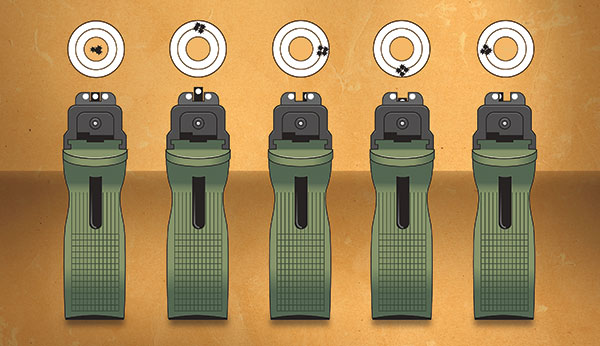
Even with good technique, many shooters face problems like hitting low, high, or to the side.
- Shots low: Often caused by flinching or poor trigger control.
- Shots high: Usually from anticipating recoil and lifting the barrel.
- Shots left/right: May be due to improper finger placement or grip.
Fix these by slowing down, correcting your grip, and focusing on the front sight.
Example: Target Analysis
A shooter consistently hits low and left. They check their grip and notice the trigger finger is too deep. Adjusting finger placement corrects the aim. Small changes can have big effects.
Safety And Responsible Shooting
Aiming well is not just about hitting your target. It’s about safe handling and responsibility.
- Always keep your finger off the trigger until ready to shoot.
- Only point the handgun at targets you intend to shoot.
- Know what is behind your target in case you miss.
Safety builds confidence and reduces accidents.
Comparing Handgun Sights
Different sight types can change how easy it is to aim.
| Sight Type | Visibility | Ease of Use |
|---|---|---|
| Iron sights | Standard, reliable | Requires practice |
| Fiber optic | Bright, easy to see | Good for quick aiming |
| Red dot | Very clear | Fast, easier for beginners |
If you have trouble with traditional sights, consider upgrading to fiber optic or red dot sights. These can help, especially in low light.
Real-world Statistics
According to the FBI, most handgun encounters happen within 7 yards. Accuracy at close range is more important than at long distances. Training for these distances improves practical skills.
A study from the National Shooting Sports Foundation shows that shooters who practice at least once a month have 25% higher accuracy rates than those who practice less. Consistency is key.
Non-obvious Insights For Better Aiming
- Dry fire with distractions: Practice aiming while hearing loud noises or seeing movement. It prepares you for real situations.
- Change your target size: Use smaller targets to train your eye and hand coordination. When you return to larger targets, aiming feels easier.
Many shooters miss these tips and focus only on standard practice. Adding these makes your training more realistic and effective.
Frequently Asked Questions
How Do I Know If My Aim Is Correct?
Check your target after each shot. If your shots are grouped closely around the center, your aim is correct. If shots are spread out or off-center, review your grip, stance, and sight alignment.
Should I Use One Eye Or Both Eyes When Aiming?
Most shooters close one eye for better focus. However, using both eyes can improve awareness and speed. Try both methods and use what feels natural.
What Is The Best Distance To Practice Aiming?
Start at 5–7 yards. This is the distance most handgun uses occur. Once you are accurate at this range, increase distance gradually.
Can I Improve Aim Without Live Ammunition?
Yes. Dry firing, laser training, and using airsoft guns are effective. These build muscle memory and trigger control without live ammo.
Are Red Dot Sights Worth It For Beginners?
Red dot sights are easier for many new shooters. They help with fast aiming and low-light conditions. If you struggle with traditional sights, consider them.
Last Word
Better aim comes from good habits, steady practice, and understanding your equipment. Focus on basics, pay attention to details, and stay safe. The more you train, the more confident and accurate you become. Remember, even small changes in technique can lead to big improvements.

Leave a Reply