Wearing a rifle sling sounds simple, but many shooters use it incorrectly or miss out on its benefits. Whether you hunt, compete, or work in security, the way you wear a sling affects comfort, safety, and accuracy. Picking the right sling style and adjusting it properly makes a big difference.
This article explains practical ways to wear a rifle sling, covers different types, and shows how to avoid common mistakes. You’ll find clear advice and real examples to help you get the most from your sling—without confusion.
Table of Contents
Why Use A Rifle Sling?
A rifle sling is more than just a way to carry your firearm. It improves weapon retention, helps you keep your hands free, and can even assist with aiming. For many people, a sling is essential for both safety and performance. Hunters often walk long distances, so a sling prevents fatigue. Tactical shooters rely on slings for quick transitions and control. Even casual shooters benefit from added stability.
Key Benefits
- Weight distribution: A sling shifts weight away from your arms and shoulders.
- Quick access: You can carry your rifle safely but bring it up fast.
- Improved accuracy: Certain sling positions steady your aim.
- Safety: Keeps your rifle secured and reduces risk of dropping.
- Hands-free movement: Lets you climb, open doors, or use binoculars.
Types Of Rifle Slings
Choosing the right sling matters. Each type works best for different situations. The three most common are single-point, two-point, and three-point slings.
| Sling Type | Best Use | Pros | Cons |
|---|---|---|---|
| Single-point | Close quarters, fast transitions | Easy to switch shoulders, simple design | Poor weapon control, less stable when running |
| Two-point | Hunting, patrol, general use | Better stability, supports aiming | Slower transitions, can snag on gear |
| Three-point | Tactical, heavy rifles | Maximum retention, hands-free | Complex, can tangle easily |
Single-point Sling
Attaches to the rifle at one location, usually near the receiver. Allows quick movement but offers less stability. Often used for AR-style rifles.
Two-point Sling
Connects at two points—usually the buttstock and fore-end. Used by hunters, military, and police. Supports carrying across the chest or back and is easy to adjust.
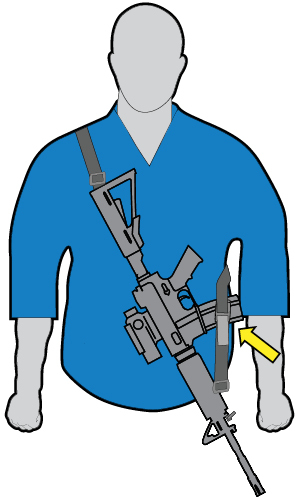
Three-point Sling
Wraps around your body and rifle, providing extra retention. Useful for heavy rifles or tactical scenarios. Can be confusing for beginners.
How To Wear Each Type Of Rifle Sling?
Knowing the differences helps you decide which sling fits your needs. Here’s how to wear each type for maximum comfort and function.
Wearing A Single-point Sling
- Attach the sling to the rear of your rifle.
- Place the loop over your dominant shoulder.
- Let the rifle hang in front of you, muzzle down.
- Adjust the length so the rifle sits at chest level.
- Practice switching shoulders and raising the rifle quickly.
Tip: Single-point slings are best for short missions or shooting ranges. They work well if you need to switch hands but aren’t ideal for long walks.
Wearing A Two-point Sling
- Attach the sling to the front and rear of your rifle.
- Choose how you want to carry: Over the shoulder, across the chest, or on the back.
- Over the shoulder: Place the sling on your shoulder, letting the rifle hang vertically.
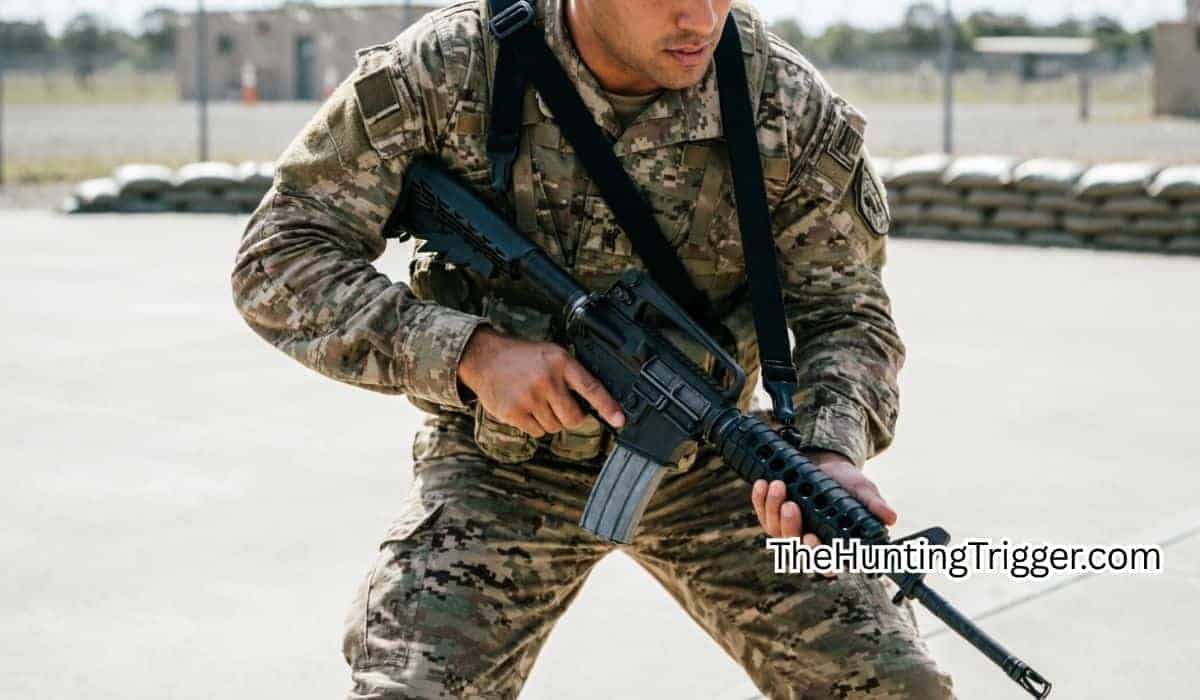
- Across the chest (tactical carry): Put your head and arm through the sling, so it rests diagonally across your body. The rifle hangs in front, ready to use.
- On the back: Place both arms through the sling, so the rifle rides behind you.
- Adjust the length for comfort and quick access.
Tip: Two-point slings are the most versatile. Adjust the tension for aiming support or loosen it for comfortable carrying.
Wearing A Three-point Sling
- Attach the sling to the rifle’s front and rear, then connect the third strap around your torso.
- Place your head and one arm through the sling, so it wraps around your chest and shoulder.
- The rifle hangs in front, muzzle down, but stays secured against your body.
- Adjust the straps so the rifle doesn’t swing loosely.
Tip: Three-point slings are good for heavy rifles and tactical tasks, but the extra straps can get in the way if not adjusted properly.
Proper Sling Adjustment
A common mistake is leaving the sling too loose or too tight. The right adjustment keeps your rifle secure but lets you use it fast. Most slings have a quick-adjust feature or sliders for easy changes.
| Adjustment | Effect | Ideal Use |
|---|---|---|
| Loose | Easy to carry, rifle swings freely | Hiking, long movements |
| Tight | Supports aim, rifle stays close | Shooting, tactical situations |
| Medium | Balance between carry and quick access | General use |
To adjust:
- Use the slider or buckle to shorten or lengthen the sling.
- Try moving your rifle to the ready position—if it’s too slow, loosen the sling.
- If the rifle swings too much or bumps your legs, tighten the sling.
- For aiming support, tighten until your arms feel steady but not strained.
Common Sling Positions
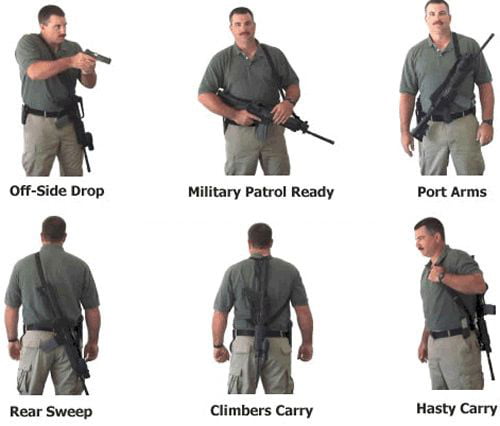
How you wear your sling affects both comfort and readiness. These are the most popular positions:
Over-the-shoulder Carry
The classic way. The rifle hangs on your dominant shoulder, muzzle down. Great for quick movement, but the rifle can slip off easily.
Cross-body Carry
The sling goes diagonally from one shoulder to the opposite hip. The rifle rests across your chest, ready to use. This is popular for tactical shooters.
Backpack Carry
Both arms through the sling, rifle sits on your back. Best for hiking or when you don’t need to shoot quickly. Not suited for emergencies.
Tactical Ready
Sling is tight across your chest, rifle hangs in front. Hands can support the rifle or stay free. Good for security, police, or competition.
How to make a paracord rifle sling step by step
Using A Sling For Shooting Stability
A sling can help you shoot more accurately. By tightening the sling around your arm or shoulder, you reduce movement and steady your aim.
Loop Sling Technique
- Place your support arm through the sling loop.
- Wrap the sling around your arm, just above the elbow.
- Pull the sling tight, so your arm and rifle form a stable triangle.
- Aim and fire with reduced wobble.
Many precision shooters use this method, especially for long-range shots. Practice wrapping the sling so it feels snug but not painful.
Hasty Sling Technique
- With a two-point sling, put your support arm through the sling and grasp the fore-end.
- Pull the sling tight as you bring the rifle to your shoulder.
- The tension helps steady your aim.
This method is faster but less stable than the loop technique. It works well for hunting or fast-moving situations.

Safety Tips For Wearing A Rifle Sling
Safety is crucial. A poorly worn sling can cause accidents or damage your rifle.
- Check attachment points often. Loose or broken mounts can drop your rifle.
- Avoid letting the muzzle point at people or your own body.
- Adjust the sling for your height and build; don’t copy someone else’s settings.
- If crossing obstacles, keep the rifle secured and hands ready to grab.
- Clean and inspect your sling regularly—dirt or wear can weaken straps.
Insight: Many shooters forget to check their sling after heavy use. Frayed fabric or rusty buckles can fail unexpectedly.
Choosing The Right Sling For Your Needs
Picking a sling depends on your activity, rifle type, and personal comfort. Here are some important factors:
- Material: Nylon is lightweight and strong. Leather is durable and classic but heavier.
- Width: Wider slings distribute weight better. Narrow slings are lighter but less comfortable for long use.
- Attachment type: Look for swivels, clips, or loops that fit your rifle.
- Length adjustment: Quick-adjust sliders are easier for fast changes.
- Padding: Helps with heavy rifles or long hikes.
Example: Hunters often prefer wide, padded two-point slings for support. Tactical shooters like single-point slings with quick-release clips.
Common Mistakes And How To Avoid Them
Even experienced shooters make errors with slings. Here are some of the most frequent problems:
- Sling too loose: Causes rifle to swing and bump.
- Sling too tight: Makes it hard to shoulder the rifle.
- Wrong attachment: Using clips that don’t fit can damage your rifle.
- Ignoring sling maintenance: Worn slings can break at the worst time.
- Not practicing transitions: If you need to switch shoulders, train with your sling on.
Insight: Many beginners skip practicing with their sling. This leads to slow reactions and missed shots in real situations.
Comparing Popular Rifle Sling Brands
To see how top slings stack up, here’s a quick comparison of three well-known brands.
| Brand | Material | Type | Price Range | Key Features |
|---|---|---|---|---|
| Magpul | Nylon | Two-point, Single-point | $30–$60 | Quick-adjust, durable hardware |
| Blue Force Gear | Nylon | Two-point | $40–$90 | Vickers design, wide padding |
| Viking Tactics | Nylon | Two-point | $45–$80 | Fast adjustment, slim profile |
Real-world Example: Sling Use In Hunting
A hunter spends hours outdoors, often walking rough terrain. Carrying a rifle in your hands leads to tired arms and less focus. Using a two-point sling with padding lets you carry the rifle comfortably, freeing your hands for binoculars or hiking poles.
When spotting game, you can tighten the sling for aiming support. This simple adjustment increases accuracy and reduces missed shots.
How To Practice Wearing Your Sling?
Getting comfortable with your sling takes a little practice:
- Start with your unloaded rifle and sling attached.
- Try carrying in different positions: Shoulder, cross-body, back.
- Adjust the sling for comfort, then test quick access.
- Practice raising the rifle from each position.
- If possible, train with real gear—heavy jackets, backpacks, or gloves.
Tip: Practice transitions, especially if you need to switch shoulders or carry gear.
Frequently Asked Questions
How Do I Choose The Best Sling For My Rifle?
Pick a sling based on your activity, rifle weight, and comfort. Hunters often prefer two-point slings with padding. Tactical shooters may like single-point slings for fast transitions. Look for durable materials and easy adjustment.
Can I Use A Rifle Sling To Improve Accuracy?
Yes. By tightening the sling around your arm or shoulder, you reduce movement and steady your aim. The loop sling and hasty sling techniques are popular for this purpose.
Are Rifle Slings Allowed In Competitions?
Most shooting competitions permit slings, but rules vary. Check the event guidelines for allowed sling types and methods. Using a sling can improve your score in precision events.
What Is The Safest Way To Carry A Rifle With A Sling?
The safest way is cross-body carry, with the muzzle pointed down and away from people. Keep the sling adjusted so the rifle stays close but can be accessed quickly. Always check attachments and sling condition before use.
How Often Should I Check My Rifle Sling For Wear?
Inspect your sling every time you clean your rifle or after heavy use. Look for fraying, broken buckles, and loose attachments. Replace worn slings immediately to avoid accidents.
Last Word
Getting your sling right means safer, more comfortable, and more accurate shooting. Take time to adjust, practice, and maintain your sling. The right sling makes every trip to the range or field easier and more effective.

Leave a Reply