Choosing the right handgun is a big decision, whether you are new to firearms or have some experience. The right handgun can make a real difference in your safety, comfort, and confidence. But with so many options and technical details, it’s easy to feel lost.
This guide will help you understand what really matters when picking a handgun, so you can make a smart and informed choice.
Know Your Purpose
Before you look at brands or models, ask yourself: why do you want a handgun? Your purpose will shape every other decision.
- Home Defense: If you need protection at home, size and capacity are important. You may not need the smallest gun, but you want something you can handle under stress.
- Concealed Carry: For carrying a handgun daily, size and weight matter a lot. You want something light, slim, and easy to hide.
- Target Shooting: If you enjoy shooting at the range, accuracy, comfort, and trigger quality take priority.
- Hunting or Outdoors: Some use handguns for animals or safety in the wild. This requires more power and often a larger frame.
Many people try to buy one gun for every purpose, but that often leads to compromise. Focus on your main reason first.
Understand Handgun Types
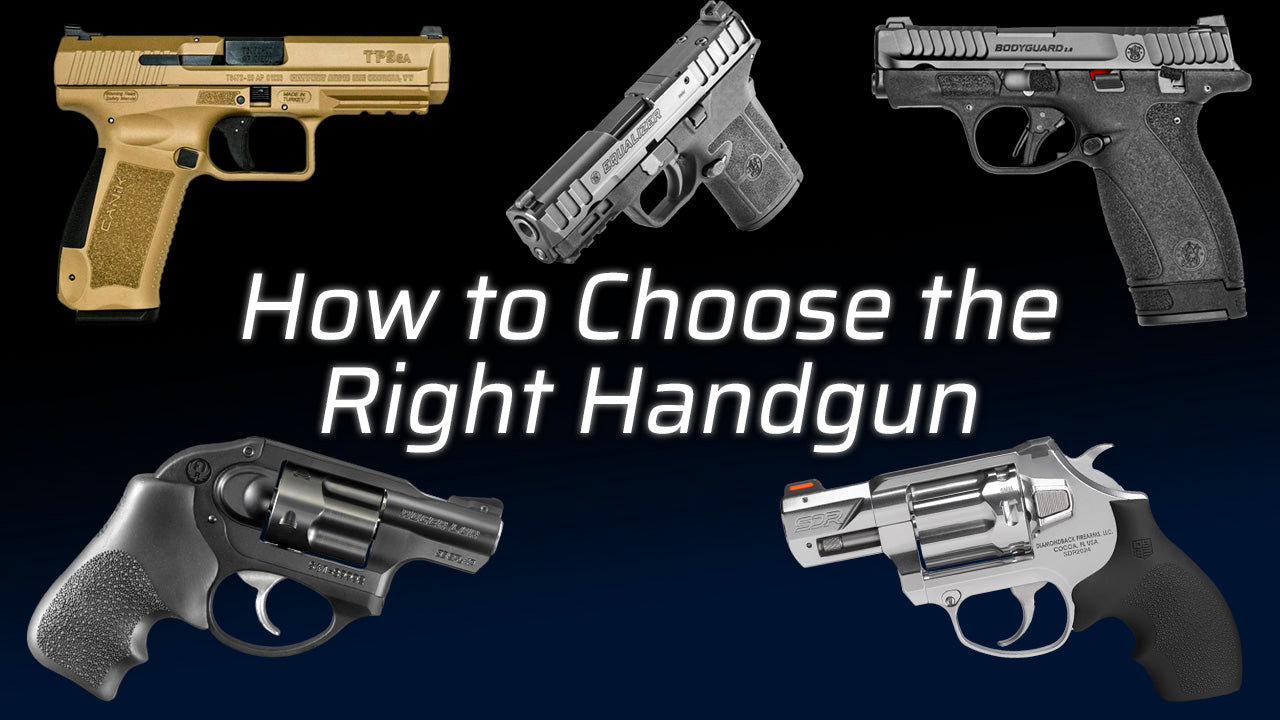
Handguns come in different types. The two main categories are revolvers and semi-automatic pistols.
| Type | Main Features | Pros | Cons |
|---|---|---|---|
| Revolver | Rotating cylinder holds ammo, usually 5-6 rounds | Simple to use, reliable, easy to check if loaded | Fewer rounds, bulkier, slower to reload |
| Semi-Auto Pistol | Uses magazines, can hold 7-17 rounds or more | Higher capacity, faster reload, slimmer profile | More moving parts, may jam if not maintained |
Most beginners prefer semi-auto pistols because they are slim, easy to carry, and offer more shots before reloading. But revolvers are still popular for their simplicity and reliability.
Caliber: Power And Control
The word caliber means the size of the bullet. Bigger caliber usually means more power, but also more recoil (kickback). Popular calibers include:
- .22 LR: Very low recoil, cheap, good for practice but weak for defense.
- .380 ACP: Small, light recoil, used in compact pistols.
- 9mm: Most common for self-defense, good balance of power and control.
- .40 S&W: More power than 9mm, but sharper recoil.
- .45 ACP: Heavy bullet, strong recoil, used in larger pistols.
For most people, 9mm is the best starting point. It offers enough power for protection, manageable recoil, and ammo is affordable.
Comparing Popular Calibers
| Caliber | Recoil | Magazine Capacity | Typical Use |
|---|---|---|---|
| .22 LR | Very Low | 10-15 | Practice/Training |
| .380 ACP | Low | 6-8 | Concealed Carry |
| 9mm | Moderate | 10-17 | Defense/Carry |
| .45 ACP | High | 7-10 | Defense/Range |
A common beginner mistake is picking a caliber that is too powerful. This can make the gun hard to control, especially for smaller hands or new shooters.
Size And Weight Matter
Handguns come in three main sizes:
- Full-size: Easier to shoot, less recoil, holds more ammo, but harder to carry.
- Compact: Shorter grip and barrel, easier to carry, still comfortable for most hands.
- Subcompact/Micro: Very small, light, easy to hide, but harder to shoot accurately.
If you plan to carry your handgun, try holding different sizes in your hand. A gun that feels good in the store might feel heavy after hours of carrying.
Grip And Ergonomics
The way a handgun fits your hand is critical. A poor fit can make shooting uncomfortable and less accurate.
- Check if your finger can reach the trigger easily.
- Make sure you can hold the grip firmly without straining.
- Try racking the slide (for semi-autos) or pulling the trigger (for revolvers). Is it smooth and comfortable?
Many new shooters ignore grip shape and end up with a gun that’s difficult to control. Hands come in all sizes, so test the gun before buying if possible.
Trigger Quality
Triggers matter more than most people think. A smooth, consistent trigger helps you shoot accurately.
- Single-action triggers are light and short.
- Double-action triggers are heavier and longer.
- Some guns have both (double-action/single-action).
If the trigger is too heavy or gritty, you may pull your shots off target. Try dry-firing (without ammo) to see how the trigger feels.
Safety Features
Modern handguns often have built-in safety features:
- Manual safety: A lever you flip to make the gun safe or ready.
- Trigger safety: Only fires when the trigger is fully pressed.
- Grip safety: Must be pressed by your hand to fire.
- Firing pin block: Prevents accidental firing if dropped.
Some people want many safeties, while others prefer simple designs. Know your comfort level and practice using the safety on your gun.
Reliability And Maintenance
A reliable handgun is one that works every time. Look for:
- Proven models used by police or military.
- Good reviews from trusted sources.
- Easy cleaning and maintenance.
Some pistols need more cleaning than others. Before you buy, check how to take the gun apart (field strip) and clean it.
Magazine Capacity
Magazine capacity means how many rounds the gun can hold before reloading. More capacity is better, but can also mean a larger gun.
- For self-defense, 7–15 rounds is common.
- For practice or home defense, higher capacity is useful.
Some areas have laws about capacity, so check your local rules.
Cost And Budget
Handguns can cost anywhere from $200 to over $2,000. Price does not always mean better.
- Budget models are often reliable, but may lack features.
- Mid-range ($400–$700) offers the best value for most people.
- Expensive guns may have better triggers, finish, or brand name, but not always better performance.
Don’t forget to budget for ammo, cleaning supplies, a safe, and training.

Try Before You Buy
If possible, visit a range that rents handguns. Test different models and calibers. What feels good in your hand? What can you shoot accurately and comfortably?
Many people buy a gun they have never shot, and later regret it. Range time helps you avoid this mistake.
Popular Handgun Brands
Some brands are known for quality and reliability:
- Glock: Simple, durable, easy to use.
- Smith & Wesson: Wide variety, good for all needs.
- Sig Sauer: High quality, great triggers.
- Ruger: Affordable, reliable.
- Beretta: Used by military and police worldwide.
Check reviews and talk to owners before deciding.
Common Beginner Mistakes
- Choosing by looks: A gun may look “cool” but feel terrible to shoot.
- Ignoring fit: If the grip is too big or small, accuracy and comfort suffer.
- Buying too much gun: Powerful calibers can cause flinching and bad habits.
- Skipping training: Owning a gun means learning to use it safely and well.
- Not considering the law: Always check local rules about ownership, transport, and carry.
Real-world Examples
- Sarah, first-time buyer: She wanted a carry gun and picked a .45 ACP subcompact. After shooting, she realized the recoil was too strong and the grip too small. She switched to a 9mm compact and now shoots more accurately.
- James, home defense: He chose a full-size 9mm with a light and a high-capacity magazine. It’s too large for carry but perfect for his nightstand.
- Maria, new to shooting: She started with a .22 LR for cheap practice. Later, she moved up to a 9mm when she was ready for more power.

Comparing Popular Handgun Models
To help you start your search, here’s a quick look at some well-loved models.
| Model | Type | Caliber | Capacity | Best Use |
|---|---|---|---|---|
| Glock 19 | Semi-auto | 9mm | 15 | Carry, Home Defense |
| Smith & Wesson M&P Shield | Semi-auto | 9mm/.40 | 7–8 | Concealed Carry |
| Ruger GP100 | Revolver | .357 Mag | 6 | Home Defense, Outdoors |
| SIG Sauer P320 | Semi-auto | 9mm | 15–17 | Carry, Range |
| Beretta 92FS | Semi-auto | 9mm | 15 | Home Defense, Range |
Legal And Training Considerations
Handgun laws are different everywhere. Always check:
- Do you need a license or permit?
- Are there rules about carrying or storing your gun?
- Is there a waiting period?
Training is just as important as choosing the gun. Many ranges offer basic handgun classes. These will teach you safe handling, storage, and shooting skills. Never skip training, even if you already know how to shoot.
Non-obvious Insights For Beginners
- Aftermarket support: Some guns have a huge market for holsters, sights, and magazines. Others have almost none. Buying a popular model can make finding accessories much easier.
- Resale value: Quality brands hold value better. If you change your mind later, selling a well-known brand is easier.
Remember, the best handgun is the one you can shoot well and will practice with regularly. Fancy features mean little if you don’t use them.
Frequently Asked Questions
What Is The Best Handgun For Beginners?
For most beginners, a 9mm compact semi-automatic pistol is ideal. It offers manageable recoil, good capacity, and is easy to find at ranges. Models like the Glock 19 or Smith & Wesson M&P Shield are popular starting points.
How Much Should I Spend On My First Handgun?
A budget of $400–$700 is reasonable for a quality, reliable handgun. Avoid very cheap guns, as reliability and support may be poor. Don’t forget to budget for training and safe storage.
What Caliber Is Best For Self-defense?
9mm is the most popular self-defense caliber. It balances power, capacity, and recoil well. It’s also the most widely used by police and military worldwide. Higher calibers like .40 S&W or .45 ACP are more powerful but harder to control.
Should I Choose A Revolver Or A Semi-automatic Pistol?
Both have strengths. Revolvers are simple and reliable, great for those who want a low-maintenance option. Semi-automatic pistols offer higher capacity and easier reloading. Most beginners prefer semi-autos, but try both to see what fits you best.
Do I Need To Take A Handgun Safety Course?
Yes, everyone should take a basic handgun safety course. It teaches safe handling, storage, and shooting skills. Many ranges or local law enforcement offer these courses, and some states require them for ownership or carry permits. Learn more about safety and training from the National Rifle Association.
Choosing the right handgun takes time, research, and hands-on experience. Focus on your main purpose, find a gun that fits your hand and skill level, and practice regularly. With the right approach, you’ll find a handgun that keeps you safe and confident.

Leave a Reply