
Use up and down arrow keys to resize the meta box pane.
Many gun owners wonder if they can use. 380 ammo in a 9mm handgun. Both cartridges look similar, and some people even call the. 380 the “9mm Short. ” But does this mean they are interchangeable? The answer is more complex than a simple yes or no.
Using the wrong ammunition can be dangerous, and misunderstanding the differences could lead to injury or damage to your firearm. In this article, you’ll learn the exact differences between. 380 ACP and 9mm, the risks of trying to shoot. 380 in a 9mm handgun, and what every gun owner should know before they go to the range.
Table of Contents
Understanding The Cartridges
Before you even think about loading a .380 into a 9mm handgun, it’s important to know what these numbers mean. .380 ACP stands for Automatic Colt Pistol, while 9mm usually refers to 9x19mm Parabellum, also called 9mm Luger.
.380 Acp
- Bullet diameter: 0.355 inches (9mm)
- Case length: 17mm
- Typical pressure: 21,500 psi
- Common use: Compact pistols for self-defense
9mm Luger (9x19mm Parabellum)
- Bullet diameter: 0.355 inches (9mm)
- Case length: 19mm
- Typical pressure: 35,000 psi
- Common use: Full-size pistols, military, law enforcement
At first glance, they seem similar. Both have the same bullet diameter, but the 9mm Luger case is longer and loaded to higher pressures. This makes a big difference in how they perform.
Can A .380 Cartridge Fit In A 9mm Chamber?
The short answer is usually no—at least, not safely or reliably. The .380 ACP cartridge is shorter than the 9mm, and the case is also slightly different in design.
| Cartridge | Case Length | Breech Pressure | Intended Use |
|---|---|---|---|
| .380 ACP | 17mm | 21,500 psi | Compact pistols |
| 9mm Luger | 19mm | 35,000 psi | Full-size pistols |
Some shooters notice that a. 380 round can physically fit into a 9mm magazine and sometimes even into the chamber, but this does not mean it is safe to fire. In fact, this is a mistake that can have serious consequences.
What Happens If You Shoot .380 In A 9mm Handgun?
If you load a .380 ACP into a 9mm chamber and pull the trigger, several things can happen:
- The .380 round may not fire at all. The firing pin may hit, but the shorter case means the round sits deeper in the chamber, so it might not ignite.
- If it does fire, the .380 case could expand or even rupture due to the loose fit, causing hot gas to escape.
- Accuracy will be poor, and the bullet may not have enough force to leave the barrel, creating a blockage. This is called a squib load and is dangerous if you fire another round afterward.
- Your gun could be damaged or destroyed.
No gun manufacturer recommends firing. 380 in a 9mm handgun. Most gun manuals specifically warn against using the wrong ammunition.
Why The Two Cartridges Are Not Interchangeable?
At first glance, the .380 ACP and 9mm Luger look alike, but their design differences are critical.
- The .380 is a straight-walled, rimless cartridge.
- The 9mm Luger is slightly tapered and longer.
- The pressure difference means a 9mm gun is built for more forceful ammo.
Even though the bullet diameter is the same, the overall cartridge dimensions and pressure levels are not. This makes them unsafe to swap.
Key Differences Summarized
| Feature | .380 ACP | 9mm Luger |
|---|---|---|
| Bullet Diameter | 0.355 in | 0.355 in |
| Case Length | 0.680 in | 0.754 in |
| Overall Length | 0.984 in | 1.169 in |
| Pressure | 21,500 psi | 35,000 psi |
Risks And Dangers
Trying to fire a .380 in a 9mm handgun is not just a bad idea—it’s a real safety risk. Here are some of the dangers:
- Case Rupture: Because the .380 case is smaller, it does not seal the chamber correctly. Hot gases can escape, possibly injuring your hand or face.
- Squib Loads: The bullet may get stuck in the barrel. If you fire a 9mm round afterward, the gun can explode.
- Poor Cycling: Most 9mm handguns rely on the recoil from a full-power round. A .380 does not produce enough force to cycle the action reliably, often causing jams.
- Damage to the Gun: Repeated mistakes can ruin the chamber or other parts of your firearm.
- Legal Issues: Using the wrong ammo can void warranties or even create problems with law enforcement or insurance if an accident happens.
Can 18-year-olds buy ammunition for handguns
Common Myths And Misunderstandings
Many people think that because the .380 and 9mm have the same bullet diameter, they must be interchangeable. This is false and dangerous.
Myth 1: “it’s Just A Shorter 9mm”
While the. 380 is sometimes called the “9mm Short,” it’s not just a smaller version. The engineering and pressure differences make them unique.
Myth 2: “my Friend Did It And Nothing Happened”
Accidents do not happen every time, but the risk is always there. Just because you got lucky once does not mean it’s safe.
Myth 3: “the Magazine Fits, So It Must Work”
A. 380 may fit into a 9mm magazine, but this does not mean it is safe to fire. The chamber size is what matters.
Why Do People Get Confused?
Many beginners are confused by cartridge names. 9mm can refer to several types of ammo, such as:
- 9mm Luger (9x19mm)
- 9mm Short (.380 ACP)
- 9mm Makarov (9x18mm)
Not every 9mm is the same. Always check your gun’s barrel or owner’s manual for the correct ammo.
What Should You Do If You Accidentally Load .380 In A 9mm?
If you realize you have loaded the wrong ammo, do not fire the gun. Instead:
- Eject the magazine and lock the slide open.
- Remove all ammunition and check every round.
- Inspect the barrel to make sure nothing is stuck.
- Reload with the correct ammo before using the gun again.
If you are unsure, ask a qualified gunsmith or range officer to inspect your firearm.
Real-world Examples
Some shooters have tried to fire. 380 in a 9mm handgun by accident. The most common results are failure to fire or a jam, but there have been reports of case ruptures causing minor injuries. In rare cases, gun damage has occurred, especially with older firearms that have less chamber support.
One non-obvious risk is that the bullet may travel a short distance down the barrel, making it hard to see. Firing another round afterward can destroy the gun and cause serious harm.
How To Avoid Mistakes
It’s easy to mix up .380 and 9mm ammo if you own both types of guns. Here are some practical tips:
- Store different calibers in separate, labeled boxes.
- Double-check ammo before loading magazines.
- Inspect the markings on each round—most have the caliber stamped on the base.
- Never shoot if you are unsure about the ammo.
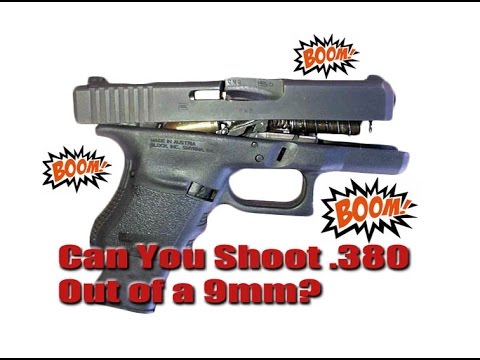
What About Shooting 9mm In A .380?
This is even more dangerous. A 9mm Luger round is too long and powerful for a. 380 chamber. It likely will not fit, but if forced, it can cause a catastrophic failure.
Manufacturer Warnings
All major gun makers, including Glock, Smith & Wesson, and SIG Sauer, warn users to only shoot ammunition designed for their firearm’s caliber. Ignoring this guidance can void your warranty and put you in danger.
Practical Advice For New Gun Owners
If you are new to handguns:
- Learn to identify ammo by sight and by reading the box.
- Practice safe handling and ask for help if you are unsure.
- Understand that using the wrong ammo is one of the most common beginner mistakes.
- Invest in a quality ammo storage system to avoid confusion.
Ammo Identification Table
Here’s a quick reference for identifying popular 9mm-based rounds:
| Caliber Name | Common Marking | Typical Use |
|---|---|---|
| .380 ACP | .380 Auto | Pocket pistols |
| 9mm Luger | 9x19mm | Duty pistols |
| 9mm Makarov | 9x18mm | Eastern European pistols |
Two Non-obvious Insights
- Headspace problems: Many shooters do not realize that the .380’s shorter case can cause “headspace” issues in a 9mm chamber, making ignition unreliable and dangerous.
- Extractor failures: The extractor in a 9mm gun may not grab the smaller .380 case properly, leading to extraction failures and possible jams.
Final Thoughts
Shooting .380 in a 9mm handgun is not safe or recommended. The risks far outweigh any perceived convenience. Both cartridges serve different purposes and are made for specific firearms. Always use the correct ammo for your gun, double-check before shooting, and when in doubt, ask a qualified expert. Staying safe means respecting the differences between similar-looking rounds.
Frequently Asked Questions
Can A 9mm Handgun Safely Fire .380 Ammunition?
No, a 9mm handgun is not designed to fire. 380 ammunition. The differences in case length, pressure, and headspace make it unsafe to use. 380 ammo in a 9mm chamber.
What Will Happen If I Accidentally Fire A .380 In My 9mm Pistol?
Most likely, the round will fail to fire, or the case may rupture. If the bullet gets stuck in the barrel, it can cause serious damage or injury if you fire another round afterward.
Is It Ever Okay To Use Different Ammo In My Handgun?
Only use the exact caliber marked on your firearm. Mixing calibers is dangerous and can damage your gun or cause injury.
Why Do People Call .380 The “9mm Short”?
The. 380 ACP and 9mm Luger have the same bullet diameter, but the. 380 is shorter and less powerful. Some countries and manufacturers refer to it as the “9mm Short” or “9mm Kurz. ”

Leave a Reply