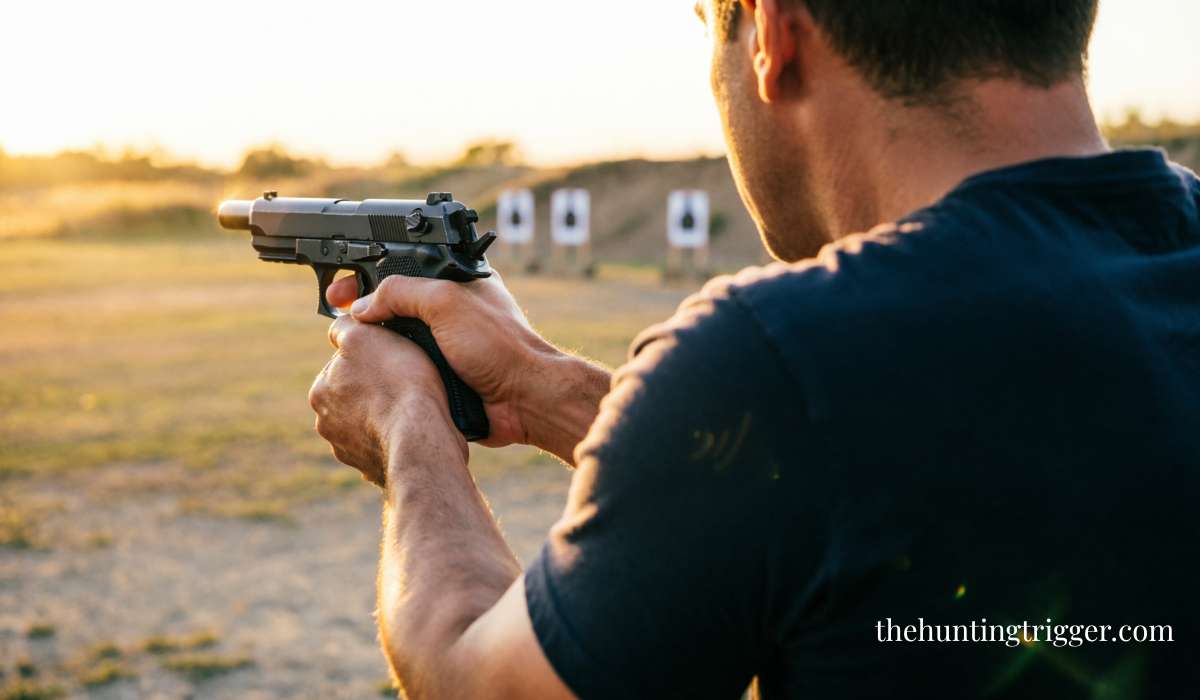
Holding a handgun may seem simple, but the way you grip and position your hands can make a huge difference in accuracy. Even the most expensive pistol will not shoot straight if your hands are not steady and aligned. Many new shooters focus on aiming or buying better sights, but the real secret to hitting your target often starts with your grip.
If your shots go low, to the side, or are scattered, your hold is likely the main reason. Learning to hold a handgun the right way is essential for safety, confidence, and maximum accuracy.
Table of Contents
Why Grip Matters More Than You Think?
Most handgun misses are not caused by poor aiming—they happen because of inconsistent or weak grip. When you pull the trigger, your hand can move the gun just enough to make you miss the target, especially at longer distances. A good grip gives you control, reduces recoil, and keeps your sights steady. In fact, studies show that up to 80% of handgun shooting errors are related to grip and trigger control, not the gun or ammo.
A solid grip also helps you shoot faster. When your gun comes back down from recoil, it will return to the same position, making follow-up shots more accurate and quick. This is why professional shooters spend hours just practicing their grip.
The Correct Handgun Grip Step-by-step
Let’s break down the best way to hold a handgun for maximum accuracy. These steps work for most semi-automatic pistols and revolvers.
1. High On The Backstrap
Place the web of your shooting hand (the area between your thumb and index finger) as high as possible on the backstrap of the gun. This puts your hand in line with the barrel and reduces muzzle flip.
2. Wrap Your Fingers Firmly
Curl your three lower fingers tightly around the grip. Your middle finger should be snug under the trigger guard. The grip should feel solid but not tense.
3. Trigger Finger Placement
Your trigger finger should rest on the trigger’s face, not too deep or too shallow. The pad (not the joint) is usually best for smooth pressure.
4. Support Hand Joins
Bring your support hand up and wrap it around the front of your shooting hand’s fingers. Your support hand’s thumb should point forward, under your shooting hand’s thumb.
5. Thumb Position
Both thumbs should point forward, almost parallel to the barrel. The support hand’s thumb often sits just below the slide or cylinder.
6. Pressure From Both Hands
Most of your grip strength should come from your support hand. Try for about 60% support hand and 40% shooting hand pressure. This helps keep the gun steady.
7. Grip Consistency
Always use the same grip. Changing your hold between shots or shooting sessions causes accuracy problems.
Can you fire a 380 round in a 9mm handgun

One-handed Vs Two-handed Grip
One-handed Shooting
One-handed shooting is sometimes required, such as in competitions or self-defense. In this case, keep your grip high, wrap your fingers tight, and keep your wrist locked. Balance and stance become more important to offset the loss of your support hand.
Two-handed Grip
Most modern shooting uses a two-handed grip for better control. It absorbs recoil, steadies your aim, and helps you shoot faster and more accurately. The most popular two-handed grip is the thumbs-forward grip described earlier.
Here’s a quick comparison of the two:
| Grip Type | Stability | Recoil Control | Common Use |
|---|---|---|---|
| One-Handed | Lower | Less | Competitive, Defensive |
| Two-Handed | High | Better | Most modern shooting |
Common Mistakes When Holding A Handgun
Many shooters make small mistakes that lead to big accuracy problems. Here are some of the most frequent:
1. Low Grip
Placing your hand too low on the grip causes more muzzle flip and less control.
2. Thumbs Crossed
Crossing your thumbs behind the slide is dangerous. The slide can cut your hand as it moves back.
3. Too Tight Or Too Loose
Gripping the gun too hard makes your hands shake. Too loose and the gun moves in your hand.
4. Trigger Finger Too Deep
Using the joint of your finger instead of the pad can pull your shots off target.
5. Inconsistent Grip
Changing your grip from shot to shot leads to random results.
6. Weak Support Hand
Not using your support hand enough means less stability and more muzzle rise.
How Grip Affects Recoil And Follow-up Shots?
A proper grip is not just about accuracy—it also controls recoil. When you fire, the gun wants to move back and up. A high, firm grip absorbs much of this movement, so your sights stay on target. Your support hand acts as a shock absorber, helping the gun come back to the same place after each shot.
Experienced shooters can fire several rounds quickly and still hit the target, all because of their grip. For example, in practical shooting sports, the top competitors can shoot 5 shots in under 2 seconds and keep tight groupings. They do this by having a consistent, strong grip that manages recoil.
Stance And Grip: Working Together
Even with a perfect grip, your stance also matters. The way you stand helps balance your body and absorb the gun’s movement. Here are two of the most popular stances:
- Isosceles Stance: Both arms extended, feet shoulder-width apart, body square to the target.
- Weaver Stance: Firing arm straight, support arm bent, body slightly turned.
Both stances work if you keep your upper body strong and lean slightly forward. Leaning back is a common mistake—it makes recoil harder to control.
Here’s a summary of grip and stance interaction:
| Stance | Grip Benefit | Drawback |
|---|---|---|
| Isosceles | Even recoil absorption, easy to learn | Can feel less natural for some shooters |
| Weaver | Good for strong-handed shooters, more stable under stress | More complex, less popular for beginners |
Adjusting Grip For Different Handguns
Not all handguns are the same size or shape. A full-size pistol, compact, and revolver all feel different in your hands. Here’s how to adjust:
- Small Guns: You may not get your pinky finger on the grip. Use a firmer hold with your remaining fingers, and let your support hand fill as much space as possible.
- Revolvers: Keep your thumbs away from the cylinder gap (the space between cylinder and barrel). Hot gases escape here and can burn.
- Large Guns: Don’t over-grip or stretch your fingers. Keep the same principles—high, firm, consistent.
Many shooters miss that grip panels, backstraps, and even grip tape can make a big difference. Try different grips if your gun allows it, and choose one that fits your hand comfortably.
Dry Fire Practice: Building Muscle Memory
Dry fire means practicing your grip and trigger press with an unloaded gun. It is one of the safest and best ways to build muscle memory. When you dry fire:
- Practice your grip exactly as you would when shooting live ammo.
- Focus on consistent hand placement every time you pick up the gun.
- Pull the trigger smoothly, watching that the sights don’t move.
Ten minutes a day of dry fire can improve your grip and accuracy more than shooting hundreds of rounds at the range.
Recoil Anticipation And Grip
Many shooters anticipate recoil—they flinch or push the gun down just before firing. This ruins accuracy. The root cause is often a weak or inconsistent grip. A good grip makes the gun feel like an extension of your hand, so you trust it won’t jump or twist.
Practicing with a firm, repeatable grip helps your mind and muscles stay relaxed and confident.
A useful trick: after gripping the gun, try to hold it so that if someone gently pushes on it, your hands do not shift or slip. This means your grip is solid.
Advanced Tips For Maximum Accuracy
Once you have the basics, these advanced tips can push your accuracy even further:
- Grip Pressure Drill: Practice squeezing the gun with both hands, then slightly relax until your hands stop shaking. This is usually the right amount of pressure.
- Visual Alignment: Make sure you can see equal amounts of the backstrap on both sides of your hand. This means your grip is centered.
- Check Your Wrists: Wrists should be locked, not loose. A loose wrist lets the gun jump.
- Use a Shooting Timer: Time your shots to test your grip under pressure. If your groups open up, check your grip first.
- Film Yourself: Watching a video of your shooting can show you small grip problems you never noticed.
- Try Different Grips: Some hand sizes fit better with slight changes. Experiment to find what feels stable but natural.
Real-world Example: Competition Shooter’s Grip
Professional shooters like those in IPSC or USPSA competitions use extremely consistent grips. They train to keep their hands in the exact same place every time they draw. For instance, champion shooter Ben Stoeger practices his grip hundreds of times a week without firing a shot, just to build perfect muscle memory.
They also use grip-enhancing products like chalk, grip tape, or rubber sleeves to prevent slipping, especially during long matches or in sweaty conditions.
Safety First: Why Grip Affects More Than Accuracy
A correct grip is not just about hitting your target. It also keeps you and others safe. A poor grip can lead to malfunctions, dropped guns, or even injury. For example, a weak grip can cause a “limp wrist” malfunction in semi-automatic pistols, where the gun fails to cycle properly.
Always make sure your grip is secure before you shoot. Never try new grip techniques with live ammo until you have practiced them safely.
The Role Of Hand Strength And Dexterity
Some people think you need huge hands or strong arms to shoot well. This is not true. What matters more is hand strength and dexterity. Simple exercises like squeezing a tennis ball or using hand grippers can help.
Interestingly, shooters with small hands often find ways to adjust their grip for comfort and control. The most important thing is finding a position that lets you press the trigger smoothly without moving the sights.
Choosing The Right Accessories For Better Grip
Modern handguns offer many ways to improve your grip:
- Grip Tape: Adds friction, especially useful in humid or wet conditions.
- Custom Grips: Change the size or texture of the handle.
- Finger Grooves: Some grips have built-in grooves for your fingers, which help with repeatable hand placement.
Before buying accessories, try shooting with the standard grip first. Sometimes, less is more.

Frequently Asked Questions
What Is The Most Important Part Of Holding A Handgun Accurately?
The most important part is having a high, firm, and consistent grip. Your hand should be as high on the backstrap as possible, and both hands should press the gun evenly. This gives you control, helps manage recoil, and keeps your aim steady.
Should My Grip Be Tight Or Relaxed?
Your grip should be firm but not tense. Imagine holding a hammer—tight enough so it won’t slip, but not so tight your hand shakes. Most of your grip strength comes from your support hand.
How Do I Stop My Gun From Moving When I Pull The Trigger?
If your gun moves, your grip may be weak or your trigger finger may be pressing too hard or unevenly. Focus on keeping your grip steady and pressing the trigger straight back with the pad of your finger. Dry fire practice helps a lot.
Can I Use The Same Grip For All Types Of Handguns?
The basic principles are the same, but you may need to adjust for size and shape. For example, small guns may not fit all your fingers, and revolvers need your thumbs kept clear of the cylinder gap. Always adapt your grip for comfort, control, and safety.
Is It Okay To Use Grip Enhancers Or Accessories?
Yes, as long as they help you maintain a consistent grip and do not interfere with the gun’s function. Grip tape, rubber sleeves, and custom panels are common. Try shooting without them first, then decide what works best for you.
Final Word
Holding your handgun the right way is the foundation of accurate shooting. Practice your grip regularly, pay attention to small details, and never rush. Even small improvements in how you hold your gun can lead to much better results on the range.
Remember, accuracy is built from the ground up—starting with your hands.

Leave a Reply