
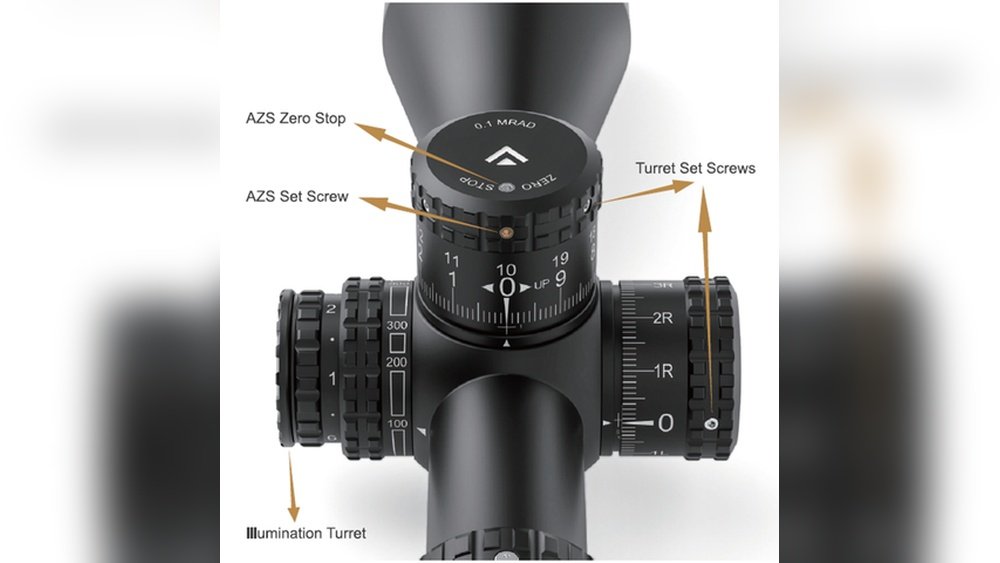
If you use riflescopes for hunting, target shooting, or tactical shooting, you may have heard the term “zero stop. ” But what exactly is zero stop on a scope, and why is it important? Many shooters overlook this feature, but it can make a big difference in accuracy and ease of use.
Let’s dive deep into what zero stop means, how it works, and why it matters for shooters at all levels.
Table of Contents
What Does Zero Stop Mean?
The zero stop is a mechanical feature inside some rifle scopes. It allows you to return the elevation turret to your original zero point quickly and precisely, without looking or counting clicks. When you “dial up” your elevation turret for long-range shots, you often need to return to your base zero for closer targets. Zero stop makes this process fast and foolproof.
Imagine you’ve set your scope so that at 100 yards, the crosshairs hit exactly where your bullet lands. That’s your “zero. ” When you adjust for a 500-yard shot, you twist the elevation turret up by several clicks. Without zero stop, it’s easy to lose track of where your original zero was, especially if you’re in a hurry or distracted.
Zero stop solves this by giving you a hard, physical stop when you return to zero—no more guessing.
How to sight in a scope at 25 yards step by step
Why Is Zero Stop Important?
For shooters who adjust their turrets frequently, especially in dynamic situations, zero stop is a game-changer. Here’s why:
- Speed: You can return to your exact zero instantly, which is crucial in competitions or hunting where time matters.
- Confidence: There’s no risk of going below your zero and making a bad shot.
- Consistency: Every time you return to zero, it’s the same—no variations or errors.
Zero stop is especially valuable for long-range shooters, PRS (Precision Rifle Series) competitors, and hunters who deal with targets at different distances.

How Does Zero Stop Work?
The zero stop system is mechanical. Inside the scope’s elevation turret, there’s a device—usually a ring, collar, or pin—that physically blocks the turret from rotating below your set zero. Once you set it up, the turret will stop at that point every time.
There are several types of zero stop mechanisms:
- Shim-based systems: Early zero stops used small metal shims to set the stop point.
- Disc or collar systems: Many modern scopes use a disc that you set at your zero position.
- Internal pin stops: Some high-end scopes use a built-in pin or catch to create the stop.
Each design has pros and cons, but all serve the same basic purpose: preventing the turret from rotating below your chosen zero.
Setting Up Zero Stop: Step-by-step
Setting zero stop on a scope is not difficult, but each model can be a bit different. Here’s a typical process:
- Zero your rifle: Shoot at your desired distance (often 100 yards/meters) and adjust the scope so your point of impact matches your crosshairs.
- Remove turret cap: Carefully unscrew and lift off the elevation turret cap.
- Adjust zero stop mechanism: Depending on your scope, this could mean inserting shims, turning a collar, or adjusting a set screw.
- Test the stop: Rotate the turret down until it stops. Check if you’re still perfectly zeroed.
- Reassemble: Replace the turret cap and ensure everything is tight.
Some scopes, like the Vortex PST Gen II or Nightforce ATACR, have tool-free systems. Others may need small tools or shims. Always check your scope’s manual for details.
Types Of Zero Stop Systems Compared
Different brands use different zero stop designs. Here’s a quick comparison of popular systems:
| Zero Stop Type | How It Works | Pros | Cons |
|---|---|---|---|
| Shim-based | Stack metal shims under turret | Simple, reliable | Time-consuming, not tool-free |
| Disc/collar | Turn or slide a disc to set stop | Easy to adjust, tool-free (often) | Can slip if not tight |
| Internal pin | Pin blocks turret at zero | Precise, durable | Usually only in premium scopes |
Zero Stop Vs. No Zero Stop: Real-world Performance
To see the difference, let’s compare using a scope with and without zero stop in a practical shooting scenario:
| Situation | With Zero Stop | Without Zero Stop |
|---|---|---|
| Return to zero after dialing up | Instant, no counting needed | Must count clicks, risk of going past zero |
| Night or low light use | Can return to zero by feel | Hard to see turret marks, easy to make mistakes |
| Stressful situations | Consistent, reliable | Increased chance of errors |
As you can see, the advantages of zero stop become clear when speed, confidence, and reliability are important.
Common Misunderstandings About Zero Stop
Many new shooters believe that zero stop is only for professionals or that it’s unnecessary for hunting. Here are a few facts:
- Zero stop is not just for long-range shooters. Even hunters who may need to adjust for different distances can benefit.
- It does not affect scope accuracy; it simply helps you return to a known zero.
- Not all scopes have zero stop. It’s mostly found in mid to high-end models, but more affordable scopes now offer it too.
Another point beginners often miss: Setting the zero stop does not “lock” your elevation turret. It only prevents you from dialing below your zero, not above it.
Choosing A Scope With Zero Stop
If you’re shopping for a new scope, should you prioritize zero stop? Here are some factors to consider:
- Shooting style: If you dial turrets for different distances, zero stop is extremely helpful.
- Budget: Scopes with zero stop tend to cost more, but prices are dropping.
- Ease of use: Look for scopes with tool-free or easy-to-adjust zero stop systems.
- Brand reliability: Trusted brands like Vortex, Nightforce, Leupold, and Athlon offer well-designed zero stop features.
Before buying, handle a few scopes in person if possible. Try dialing the turrets and see if the zero stop feels solid and easy to set.
Practical Uses And Examples
Let’s see how zero stop helps in real shooting situations.
- PRS competition: Shooters engage targets from 100 to 1000 yards. They dial up for long-range, then need to return to zero quickly for closer targets. Zero stop lets them do this without mistake.
- Hunting: A hunter may dial up for a 300-yard shot, then a deer appears at 100 yards. With zero stop, the hunter can quickly return to zero without looking at the turret.
- Tactical shooting: In stressful or low-visibility situations, fine adjustments are hard. Zero stop gives tactile feedback so shooters know their turret is at zero, even without looking.
Common Mistakes When Using Zero Stop
Even experienced shooters sometimes make mistakes with zero stop systems:
- Not setting zero stop after re-zeroing: If you change your zero distance, always reset the zero stop.
- Forgetting to check the stop: Sometimes, the stop can slip or move after heavy recoil. Check it regularly.
- Assuming all zero stops are the same: Different brands have different systems—read your manual and practice with your scope.
- Over-tightening or forcing the turret: Never use excessive force; this can damage the mechanism.
One insight many miss: Always bring small tools or Allen wrenches to the range if your scope’s zero stop uses them. It saves time if you need to adjust on the fly.

Zero Stop Vs. Other Scope Features
How important is zero stop compared to other features like illuminated reticles, parallax adjustment, or first vs. second focal plane? Here’s a basic comparison:
| Feature | Best For | Importance |
|---|---|---|
| Zero stop | Frequent turret dialers | High for precision shooting |
| Illuminated reticle | Low light, hunting | Medium |
| Parallax adjustment | Long range, target shooters | Medium-high |
| First focal plane | Range estimation, tactical | Depends on style |
For anyone who dials turrets often, zero stop is usually more valuable than features like illumination or even parallax, especially for repeatable accuracy.
Should You Add Zero Stop To An Existing Scope?
Some shooters wonder if they can add zero stop to a scope that doesn’t have it. In most cases, it’s not possible unless the manufacturer offers an aftermarket kit. Some scopes (like certain Vortex models) do have retrofit kits, but these are the exception, not the rule.
If zero stop is essential for your shooting, it’s better to invest in a scope with this feature built in. Trying to “hack” a zero stop with homemade solutions often leads to unreliable results.
Is Zero Stop Worth The Cost?
Zero stop used to be a feature only on expensive scopes, but things are changing. Many mid-range models now include it. For most shooters who want consistent, repeatable performance, the small extra cost is well worth it.
Here’s a practical tip: If you’re on a budget and must choose, spend more on glass quality and tracking reliability before paying for zero stop. But if you can afford both, it’s a smart upgrade.
Frequently Asked Questions
What Is The Main Purpose Of Zero Stop On A Scope?
The main purpose of zero stop is to let you return your elevation turret to your original zero point quickly, without counting clicks or looking at the turret. This ensures you always know where your “home” position is, which helps with consistent shooting.
Can You Set Zero Stop At Any Distance?
Yes, you can set zero stop at any distance you choose, but most shooters set it at 100 or 200 yards/meters. Just remember, if you change your zero distance, you need to reset the zero stop.
Do All Scopes Have Zero Stop?
No, not all scopes have zero stop. It’s most common in mid to high-end scopes, especially those designed for tactical or precision shooting. Some entry-level scopes are now offering basic zero stop features.
Is Zero Stop The Same As Turret Lock?
No, zero stop and turret lock are different. Zero stop prevents you from dialing below your set zero. Turret lock stops the turret from moving at all, usually to prevent accidental changes during transport.
Finally
Zero stop is a simple feature with a big impact. Whether you’re a hunter, competitor, or tactical shooter, understanding and using zero stop can boost your accuracy and confidence in the field. It’s one of those small things that make a real difference when it matters most.

Leave a Reply