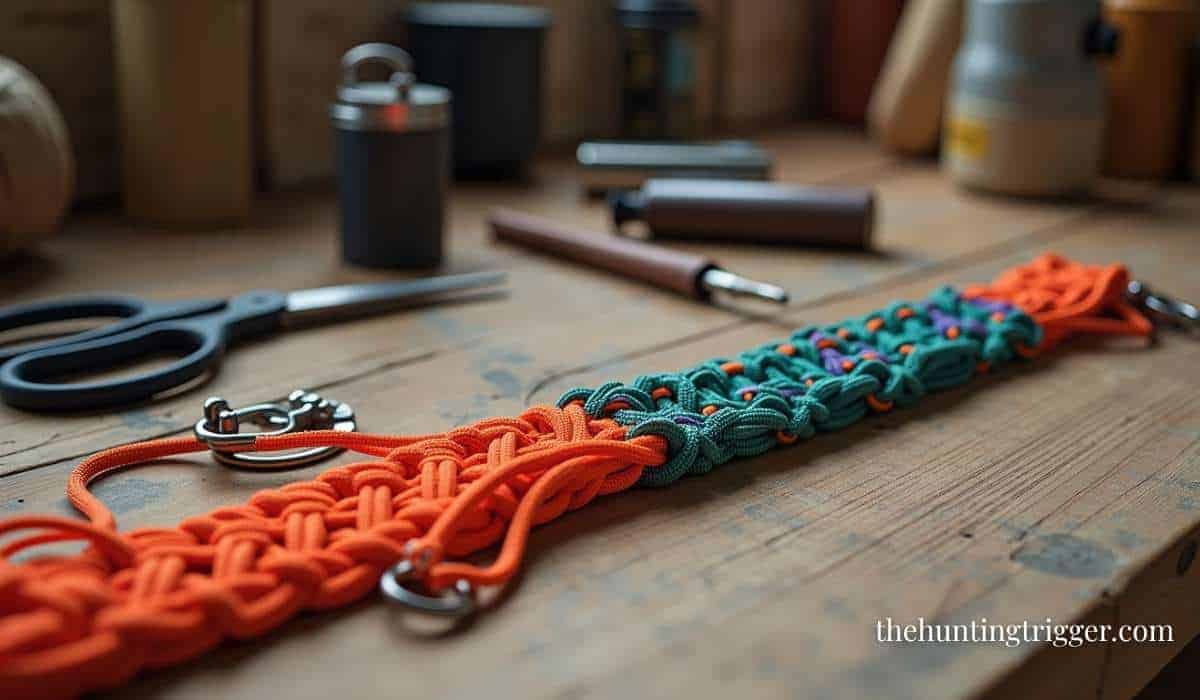
Making your own paracord rifle sling is a rewarding project. Not only does it let you customize your gear, but it also gives you a strong, practical tool for outdoor adventures. Paracord slings are known for their durability and multi-use potential—if you ever need extra cordage, you can unravel your sling and use the paracord for survival tasks. Many hunters, shooters, and preppers appreciate the self-reliance that comes from making their own equipment. This guide will walk you through the entire process, from choosing materials to attaching the finished sling to your rifle. Along the way, you’ll pick up practical tips, learn about common mistakes, and discover a few details that most beginners overlook.
Table of Contents
Why Choose A Paracord Rifle Sling?
A paracord rifle sling is more than just a way to carry your rifle. It’s a versatile tool that can help you in many situations. Paracord, also known as 550 cord, is famous for its strength—rated to hold up to 550 pounds. When woven into a sling, it offers comfort and security, while also looking great on your rifle. If you ever face an emergency, you can unravel the sling and use the paracord for shelter, fishing line, or repairs.
Buying a pre-made sling can be expensive, and you’re often limited in style and features. By making your own, you decide the length, color, width, and pattern. This project is not just practical—it’s a chance to express your personal style and gain useful skills.
Tools And Materials Needed
Before you start, gather all the tools and materials. Having everything ready will make the process smoother and more enjoyable.
Materials
- Paracord (550 cord): You’ll need about 50–100 feet, depending on your preferred sling length and width.
- Sling Swivels: These attach the sling to your rifle. Make sure they fit your rifle’s mounting points.
- Side-release buckles (optional): For quick detachment.
- Needle and thread (optional): For finishing touches.
- Heat source: A lighter or candle to melt the paracord ends.
Tools
- Measuring tape
- Sharp scissors or a knife
- Lighter
- Small pliers (optional)
- Jig or clamps (optional): Helps hold paracord during braiding.
If you’re new to working with paracord, buy a bit extra. Mistakes happen, and extra cord lets you practice knots and braiding.
Deciding Sling Length And Width
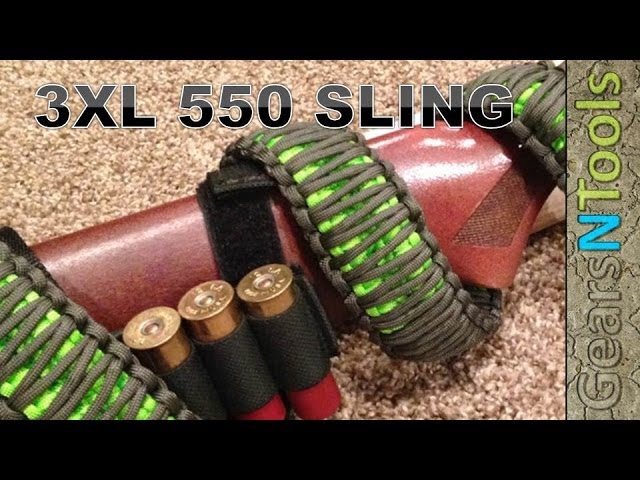
The right sling length depends on your body size and rifle type. Most rifle slings are between 36 and 45 inches long. To measure, put on your rifle and use a piece of string to test different lengths until you find one that feels comfortable. Remember, a wider sling is more comfortable for long carries but uses more paracord.
Example Sling Lengths
| Body Height | Recommended Sling Length |
|---|---|
| Below 5’5″ | 36-38 inches |
| 5’6″ to 6’0″ | 40-42 inches |
| Above 6’0″ | 43-45 inches |
Tip: Make your sling a bit longer than you think you need. You can always shorten it later, but adding length after finishing is difficult.
Choosing Your Weave Pattern
There are many paracord weaving patterns. The Cobra weave is the most popular for rifle slings. It’s strong, looks good, and isn’t too complicated for beginners. Other patterns include King Cobra, Fish Tail, and Trilobite. For your first sling, stick with Cobra—once you master it, you can experiment with others.
Pattern Comparison
| Pattern | Difficulty | Width | Paracord Needed (per 1″ length) |
|---|---|---|---|
| Cobra | Easy | 0.75″ | ~1.3 ft |
| King Cobra | Moderate | 1.2″ | ~2.5 ft |
| Fish Tail | Intermediate | 0.8″ | ~1.5 ft |
Step-by-step Instructions
Follow these steps to create a paracord rifle sling using the Cobra weave. Adjust details if you choose a different pattern.
Step 1: Measure And Cut Paracord
Decide the finished sling length. For a 40-inch sling, you’ll need about 50–60 feet of paracord for a single-color Cobra weave. If you want two colors, cut two 25–30 foot sections.
Practical insight: Many beginners underestimate how much cord they need. Always cut extra—paracord is cheap compared to the time you’ll spend re-weaving.
Step 2: Attach Paracord To Swivels
Thread each end of your main paracord through the sling swivels. Pull the cord until you have two equal lengths. Tie a simple overhand knot to secure the paracord to each swivel.
Mistake to avoid: Don’t make the knot too close to the swivel—leave a small loop for flexibility. If the knot is too tight, your sling may not pivot smoothly.
Step 3: Set Up Your Working Area
If you have a jig or clamps, secure the swivels so they’re held firmly and the cords are tight. If not, tape the swivels to a table or ask a friend to help. Keeping your work tight prevents uneven weaving.
Step 4: Start The Cobra Weave
Take the left cord and place it over the two center cords, forming a loop. Bring the right cord over the left, then under the center cords and up through the loop on the left. Pull tight.
Repeat the process, alternating sides for each knot. The classic Cobra pattern will start to appear.
Non-obvious tip: After every 5–10 knots, slide the weave toward the swivels to keep it tight. Loose weaving makes the sling floppy and less durable.
Step 5: Continue Weaving
Continue the Cobra weave until you reach the other swivel. Check your progress regularly for evenness. If one side looks bigger, adjust the tension as you go.
Step 6: Finish The Ends
When you reach the end, tuck the loose paracord under the last few knots using pliers or a paracord needle. Cut the excess cord, leaving about 1/4 inch. Carefully melt the ends with a lighter to prevent fraying.
If you want a cleaner look, use a needle and thread to secure the ends. Some people add a drop of strong glue for extra hold.
Step 7: Attach To Rifle And Adjust
Clip the finished sling onto your rifle. Try it on and adjust the fit. If it feels too long, carefully remove a few weaves from each end and re-finish. If it’s too short, you’ll have to start again (a common beginner’s frustration).
Non-obvious insight: Test your sling with your rifle unloaded. Practice shouldering and carrying to spot fit issues before heading outdoors.
Customizing Your Paracord Sling
One big advantage of making your own sling is customization. You can choose colors to match your gear, add a second layer (King Cobra) for extra padding, or weave in small accessories like a fire starter or whistle.
Popular Custom Options
- Multi-color paracord: Combine two or three colors for a unique look.
- Side-release buckles: Add quick-detach points for fast removal.
- Integrated gear: Weave small survival tools into the sling.
- Name tags or patches: Personalize your sling for identification.
Customizing your sling makes it more useful and easier to spot in a group.

Common Mistakes And How To Avoid Them
Many first-time makers make small errors that can spoil the finished sling. Here’s what to watch out for:
- Using too little paracord: Always overestimate your needs.
- Uneven weaving: Keep cords tight and check every few knots.
- Poorly finished ends: Melt ends thoroughly to avoid unraveling.
- Wrong sling length: Test length before starting the weave.
- Weak attachment to swivels: Double-check knots for security.
If you do make a mistake, don’t get frustrated. Paracord is forgiving—you can undo and redo most knots easily.
How do you properly use a two point rifle sling
When To Use A Paracord Rifle Sling
This type of sling is ideal for hunting, target shooting, and survival situations. If you’re carrying your rifle for long distances, the padded weave adds comfort compared to a simple strap. In emergencies, you can unravel the sling to use the cord for:
- Building shelter
- Making traps
- Repairing gear
- Tying splints or bandages
It’s a practical upgrade for anyone who spends time outdoors.
Care And Maintenance
A paracord sling is tough but still needs care. If it gets wet, let it dry fully before storing. Clean off mud or dirt with mild soap and water. Avoid exposing the sling to open flame (except for melting ends) or strong chemicals, as these can damage the nylon fibers.
Pro tip: Every few months, check the attachment points for wear. Replace swivels or knots if you see fraying.
Paracord Sling Vs. Traditional Rifle Sling
Is a paracord sling better than a standard leather or nylon sling? It depends on your needs.
| Feature | Paracord Sling | Traditional Sling |
|---|---|---|
| Durability | High | Medium-High |
| Multi-use | Yes | No |
| Comfort | Good (with wide weave) | Varies |
| Customization | High | Low-Medium |
| Cost | Low | Medium-High |
If you want a sling that can also help in a survival situation, paracord is the clear winner.
Frequently Asked Questions
How Much Paracord Do I Need For A Rifle Sling?
Most people use 50–100 feet of paracord for a standard Cobra weave sling. The exact amount depends on your chosen pattern, sling length, and width. Always cut extra to be safe.
Can I Wash My Paracord Rifle Sling?
Yes, you can wash the sling with mild soap and water. Let it dry completely before using it again. Avoid hot water or harsh chemicals, as these can damage the cord fibers.
Is Paracord Strong Enough For A Heavy Rifle?
550 paracord is very strong and can hold up to 550 pounds. A well-woven sling using quality paracord is more than strong enough for most rifles, even heavier models.
How Do I Add Extra Features To My Sling?
You can weave in small accessories like fire starters, whistles, or buckles during the braiding process. Plan where you want these before starting your weave, and make sure they are secure.
What If I Make A Mistake While Weaving?
If you make a mistake, undo the weave back to the problem area and redo it. Paracord is forgiving and can be unbraided multiple times without damage. Take your time, and don’t rush.
Finally
Making a paracord rifle sling is more than just a craft—it’s a skill that blends function, style, and self-reliance. With careful planning and attention to detail, you’ll end up with a sling that’s as tough and versatile as you are. Give it a try, and enjoy the satisfaction of using gear you built with your own hands.

Leave a Reply