Carrying a rifle for hunting, sport shooting, or military use can get tiring fast. A rifle sling is more than just a strap—it’s a tool that makes handling your firearm safer, easier, and more comfortable. Many shooters, however, don’t realize how much a sling can improve accuracy and control, or how different sling types serve different needs.
Let’s explore how to use a rifle sling, step by step, so you can move, shoot, and carry your rifle with confidence.
Table of Contents
What Is A Rifle Sling?
A rifle sling is a strap attached to a rifle, allowing you to carry it on your shoulder or across your body. Slings also help stabilize your aim and free up your hands when you need them. Most slings are made of nylon, leather, or canvas, and come in different designs to suit various shooting styles and environments.
Types Of Rifle Slings
Choosing the right sling is key to using it well. Here are the main types:
| Sling Type | Main Use | Benefits | Drawbacks |
|---|---|---|---|
| Single-point Sling | Quick transitions, tactical use | Fast to switch shoulders | Less stable for aiming |
| Two-point Sling | Hunting, general carry | Versatile, stable, comfortable | Can tangle during transitions |
| Three-point Sling | Military, long carry | Very secure, hands-free | Complicated to adjust |
Single-point Sling
This attaches to the rifle at one point, usually near the stock. It hangs the rifle in front of you, making it easy to switch shoulders. It’s popular for tactical shooting but can bounce around more than other types.
Two-point Sling
This is the most common. It attaches at the front and rear of the rifle. It’s easy to adjust, comfortable for long walks, and can be used to steady your shot.
Three-point Sling
This type loops around your body and the rifle, making it very secure. It’s harder to use but great for long periods of carry and for when you need your hands free.
How do you properly wear a two point sling
Why A Rifle Sling Matters?
Many new shooters don’t realize that a sling is more than a carrying strap. Used correctly, it:
- Reduces arm fatigue on long walks
- Improves shooting accuracy by adding stability
- Makes transitions between carrying and shooting faster
- Helps keep your rifle safe and close in crowded areas
A good example: In a 2015 survey of hunters, 84% reported using a sling improved their comfort and safety, especially in rough terrain.
How To Attach A Rifle Sling?
Proper attachment is essential. Here’s how:
- Check sling type and rifle mounts. Not all rifles have the same mounting points. Look for swivels or loops at the front (near the barrel) and rear (near the stock).
- Thread the sling through the mounts. For a two-point sling, thread one end through the front mount and the other through the rear. Secure with the buckles or clips provided.
- Adjust the length. The sling should be tight enough to hold the rifle close but loose enough to allow fast movement.
- Test for comfort. Place the rifle on your shoulder and walk around. Adjust as needed.
| Step | Two-point Sling | Single-point Sling |
|---|---|---|
| 1 | Attach to front and rear mounts | Attach to single-point adapter near stock |
| 2 | Adjust both ends for length | Adjust loop for body size |
| 3 | Test carry and shooting positions | Test quick transitions |
Pro tip: Use a sling with quick-release buckles if you plan to switch between carry and shooting often.
How To Carry Your Rifle With A Sling
There are three main carry positions. Each suits different situations.
Over-the-shoulder Carry
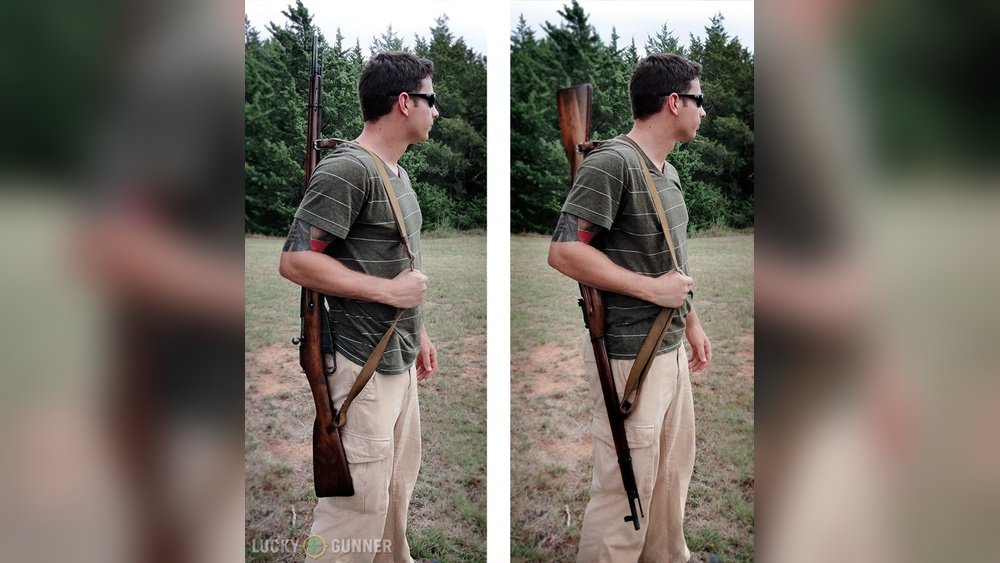
The most common method. Slide the sling over one shoulder so the rifle hangs at your side or back. This is comfortable for long walks but can be slow to bring into action.
Cross-body Carry (african Carry)
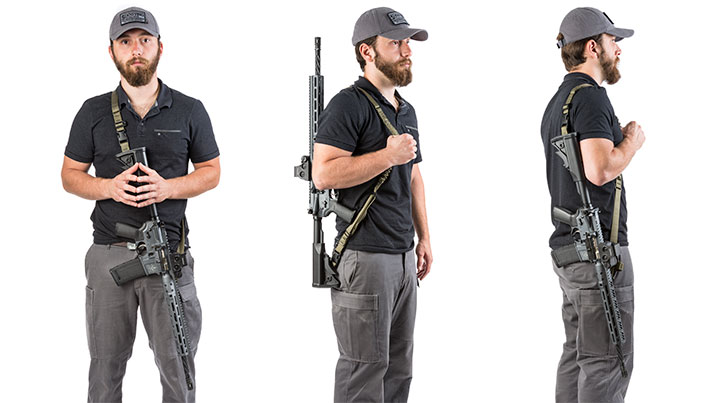
The sling goes across your chest, with the rifle barrel pointing down and the stock up. This is faster to bring into shooting position and keeps the rifle stable while moving.
Patrol Carry
The sling sits across your chest with the rifle in front, ready to grab quickly. Used by military and law enforcement, it gives the fastest access but can be tiring for long periods.
Non-obvious insight: Shortening the sling slightly in cross-body carry makes it easier to control the muzzle direction in tight spaces, reducing the risk of accidents.
How To Use A Sling For Shooting Support?
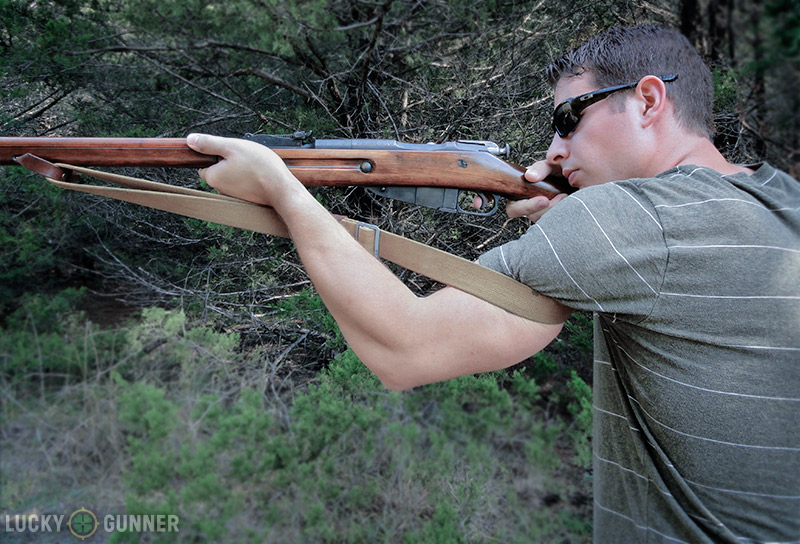
A sling isn’t just for carrying. It can also help steady your aim. Here’s how to use a two-point sling for extra accuracy:
- Loop your arm. Slide your support arm (left arm for right-handed shooters) through the sling.
- Tighten. Pull the sling tight around your upper arm.
- Wrap and grip. Wrap your hand back to the rifle’s fore-end, so the sling pulls against your arm.
- Aim and fire. The tension reduces barrel movement, making your shot steadier.
This method is especially useful in prone (lying down) or kneeling positions. Many competitive shooters use this trick for more accurate shots.
Practical example: If you hunt in windy conditions, using your sling for support can reduce your group size by up to 30%, according to shooting sports studies.
Can you DIY a rifle sling using paracord
Adjusting Sling Length
A big mistake beginners make is leaving the sling too long or too short. Here’s how to set it right:
- For carrying, the rifle should sit flat against your back or side without swinging.
- For shooting support, the sling should tighten enough to add tension but not cut off your circulation.
Tip: Measure the sling with your rifle unloaded and practice moving from carry to shooting positions. Make small adjustments until it feels natural.
Sling Use For Hunting
Hunting often means long hours on the move. A good sling can save your energy and help you react quickly. For example, a padded two-point sling reduces shoulder pain on long hikes. If you expect to climb, choose a sling that stays tight to your body so the rifle doesn’t snag.
Non-obvious insight: Some hunters add a small piece of rubber or paracord to keep the sling from sliding off their shoulder—especially useful in rainy or cold weather.
Cold weather hunting clothes guide
Sling Use For Tactical And Sport Shooting
In tactical or competitive sport shooting, speed matters. Single-point and adjustable two-point slings are popular here. They let you switch shoulders, transition from rifle to handgun, and control the weapon in tight spaces.
- Single-point slings are best for close-quarters, but can bounce.
- Two-point slings offer more control and can be adjusted quickly.
Practice switching from patrol carry to ready position until it feels automatic. In competitions, lost seconds can mean the difference between winning and losing.
Sling Maintenance And Care
A dirty or worn sling can fail when you need it most. Check your sling every few months:
- Look for fraying, tears, or rust on buckles.
- Clean fabric slings with mild soap and water; let them dry fully before storing.
- For leather slings, use a leather conditioner to prevent cracking.
- Test all attachment points to make sure they’re solid.
Replacing a sling is cheaper than risking a dropped rifle.

Common Mistakes With Rifle Slings
Many shooters make small errors that cause big problems. Here are the most frequent:
- Sling too loose or tight. This makes carrying awkward and can slow your aim.
- Wrong sling type for the rifle. Heavy rifles need padded slings; tactical rifles need quick-adjust types.
- Not practicing transitions. Moving from carry to shooting should be smooth.
- Ignoring maintenance. Dirty or old slings break at the worst times.
- Letting the sling twist. Twisted slings are uncomfortable and can cause snags.
Tip: After attaching your sling, practice moving, aiming, and carrying with an unloaded rifle until everything feels natural.
Comparing Popular Rifle Sling Brands
Choosing a sling can be overwhelming. Here’s a comparison of three top brands:
| Brand | Main Material | Best For | Average Price (USD) |
|---|---|---|---|
| Magpul MS1 | Nylon | Tactical, sport shooting | 45 |
| Blue Force Gear Vickers | Nylon | Military, law enforcement | 55 |
| Butler Creek Comfort Stretch | Neoprene, nylon | Hunting, long carry | 25 |
Pro tip: Don’t buy the cheapest sling. Spending a bit more gets you durability, comfort, and better features.
When Not To Use A Sling
While slings are helpful, there are times to avoid them:
- In thick brush, a sling can snag on branches.
- During some competitions, slings are not allowed.
- If you need complete silence, some slings squeak or make noise.
In these cases, carry your rifle by hand or use a silent carry method.
Real-world Example: Using A Sling In The Field
Imagine you’re hiking up a steep hill, rifle slung over your shoulder. Suddenly, a deer appears. With the right sling setup, you can move the rifle to a ready position in under two seconds—without fumbling or making noise. If your sling was too loose or tangled, you’d lose precious time and maybe miss your chance.
Frequently Asked Questions
What Is The Best Type Of Sling For Beginners?
For most beginners, a two-point sling is easiest to use. It’s versatile, supports the rifle well, and is simple to attach. Look for adjustable models with padding for comfort.
How Do I Keep My Sling From Slipping Off My Shoulder?
You can add a rubber pad or choose a sling with a non-slip material on the inside. Wearing clothing with some texture also helps prevent slipping.
Can I Use A Rifle Sling With Any Rifle?
Most rifles can use a sling if they have the right mounting points (swivels or loops). Some older or specialized rifles may need extra hardware installed.
How Often Should I Check My Rifle Sling?
Inspect your sling every few months or after every hunting trip. Look for damage or loose parts, especially if you hunt in rough terrain or bad weather.
Finally
A rifle sling is a small investment that makes a big difference in both safety and performance. With the right knowledge and regular practice, your sling becomes a natural extension of your shooting skills—improving comfort, accuracy, and readiness every time you step into the field.

Leave a Reply